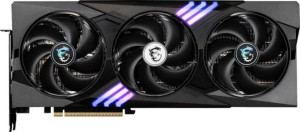
MSI GeForce RTX 5070 Gaming Trio OC
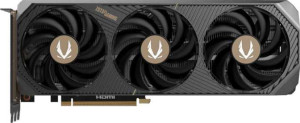
Zotac Gaming GeForce RTX 5070 Ti Solid Core

MSI GeForce RTX 5070 Gaming Trio OC Zotac Gaming GeForce RTX 5070 Ti Solid Core

Overview

Choosing between the MSI GeForce RTX 5070 Gaming Trio OC and the Zotac Gaming GeForce RTX 5070 Ti Solid Core means weighing two Blackwell-architecture cards that share a strong common foundation yet diverge in meaningful ways. Both are built on a 5 nm process with PCIe 5 support, GDDR7 memory, and a full feature set including ray tracing and DLSS, but they part ways on raw compute muscle, memory capacity, power draw, and physical size. Read on to see how every key specification compares before you decide.

Common Features

  • GPU memory speed is 1750 MHz on both MSI GeForce RTX 5070 Gaming Trio OC and Zotac Gaming GeForce RTX 5070 Ti Solid Core.
  • Double Precision Floating Point (DPFP) is supported on both products.
  • Effective memory speed is 28000 MHz on both products.
  • Both products use GDDR7 memory.
  • ECC memory is supported on both products.
  • Both products support DirectX 12 Ultimate.
  • OpenGL version 4.6 is available on both products.
  • OpenCL version 3 is available on both products.
  • Multi-display technology is supported on both products.
  • Ray tracing is supported on both products.
  • 3D support is available on both products.
  • DLSS is supported on both products.
  • XeSS (XMX) is not available on either product.
  • Both products have one HDMI output running HDMI version 2.1b.
  • Both products feature three DisplayPort outputs.
  • Neither product includes USB-C ports, DVI outputs, or mini DisplayPort outputs.
  • Both products are built on the Blackwell GPU architecture.
  • Both products use PCIe version 5.
  • Both products are manufactured with a 5 nm semiconductor process.
  • Air-water cooling is not available on either product.

Main Differences

  • GPU clock speed is 2325 MHz on MSI GeForce RTX 5070 Gaming Trio OC and 2295 MHz on Zotac Gaming GeForce RTX 5070 Ti Solid Core.
  • GPU turbo speed is 2610 MHz on MSI GeForce RTX 5070 Gaming Trio OC and 2452 MHz on Zotac Gaming GeForce RTX 5070 Ti Solid Core.
  • Pixel rate is 208.8 GPixel/s on MSI GeForce RTX 5070 Gaming Trio OC and 235.4 GPixel/s on Zotac Gaming GeForce RTX 5070 Ti Solid Core.
  • Floating-point performance is 32.07 TFLOPS on MSI GeForce RTX 5070 Gaming Trio OC and 43.94 TFLOPS on Zotac Gaming GeForce RTX 5070 Ti Solid Core.
  • Texture rate is 501.1 GTexels/s on MSI GeForce RTX 5070 Gaming Trio OC and 686.6 GTexels/s on Zotac Gaming GeForce RTX 5070 Ti Solid Core.
  • Shading units number 6144 on MSI GeForce RTX 5070 Gaming Trio OC and 8960 on Zotac Gaming GeForce RTX 5070 Ti Solid Core.
  • Texture mapping units (TMUs) total 192 on MSI GeForce RTX 5070 Gaming Trio OC and 280 on Zotac Gaming GeForce RTX 5070 Ti Solid Core.
  • Render output units (ROPs) total 80 on MSI GeForce RTX 5070 Gaming Trio OC and 96 on Zotac Gaming GeForce RTX 5070 Ti Solid Core.
  • Maximum memory bandwidth is 672 GB/s on MSI GeForce RTX 5070 Gaming Trio OC and 896 GB/s on Zotac Gaming GeForce RTX 5070 Ti Solid Core.
  • VRAM is 12GB on MSI GeForce RTX 5070 Gaming Trio OC and 16GB on Zotac Gaming GeForce RTX 5070 Ti Solid Core.
  • Memory bus width is 192-bit on MSI GeForce RTX 5070 Gaming Trio OC and 256-bit on Zotac Gaming GeForce RTX 5070 Ti Solid Core.
  • Thermal Design Power (TDP) is 250W on MSI GeForce RTX 5070 Gaming Trio OC and 300W on Zotac Gaming GeForce RTX 5070 Ti Solid Core.
  • Number of transistors is 31100 million on MSI GeForce RTX 5070 Gaming Trio OC and 45600 million on Zotac Gaming GeForce RTX 5070 Ti Solid Core.
  • Width is 338 mm on MSI GeForce RTX 5070 Gaming Trio OC and 303.5 mm on Zotac Gaming GeForce RTX 5070 Ti Solid Core.
  • Height is 140 mm on MSI GeForce RTX 5070 Gaming Trio OC and 115.8 mm on Zotac Gaming GeForce RTX 5070 Ti Solid Core.
Specs Comparison
MSI GeForce RTX 5070 Gaming Trio OC

MSI GeForce RTX 5070 Gaming Trio OC

Zotac Gaming GeForce RTX 5070 Ti Solid Core

Zotac Gaming GeForce RTX 5070 Ti Solid Core

Performance:
GPU clock speed 2325 MHz 2295 MHz
GPU turbo 2610 MHz 2452 MHz
pixel rate 208.8 GPixel/s 235.4 GPixel/s
floating-point performance 32.07 TFLOPS 43.94 TFLOPS
texture rate 501.1 GTexels/s 686.6 GTexels/s
GPU memory speed 1750 MHz 1750 MHz
shading units 6144 8960
texture mapping units (TMUs) 192 280
render output units (ROPs) 80 96
Has Double Precision Floating Point (DPFP)

The single most important story in this performance group is the raw compute gap between these two cards. The Zotac RTX 5070 Ti Solid Core houses 8,960 shading units versus 6,144 on the MSI RTX 5070 Gaming Trio OC — a roughly 46% advantage in shader count that flows directly into every rendered frame. This translates into a 43.94 TFLOPS floating-point throughput for the Zotac against just 32.07 TFLOPS for the MSI, meaning the Zotac can push through nearly 37% more raw shader work per second. In practice, this gap shows up in 4K gaming, heavy ray-tracing workloads, and GPU-accelerated compute tasks, where additional execution resources are consumed at scale.

The MSI does strike back on clock speed: its 2,610 MHz boost comfortably outpaces the Zotac's 2,452 MHz, making each of its shading units cycle faster. However, this ~6% clock advantage is mathematically overwhelmed by the Zotac's ~46% unit count lead, so the aggregate throughput figures remain decisively in the Zotac's favor. The texture pipeline tells the same story — 686.6 GTexels/s on the Zotac versus 501.1 GTexels/s on the MSI — which matters for high-resolution texture filtering and complex material rendering. The 96 ROPs on the Zotac (vs. 80 on the MSI) also give it a higher pixel fill rate, a meaningful advantage when driving high-refresh or ultra-high-resolution displays. Memory clock is identical on both at 1,750 MHz, and both support Double Precision Floating Point, making neither differentiated on those fronts.

The verdict for this group is clear: the Zotac RTX 5070 Ti Solid Core holds a substantial performance edge across every major throughput metric — compute, texturing, and pixel output — thanks to its higher-tier GPU die. The MSI's clock speed lead is real but insufficient to close the gap created by the Ti's significantly larger shader array. Buyers prioritizing maximum rendering horsepower should lean toward the Zotac, while the MSI remains a capable option for those who do not need the additional headroom the Ti tier provides.

Memory:
effective memory speed 28000 MHz 28000 MHz
maximum memory bandwidth 672 GB/s 896 GB/s
VRAM 12GB 16GB
GDDR version GDDR7 GDDR7
memory bus width 192-bit 256-bit
Supports ECC memory

Both the MSI GeForce RTX 5070 Gaming Trio OC and the Zotac Gaming GeForce RTX 5070 Ti Solid Core feature an effective memory speed of 28000 MHz and use GDDR7 memory, so they share similar memory technology. However, there are some differences in memory capacity and bandwidth. The MSI card has 12GB of VRAM, while the Zotac card offers 16GB of VRAM. In terms of memory bandwidth, the MSI model has a maximum bandwidth of 672 GB/s, whereas the Zotac card significantly outperforms with a bandwidth of 896 GB/s.

Additionally, the MSI card has a 192-bit memory bus width, while the Zotac model uses a wider 256-bit memory bus. Both products support ECC memory, ensuring enhanced error correction capabilities.

In summary, the Zotac Gaming GeForce RTX 5070 Ti Solid Core provides more VRAM, higher memory bandwidth, and a wider memory bus compared to the MSI GeForce RTX 5070 Gaming Trio OC, but both share the same effective memory speed, GDDR version, and ECC support.

Features:
DirectX version DirectX 12 Ultimate DirectX 12 Ultimate
OpenGL version 4.6 4.6
OpenCL version 3 3
Supports multi-display technology
supports ray tracing
Supports 3D
supports DLSS
has XeSS (XMX)
AMD SAM / Intel Resizable BAR Intel Resizable BAR Intel Resizable BAR
has LHR
has RGB lighting
supported displays 4 4

The MSI GeForce RTX 5070 Gaming Trio OC and the Zotac Gaming GeForce RTX 5070 Ti Solid Core both support DirectX 12 Ultimate, OpenGL 4.6, and OpenCL 3, offering a consistent set of API support for modern gaming and applications. Both cards also support multi-display technology, ray tracing, 3D, DLSS, and Intel Resizable BAR, ensuring high-end features for gaming performance. Additionally, neither card supports XeSS (XMX), and both do not have LHR (Lite Hash Rate) limitations, making them suitable for a variety of use cases.

Both the MSI and Zotac cards feature RGB lighting, providing visual customization. They also support up to 4 displays, offering flexibility for multi-monitor setups.

In summary, the MSI and Zotac models have identical feature sets across all specified areas, including DirectX, OpenGL, OpenCL, multi-display support, ray tracing, DLSS, RGB lighting, and supported displays. There are no differences between the two in terms of these features.

Ports:
has an HDMI output
HDMI ports 1 1
HDMI version HDMI 2.1b HDMI 2.1b
DisplayPort outputs 3 3
USB-C ports 0 0
DVI outputs 0 0
mini DisplayPort outputs 0 0

Both the MSI GeForce RTX 5070 Gaming Trio OC and the Zotac Gaming GeForce RTX 5070 Ti Solid Core feature an HDMI output with 1 HDMI port each, supporting HDMI 2.1b. Both cards also offer 3 DisplayPort outputs, with no USB-C, DVI, or mini DisplayPort outputs available on either product.

In summary, the port configurations of the MSI and Zotac models are identical, with both offering the same HDMI version, number of HDMI and DisplayPort outputs, and lacking USB-C or DVI ports.

General info:
GPU architecture Blackwell Blackwell
release date January 2025 February 2025
Thermal Design Power (TDP) 250W 300W
PCI Express (PCIe) version 5 5
semiconductor size 5 nm 5 nm
number of transistors 31100 million 45600 million
Has air-water cooling
width 338 mm 303.5 mm
height 140 mm 115.8 mm

Both the MSI GeForce RTX 5070 Gaming Trio OC and the Zotac Gaming GeForce RTX 5070 Ti Solid Core feature the same GPU architecture, Blackwell, and use a 5 nm semiconductor size. Both cards also support PCIe version 5, ensuring compatibility with modern systems.

In terms of thermal design power (TDP), the MSI card has a TDP of 250W, while the Zotac card requires 300W, indicating a higher power demand. The MSI card has 31,100 million transistors, while the Zotac card has a significantly larger transistor count of 45,600 million. In terms of physical dimensions, the MSI card is 338 mm wide and 140 mm high, whereas the Zotac card is slightly smaller, measuring 303.5 mm in width and 115.8 mm in height.

Both cards do not feature air-water cooling, so users would need to rely on traditional cooling solutions. Overall, the Zotac card is larger, has more transistors, and has a higher TDP, while the MSI card is smaller and more power-efficient.

Comparison Summary & Verdict

After examining the full specification breakdown, it is clear that each card targets a distinct buyer. The MSI GeForce RTX 5070 Gaming Trio OC delivers a higher GPU boost clock of 2610 MHz and a lower 250W TDP, making it the more power-efficient option for gamers who want strong frame rates without a heavy demand on their PSU. The Zotac Gaming GeForce RTX 5070 Ti Solid Core, by contrast, pulls ahead with 43.94 TFLOPS of floating-point performance, 8960 shading units, a wider 256-bit memory bus, 896 GB/s of bandwidth, and a generous 16GB of GDDR7 VRAM, making it the superior choice for users who push large textures, complex ray-traced scenes, or GPU-accelerated workloads. Notably, the Zotac card also occupies a more compact footprint at 303.5 x 115.8 mm versus the larger MSI. Both cards are equally matched on connectivity and feature support, so the decision ultimately comes down to whether you prioritize efficiency and clock speed or outright compute horsepower and memory headroom.

MSI GeForce RTX 5070 Gaming Trio OC
Buy MSI GeForce RTX 5070 Gaming Trio OC if...

Buy the MSI GeForce RTX 5070 Gaming Trio OC if you want a power-efficient GPU with a higher boost clock of 2610 MHz and a 250W TDP, and your workload does not require more than 12GB of VRAM.

Zotac Gaming GeForce RTX 5070 Ti Solid Core
Buy Zotac Gaming GeForce RTX 5070 Ti Solid Core if...

Buy the Zotac Gaming GeForce RTX 5070 Ti Solid Core if you need maximum compute throughput, 16GB of GDDR7 VRAM, and 896 GB/s of memory bandwidth for demanding rendering or GPU-accelerated tasks, all in a more compact form factor.