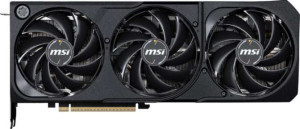
MSI GeForce RTX 5070 Shadow 3X OC
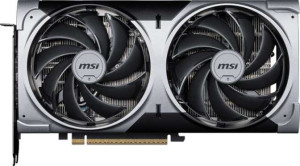
MSI GeForce RTX 5070 Ventus 2X OC

MSI GeForce RTX 5070 Shadow 3X OC MSI GeForce RTX 5070 Ventus 2X OC

Overview

Welcome to this head-to-head specification comparison between the MSI GeForce RTX 5070 Shadow 3X OC and the MSI GeForce RTX 5070 Ventus 2X OC. Both cards share the same Blackwell architecture and identical core specifications, yet they differ in physical dimensions, making form factor a central point of this matchup. Read on to explore every spec side by side and decide which variant best suits your build.

Common Features

  • Both products have a GPU clock speed of 2325 MHz.
  • Both products have a GPU turbo speed of 2542 MHz.
  • Both products deliver a pixel rate of 203.4 GPixel/s.
  • Both products offer floating-point performance of 31.24 TFLOPS.
  • Both products have a texture rate of 488.1 GTexels/s.
  • Both products have a GPU memory speed of 1750 MHz.
  • Both products feature 6144 shading units.
  • Both products include 192 texture mapping units (TMUs).
  • Both products have an effective memory speed of 28000 MHz.
  • Both products provide a maximum memory bandwidth of 672 GB/s.
  • Both products come with 12GB of VRAM.
  • Both products use GDDR7 memory.
  • Both products have a 192-bit memory bus width.
  • ECC memory support is available on both products.
  • Both products support DirectX 12 Ultimate.
  • Both products support OpenGL version 4.6.
  • Both products support OpenCL version 3.
  • Multi-display technology support is available on both products.
  • Ray tracing support is available on both products.
  • 3D support is available on both products.
  • DLSS support is available on both products.
  • XeSS (XMX) support is not available on either product.
  • Both products include one HDMI output running HDMI 2.1b.
  • Both products offer 3 DisplayPort outputs.
  • Neither product includes USB-C ports, DVI outputs, or mini DisplayPort outputs.
  • Both products are built on the Blackwell GPU architecture.
  • Both products have a Thermal Design Power (TDP) of 250W.
  • Both products use PCI Express version 5.
  • Both products are manufactured with a 5 nm semiconductor process.
  • Both products contain 31100 million transistors.
  • Air-water cooling is not available on either product.

Main Differences

  • Width is 303 mm on MSI GeForce RTX 5070 Shadow 3X OC and 236 mm on MSI GeForce RTX 5070 Ventus 2X OC.
  • Height is 121 mm on MSI GeForce RTX 5070 Shadow 3X OC and 126 mm on MSI GeForce RTX 5070 Ventus 2X OC.
Specs Comparison
MSI GeForce RTX 5070 Shadow 3X OC

MSI GeForce RTX 5070 Shadow 3X OC

MSI GeForce RTX 5070 Ventus 2X OC

MSI GeForce RTX 5070 Ventus 2X OC

Performance:
GPU clock speed 2325 MHz 2325 MHz
GPU turbo 2542 MHz 2542 MHz
pixel rate 203.4 GPixel/s 203.4 GPixel/s
floating-point performance 31.24 TFLOPS 31.24 TFLOPS
texture rate 488.1 GTexels/s 488.1 GTexels/s
GPU memory speed 1750 MHz 1750 MHz
shading units 6144 6144
texture mapping units (TMUs) 192 192
render output units (ROPs) 80 80
Has Double Precision Floating Point (DPFP)

In terms of raw performance, the MSI GeForce RTX 5070 Shadow 3X OC and the MSI GeForce RTX 5070 Ventus 2X OC are, remarkably, identical across every measurable spec in this group. Both cards share the same 2325 MHz base clock and 2542 MHz boost clock, resulting in the exact same 31.24 TFLOPS of floating-point throughput, 203.4 GPixel/s pixel fill rate, and 488.1 GTexels/s texture rate. Under the hood, the silicon is the same: 6144 shading units, 192 TMUs, 80 ROPs, and 1750 MHz memory speed.

What this means in practice is that both cards will deliver frame-for-frame identical gaming and compute performance under the same thermal and power conditions. The 31+ TFLOPS figure places them firmly in the high-performance tier, capable of handling demanding workloads at high resolutions, and the shared boost clock ensures neither card has a factory overclock advantage over the other despite their different cooler designs.

Verdict: a complete tie. Every performance metric is identical. The differentiating factor between these two cards lies entirely outside this spec group — most likely in thermals, acoustics, and physical design driven by the Shadow 3X OC's triple-fan versus the Ventus 2X OC's dual-fan cooling solution. For performance alone, neither card has any edge over the other.

Memory:
effective memory speed 28000 MHz 28000 MHz
maximum memory bandwidth 672 GB/s 672 GB/s
VRAM 12GB 12GB
GDDR version GDDR7 GDDR7
memory bus width 192-bit 192-bit
Supports ECC memory

The MSI GeForce RTX 5070 Shadow 3X OC and MSI GeForce RTX 5070 Ventus 2X OC both share identical memory specifications. Both models feature an effective memory speed of 28000 MHz and a maximum memory bandwidth of 672 GB/s. They are equipped with 12GB of VRAM and use GDDR7 memory, ensuring high-speed performance for demanding tasks.

Additionally, both products come with a 192-bit memory bus width, allowing for efficient data transfer between the GPU and memory. They also support Error Correction Code (ECC) memory, enhancing the stability and reliability of the systems during operation.

In summary, the memory specifications of both the MSI GeForce RTX 5070 Shadow 3X OC and MSI GeForce RTX 5070 Ventus 2X OC are identical, offering the same high-performance features across both models.

Features:
DirectX version DirectX 12 Ultimate DirectX 12 Ultimate
OpenGL version 4.6 4.6
OpenCL version 3 3
Supports multi-display technology
supports ray tracing
Supports 3D
supports DLSS
has XeSS (XMX)
AMD SAM / Intel Resizable BAR Intel Resizable BAR Intel Resizable BAR
has LHR
has RGB lighting
supported displays 4 4

The MSI GeForce RTX 5070 Shadow 3X OC and MSI GeForce RTX 5070 Ventus 2X OC share identical feature specifications. Both models support DirectX 12 Ultimate, OpenGL 4.6, and OpenCL 3, offering compatibility with the latest software and game titles. They also support multi-display technology, ray tracing, and 3D, making them ideal for high-quality visual experiences.

Both products feature support for DLSS and Intel's Resizable BAR technology, with neither supporting XeSS (XMX) or having LHR (Lite Hash Rate) limitations. Additionally, both models lack RGB lighting for those who prefer a simpler aesthetic.

In terms of display support, both the MSI GeForce RTX 5070 Shadow 3X OC and the MSI GeForce RTX 5070 Ventus 2X OC can handle up to 4 displays, allowing for an expansive multi-monitor setup.

Ports:
has an HDMI output
HDMI ports 1 1
HDMI version HDMI 2.1b HDMI 2.1b
DisplayPort outputs 3 3
USB-C ports 0 0
DVI outputs 0 0
mini DisplayPort outputs 0 0

Both the MSI GeForce RTX 5070 Shadow 3X OC and the MSI GeForce RTX 5070 Ventus 2X OC offer identical port configurations. Both models feature one HDMI 2.1b port, along with three DisplayPort outputs. Neither product includes USB-C ports, DVI outputs, or mini DisplayPort outputs.

In summary, the port setup on both graphics cards is exactly the same, providing users with the same connectivity options for display setups.

General info:
GPU architecture Blackwell Blackwell
release date March 2025 January 2025
Thermal Design Power (TDP) 250W 250W
PCI Express (PCIe) version 5 5
semiconductor size 5 nm 5 nm
number of transistors 31100 million 31100 million
Has air-water cooling
width 303 mm 236 mm
height 121 mm 126 mm

The MSI GeForce RTX 5070 Shadow 3X OC and MSI GeForce RTX 5070 Ventus 2X OC share identical general specifications. Both cards are based on the Blackwell GPU architecture, use a 5 nm semiconductor size, and have 31100 million transistors. They also have the same Thermal Design Power (TDP) of 250W, PCI Express (PCIe) version 5 support, and lack air-water cooling solutions.

However, the dimensions of the two models differ slightly. The MSI GeForce RTX 5070 Shadow 3X OC is 303 mm in width and 121 mm in height, while the MSI GeForce RTX 5070 Ventus 2X OC is slightly more compact with a width of 236 mm and a height of 126 mm.

In summary, both cards are identical in terms of core technology, with only a small difference in physical size between the two models.

Comparison Summary & Verdict

After a thorough side-by-side review, it is clear that the MSI GeForce RTX 5070 Shadow 3X OC and the MSI GeForce RTX 5070 Ventus 2X OC are functionally equivalent cards, sharing identical GPU clocks, 12GB of GDDR7 memory, a 250W TDP, and full support for ray tracing and DLSS. The sole distinguishing factor between them is their physical footprint: the Shadow 3X OC is notably wider at 303mm compared to the Ventus 2X OC at 236mm, while the Ventus 2X OC is marginally taller at 126mm versus 121mm. Builders working with a compact or mid-tower chassis with limited horizontal card clearance will find the Ventus 2X OC the more accommodating choice, whereas those with a spacious full-tower case may prefer the Shadow 3X OC for its broader cooler design.

MSI GeForce RTX 5070 Shadow 3X OC
Buy MSI GeForce RTX 5070 Shadow 3X OC if...

Buy the MSI GeForce RTX 5070 Shadow 3X OC if your case offers ample horizontal clearance and you prefer a wider card design. It is an ideal pick for spacious full-tower builds where the broader 303mm width is not a constraint.

MSI GeForce RTX 5070 Ventus 2X OC
Buy MSI GeForce RTX 5070 Ventus 2X OC if...

Buy the MSI GeForce RTX 5070 Ventus 2X OC if your case has limited horizontal space, as its more compact 236mm width makes it a better fit for tighter or mid-tower chassis without sacrificing any performance.