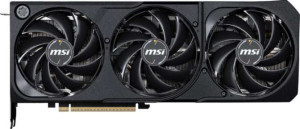
MSI GeForce RTX 5070 Shadow 3X OC
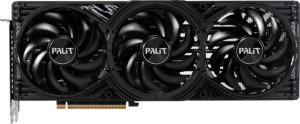
Palit GeForce RTX 5070 GamingPro-S

MSI GeForce RTX 5070 Shadow 3X OC Palit GeForce RTX 5070 GamingPro-S

Overview

Welcome to our in-depth specification comparison of the MSI GeForce RTX 5070 Shadow 3X OC and the Palit GeForce RTX 5070 GamingPro-S. Both cards are built on the same Blackwell architecture and share a 12GB GDDR7 memory configuration, yet they differ in ways that could matter to the right buyer. In this comparison, we examine their clock speed performance, physical dimensions, and feature sets to help you decide which card best suits your build and priorities.

Common Features

  • Both cards share a base GPU clock speed of 2325 MHz.
  • Both cards have a GPU memory speed of 1750 MHz.
  • Both cards feature 6144 shading units.
  • Both cards include 192 texture mapping units (TMUs).
  • Both cards have 80 render output units (ROPs).
  • Double Precision Floating Point (DPFP) is supported on both cards.
  • Both cards have an effective memory speed of 28000 MHz.
  • Both cards offer a maximum memory bandwidth of 672 GB/s.
  • Both cards come equipped with 12GB of VRAM.
  • Both cards use GDDR7 memory.
  • Both cards feature a 192-bit memory bus width.
  • ECC memory is supported on both cards.
  • Both cards support DirectX 12 Ultimate.
  • Both cards support OpenGL version 4.6.
  • Both cards support OpenCL version 3.
  • Multi-display technology is supported on both cards.
  • Ray tracing is supported on both cards.
  • 3D support is available on both cards.
  • DLSS is supported on both cards.
  • XeSS (XMX) is not available on either card.
  • Both cards include one HDMI port using HDMI version 2.1b.
  • Both cards provide three DisplayPort outputs.
  • Neither card includes USB-C ports, DVI outputs, or mini DisplayPort outputs.
  • Both cards are based on the Blackwell GPU architecture.
  • Both cards have a Thermal Design Power (TDP) of 250W.
  • Both cards use PCIe version 5.
  • Both cards are manufactured on a 5 nm semiconductor process.
  • Both cards contain 31100 million transistors.
  • Air-water cooling is not available on either card.

Main Differences

  • GPU turbo clock speed is 2542 MHz on MSI GeForce RTX 5070 Shadow 3X OC and 2512 MHz on Palit GeForce RTX 5070 GamingPro-S.
  • Pixel rate is 203.4 GPixel/s on MSI GeForce RTX 5070 Shadow 3X OC and 201 GPixel/s on Palit GeForce RTX 5070 GamingPro-S.
  • Floating-point performance is 31.24 TFLOPS on MSI GeForce RTX 5070 Shadow 3X OC and 30.87 TFLOPS on Palit GeForce RTX 5070 GamingPro-S.
  • Texture rate is 488.1 GTexels/s on MSI GeForce RTX 5070 Shadow 3X OC and 482.3 GTexels/s on Palit GeForce RTX 5070 GamingPro-S.
  • RGB lighting is present on Palit GeForce RTX 5070 GamingPro-S but not available on MSI GeForce RTX 5070 Shadow 3X OC.
  • Card width is 303 mm on MSI GeForce RTX 5070 Shadow 3X OC and 331.9 mm on Palit GeForce RTX 5070 GamingPro-S.
  • Card height is 121 mm on MSI GeForce RTX 5070 Shadow 3X OC and 127.1 mm on Palit GeForce RTX 5070 GamingPro-S.
Specs Comparison
MSI GeForce RTX 5070 Shadow 3X OC

MSI GeForce RTX 5070 Shadow 3X OC

Palit GeForce RTX 5070 GamingPro-S

Palit GeForce RTX 5070 GamingPro-S

Performance:
GPU clock speed 2325 MHz 2325 MHz
GPU turbo 2542 MHz 2512 MHz
pixel rate 203.4 GPixel/s 201 GPixel/s
floating-point performance 31.24 TFLOPS 30.87 TFLOPS
texture rate 488.1 GTexels/s 482.3 GTexels/s
GPU memory speed 1750 MHz 1750 MHz
shading units 6144 6144
texture mapping units (TMUs) 192 192
render output units (ROPs) 80 80
Has Double Precision Floating Point (DPFP)

At their foundation, the MSI RTX 5070 Shadow 3X OC and the Palit RTX 5070 GamingPro-S share identical silicon architecture: the same 6144 shading units, 192 TMUs, 80 ROPs, and 1750 MHz memory speed. This means any performance difference between them is not a matter of hardware configuration, but purely of how aggressively each card's factory overclock pushes the GPU clock.

The single meaningful differentiator is the GPU turbo clock: the MSI reaches 2542 MHz versus the Palit's 2512 MHz — a gap of 30 MHz, or roughly 1.2%. This modest boost cascades into slightly higher derived metrics: the MSI edges ahead with 31.24 TFLOPS of floating-point throughput versus 30.87 TFLOPS, and a texture rate of 488.1 GTexels/s compared to 482.3 GTexels/s. In practice, a ~1% clock advantage translates to differences well within single-digit frame margins — imperceptible in gaming workloads and unlikely to be decisive in GPU compute tasks.

Overall, the MSI Shadow 3X OC holds a narrow performance edge on paper, strictly due to its higher factory overclock. However, both cards are so closely matched that real-world rendering performance will be virtually indistinguishable. For a buyer prioritizing raw compute throughput above all else, the MSI is the technical winner in this group — but only marginally so.

Memory:
effective memory speed 28000 MHz 28000 MHz
maximum memory bandwidth 672 GB/s 672 GB/s
VRAM 12GB 12GB
GDDR version GDDR7 GDDR7
memory bus width 192-bit 192-bit
Supports ECC memory

When it comes to memory, these two cards are carbon copies of each other. Both feature 12GB of GDDR7 VRAM on a 192-bit bus, running at an effective speed of 28000 MHz and delivering 672 GB/s of memory bandwidth. There is no spec in this group — not a single figure — that separates them.

The shared specifications are nonetheless worth contextualizing. GDDR7 represents a generational leap in memory technology, and 672 GB/s of bandwidth is substantial for a mid-to-high-range GPU, ensuring that texture-heavy scenes and high-resolution workloads are fed data quickly enough to avoid bottlenecks. The 12GB VRAM pool is sufficient for most gaming scenarios at 1440p and even 4K with standard texture packs, though users working with very large AI models or professional rendering datasets should be mindful of this ceiling. ECC memory support on both cards is a practical bonus for workstation or compute use cases, where data integrity matters more than raw throughput.

This group is a complete tie. The memory subsystem is functionally identical on the MSI Shadow 3X OC and the Palit GamingPro-S, so neither card holds any advantage here. A buyer's decision should rest entirely on other specification groups.

Features:
DirectX version DirectX 12 Ultimate DirectX 12 Ultimate
OpenGL version 4.6 4.6
OpenCL version 3 3
Supports multi-display technology
supports ray tracing
Supports 3D
supports DLSS
has XeSS (XMX)
AMD SAM / Intel Resizable BAR Intel Resizable BAR Intel Resizable BAR
has LHR
has RGB lighting
supported displays 4 4

Functionally, these two cards are locked in step across every meaningful software feature. Both support DirectX 12 Ultimate, ray tracing, and DLSS — the core trio that defines a modern gaming GPU — along with Intel Resizable BAR for CPU-to-GPU data transfer optimization and support for up to 4 simultaneous displays. For gamers, content creators, and compute users alike, neither card offers a capability the other lacks in terms of API support or rendering features.

The sole differentiator in this group is purely aesthetic: the Palit GamingPro-S includes RGB lighting, while the MSI Shadow 3X OC does not. This has zero impact on performance or compatibility, but it is a legitimate consideration for builders who care about system aesthetics or synchronization with RGB ecosystems. Conversely, the absence of RGB on the MSI may actually appeal to users who prefer a cleaner, understated look.

From a technical standpoint, this group is effectively a tie. The Palit holds a marginal edge for RGB-conscious buyers, but that advantage is entirely cosmetic. Anyone choosing between these two cards based on features alone will find no functional reason to favor one over the other.

Ports:
has an HDMI output
HDMI ports 1 1
HDMI version HDMI 2.1b HDMI 2.1b
DisplayPort outputs 3 3
USB-C ports 0 0
DVI outputs 0 0
mini DisplayPort outputs 0 0

Port configurations are identical across both cards: one HDMI 2.1b output and 3 DisplayPort outputs, for a total of four display connections — matching the maximum supported display count noted in the Features group. Neither card offers USB-C or mini DisplayPort outputs.

The shared HDMI 2.1b specification is worth noting as a practical asset — it supports the bandwidth needed for 4K at high refresh rates and 8K output, making both cards future-ready for next-generation displays and TVs. The three DisplayPort outputs alongside a single HDMI is a sensible layout for multi-monitor desktop setups, where DisplayPort daisy-chaining or independent connections are common. The absence of USB-C is a consideration for users who rely on that connector for VR headsets or certain ultrawide monitors, though it is not an unusual omission at this tier.

This group is a complete tie — every port type, count, and version is identical between the MSI Shadow 3X OC and the Palit GamingPro-S. Display connectivity offers no basis for differentiation here.

General info:
GPU architecture Blackwell Blackwell
release date March 2025 March 2025
Thermal Design Power (TDP) 250W 250W
PCI Express (PCIe) version 5 5
semiconductor size 5 nm 5 nm
number of transistors 31100 million 31100 million
Has air-water cooling
width 303 mm 331.9 mm
height 121 mm 127.1 mm

Both cards are built on the same Blackwell architecture using a 5nm process with 31.1 billion transistors, and both draw a 250W TDP over a PCIe 5.0 interface. From a platform and power planning perspective, they are interchangeable — same slot requirements, same power connector expectations, same motherboard compatibility considerations.

The only distinction this group surfaces is physical size. The MSI Shadow 3X OC measures 303 × 121 mm, while the Palit GamingPro-S is noticeably larger at 331.9 × 127.1 mm — nearly 29mm longer and 6mm taller. That difference is not trivial for builders working with compact mid-tower or small-form-factor cases, where GPU length is frequently the tightest constraint. The MSI's shorter footprint gives it a meaningful fitment advantage in space-restricted builds.

For case compatibility, the MSI Shadow 3X OC holds a clear practical edge by virtue of its more compact dimensions. Builders with larger cases will find both cards equally accommodating, but anyone working within tighter clearances should take note — the Palit GamingPro-S demands more physical room.

Comparison Summary & Verdict

After reviewing all the specifications, both cards are closely matched at their core, sharing the same 12GB GDDR7 memory, 250W TDP, and identical port configurations. However, the distinctions lie in the details. The MSI GeForce RTX 5070 Shadow 3X OC edges ahead with a higher GPU turbo clock of 2542 MHz, slightly better floating-point performance at 31.24 TFLOPS, and a more compact form factor at 303 x 121 mm, making it an excellent choice for builders working with tighter cases. The Palit GeForce RTX 5070 GamingPro-S, on the other hand, brings RGB lighting to the table and is the better pick for those who value aesthetics and a more visually customizable rig, accepting the trade-off of a larger 331.9 x 127.1 mm footprint and marginally lower boost clocks.

MSI GeForce RTX 5070 Shadow 3X OC
Buy MSI GeForce RTX 5070 Shadow 3X OC if...

Buy the MSI GeForce RTX 5070 Shadow 3X OC if you want the higher GPU turbo clock speed and better floating-point performance in a more compact card that fits smaller cases.

Palit GeForce RTX 5070 GamingPro-S
Buy Palit GeForce RTX 5070 GamingPro-S if...

Buy the Palit GeForce RTX 5070 GamingPro-S if RGB lighting and a customizable aesthetic are important to your build, and physical size is not a constraint.