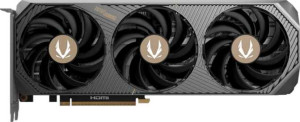
MSI GeForce RTX 5070 Shadow 3X
Zotac Gaming GeForce RTX 5070 Solid

MSI GeForce RTX 5070 Shadow 3X Zotac Gaming GeForce RTX 5070 Solid

Overview

Welcome to our in-depth specification comparison between the MSI GeForce RTX 5070 Shadow 3X and the Zotac Gaming GeForce RTX 5070 Solid. Both cards are built on the same Blackwell architecture and share an identical performance profile, making the real battlegrounds surprisingly narrow. We examine their physical dimensions and aesthetic features to help you decide which card belongs in your build.

Common Features

  • Both products have a base GPU clock speed of 2325 MHz.
  • Both products reach a GPU turbo clock speed of 2512 MHz.
  • Both products deliver a pixel rate of 201 GPixel/s.
  • Both products offer a floating-point performance of 30.87 TFLOPS.
  • Both products have a texture rate of 482.3 GTexels/s.
  • Both products feature 6144 shading units.
  • Both products include 192 texture mapping units (TMUs).
  • Both products come with 12 GB of GDDR7 VRAM.
  • Both products have a memory bus width of 192-bit.
  • Both products have a maximum memory bandwidth of 672 GB/s.
  • Both products have an effective memory speed of 28000 MHz.
  • ECC memory support is available on both products.
  • Both products support DirectX 12 Ultimate.
  • Both products support OpenGL version 4.6 and OpenCL version 3.
  • Ray tracing support is available on both products.
  • DLSS support is available on both products.
  • XeSS (XMX) support is not available on either product.
  • Multi-display technology support is available on both products.
  • Both products feature 1 HDMI 2.1b port and 3 DisplayPort outputs, with no USB-C or DVI outputs.
  • Both products are built on the Blackwell architecture using a 5 nm process, with a TDP of 250W, PCIe 5 interface, and 31100 million transistors.
  • Air-water cooling is not available on either product.

Main Differences

  • RGB lighting is present on Zotac Gaming GeForce RTX 5070 Solid but not available on MSI GeForce RTX 5070 Shadow 3X.
  • Width is 303 mm on MSI GeForce RTX 5070 Shadow 3X and 304.4 mm on Zotac Gaming GeForce RTX 5070 Solid.
  • Height is 121 mm on MSI GeForce RTX 5070 Shadow 3X and 115.8 mm on Zotac Gaming GeForce RTX 5070 Solid.
Specs Comparison
MSI GeForce RTX 5070 Shadow 3X

MSI GeForce RTX 5070 Shadow 3X

Zotac Gaming GeForce RTX 5070 Solid

Zotac Gaming GeForce RTX 5070 Solid

Performance:
GPU clock speed 2325 MHz 2325 MHz
GPU turbo 2512 MHz 2512 MHz
pixel rate 201 GPixel/s 201 GPixel/s
floating-point performance 30.87 TFLOPS 30.87 TFLOPS
texture rate 482.3 GTexels/s 482.3 GTexels/s
GPU memory speed 1750 MHz 1750 MHz
shading units 6144 6144
texture mapping units (TMUs) 192 192
render output units (ROPs) 80 80
Has Double Precision Floating Point (DPFP)

In terms of raw GPU performance, the MSI GeForce RTX 5070 Shadow 3X and the Zotac Gaming GeForce RTX 5070 Solid are a perfect match across every measurable metric in this group. Both cards share an identical base clock of 2325 MHz and boost to 2512 MHz, meaning neither card has a frequency advantage that could translate into higher sustained throughput or better responsiveness under load.

The compute and rendering pipeline specs are equally uniform: both deliver 30.87 TFLOPS of floating-point performance, 201 GPixel/s pixel fill rate, and a texture rate of 482.3 GTexels/s — backed by the same 6144 shading units, 192 TMUs, and 80 ROPs. In practice, this means rasterization throughput, shader-heavy workloads, and texture-bound rendering tasks will behave identically on either card. The shared memory speed of 1750 MHz further ensures there is no bandwidth-side advantage to tip the scales. Both also support Double Precision Floating Point, which is relevant for compute and professional workloads beyond gaming.

From a pure performance standpoint, this group is an absolute tie. Neither the Shadow 3X nor the Solid holds any measurable GPU compute or rendering edge. A buying decision between these two should therefore hinge entirely on other factors — such as cooling design, power delivery, physical dimensions, or price — as performance itself will be indistinguishable in real-world use.

Memory:
effective memory speed 28000 MHz 28000 MHz
maximum memory bandwidth 672 GB/s 672 GB/s
VRAM 12GB 12GB
GDDR version GDDR7 GDDR7
memory bus width 192-bit 192-bit
Supports ECC memory

The memory configurations of the MSI RTX 5070 Shadow 3X and the Zotac Gaming RTX 5070 Solid are completely identical across every relevant dimension. Both cards are equipped with 12GB of GDDR7 VRAM running at an effective speed of 28000 MHz over a 192-bit bus, yielding a maximum memory bandwidth of 672 GB/s. GDDR7 is the latest generation of graphics memory, and its bandwidth figure here is a meaningful generational leap — translating to faster texture streaming, snappier asset loading at high resolutions, and reduced bottlenecking in memory-intensive workloads like 4K gaming or ray tracing.

The 192-bit bus width is a deliberate architectural choice that sits between the narrower 128-bit of lower-tier cards and the wider 256-bit of higher-end models. It is wide enough to sustain the bandwidth demands of 1440p and 4K gaming without the die-area cost of a broader interface — and the GDDR7 speed compensates effectively for what a wider bus might otherwise provide. The 12GB VRAM capacity is adequate for current AAA titles at high resolutions, though users targeting extreme texture packs or future workloads should keep that ceiling in mind.

ECC memory support is present on both cards, which adds error-correction capability relevant to compute and professional use cases — a minor but notable feature for users pushing these GPUs beyond gaming. That said, this group is a clear tie: every memory specification is mirrored exactly between the two cards, so neither the Shadow 3X nor the Solid offers any memory-side advantage whatsoever.

Features:
DirectX version DirectX 12 Ultimate DirectX 12 Ultimate
OpenGL version 4.6 4.6
OpenCL version 3 3
Supports multi-display technology
supports ray tracing
Supports 3D
supports DLSS
has XeSS (XMX)
AMD SAM / Intel Resizable BAR Intel Resizable BAR Intel Resizable BAR
has LHR
has RGB lighting
supported displays 4 4

Across the functional feature set, these two cards are essentially identical. Both support DirectX 12 Ultimate, ray tracing, and DLSS — the three pillars of modern GPU feature parity for gaming. DirectX 12 Ultimate ensures compatibility with the full suite of next-gen rendering techniques, while DLSS provides AI-driven upscaling that can meaningfully boost frame rates without a proportional image quality cost. Neither card carries an LHR limiter, and both support up to 4 simultaneous displays via multi-display technology, making them equally capable for productivity multi-monitor setups.

Worth noting is that both cards support Intel Resizable BAR, which allows the CPU to access the full GPU frame buffer at once rather than in small chunks — a feature that can yield modest but real performance gains in supported titles and systems. The absence of XeSS on both is expected, as that is an Intel-specific upscaling technology and irrelevant to NVIDIA hardware.

The sole differentiator in this group is RGB lighting: the Zotac Gaming RTX 5070 Solid includes it, while the MSI RTX 5070 Shadow 3X does not. This is purely an aesthetic distinction with no bearing on performance or functionality. Users who value a clean, understated build aesthetic may actually prefer the MSI, while those who want visual flair inside a windowed case will favor the Zotac. On functional features alone, this group is a tie — the RGB difference makes the Zotac marginally more appealing only for aesthetics-conscious buyers.

Ports:
has an HDMI output
HDMI ports 1 1
HDMI version HDMI 2.1b HDMI 2.1b
DisplayPort outputs 3 3
USB-C ports 0 0
DVI outputs 0 0
mini DisplayPort outputs 0 0

Port configurations on both cards follow the same modern layout: one HDMI 2.1b output and three DisplayPort outputs, totalling four physical display connections — consistent with the four-display limit established in the Features group. HDMI 2.1b is the latest revision of the standard, supporting up to 10K resolution, high refresh rates at 4K, and enhanced Variable Refresh Rate capabilities, making it well-suited for connecting high-end TVs or gaming monitors without compromise.

The three DisplayPort outputs provide ample flexibility for multi-monitor workstation setups or high-refresh-rate gaming displays, where DisplayPort is generally the preferred interface. The complete absence of USB-C, DVI, and mini DisplayPort outputs is shared equally — meaning neither card accommodates legacy DVI monitors or USB-C display connections natively. Users with older displays or specific USB-C monitor setups would need an adapter regardless of which card they choose.

There is nothing to separate the MSI RTX 5070 Shadow 3X and the Zotac Gaming RTX 5070 Solid in this category — every port type, count, and version is a mirror image. Connectivity is a complete tie, and should not factor into a decision between these two cards.

General info:
GPU architecture Blackwell Blackwell
release date March 2025 March 2025
Thermal Design Power (TDP) 250W 250W
PCI Express (PCIe) version 5 5
semiconductor size 5 nm 5 nm
number of transistors 31100 million 31100 million
Has air-water cooling
width 303 mm 304.4 mm
height 121 mm 115.8 mm

At a foundational level, these two cards share the same DNA. Both are built on NVIDIA's Blackwell architecture using a 5nm process node and pack 31,100 million transistors onto the die — figures that define their generational positioning and efficiency ceiling equally. The shared 250W TDP means identical power supply requirements and broadly similar thermal output, so neither card demands more from a system's cooling or PSU headroom than the other. PCIe 5.0 support on both ensures forward compatibility with current and near-future motherboard platforms, though real-world bandwidth gains over PCIe 4.0 remain negligible for GPU workloads at present.

Where a marginal difference does emerge is in physical dimensions. The MSI RTX 5070 Shadow 3X measures 303 × 121 mm, while the Zotac Gaming RTX 5070 Solid comes in at 304.4 × 115.8 mm — fractionally wider but notably shorter in height. The Zotac's reduced height of 115.8 mm versus the MSI's 121 mm could be a practical advantage in cases with tight PCIe slot clearance or restrictive airflow layouts, as a shorter card profile sits lower in the chassis and may conflict less with adjacent components like NVMe heatsinks or chipset coolers.

Neither difference in dimension is dramatic enough to be decisive for most builds, but users working with compact or constrained cases should measure slot clearance carefully. On every other specification in this group — architecture, process node, TDP, and transistor count — the two cards are completely equal. The Zotac holds a very slight edge purely on physical fit flexibility due to its lower height.

Comparison Summary & Verdict

After a thorough comparison, the MSI GeForce RTX 5070 Shadow 3X and the Zotac Gaming GeForce RTX 5070 Solid emerge as near-identical performers, sharing the same 30.87 TFLOPS of floating-point performance, 12 GB of GDDR7 VRAM, and a full suite of modern features including ray tracing and DLSS. The decision between them comes down entirely to physical and aesthetic preferences. The MSI GeForce RTX 5070 Shadow 3X, being slightly shorter in width at 303 mm, may be the better fit for tighter cases, while its taller 121 mm profile is worth checking against your chassis clearance. The Zotac Gaming GeForce RTX 5070 Solid, on the other hand, is a few millimeters shorter in height at 115.8 mm and adds RGB lighting for builders who want a more visually expressive setup.

MSI GeForce RTX 5070 Shadow 3X
Buy MSI GeForce RTX 5070 Shadow 3X if...

Buy the MSI GeForce RTX 5070 Shadow 3X if you prefer a slightly more compact width and do not need RGB lighting in your build.

Zotac Gaming GeForce RTX 5070 Solid
Buy Zotac Gaming GeForce RTX 5070 Solid if...

Buy the Zotac Gaming GeForce RTX 5070 Solid if you want a shorter card with RGB lighting to complement a visually styled system.