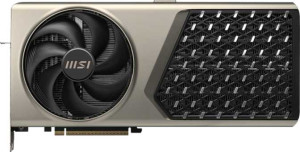
MSI GeForce RTX 5070 Ti Expert OC
Nvidia RTX Pro 500 Blackwell

MSI GeForce RTX 5070 Ti Expert OC Nvidia RTX Pro 500 Blackwell

Overview

Welcome to our in-depth spec comparison between the MSI GeForce RTX 5070 Ti Expert OC and the Nvidia RTX Pro 500 Blackwell. Both cards share the same Blackwell architecture and GDDR7 memory standard, yet they target very different audiences. In this comparison, we examine key battlegrounds including raw compute performance, memory capacity and bandwidth, power consumption, and overall silicon scale to help you decide which GPU best fits your needs.

Common Features

  • Both products share a GPU memory speed of 1750 MHz.
  • Both products support Double Precision Floating Point (DPFP).
  • Both products have an effective memory speed of 28000 MHz.
  • Both products use GDDR7 memory.
  • Both products support ECC memory.
  • Both products support DirectX 12 Ultimate.
  • Both products support OpenGL version 4.6.
  • Both products support OpenCL version 3.
  • Both products support multi-display technology.
  • Both products support ray tracing.
  • Both products support 3D output.
  • XeSS (XMX) support is not available on either product.
  • Both products support Intel Resizable BAR.
  • Both products are built on the Blackwell GPU architecture.
  • Both products use PCIe version 5.
  • Both products are manufactured on a 5 nm semiconductor process.
  • Air-water cooling is not available on either product.

Main Differences

  • GPU clock speed is 2295 MHz on MSI GeForce RTX 5070 Ti Expert OC and 2235 MHz on Nvidia RTX Pro 500 Blackwell.
  • GPU turbo speed is 2580 MHz on MSI GeForce RTX 5070 Ti Expert OC and 2520 MHz on Nvidia RTX Pro 500 Blackwell.
  • Pixel rate is 247.7 GPixel/s on MSI GeForce RTX 5070 Ti Expert OC and 60.48 GPixel/s on Nvidia RTX Pro 500 Blackwell.
  • Floating-point performance is 46.23 TFLOPS on MSI GeForce RTX 5070 Ti Expert OC and 9.032 TFLOPS on Nvidia RTX Pro 500 Blackwell.
  • Texture rate is 722.4 GTexels/s on MSI GeForce RTX 5070 Ti Expert OC and 141.1 GTexels/s on Nvidia RTX Pro 500 Blackwell.
  • Shading units number 8960 on MSI GeForce RTX 5070 Ti Expert OC and 1792 on Nvidia RTX Pro 500 Blackwell.
  • Texture mapping units (TMUs) total 280 on MSI GeForce RTX 5070 Ti Expert OC and 56 on Nvidia RTX Pro 500 Blackwell.
  • Render output units (ROPs) total 96 on MSI GeForce RTX 5070 Ti Expert OC and 24 on Nvidia RTX Pro 500 Blackwell.
  • Maximum memory bandwidth is 896 GB/s on MSI GeForce RTX 5070 Ti Expert OC and 336 GB/s on Nvidia RTX Pro 500 Blackwell.
  • VRAM is 16GB on MSI GeForce RTX 5070 Ti Expert OC and 6GB on Nvidia RTX Pro 500 Blackwell.
  • Memory bus width is 256-bit on MSI GeForce RTX 5070 Ti Expert OC and 96-bit on Nvidia RTX Pro 500 Blackwell.
  • Thermal Design Power (TDP) is 300W on MSI GeForce RTX 5070 Ti Expert OC and 35W on Nvidia RTX Pro 500 Blackwell.
  • Number of transistors is 45600 million on MSI GeForce RTX 5070 Ti Expert OC and 16900 million on Nvidia RTX Pro 500 Blackwell.
Specs Comparison
MSI GeForce RTX 5070 Ti Expert OC

MSI GeForce RTX 5070 Ti Expert OC

Nvidia RTX Pro 500 Blackwell

Nvidia RTX Pro 500 Blackwell

Performance:
GPU clock speed 2295 MHz 2235 MHz
GPU turbo 2580 MHz 2520 MHz
pixel rate 247.7 GPixel/s 60.48 GPixel/s
floating-point performance 46.23 TFLOPS 9.032 TFLOPS
texture rate 722.4 GTexels/s 141.1 GTexels/s
GPU memory speed 1750 MHz 1750 MHz
shading units 8960 1792
texture mapping units (TMUs) 280 56
render output units (ROPs) 96 24
Has Double Precision Floating Point (DPFP)

At first glance, the clock speeds of these two GPUs appear relatively close — the MSI RTX 5070 Ti Expert OC boosts to 2580 MHz while the Nvidia RTX Pro 500 reaches 2520 MHz. However, clock speed alone is a deeply misleading metric when the underlying hardware differs so substantially. The real performance gap opens up when you look at the shader count: the MSI fields 8960 shading units versus just 1792 on the RTX Pro 500 — a five-to-one ratio. This means the MSI can execute roughly five times as many parallel compute operations per clock cycle, which is the foundation of raw GPU throughput.

That multiplier cascades across every throughput metric. The MSI delivers 46.23 TFLOPS of floating-point performance against the RTX Pro 500's 9.03 TFLOPS — making it over five times faster in compute-heavy workloads like AI inference, 3D rendering, and physics simulations. Similarly, its texture rate of 722.4 GTexels/s dwarfs the Pro 500's 141.1 GTexels/s, which translates directly to sharper, more detailed rendering at higher resolutions. The pixel fill rate tells the same story: 247.7 GPixel/s on the MSI versus 60.48 GPixel/s, giving it a decisive edge in rasterization throughput — the backbone of traditional gaming and real-time graphics. Both cards share identical GPU memory speed (1750 MHz) and both support Double Precision Floating Point, so neither has an advantage in memory bandwidth or scientific/professional compute precision.

The conclusion here is unambiguous: the MSI RTX 5070 Ti Expert OC holds a commanding performance advantage across every meaningful compute and graphics throughput metric. The RTX Pro 500 appears oriented toward a different market segment — likely power-efficient or space-constrained professional deployments — where raw throughput is not the primary requirement. For any workload that benefits from parallelism, whether gaming, content creation, or GPU-accelerated compute, the MSI is the decisively more capable card based on these specs alone.

Memory:
effective memory speed 28000 MHz 28000 MHz
maximum memory bandwidth 896 GB/s 336 GB/s
VRAM 16GB 6GB
GDDR version GDDR7 GDDR7
memory bus width 256-bit 96-bit
Supports ECC memory

Both cards use GDDR7 memory running at the same 28000 MHz effective speed, and both support ECC memory — a feature critical for professional workloads where data integrity matters more than peak throughput. That's where the common ground ends. The fundamental architectural difference lies in the memory bus: the MSI RTX 5070 Ti Expert OC uses a 256-bit bus while the RTX Pro 500 Blackwell is limited to a 96-bit bus. Think of the bus width as the number of lanes on a highway — even if both cars travel at the same speed, the wider highway moves dramatically more data per second.

That bus width gap directly explains the bandwidth disparity: the MSI delivers 896 GB/s of memory bandwidth versus 336 GB/s on the RTX Pro 500 — nearly three times as much. In practice, this means the MSI can feed its far larger shader array without creating memory bottlenecks, sustaining high performance at 4K or when working with large textures and datasets. The RTX Pro 500's narrower bus is also consistent with its significantly smaller 6GB VRAM pool, compared to the MSI's 16GB. For modern workloads — whether that's running large AI models locally, editing high-resolution video, or loading complex 3D scenes — 6GB can become a hard ceiling, forcing assets to spill into slower system memory.

The memory verdict strongly favors the MSI RTX 5070 Ti Expert OC. Its combination of a wider bus, nearly triple the bandwidth, and over twice the VRAM capacity makes it substantially better equipped for memory-intensive tasks. The RTX Pro 500's ECC support keeps it relevant for reliability-focused professional environments, but its constrained memory subsystem will limit how demanding a workload it can realistically handle.

Features:
DirectX version DirectX 12 Ultimate DirectX 12 Ultimate
OpenGL version 4.6 4.6
OpenCL version 3 3
Supports multi-display technology
supports ray tracing
Supports 3D
has XeSS (XMX)
AMD SAM / Intel Resizable BAR Intel Resizable BAR Intel Resizable BAR
has LHR

Across every feature in this group, the two cards are in complete lockstep. Both support DirectX 12 Ultimate, OpenGL 4.6, and OpenCL 3 — the current standard ceiling for GPU API compatibility. DirectX 12 Ultimate in particular is significant, as it guarantees support for hardware ray tracing, mesh shaders, and variable-rate shading, making both cards fully capable of running modern game engines and professional rendering pipelines without any compatibility compromises.

Ray tracing support is confirmed on both, as are multi-display configurations and Intel Resizable BAR — the latter allowing the CPU to access the full GPU framebuffer at once, which can meaningfully reduce CPU-side bottlenecks in certain workloads. Neither card carries a Lite Hash Rate limiter, though that is largely a non-factor in today's market context. The absence of XeSS on both is expected, as that is an Intel-specific upscaling technology.

This group is a clear tie. Every feature listed is shared identically between the MSI RTX 5070 Ti Expert OC and the Nvidia RTX Pro 500 Blackwell, meaning software compatibility, API support, and display capabilities will not be a differentiating factor in any purchasing decision between these two cards. The choice will come down entirely to performance, memory, and use-case fit — as analyzed in the other spec groups.

General info:
GPU architecture Blackwell Blackwell
release date August 2025 March 2025
Thermal Design Power (TDP) 300W 35W
PCI Express (PCIe) version 5 5
semiconductor size 5 nm 5 nm
number of transistors 45600 million 16900 million
Has air-water cooling

Sharing the same Blackwell architecture, 5nm fabrication process, and PCIe 5 interface, these two cards come from the same generational family — but they are clearly engineered for entirely different deployment contexts. The starkest indicator is the transistor count: the MSI RTX 5070 Ti Expert OC packs 45,600 million transistors against the RTX Pro 500 Blackwell's 16,900 million. More transistors generally mean more functional units on die, which directly underpins the massive compute and memory throughput gaps seen in the other spec groups.

The most operationally significant divergence, however, is power consumption. The MSI draws a substantial 300W TDP, requiring a robust power delivery system, dedicated PCIe power connectors, and a well-ventilated case with capable cooling. The RTX Pro 500, by contrast, operates at a remarkably lean 35W TDP — less than a twelfth of the MSI's power draw. That figure strongly suggests the RTX Pro 500 is designed for small form factor workstations, embedded professional systems, or environments where thermal and power budgets are tightly constrained.

There is no single winner in this group — rather, each card's profile suits a different user. The MSI RTX 5070 Ti Expert OC is clearly built for maximum performance in full-size systems where power and cooling are not limiting factors. The RTX Pro 500 Blackwell makes a compelling case for deployments where energy efficiency and thermal footprint matter most. The shared architecture and process node confirm both are modern, capable designs — but their TDP figures alone signal that they are not competing for the same installation environment.
Comparison Summary & Verdict

After reviewing all the specifications, the two cards serve distinctly different markets. The MSI GeForce RTX 5070 Ti Expert OC is a powerhouse built for demanding workloads, delivering 46.23 TFLOPS of floating-point performance, 16GB of GDDR7 VRAM on a 256-bit bus, and a massive 896 GB/s of memory bandwidth — all backed by 8960 shading units. It is the clear choice for enthusiast gamers and content creators who need maximum throughput. The Nvidia RTX Pro 500 Blackwell, on the other hand, prioritizes efficiency and compact deployment, drawing just 35W TDP compared to the MSI's 300W, making it ideal for professional workstation builds or small-form-factor systems where power efficiency is critical and workloads are lighter. Both cards share ray tracing support, DirectX 12 Ultimate, and the 5nm Blackwell foundation, so the decision ultimately comes down to whether you need maximum performance or maximum efficiency.

MSI GeForce RTX 5070 Ti Expert OC
Buy MSI GeForce RTX 5070 Ti Expert OC if...

Buy the MSI GeForce RTX 5070 Ti Expert OC if you need maximum GPU performance, with 46.23 TFLOPS, 16GB of GDDR7 VRAM, and 896 GB/s of memory bandwidth for demanding gaming or creative workloads.

Nvidia RTX Pro 500 Blackwell
Buy Nvidia RTX Pro 500 Blackwell if...

Buy the Nvidia RTX Pro 500 Blackwell if you require a highly power-efficient GPU drawing only 35W, making it ideal for compact or low-power professional systems where energy consumption is a priority.