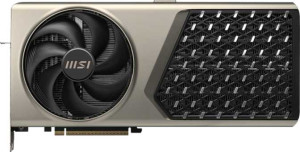
MSI GeForce RTX 5070 Ti Expert OC
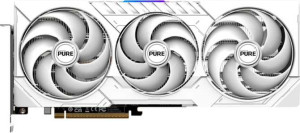
Sapphire Pure Radeon RX 9070 XT

MSI GeForce RTX 5070 Ti Expert OC Sapphire Pure Radeon RX 9070 XT

Overview

Welcome to our in-depth spec comparison between the MSI GeForce RTX 5070 Ti Expert OC and the Sapphire Pure Radeon RX 9070 XT, two powerful graphics cards that take very different approaches to delivering high-end gaming performance. From their distinct GPU architectures to their memory technologies and feature sets, these two cards each bring unique strengths to the table — making the choice between them far from straightforward.

Common Features

  • Both products support Double Precision Floating Point (DPFP).
  • Both cards come with 16GB of VRAM.
  • Both use a 256-bit memory bus width.
  • ECC memory support is available on both products.
  • Both products are compatible with DirectX 12 Ultimate.
  • Both cards support OpenGL version 4.6.
  • Multi-display technology is supported on both products.
  • Ray tracing support is available on both products.
  • 3D support is available on both products.
  • XeSS (XMX) support is not available on either product.
  • LHR is not present on either product.
  • Both cards support up to 4 displays simultaneously.
  • Both products include an HDMI output with HDMI 2.1b.
  • Neither card has any USB-C ports.
  • Neither card has any DVI outputs.
  • Neither card has any mini DisplayPort outputs.
  • Both products use PCI Express (PCIe) version 5.
  • Air-water cooling is not available on either product.

Main Differences

  • GPU base clock speed is 2295 MHz on MSI GeForce RTX 5070 Ti Expert OC and 1660 MHz on Sapphire Pure Radeon RX 9070 XT.
  • GPU turbo clock speed is 2580 MHz on MSI GeForce RTX 5070 Ti Expert OC and 3010 MHz on Sapphire Pure Radeon RX 9070 XT.
  • Pixel rate is 247.7 GPixel/s on MSI GeForce RTX 5070 Ti Expert OC and 385.3 GPixel/s on Sapphire Pure Radeon RX 9070 XT.
  • Floating-point performance is 46.23 TFLOPS on MSI GeForce RTX 5070 Ti Expert OC and 49.32 TFLOPS on Sapphire Pure Radeon RX 9070 XT.
  • Texture rate is 722.4 GTexels/s on MSI GeForce RTX 5070 Ti Expert OC and 770.6 GTexels/s on Sapphire Pure Radeon RX 9070 XT.
  • GPU memory speed is 1750 MHz on MSI GeForce RTX 5070 Ti Expert OC and 2518 MHz on Sapphire Pure Radeon RX 9070 XT.
  • Shading units count is 8960 on MSI GeForce RTX 5070 Ti Expert OC and 4096 on Sapphire Pure Radeon RX 9070 XT.
  • Texture mapping units (TMUs) number 280 on MSI GeForce RTX 5070 Ti Expert OC and 256 on Sapphire Pure Radeon RX 9070 XT.
  • Render output units (ROPs) total 96 on MSI GeForce RTX 5070 Ti Expert OC and 128 on Sapphire Pure Radeon RX 9070 XT.
  • Effective memory speed is 28000 MHz on MSI GeForce RTX 5070 Ti Expert OC and 20000 MHz on Sapphire Pure Radeon RX 9070 XT.
  • Maximum memory bandwidth is 896 GB/s on MSI GeForce RTX 5070 Ti Expert OC and 644.6 GB/s on Sapphire Pure Radeon RX 9070 XT.
  • MSI GeForce RTX 5070 Ti Expert OC uses GDDR7 memory while Sapphire Pure Radeon RX 9070 XT uses GDDR6 memory.
  • OpenCL version is 3 on MSI GeForce RTX 5070 Ti Expert OC and 2.2 on Sapphire Pure Radeon RX 9070 XT.
  • DLSS support is present on MSI GeForce RTX 5070 Ti Expert OC but not available on Sapphire Pure Radeon RX 9070 XT.
  • MSI GeForce RTX 5070 Ti Expert OC supports Intel Resizable BAR while Sapphire Pure Radeon RX 9070 XT supports AMD SAM.
  • RGB lighting is present on Sapphire Pure Radeon RX 9070 XT but not available on MSI GeForce RTX 5070 Ti Expert OC.
  • HDMI port count is 1 on MSI GeForce RTX 5070 Ti Expert OC and 2 on Sapphire Pure Radeon RX 9070 XT.
  • DisplayPort outputs number 3 on MSI GeForce RTX 5070 Ti Expert OC and 2 on Sapphire Pure Radeon RX 9070 XT.
  • GPU architecture is Blackwell on MSI GeForce RTX 5070 Ti Expert OC and RDNA 4.0 on Sapphire Pure Radeon RX 9070 XT.
  • Thermal Design Power (TDP) is 300W on MSI GeForce RTX 5070 Ti Expert OC and 317W on Sapphire Pure Radeon RX 9070 XT.
  • Semiconductor size is 5 nm on MSI GeForce RTX 5070 Ti Expert OC and 4 nm on Sapphire Pure Radeon RX 9070 XT.
  • Transistor count is 45600 million on MSI GeForce RTX 5070 Ti Expert OC and 53900 million on Sapphire Pure Radeon RX 9070 XT.
  • Card width is 319 mm on MSI GeForce RTX 5070 Ti Expert OC and 320 mm on Sapphire Pure Radeon RX 9070 XT.
  • Card height is 150 mm on MSI GeForce RTX 5070 Ti Expert OC and 120.3 mm on Sapphire Pure Radeon RX 9070 XT.
Specs Comparison
MSI GeForce RTX 5070 Ti Expert OC

MSI GeForce RTX 5070 Ti Expert OC

Sapphire Pure Radeon RX 9070 XT

Sapphire Pure Radeon RX 9070 XT

Performance:
GPU clock speed 2295 MHz 1660 MHz
GPU turbo 2580 MHz 3010 MHz
pixel rate 247.7 GPixel/s 385.3 GPixel/s
floating-point performance 46.23 TFLOPS 49.32 TFLOPS
texture rate 722.4 GTexels/s 770.6 GTexels/s
GPU memory speed 1750 MHz 2518 MHz
shading units 8960 4096
texture mapping units (TMUs) 280 256
render output units (ROPs) 96 128
Has Double Precision Floating Point (DPFP)

At first glance, the MSI RTX 5070 Ti's 8960 shading units versus the Sapphire RX 9070 XT's 4096 seems like a decisive hardware advantage — but raw shader counts mean little without context. The RX 9070 XT's architecture extracts dramatically more throughput per unit, resulting in a higher floating-point performance of 49.32 TFLOPS versus 46.23 TFLOPS, and a notably superior texture rate of 770.6 GTexels/s compared to 722.4 GTexels/s. This tells us AMD's architecture is significantly more efficient per shader, and that the RTX 5070 Ti's larger shader array does not translate into a raw compute lead.

The pixel rate gap is even more telling: the RX 9070 XT delivers 385.3 GPixel/s against the RTX 5070 Ti's 247.7 GPixel/s, powered by more render output units (128 ROPs vs. 96) and a much higher GPU turbo clock of 3010 MHz vs. 2580 MHz. In practice, a higher pixel fill rate benefits high-resolution rendering and anti-aliasing workloads, meaning the AMD card has a structural edge in pixel-bound scenarios. The RTX 5070 Ti does maintain a higher base clock (2295 MHz vs. 1660 MHz), which can mean more consistent performance in sustained, non-boosted workloads, but the turbo gap is substantial.

Overall, the Sapphire RX 9070 XT holds a clear performance edge in this group across the most impactful throughput metrics — compute, texturing, and pixel output — despite its smaller shader count. The RTX 5070 Ti's advantage lies in its higher base clock and larger shader array, which may benefit specific workloads, but the raw numbers favor the RX 9070 XT for peak rendering performance.

Memory:
effective memory speed 28000 MHz 20000 MHz
maximum memory bandwidth 896 GB/s 644.6 GB/s
VRAM 16GB 16GB
GDDR version GDDR7 GDDR6
memory bus width 256-bit 256-bit
Supports ECC memory

Both cards arrive with an identical 16GB VRAM pool over a 256-bit bus, so neither has a capacity or bus-width advantage. The critical differentiator is the memory generation: the RTX 5070 Ti uses GDDR7, while the RX 9070 XT ships with GDDR6. That generational gap compounds into a significant bandwidth lead — the RTX 5070 Ti achieves an effective memory speed of 28000 MHz versus 20000 MHz, translating into a maximum memory bandwidth of 896 GB/s compared to 644.6 GB/s.

That roughly 39% bandwidth advantage is not trivial. Memory bandwidth acts as the data pipeline feeding the GPU's shader cores; in bandwidth-hungry scenarios — high-resolution textures, large frame buffers at 4K, or memory-intensive compute workloads — a starved pipeline forces the GPU to stall and wait for data. The RTX 5070 Ti's GDDR7 subsystem is considerably less likely to become that bottleneck, which is especially relevant given its larger shader array noted in the performance specs.

The MSI RTX 5070 Ti holds a clear and meaningful edge in this group. While both cards match on capacity and bus width, the GDDR7 vs. GDDR6 divide creates a bandwidth gap large enough to materially impact real-world performance in memory-intensive use cases. The RX 9070 XT's GDDR6 setup is respectable but architecturally a generation behind.

Features:
DirectX version DirectX 12 Ultimate DirectX 12 Ultimate
OpenGL version 4.6 4.6
OpenCL version 3 2.2
Supports multi-display technology
supports ray tracing
Supports 3D
supports DLSS
has XeSS (XMX)
AMD SAM / Intel Resizable BAR Intel Resizable BAR AMD SAM
has LHR
has RGB lighting
supported displays 4 4

The foundational feature set is largely identical: both cards support DirectX 12 Ultimate, OpenGL 4.6, ray tracing, 3D, and up to 4 displays simultaneously. The most consequential divergence, however, is upscaling support. The RTX 5070 Ti supports DLSS, NVIDIA's AI-driven upscaling technology, while the RX 9070 XT does not support DLSS and neither card supports XeSS. For gaming, DLSS can deliver substantial frame rate boosts at minimal visual cost, making it a practical, real-world advantage in any title that supports it — and the supported game library is extensive.

A smaller but notable difference lies in the OpenCL versions: the RTX 5070 Ti supports OpenCL 3 versus the RX 9070 XT's OpenCL 2.2. For most gamers this is inconsequential, but users running GPU-accelerated compute applications or creative tools that leverage OpenCL may benefit from the newer version's expanded feature set. On the memory access side, both cards support their respective resizable BAR implementations — Intel Resizable BAR on the MSI and AMD SAM on the Sapphire — which are functionally equivalent in purpose, allowing the CPU broader access to VRAM to reduce bottlenecks.

The RTX 5070 Ti holds the edge in this group, primarily because DLSS support is a tangible, game-session-level advantage that the RX 9070 XT simply cannot match. The Sapphire card does include RGB lighting for those who prioritize system aesthetics, but that is a cosmetic distinction rather than a functional one. For feature depth that directly impacts gameplay, the MSI card's DLSS support is the deciding factor here.
Ports:
has an HDMI output
HDMI ports 1 2
HDMI version HDMI 2.1b HDMI 2.1b
DisplayPort outputs 3 2
USB-C ports 0 0
DVI outputs 0 0
mini DisplayPort outputs 0 0

Both cards share the same total of 4 display outputs and identical HDMI 2.1b support, so the version-level capability for high-bandwidth, high-refresh connections is a wash. Where they diverge is in how those four ports are distributed. The RTX 5070 Ti opts for 1 HDMI and 3 DisplayPort outputs, while the RX 9070 XT flips the balance to 2 HDMI and 2 DisplayPort.

This split matters depending on your display setup. Users with multiple HDMI-native devices — TVs, consoles, or monitors without DisplayPort — will find the RX 9070 XT's dual HDMI layout more convenient, avoiding the need for adapters. Conversely, users in a multi-monitor PC setup tend to rely on DisplayPort for daisy-chaining or high-refresh-rate panels, where the RTX 5070 Ti's three DisplayPort outputs offer more native flexibility. Neither configuration is objectively superior; it comes down to what devices are on the other end of the cables.

This group is effectively a tie in capability, with the ″winner″ being entirely use-case dependent. The RX 9070 XT has a slight practical edge for living-room or hybrid PC/TV setups, while the RTX 5070 Ti is marginally better suited to a traditional multi-monitor desktop environment. No adapter-free configuration locks either card out of a four-display setup.

General info:
GPU architecture Blackwell RDNA 4.0
release date August 2025 March 2025
Thermal Design Power (TDP) 300W 317W
PCI Express (PCIe) version 5 5
semiconductor size 5 nm 4 nm
number of transistors 45600 million 53900 million
Has air-water cooling
width 319 mm 320 mm
height 150 mm 120.3 mm

Underneath their similar price brackets, these two cards are built on meaningfully different silicon. The RX 9070 XT is fabbed on a 4 nm process with 53,900 million transistors, versus the RTX 5070 Ti's 5 nm node and 45,600 million transistors. A smaller process node generally enables greater transistor density and improved power efficiency, and the AMD chip's higher transistor count on that smaller node reflects a physically larger, more complex die — context that helps explain how the RX 9070 XT punches above its shader count in raw throughput, as seen in the performance group.

Power consumption is close but not identical: the RX 9070 XT draws up to 317W versus the RTX 5070 Ti's 300W. A 17W difference is marginal in absolute terms but worth noting for users with tightly constrained PSU headroom or those mindful of long-term energy costs. Both cards share PCIe 5.0 connectivity, ensuring neither is bottlenecked by the slot in current or near-future platforms. Physical dimensions are nearly identical in length (~319–320 mm), but the RX 9070 XT is notably slimmer at 120.3 mm tall compared to the RTX 5070 Ti's 150 mm, which could be relevant in compact or mid-tower cases with tight clearance above the PCIe slot.

This group doesn't produce a clear winner so much as it reveals two different engineering philosophies. The RTX 5070 Ti has a slight power efficiency advantage given its lower TDP, while the RX 9070 XT benefits from a more advanced fabrication node and a lower profile form factor. For builders working with space-constrained cases, the Sapphire card's reduced height is a tangible practical advantage.

Comparison Summary & Verdict

Both cards are capable high-end GPUs, but they suit different types of users. The MSI GeForce RTX 5070 Ti Expert OC stands out with its significantly higher memory bandwidth of 896 GB/s, faster GDDR7 memory, more shading units, and exclusive DLSS support, making it an excellent choice for users who value cutting-edge upscaling technology and raw memory throughput. The Sapphire Pure Radeon RX 9070 XT, on the other hand, delivers a higher pixel rate, a faster GPU turbo clock of 3010 MHz, more render output units, and a slightly higher floating-point performance, giving it an edge in rasterization-heavy workloads. It also offers two HDMI ports and RGB lighting for those who value connectivity flexibility and system aesthetics.

MSI GeForce RTX 5070 Ti Expert OC
Buy MSI GeForce RTX 5070 Ti Expert OC if...

Buy the MSI GeForce RTX 5070 Ti Expert OC if you want superior memory bandwidth, GDDR7 memory technology, and access to DLSS upscaling for a future-proof gaming experience.

Sapphire Pure Radeon RX 9070 XT
Buy Sapphire Pure Radeon RX 9070 XT if...

Buy the Sapphire Pure Radeon RX 9070 XT if you prioritize a higher pixel rate, faster GPU turbo clock, more render output units, and dual HDMI ports with RGB lighting.