MSI GeForce RTX 5070 Ti Expert
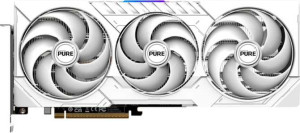
Sapphire Pure Radeon RX 9070 XT

MSI GeForce RTX 5070 Ti Expert Sapphire Pure Radeon RX 9070 XT

Overview

Welcome to our in-depth spec comparison between the MSI GeForce RTX 5070 Ti Expert and the Sapphire Pure Radeon RX 9070 XT — two powerful mid-to-high-end graphics cards from rival camps. Both cards share 16GB of VRAM and ray tracing support, yet they take strikingly different approaches to architecture, memory technology, and feature sets. Read on as we examine the key battlegrounds of raw performance, memory bandwidth, and platform-specific features to help you decide which GPU best fits your build.

Common Features

  • Both products support Double Precision Floating Point (DPFP).
  • Both cards come with 16GB of VRAM.
  • Both use a 256-bit memory bus width.
  • ECC memory support is available on both products.
  • Both cards support DirectX 12 Ultimate.
  • Both support OpenGL version 4.6.
  • Multi-display technology is supported on both products.
  • Ray tracing support is available on both products.
  • 3D support is present on both products.
  • XeSS (XMX) support is not available on either product.
  • LHR is not present on either product.
  • Both cards support up to 4 displays simultaneously.
  • Both products feature an HDMI output using HDMI version 2.1b.
  • Neither card includes USB-C ports.
  • Neither card includes DVI outputs.
  • Neither card includes mini DisplayPort outputs.
  • Both cards use PCI Express (PCIe) version 5.
  • Air-water cooling is not available on either product.

Main Differences

  • GPU base clock speed is 2295 MHz on MSI GeForce RTX 5070 Ti Expert and 1660 MHz on Sapphire Pure Radeon RX 9070 XT.
  • GPU turbo clock speed is 2452 MHz on MSI GeForce RTX 5070 Ti Expert and 3010 MHz on Sapphire Pure Radeon RX 9070 XT.
  • Pixel rate is 235.4 GPixel/s on MSI GeForce RTX 5070 Ti Expert and 385.3 GPixel/s on Sapphire Pure Radeon RX 9070 XT.
  • Floating-point performance is 43.94 TFLOPS on MSI GeForce RTX 5070 Ti Expert and 49.32 TFLOPS on Sapphire Pure Radeon RX 9070 XT.
  • Texture rate is 686.6 GTexels/s on MSI GeForce RTX 5070 Ti Expert and 770.6 GTexels/s on Sapphire Pure Radeon RX 9070 XT.
  • GPU memory speed is 1750 MHz on MSI GeForce RTX 5070 Ti Expert and 2518 MHz on Sapphire Pure Radeon RX 9070 XT.
  • Shading units number 8960 on MSI GeForce RTX 5070 Ti Expert and 4096 on Sapphire Pure Radeon RX 9070 XT.
  • Texture mapping units (TMUs) total 280 on MSI GeForce RTX 5070 Ti Expert and 256 on Sapphire Pure Radeon RX 9070 XT.
  • Render output units (ROPs) total 96 on MSI GeForce RTX 5070 Ti Expert and 128 on Sapphire Pure Radeon RX 9070 XT.
  • Effective memory speed is 28000 MHz on MSI GeForce RTX 5070 Ti Expert and 20000 MHz on Sapphire Pure Radeon RX 9070 XT.
  • Maximum memory bandwidth is 896 GB/s on MSI GeForce RTX 5070 Ti Expert and 644.6 GB/s on Sapphire Pure Radeon RX 9070 XT.
  • MSI GeForce RTX 5070 Ti Expert uses GDDR7 memory, while Sapphire Pure Radeon RX 9070 XT uses GDDR6 memory.
  • OpenCL version is 3 on MSI GeForce RTX 5070 Ti Expert and 2.2 on Sapphire Pure Radeon RX 9070 XT.
  • DLSS support is present on MSI GeForce RTX 5070 Ti Expert but not available on Sapphire Pure Radeon RX 9070 XT.
  • MSI GeForce RTX 5070 Ti Expert supports Intel Resizable BAR, while Sapphire Pure Radeon RX 9070 XT supports AMD SAM.
  • RGB lighting is present on Sapphire Pure Radeon RX 9070 XT but not available on MSI GeForce RTX 5070 Ti Expert.
  • HDMI port count is 1 on MSI GeForce RTX 5070 Ti Expert and 2 on Sapphire Pure Radeon RX 9070 XT.
  • DisplayPort outputs number 3 on MSI GeForce RTX 5070 Ti Expert and 2 on Sapphire Pure Radeon RX 9070 XT.
  • GPU architecture is Blackwell on MSI GeForce RTX 5070 Ti Expert and RDNA 4.0 on Sapphire Pure Radeon RX 9070 XT.
  • Thermal Design Power (TDP) is 300W on MSI GeForce RTX 5070 Ti Expert and 317W on Sapphire Pure Radeon RX 9070 XT.
  • Semiconductor size is 5 nm on MSI GeForce RTX 5070 Ti Expert and 4 nm on Sapphire Pure Radeon RX 9070 XT.
  • Transistor count is 45600 million on MSI GeForce RTX 5070 Ti Expert and 53900 million on Sapphire Pure Radeon RX 9070 XT.
  • Card width is 319 mm on MSI GeForce RTX 5070 Ti Expert and 320 mm on Sapphire Pure Radeon RX 9070 XT.
  • Card height is 150 mm on MSI GeForce RTX 5070 Ti Expert and 120.3 mm on Sapphire Pure Radeon RX 9070 XT.
Specs Comparison
MSI GeForce RTX 5070 Ti Expert

MSI GeForce RTX 5070 Ti Expert

Sapphire Pure Radeon RX 9070 XT

Sapphire Pure Radeon RX 9070 XT

Performance:
GPU clock speed 2295 MHz 1660 MHz
GPU turbo 2452 MHz 3010 MHz
pixel rate 235.4 GPixel/s 385.3 GPixel/s
floating-point performance 43.94 TFLOPS 49.32 TFLOPS
texture rate 686.6 GTexels/s 770.6 GTexels/s
GPU memory speed 1750 MHz 2518 MHz
shading units 8960 4096
texture mapping units (TMUs) 280 256
render output units (ROPs) 96 128
Has Double Precision Floating Point (DPFP)

The most striking contrast in this group is how differently the two GPUs are architected to reach their peak performance. The MSI RTX 5070 Ti Expert relies on a massive 8,960 shading units — more than double the 4,096 found in the Sapphire RX 9070 XT — yet the AMD card outpaces it in nearly every throughput metric. This tells a clear architectural story: AMD's RDNA 4 design extracts significantly more work per compute unit than NVIDIA's configuration here, achieving a 49.32 TFLOPS floating-point result versus 43.94 TFLOPS on the MSI, despite the raw unit count deficit.

The RX 9070 XT also holds a commanding lead in rasterization bandwidth. Its 128 ROPs versus the RTX 5070 Ti's 96 ROPs, combined with a pixel fill rate of 385.3 GPixel/s versus 235.4 GPixel/s, means the Sapphire card can push substantially more pixels per second — a tangible advantage at high resolutions and in scenes with heavy overdraw. Similarly, its texture rate of 770.6 GTexels/s versus 686.6 GTexels/s gives it an edge in texture-heavy workloads. Memory-side, the 9070 XT's 2518 MHz memory speed also outpaces the 5070 Ti's 1750 MHz, which can reduce bottlenecks when bandwidth is the limiting factor.

On the clock side, the RTX 5070 Ti Expert leads in base clock (2295 MHz vs 1660 MHz), suggesting more consistent sustained performance, while the RX 9070 XT's turbo of 3010 MHz is significantly higher — meaning it can sprint harder under burst workloads. Both cards support Double Precision Floating Point, relevant for compute tasks but rarely the deciding factor in gaming. Overall, based strictly on these specs, the Sapphire RX 9070 XT holds a clear performance edge in raw throughput, fill rate, and memory speed, making it the stronger performer on paper in this category.

Memory:
effective memory speed 28000 MHz 20000 MHz
maximum memory bandwidth 896 GB/s 644.6 GB/s
VRAM 16GB 16GB
GDDR version GDDR7 GDDR6
memory bus width 256-bit 256-bit
Supports ECC memory

Both cards arrive with an identical 16GB of VRAM over a 256-bit bus, so neither holds an advantage in raw capacity or bus width — a meaningful tie at a tier where 16GB is increasingly the minimum comfortable headroom for demanding titles and creative workloads. The real divergence lies in the memory technology underneath. The RTX 5070 Ti Expert uses GDDR7, while the RX 9070 XT runs on GDDR6 — a generational gap that compounds significantly when you look at the resulting numbers.

That generational difference translates directly into a substantial bandwidth gap. The MSI card achieves a maximum memory bandwidth of 896 GB/s off an effective memory speed of 28,000 MHz, versus 644.6 GB/s at 20,000 MHz on the Sapphire. That's roughly a 39% bandwidth advantage for the RTX 5070 Ti Expert. In practice, higher memory bandwidth reduces the likelihood of the GPU stalling while waiting for data — particularly relevant at 4K, with ray tracing enabled, or in applications that stream large textures and assets. It also provides more headroom as future titles grow more memory-hungry.

Both cards support ECC memory, which adds error-correction capability useful in professional and compute workloads — a parity feature that neither differentiates nor disadvantages either card for typical users. Overall, the MSI RTX 5070 Ti Expert holds a clear memory advantage in this group, driven entirely by its GDDR7 technology delivering substantially faster speeds and bandwidth despite the shared bus width and capacity.

Features:
DirectX version DirectX 12 Ultimate DirectX 12 Ultimate
OpenGL version 4.6 4.6
OpenCL version 3 2.2
Supports multi-display technology
supports ray tracing
Supports 3D
supports DLSS
has XeSS (XMX)
AMD SAM / Intel Resizable BAR Intel Resizable BAR AMD SAM
has LHR
has RGB lighting
supported displays 4 4

At the foundation, these two cards are evenly matched on the most critical API support: both run DirectX 12 Ultimate, OpenGL 4.6, ray tracing, and support up to 4 displays simultaneously. For the vast majority of gaming and general workloads, this shared baseline means neither card is gated by compatibility. The minor gap in OpenCL versions — 3.0 on the RTX 5070 Ti Expert versus 2.2 on the RX 9070 XT — is only relevant for specific GPU compute applications that explicitly target the newer spec, and has no practical impact on gaming.

The most consequential feature split is upscaling. The RTX 5070 Ti Expert supports DLSS, NVIDIA's AI-driven upscaling technology, while the RX 9070 XT does not support DLSS — and neither card supports XeSS. For gamers, DLSS is a meaningful advantage: it allows the GPU to render at a lower internal resolution and reconstruct a higher-quality image, effectively boosting frame rates in supported titles with minimal visual compromise. The RX 9070 XT would rely on AMD's own upscaling solution, but since that is not reflected in the provided specs, no claim can be made about it here. On the memory resizing front, each card supports its respective platform's BAR technology — Intel Resizable BAR for the MSI and AMD SAM for the Sapphire — which is expected and neither differentiating nor limiting in practice.

One minor lifestyle differentiator: the RX 9070 XT includes RGB lighting, while the RTX 5070 Ti Expert does not — a purely cosmetic distinction that may matter to builders focused on case aesthetics. Weighing the group as a whole, the MSI RTX 5070 Ti Expert holds the edge here, primarily due to its DLSS support, which is a tangible, game-library-wide feature advantage over the Sapphire card based strictly on the data provided.

Ports:
has an HDMI output
HDMI ports 1 2
HDMI version HDMI 2.1b HDMI 2.1b
DisplayPort outputs 3 2
USB-C ports 0 0
DVI outputs 0 0
mini DisplayPort outputs 0 0

Both cards top out at four total display outputs and share the same HDMI 2.1b standard, meaning peak single-display bandwidth and feature support — including 4K at high refresh rates and 8K output — is identical between them. Neither offers USB-C, DVI, or mini DisplayPort, so the entire comparison narrows down to one question: how those four ports are distributed between HDMI and DisplayPort.

The RX 9070 XT splits its outputs as 2 HDMI + 2 DisplayPort, while the RTX 5070 Ti Expert goes 1 HDMI + 3 DisplayPort. In practice, this matters depending on your monitor setup. HDMI is the dominant connection standard for TVs, console-adjacent monitors, and many consumer displays, so users connecting to a TV alongside one or two monitors will find the Sapphire's dual HDMI layout more convenient — no adapter required. Conversely, the MSI card's three DisplayPort outputs better serve users running a multi-monitor desktop array, where DisplayPort daisy-chaining and higher-end panel compatibility are more common.

Neither layout is objectively superior — the right choice depends entirely on the user's display ecosystem. That said, since the total output count and version parity are identical, this group is effectively a tie, with each card holding a marginal edge for its respective target audience: the RX 9070 XT for mixed TV and monitor setups, and the RTX 5070 Ti Expert for dedicated multi-monitor workstation or gaming rigs.

General info:
GPU architecture Blackwell RDNA 4.0
release date August 2025 March 2025
Thermal Design Power (TDP) 300W 317W
PCI Express (PCIe) version 5 5
semiconductor size 5 nm 4 nm
number of transistors 45600 million 53900 million
Has air-water cooling
width 319 mm 320 mm
height 150 mm 120.3 mm

Under the hood, these two cards represent the latest generation from their respective manufacturers, but they arrive on different process nodes. The RX 9070 XT is built on a 4 nm process with 53.9 billion transistors, while the RTX 5070 Ti Expert uses a 5 nm node with 45.6 billion transistors. The smaller node on the Sapphire card generally allows for greater transistor density and improved power efficiency per operation — and the higher transistor count suggests a physically more complex die. Both cards use PCIe 5.0, ensuring neither is bottlenecked by the interface on current and near-future platforms.

On power consumption, the gap is narrow but present: the RX 9070 XT draws 317W versus 300W for the RTX 5070 Ti Expert. A 17W difference is unlikely to be felt in electricity costs, but it does mean the Sapphire card demands slightly more from the PSU and may run marginally warmer under sustained load. Neither card offers air-water hybrid cooling, so thermal management falls entirely to the air cooler design of each board partner. Physical dimensions are nearly identical in length — 320 mm vs 319 mm — making case compatibility a non-issue for either. The more notable difference is height: the RTX 5070 Ti Expert stands 150 mm tall versus 120.3 mm for the RX 9070 XT, which could matter in compact builds with tight PCIe slot spacing.

Taken together, this group doesn't produce a dramatic winner, but the RTX 5070 Ti Expert holds a modest edge here — its lower TDP means it operates within tighter power limits, and its smaller height offers slightly better compatibility in constrained cases. The RX 9070 XT counters with a more advanced process node and higher transistor count, reflecting a denser, more modern die design, but that advantage is more architectural than practical at the system-building level.

Comparison Summary & Verdict

After a thorough review of the specifications, both cards prove to be compelling options, each with a distinct profile. The MSI GeForce RTX 5070 Ti Expert stands out with its significantly higher memory bandwidth of 896 GB/s, faster GDDR7 memory, and exclusive DLSS support, making it the stronger choice for users invested in the NVIDIA ecosystem who prioritize memory throughput and AI-powered upscaling. On the other hand, the Sapphire Pure Radeon RX 9070 XT delivers a higher pixel rate of 385.3 GPixel/s, a faster GPU turbo clock of 3010 MHz, and greater floating-point performance at 49.32 TFLOPS, making it the better pick for AMD platform users seeking higher rasterization throughput and RGB aesthetics. Choose the MSI if DLSS and memory speed are your priorities; choose the Sapphire if raw compute and pixel throughput matter most.

MSI GeForce RTX 5070 Ti Expert
Buy MSI GeForce RTX 5070 Ti Expert if...

Buy the MSI GeForce RTX 5070 Ti Expert if you want faster GDDR7 memory with 896 GB/s bandwidth and rely on DLSS for AI-powered upscaling in your games.

Sapphire Pure Radeon RX 9070 XT
Buy Sapphire Pure Radeon RX 9070 XT if...

Buy the Sapphire Pure Radeon RX 9070 XT if you prioritize higher pixel rate, greater floating-point performance, and a faster GPU turbo clock within the AMD ecosystem.