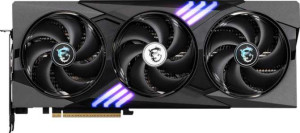
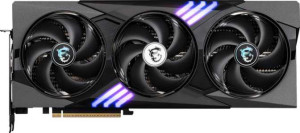
MSI GeForce RTX 5070 Ti Gaming Trio OC Plus
MSI GeForce RTX 5070 Ti Gaming Trio Plus

MSI GeForce RTX 5070 Ti Gaming Trio OC Plus MSI GeForce RTX 5070 Ti Gaming Trio Plus

Overview

Welcome to our detailed spec comparison between the MSI GeForce RTX 5070 Ti Gaming Trio OC Plus and the MSI GeForce RTX 5070 Ti Gaming Trio Plus. These two cards share the same Blackwell foundation, 16GB of GDDR7 memory, and a 300W TDP, yet differ in key performance metrics such as GPU turbo clock speed, pixel rate, and floating-point throughput. Read on to discover which card best matches your needs.

Common Features

  • Both products have a base GPU clock speed of 2295 MHz.
  • Both products have a GPU memory speed of 1750 MHz.
  • Both products have 8960 shading units.
  • Both products have 280 texture mapping units (TMUs).
  • Both products have 96 render output units (ROPs).
  • Double Precision Floating Point (DPFP) is supported on both products.
  • Both products have an effective memory speed of 28000 MHz.
  • Both products have a maximum memory bandwidth of 896 GB/s.
  • Both products feature 16GB of VRAM.
  • Both products use GDDR7 memory.
  • Both products have a 256-bit memory bus width.
  • ECC memory is supported on both products.
  • Both products support DirectX 12 Ultimate.
  • Both products support OpenGL version 4.6.
  • Both products support OpenCL version 3.
  • Multi-display technology is supported on both products.
  • Ray tracing is supported on both products.
  • DLSS is supported on both products.
  • XeSS (XMX) is not available on either product.
  • Both products have one HDMI 2.1b output and three DisplayPort outputs, with no USB-C or DVI outputs.
  • Both products are built on the Blackwell GPU architecture.
  • Both products have a Thermal Design Power (TDP) of 300W.
  • Both products use PCIe version 5.
  • Both products are manufactured on a 5 nm semiconductor process.
  • Both products contain 45600 million transistors.
  • Air-water cooling is not available on either product.
  • Both products measure 338 mm in width and 140 mm in height.

Main Differences

  • GPU turbo clock speed is 2572 MHz on MSI GeForce RTX 5070 Ti Gaming Trio OC Plus and 2452 MHz on MSI GeForce RTX 5070 Ti Gaming Trio Plus.
  • Pixel rate is 246.9 GPixel/s on MSI GeForce RTX 5070 Ti Gaming Trio OC Plus and 235.4 GPixel/s on MSI GeForce RTX 5070 Ti Gaming Trio Plus.
  • Floating-point performance is 46.09 TFLOPS on MSI GeForce RTX 5070 Ti Gaming Trio OC Plus and 43.94 TFLOPS on MSI GeForce RTX 5070 Ti Gaming Trio Plus.
  • Texture rate is 720.2 GTexels/s on MSI GeForce RTX 5070 Ti Gaming Trio OC Plus and 686.6 GTexels/s on MSI GeForce RTX 5070 Ti Gaming Trio Plus.
Specs Comparison
MSI GeForce RTX 5070 Ti Gaming Trio OC Plus

MSI GeForce RTX 5070 Ti Gaming Trio OC Plus

MSI GeForce RTX 5070 Ti Gaming Trio Plus

MSI GeForce RTX 5070 Ti Gaming Trio Plus

Performance:
GPU clock speed 2295 MHz 2295 MHz
GPU turbo 2572 MHz 2452 MHz
pixel rate 246.9 GPixel/s 235.4 GPixel/s
floating-point performance 46.09 TFLOPS 43.94 TFLOPS
texture rate 720.2 GTexels/s 686.6 GTexels/s
GPU memory speed 1750 MHz 1750 MHz
shading units 8960 8960
texture mapping units (TMUs) 280 280
render output units (ROPs) 96 96
Has Double Precision Floating Point (DPFP)

At the core, both the MSI GeForce RTX 5070 Ti Gaming Trio OC Plus and the Gaming Trio Plus share identical foundations: the same 2295 MHz base clock, 8960 shading units, 280 TMUs, 96 ROPs, and 1750 MHz memory speed. This means both cards draw from the same silicon and memory configuration — the difference lies entirely in how aggressively MSI has tuned the boost behavior.

The critical differentiator is the GPU turbo clock: the OC Plus reaches 2572 MHz versus 2452 MHz on the standard Trio Plus — a 120 MHz gap. That 4.9% clock advantage compounds across every performance metric. Floating-point throughput lands at 46.09 TFLOPS on the OC Plus compared to 43.94 TFLOPS, and texture fill rate follows suit at 720.2 GTexels/s versus 686.6 GTexels/s. In practice, this translates to a modest but measurable uplift in compute-heavy workloads and high-refresh-rate gaming scenarios where sustained peak clocks matter most.

The Gaming Trio OC Plus holds a clear performance edge in this group, driven entirely by its higher factory overclock. For users pushing high frame rates at 4K or running GPU-accelerated creative workloads, the OC Plus delivers a consistent ~5% lead without any manual tuning. The Trio Plus is not deficient — it uses the same architecture and memory subsystem — but buyers who want every bit of out-of-the-box performance the chip can offer should lean toward the OC Plus variant.

Memory:
effective memory speed 28000 MHz 28000 MHz
maximum memory bandwidth 896 GB/s 896 GB/s
VRAM 16GB 16GB
GDDR version GDDR7 GDDR7
memory bus width 256-bit 256-bit
Supports ECC memory

The MSI GeForce RTX 5070 Ti Gaming Trio OC Plus and MSI GeForce RTX 5070 Ti Gaming Trio Plus have identical specifications when it comes to memory. Both feature an effective memory speed of 28000 MHz, a maximum memory bandwidth of 896 GB/s, and 16GB of VRAM.

Both models also utilize GDDR7 memory and have a 256-bit memory bus width. Furthermore, both support ECC memory, ensuring error correction functionality.

In summary, the memory configurations of both the OC Plus and Plus models are exactly the same across all key specs, with no differences between the two products in this category.

Features:
DirectX version DirectX 12 Ultimate DirectX 12 Ultimate
OpenGL version 4.6 4.6
OpenCL version 3 3
Supports multi-display technology
supports ray tracing
Supports 3D
supports DLSS
has XeSS (XMX)
AMD SAM / Intel Resizable BAR Intel Resizable BAR Intel Resizable BAR
has LHR
has RGB lighting
supported displays 4 4

The MSI GeForce RTX 5070 Ti Gaming Trio OC Plus and MSI GeForce RTX 5070 Ti Gaming Trio Plus have identical feature sets. Both cards support DirectX 12 Ultimate, OpenGL 4.6, and OpenCL 3. Additionally, they both support multi-display technology, ray tracing, and 3D functionality.

Each model also includes support for DLSS and Intel's Resizable BAR, while neither card features XeSS (XMX) or LHR (Low Hash Rate) capabilities. Both models come equipped with RGB lighting and can support up to four displays simultaneously.

In summary, the feature specifications for both the OC Plus and Plus are identical, with no differences in the key areas of support and functionality.

Ports:
has an HDMI output
HDMI ports 1 1
HDMI version HDMI 2.1b HDMI 2.1b
DisplayPort outputs 3 3
USB-C ports 0 0
DVI outputs 0 0
mini DisplayPort outputs 0 0

The MSI GeForce RTX 5070 Ti Gaming Trio OC Plus and MSI GeForce RTX 5070 Ti Gaming Trio Plus share identical port configurations. Both models feature one HDMI output, with an HDMI version of 2.1b. Each card also offers three DisplayPort outputs and has no USB-C, DVI, or mini DisplayPort outputs.

In terms of HDMI and DisplayPort options, both cards are exactly the same, with no differences in the number or type of outputs provided.

Overall, the ports on the OC Plus and Plus models are identical, offering the same connectivity options across both products.

General info:
GPU architecture Blackwell Blackwell
release date January 2025 February 2025
Thermal Design Power (TDP) 300W 300W
PCI Express (PCIe) version 5 5
semiconductor size 5 nm 5 nm
number of transistors 45600 million 45600 million
Has air-water cooling
width 338 mm 338 mm
height 140 mm 140 mm

The MSI GeForce RTX 5070 Ti Gaming Trio OC Plus and MSI GeForce RTX 5070 Ti Gaming Trio Plus have identical general specifications. Both cards are built on the Blackwell GPU architecture and have a Thermal Design Power (TDP) of 300W. They both use PCI Express (PCIe) version 5 and are manufactured with a 5 nm semiconductor size, featuring the same number of transistors at 45600 million.

Neither model includes air-water cooling, and both have the same physical dimensions, with a width of 338 mm and a height of 140 mm.

In summary, the general specifications of the OC Plus and Plus models are exactly the same, with no differences between the two in terms of architecture, power, size, or cooling features.

Comparison Summary & Verdict

Both the MSI GeForce RTX 5070 Ti Gaming Trio OC Plus and the MSI GeForce RTX 5070 Ti Gaming Trio Plus are built on the same Blackwell architecture, share identical 16GB GDDR7 memory with a 896 GB/s bandwidth, and offer the same port configuration and feature set including ray tracing and DLSS. The key distinction lies in raw performance: the OC Plus variant delivers a higher GPU turbo clock of 2572 MHz, a pixel rate of 246.9 GPixel/s, and 46.09 TFLOPS of floating-point performance, compared to 2452 MHz, 235.4 GPixel/s, and 43.94 TFLOPS on the standard Trio Plus. For users who demand every last frame and the highest throughput available, the OC Plus is the clear choice, while the Trio Plus remains an excellent option for those satisfied with near-identical real-world capability at potentially lower cost.

MSI GeForce RTX 5070 Ti Gaming Trio OC Plus
Buy MSI GeForce RTX 5070 Ti Gaming Trio OC Plus if...

Buy the MSI GeForce RTX 5070 Ti Gaming Trio OC Plus if you want the highest possible GPU turbo clock speed, pixel rate, and floating-point performance between these two cards.

MSI GeForce RTX 5070 Ti Gaming Trio Plus
Buy MSI GeForce RTX 5070 Ti Gaming Trio Plus if...

Buy the MSI GeForce RTX 5070 Ti Gaming Trio Plus if you are happy with slightly lower clock speeds and still want the same memory, feature set, and overall platform as the OC Plus variant.