MSI GeForce RTX 5070 Ti Gaming Trio OC Plus
MSI GeForce RTX 5070 Ti Shadow 3X OC

MSI GeForce RTX 5070 Ti Gaming Trio OC Plus MSI GeForce RTX 5070 Ti Shadow 3X OC

Overview

Welcome to our in-depth specification comparison of the MSI GeForce RTX 5070 Ti Gaming Trio OC Plus and the MSI GeForce RTX 5070 Ti Shadow 3X OC. Both cards are built on the same Blackwell architecture and share identical memory configurations, yet they diverge in key areas such as GPU turbo clock speeds, overall performance figures, physical dimensions, and aesthetics. Read on to discover which card best fits your needs.

Common Features

  • Both cards share the same base GPU clock speed of 2295 MHz.
  • Both cards have a GPU memory speed of 1750 MHz.
  • Both cards feature 8960 shading units.
  • Both cards include 280 texture mapping units (TMUs).
  • Both cards have 96 render output units (ROPs).
  • Double precision floating point (DPFP) is supported on both cards.
  • Both cards have an effective memory speed of 28000 MHz.
  • Both cards offer a maximum memory bandwidth of 896 GB/s.
  • Both cards come with 16GB of VRAM.
  • Both cards use GDDR7 memory.
  • Both cards feature a 256-bit memory bus width.
  • ECC memory is supported on both cards.
  • Both cards support DirectX 12 Ultimate.
  • Both cards support OpenGL version 4.6.
  • Both cards support OpenCL version 3.
  • Multi-display technology is supported on both cards.
  • Ray tracing is supported on both cards.
  • 3D output is supported on both cards.
  • DLSS is supported on both cards.
  • XeSS (XMX) is not available on either card.
  • Both cards include one HDMI 2.1b port and three DisplayPort outputs, with no USB-C or DVI outputs.
  • Both cards are built on the Blackwell GPU architecture.
  • Both cards have a Thermal Design Power (TDP) of 300W.
  • Both cards use PCIe version 5.
  • Both cards are manufactured on a 5 nm process with 45600 million transistors.
  • Neither card features air-water cooling.

Main Differences

  • GPU turbo clock is 2572 MHz on the MSI GeForce RTX 5070 Ti Gaming Trio OC Plus and 2482 MHz on the MSI GeForce RTX 5070 Ti Shadow 3X OC.
  • Pixel rate is 246.9 GPixel/s on the MSI GeForce RTX 5070 Ti Gaming Trio OC Plus and 238.3 GPixel/s on the MSI GeForce RTX 5070 Ti Shadow 3X OC.
  • Floating-point performance is 46.09 TFLOPS on the MSI GeForce RTX 5070 Ti Gaming Trio OC Plus and 44.48 TFLOPS on the MSI GeForce RTX 5070 Ti Shadow 3X OC.
  • Texture rate is 720.2 GTexels/s on the MSI GeForce RTX 5070 Ti Gaming Trio OC Plus and 695 GTexels/s on the MSI GeForce RTX 5070 Ti Shadow 3X OC.
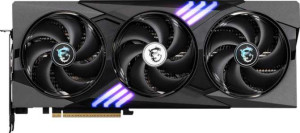
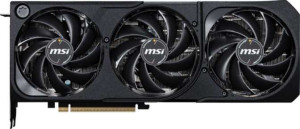
  • RGB lighting is present on the MSI GeForce RTX 5070 Ti Gaming Trio OC Plus but not available on the MSI GeForce RTX 5070 Ti Shadow 3X OC.
  • Card width is 338 mm on the MSI GeForce RTX 5070 Ti Gaming Trio OC Plus and 303 mm on the MSI GeForce RTX 5070 Ti Shadow 3X OC.
  • Card height is 140 mm on the MSI GeForce RTX 5070 Ti Gaming Trio OC Plus and 121 mm on the MSI GeForce RTX 5070 Ti Shadow 3X OC.
Specs Comparison
MSI GeForce RTX 5070 Ti Gaming Trio OC Plus

MSI GeForce RTX 5070 Ti Gaming Trio OC Plus

MSI GeForce RTX 5070 Ti Shadow 3X OC

MSI GeForce RTX 5070 Ti Shadow 3X OC

Performance:
GPU clock speed 2295 MHz 2295 MHz
GPU turbo 2572 MHz 2482 MHz
pixel rate 246.9 GPixel/s 238.3 GPixel/s
floating-point performance 46.09 TFLOPS 44.48 TFLOPS
texture rate 720.2 GTexels/s 695 GTexels/s
GPU memory speed 1750 MHz 1750 MHz
shading units 8960 8960
texture mapping units (TMUs) 280 280
render output units (ROPs) 96 96
Has Double Precision Floating Point (DPFP)

At the core, both the Gaming Trio OC Plus and the Shadow 3X OC share identical silicon foundations: the same 8960 shading units, 280 TMUs, 96 ROPs, and a base clock of 2295 MHz. This means neither card has a structural hardware advantage — any performance gap between them comes down entirely to how aggressively MSI has factory-overclocked the boost clock.

That is where the two diverge. The Gaming Trio OC Plus reaches a GPU turbo of 2572 MHz, while the Shadow 3X OC tops out at 2482 MHz — a difference of 90 MHz. While that may sound modest, it cascades into measurable gaps across every throughput metric: the Trio OC Plus delivers 46.09 TFLOPS of floating-point performance versus 44.48 TFLOPS on the Shadow 3X OC, a roughly 3.6% lead. Similarly, its texture rate of 720.2 GTexels/s versus 695 GTexels/s means slightly faster texture processing in complex scenes, and a pixel rate of 246.9 GPixel/s versus 238.3 GPixel/s translates to a modest but real rasterization advantage at high resolutions.

In practice, this performance delta is unlikely to manifest as a dramatic frame-rate difference in most workloads — we are talking single-digit percentage gains at best. However, the Gaming Trio OC Plus holds a clear, if narrow, edge in raw throughput across every computed metric in this group, making it the stronger performer strictly on paper. Users prioritizing maximum out-of-the-box clock speed should favor it; those less sensitive to marginal gains may find the Shadow 3X OC a comparable alternative in real-world use.
Memory:
effective memory speed 28000 MHz 28000 MHz
maximum memory bandwidth 896 GB/s 896 GB/s
VRAM 16GB 16GB
GDDR version GDDR7 GDDR7
memory bus width 256-bit 256-bit
Supports ECC memory

The MSI GeForce RTX 5070 Ti Gaming Trio OC Plus and MSI GeForce RTX 5070 Ti Shadow 3X OC are identical when it comes to memory specifications. Both products feature an effective memory speed of 28000 MHz, a maximum memory bandwidth of 896 GB/s, and 16GB of VRAM. Additionally, both utilize the GDDR7 memory type, have a 256-bit memory bus width, and support ECC memory (Error-Correcting Code).

Since all memory specifications are the same across both models, there are no differences in terms of memory performance or capabilities between the Gaming Trio OC Plus and the Shadow 3X OC in this regard.

Features:
DirectX version DirectX 12 Ultimate DirectX 12 Ultimate
OpenGL version 4.6 4.6
OpenCL version 3 3
Supports multi-display technology
supports ray tracing
Supports 3D
supports DLSS
has XeSS (XMX)
AMD SAM / Intel Resizable BAR Intel Resizable BAR Intel Resizable BAR
has LHR
has RGB lighting
supported displays 4 4

The MSI GeForce RTX 5070 Ti Gaming Trio OC Plus and MSI GeForce RTX 5070 Ti Shadow 3X OC share identical features in many areas. Both support DirectX 12 Ultimate, OpenGL 4.6, and OpenCL 3. They also support multi-display technology, ray tracing, and 3D, along with DLSS. Additionally, both support Intel Resizable BAR, and neither product has XeSS (XMX) or LHR (Lite Hash Rate) features.

The primary difference between these two models is the RGB lighting feature. The Gaming Trio OC Plus includes RGB lighting, while the Shadow 3X OC does not. Both models support up to four displays.

Ports:
has an HDMI output
HDMI ports 1 1
HDMI version HDMI 2.1b HDMI 2.1b
DisplayPort outputs 3 3
USB-C ports 0 0
DVI outputs 0 0
mini DisplayPort outputs 0 0

The MSI GeForce RTX 5070 Ti Gaming Trio OC Plus and MSI GeForce RTX 5070 Ti Shadow 3X OC are identical in terms of port configuration. Both products feature one HDMI output with HDMI 2.1b support, three DisplayPort outputs, and no USB-C, DVI, or mini DisplayPort outputs. This means both models offer the same video output options and support for modern display technologies, with no additional or different port features between them.

General info:
GPU architecture Blackwell Blackwell
release date January 2025 February 2025
Thermal Design Power (TDP) 300W 300W
PCI Express (PCIe) version 5 5
semiconductor size 5 nm 5 nm
number of transistors 45600 million 45600 million
Has air-water cooling
width 338 mm 303 mm
height 140 mm 121 mm

The MSI GeForce RTX 5070 Ti Gaming Trio OC Plus and MSI GeForce RTX 5070 Ti Shadow 3X OC share identical specifications for GPU architecture, thermal design power (TDP), PCI Express version, semiconductor size, and the number of transistors. Both use the Blackwell architecture, have a TDP of 300W, support PCIe version 5, are built on a 5 nm semiconductor process, and contain 45600 million transistors. Neither product features air-water cooling.

The main differences between the two models are in their physical dimensions. The Gaming Trio OC Plus is larger, with a width of 338 mm and a height of 140 mm, while the Shadow 3X OC is more compact, measuring 303 mm in width and 121 mm in height. These size differences could impact case compatibility and overall airflow considerations.

Comparison Summary & Verdict

Both the MSI GeForce RTX 5070 Ti Gaming Trio OC Plus and the MSI GeForce RTX 5070 Ti Shadow 3X OC share the same fundamental DNA: identical 16GB GDDR7 memory, a 300W TDP, and full support for ray tracing and DLSS. However, the Gaming Trio OC Plus pulls ahead with a higher GPU turbo clock of 2572 MHz, delivering 46.09 TFLOPS of floating-point performance and a pixel rate of 246.9 GPixel/s, making it the stronger choice for enthusiasts chasing every last frame. It also adds RGB lighting for those who value aesthetics. The Shadow 3X OC, meanwhile, offers a notably more compact footprint at 303 x 121 mm versus 338 x 140 mm, making it better suited for smaller chassis builds where space is at a premium, while still delivering capable performance at 44.48 TFLOPS.

MSI GeForce RTX 5070 Ti Gaming Trio OC Plus
Buy MSI GeForce RTX 5070 Ti Gaming Trio OC Plus if...

Buy the MSI GeForce RTX 5070 Ti Gaming Trio OC Plus if you want maximum out-of-the-box performance with a higher GPU turbo clock and RGB lighting for a premium, high-performance build.

MSI GeForce RTX 5070 Ti Shadow 3X OC
Buy MSI GeForce RTX 5070 Ti Shadow 3X OC if...

Buy the MSI GeForce RTX 5070 Ti Shadow 3X OC if you need a more compact card that fits smaller cases, and do not require RGB lighting.