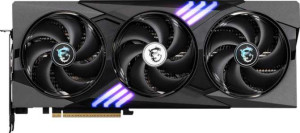
MSI GeForce RTX 5070 Ti Gaming Trio OC Plus
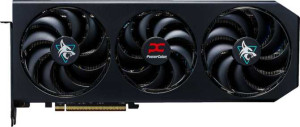
PowerColor Hellhound Radeon RX 9070 XT

MSI GeForce RTX 5070 Ti Gaming Trio OC Plus PowerColor Hellhound Radeon RX 9070 XT

Overview

Choosing between Nvidia and AMD at the high-end tier has never been more compelling. In this head-to-head between the MSI GeForce RTX 5070 Ti Gaming Trio OC Plus and the PowerColor Hellhound Radeon RX 9070 XT, we examine the key battlegrounds of memory bandwidth, raw compute throughput, feature support, and architectural differences to help you find the card that best fits your needs.

Common Features

  • Both products support Double Precision Floating Point (DPFP).
  • Both cards come with 16GB of VRAM.
  • Both cards use a 256-bit memory bus width.
  • ECC memory is supported on both products.
  • Both products support OpenGL version 4.6.
  • Multi-display technology is supported on both products.
  • Ray tracing is supported on both products.
  • 3D support is available on both products.
  • XeSS (XMX) support is not available on either product.
  • Neither product has LHR (Lite Hash Rate) limitations.
  • RGB lighting is present on both products.
  • Both cards support up to 4 displays simultaneously.
  • Both cards include 1 HDMI port running HDMI version 2.1b.
  • Both cards feature 3 DisplayPort outputs.
  • Neither card includes USB-C or DVI outputs.
  • Neither card includes mini DisplayPort outputs.
  • Both products use PCI Express version 5.
  • Neither product uses air-water cooling.

Main Differences

  • Base GPU clock speed is 2295 MHz on MSI GeForce RTX 5070 Ti Gaming Trio OC Plus and 1660 MHz on PowerColor Hellhound Radeon RX 9070 XT.
  • GPU turbo clock speed is 2572 MHz on MSI GeForce RTX 5070 Ti Gaming Trio OC Plus and 3010 MHz on PowerColor Hellhound Radeon RX 9070 XT.
  • Pixel rate is 246.9 GPixel/s on MSI GeForce RTX 5070 Ti Gaming Trio OC Plus and 385.3 GPixel/s on PowerColor Hellhound Radeon RX 9070 XT.
  • Floating-point performance is 46.09 TFLOPS on MSI GeForce RTX 5070 Ti Gaming Trio OC Plus and 49.32 TFLOPS on PowerColor Hellhound Radeon RX 9070 XT.
  • Texture rate is 720.2 GTexels/s on MSI GeForce RTX 5070 Ti Gaming Trio OC Plus and 770.6 GTexels/s on PowerColor Hellhound Radeon RX 9070 XT.
  • GPU memory speed is 1750 MHz on MSI GeForce RTX 5070 Ti Gaming Trio OC Plus and 2518 MHz on PowerColor Hellhound Radeon RX 9070 XT.
  • Shading units number 8960 on MSI GeForce RTX 5070 Ti Gaming Trio OC Plus and 4096 on PowerColor Hellhound Radeon RX 9070 XT.
  • Texture mapping units (TMUs) total 280 on MSI GeForce RTX 5070 Ti Gaming Trio OC Plus and 256 on PowerColor Hellhound Radeon RX 9070 XT.
  • Render output units (ROPs) number 96 on MSI GeForce RTX 5070 Ti Gaming Trio OC Plus and 128 on PowerColor Hellhound Radeon RX 9070 XT.
  • Effective memory speed is 28000 MHz on MSI GeForce RTX 5070 Ti Gaming Trio OC Plus and 20000 MHz on PowerColor Hellhound Radeon RX 9070 XT.
  • Maximum memory bandwidth is 896 GB/s on MSI GeForce RTX 5070 Ti Gaming Trio OC Plus and 644.6 GB/s on PowerColor Hellhound Radeon RX 9070 XT.
  • MSI GeForce RTX 5070 Ti Gaming Trio OC Plus uses GDDR7 memory, while PowerColor Hellhound Radeon RX 9070 XT uses GDDR6 memory.
  • DirectX 12 Ultimate is supported on MSI GeForce RTX 5070 Ti Gaming Trio OC Plus, while PowerColor Hellhound Radeon RX 9070 XT supports DirectX 12.
  • OpenCL version is 3 on MSI GeForce RTX 5070 Ti Gaming Trio OC Plus and 2.2 on PowerColor Hellhound Radeon RX 9070 XT.
  • DLSS support is available on MSI GeForce RTX 5070 Ti Gaming Trio OC Plus but not on PowerColor Hellhound Radeon RX 9070 XT.
  • MSI GeForce RTX 5070 Ti Gaming Trio OC Plus supports Intel Resizable BAR, while PowerColor Hellhound Radeon RX 9070 XT supports AMD SAM.
  • GPU architecture is Blackwell on MSI GeForce RTX 5070 Ti Gaming Trio OC Plus and RDNA 4.0 on PowerColor Hellhound Radeon RX 9070 XT.
  • Thermal Design Power (TDP) is 300W on MSI GeForce RTX 5070 Ti Gaming Trio OC Plus and 304W on PowerColor Hellhound Radeon RX 9070 XT.
  • Semiconductor size is 5 nm on MSI GeForce RTX 5070 Ti Gaming Trio OC Plus and 4 nm on PowerColor Hellhound Radeon RX 9070 XT.
  • Transistor count is 45600 million on MSI GeForce RTX 5070 Ti Gaming Trio OC Plus and 53900 million on PowerColor Hellhound Radeon RX 9070 XT.
  • Card width is 338 mm on MSI GeForce RTX 5070 Ti Gaming Trio OC Plus and 340 mm on PowerColor Hellhound Radeon RX 9070 XT.
  • Card height is 140 mm on MSI GeForce RTX 5070 Ti Gaming Trio OC Plus and 142 mm on PowerColor Hellhound Radeon RX 9070 XT.
Specs Comparison
MSI GeForce RTX 5070 Ti Gaming Trio OC Plus

MSI GeForce RTX 5070 Ti Gaming Trio OC Plus

PowerColor Hellhound Radeon RX 9070 XT

PowerColor Hellhound Radeon RX 9070 XT

Performance:
GPU clock speed 2295 MHz 1660 MHz
GPU turbo 2572 MHz 3010 MHz
pixel rate 246.9 GPixel/s 385.3 GPixel/s
floating-point performance 46.09 TFLOPS 49.32 TFLOPS
texture rate 720.2 GTexels/s 770.6 GTexels/s
GPU memory speed 1750 MHz 2518 MHz
shading units 8960 4096
texture mapping units (TMUs) 280 256
render output units (ROPs) 96 128
Has Double Precision Floating Point (DPFP)

On paper, the MSI RTX 5070 Ti Gaming Trio OC Plus appears to dominate the shader count race with 8,960 shading units versus the PowerColor Hellhound RX 9070 XT's 4,096 — more than double. Yet raw shader counts are architecture-dependent and do not translate linearly into real-world output, and the remaining compute metrics tell a very different story. The RX 9070 XT edges ahead in floating-point performance at 49.32 TFLOPS versus 46.09 TFLOPS, and pulls meaningfully ahead in pixel rate (385.3 GPixel/s vs. 246.9 GPixel/s) and texture rate (770.6 GTexels/s vs. 720.2 GTexels/s). This means the AMD card can theoretically push more pixels and process textures faster per second — metrics that directly correlate with rendering throughput in demanding workloads.

Clock speed dynamics also reveal an interesting contrast. The RTX 5070 Ti runs a higher base clock at 2295 MHz, suggesting more consistent sustained performance, while the RX 9070 XT operates at a much lower base of 1660 MHz but rockets to a 3010 MHz turbo — a significantly wider boost range. The RX 9070 XT also benefits from faster GPU memory at 2518 MHz versus 1750 MHz, which reduces memory bandwidth bottlenecks in high-resolution or memory-intensive scenarios. Its 128 ROPs versus the RTX 5070 Ti's 96 further reinforce its pixel-throughput advantage. Both cards support Double Precision Floating Point, making neither uniquely advantaged for DPFP compute tasks.

Overall, based strictly on the provided performance specs, the PowerColor Hellhound RX 9070 XT holds a tangible edge in computed throughput metrics — TFLOPS, pixel rate, texture rate, ROP count, and memory speed — despite its lower shader count. The MSI RTX 5070 Ti counters with a more stable base clock and a larger TMU count, which can matter in certain texture-heavy pipelines, but these advantages do not outweigh the AMD card's broader performance lead across the most impactful figures in this group.
Memory:
effective memory speed 28000 MHz 20000 MHz
maximum memory bandwidth 896 GB/s 644.6 GB/s
VRAM 16GB 16GB
GDDR version GDDR7 GDDR6
memory bus width 256-bit 256-bit
Supports ECC memory

The MSI GeForce RTX 5070 Ti Gaming Trio OC Plus and the PowerColor Hellhound Radeon RX 9070 XT share the same VRAM capacity of 16GB, but differ in several other memory-related specifications. The MSI card features a higher effective memory speed of 28000 MHz, compared to the PowerColor card's 20000 MHz. This suggests that the MSI card can transfer data faster in memory-intensive tasks.

In terms of maximum memory bandwidth, the MSI card also outperforms the PowerColor card with 896 GB/s, while the PowerColor card has a lower bandwidth of 644.6 GB/s. This difference in bandwidth can have an impact on the overall speed and efficiency of memory data transfer, particularly in high-resolution and demanding applications.

Both cards use a 256-bit memory bus width and support ECC memory, ensuring that they can handle memory errors and offer stability for computational tasks. Additionally, the MSI card utilizes GDDR7 memory, while the PowerColor card uses GDDR6. Although both GDDR versions are high-performance memory types, GDDR7 generally offers improvements in speed and efficiency compared to GDDR6.

Features:
DirectX version DirectX 12 Ultimate DirectX 12
OpenGL version 4.6 4.6
OpenCL version 3 2.2
Supports multi-display technology
supports ray tracing
Supports 3D
supports DLSS
has XeSS (XMX)
AMD SAM / Intel Resizable BAR Intel Resizable BAR AMD SAM
has LHR
has RGB lighting
supported displays 4 4

The MSI GeForce RTX 5070 Ti Gaming Trio OC Plus and the PowerColor Hellhound Radeon RX 9070 XT offer a range of similar features with a few differences. Both support DirectX 12, though the MSI card supports the more advanced DirectX 12 Ultimate, which includes additional features like ray tracing and variable rate shading, while the PowerColor card supports only DirectX 12. Both cards also support OpenGL 4.6, but the MSI card supports OpenCL 3, while the PowerColor card supports OpenCL 2.2, indicating a newer version of OpenCL on the MSI card.

Both cards support multi-display technology, ray tracing, and 3D, with the MSI card having an additional feature in supporting DLSS (Deep Learning Super Sampling), a technology that improves frame rates and visual fidelity. The PowerColor card does not support DLSS. Neither card has XeSS (XMX) support.

When it comes to platform features, the MSI card supports Intel Resizable BAR (which is part of the Intel's SAM technology), while the PowerColor card supports AMD's SAM. Both cards do not feature LHR (Lite Hash Rate), making them suitable for gaming and other tasks. Both cards also have RGB lighting and can support up to 4 displays.

Ports:
has an HDMI output
HDMI ports 1 1
HDMI version HDMI 2.1b HDMI 2.1b
DisplayPort outputs 3 3
USB-C ports 0 0
DVI outputs 0 0
mini DisplayPort outputs 0 0

The MSI GeForce RTX 5070 Ti Gaming Trio OC Plus and the PowerColor Hellhound Radeon RX 9070 XT have nearly identical port configurations. Both cards feature one HDMI output with HDMI 2.1b support, as well as three DisplayPort outputs. Neither card includes USB-C ports, DVI outputs, or mini DisplayPort outputs. This means that users can expect similar connectivity options for both products, with no significant differences in terms of the types or number of ports available.

Overall, both cards offer the same level of display connectivity, making them equally capable for multi-monitor setups and high-definition output.

General info:
GPU architecture Blackwell RDNA 4.0
release date January 2025 March 2025
Thermal Design Power (TDP) 300W 304W
PCI Express (PCIe) version 5 5
semiconductor size 5 nm 4 nm
number of transistors 45600 million 53900 million
Has air-water cooling
width 338 mm 340 mm
height 140 mm 142 mm

The MSI GeForce RTX 5070 Ti Gaming Trio OC Plus and the PowerColor Hellhound Radeon RX 9070 XT differ in several key areas of their general specifications. The MSI card is based on the Blackwell GPU architecture, while the PowerColor card uses the RDNA 4.0 architecture. The MSI card has a Thermal Design Power (TDP) of 300W, slightly lower than the PowerColor's 304W TDP. Both cards use PCI Express version 5 and do not have air-water cooling systems.

In terms of semiconductor size, the PowerColor card has a smaller 4 nm process, compared to the MSI card's 5 nm, which may contribute to differences in power efficiency and performance. The number of transistors also varies, with the PowerColor card containing 53,900 million transistors, while the MSI card has 45,600 million transistors.

Finally, the physical dimensions of the two cards are quite similar, with the MSI card measuring 338 mm in width and 140 mm in height, while the PowerColor card is slightly larger at 340 mm in width and 142 mm in height. These minor differences in size may affect compatibility with certain cases but are otherwise nearly identical.

Comparison Summary & Verdict

Both the MSI GeForce RTX 5070 Ti Gaming Trio OC Plus and the PowerColor Hellhound Radeon RX 9070 XT are compelling high-end cards sharing 16GB VRAM and ray tracing support, but they cater to different priorities. The MSI card excels with its GDDR7 memory, industry-leading 896 GB/s bandwidth, DLSS support, and DirectX 12 Ultimate, making it the stronger pick for those invested in Nvidia's ecosystem and cutting-edge feature set. The PowerColor card counters with a higher turbo clock of 3010 MHz, a superior pixel rate of 385.3 GPixel/s, and slightly better floating-point throughput, appealing to AMD enthusiasts who value strong rasterization performance and AMD SAM support. With near-identical TDPs, the decision ultimately hinges on software ecosystem preference and specific workload needs.

MSI GeForce RTX 5070 Ti Gaming Trio OC Plus
Buy MSI GeForce RTX 5070 Ti Gaming Trio OC Plus if...

Buy the MSI GeForce RTX 5070 Ti Gaming Trio OC Plus if you want the highest memory bandwidth, GDDR7 technology, DLSS support, and DirectX 12 Ultimate for a future-ready Nvidia experience.

PowerColor Hellhound Radeon RX 9070 XT
Buy PowerColor Hellhound Radeon RX 9070 XT if...

Choose the PowerColor Hellhound Radeon RX 9070 XT if you prioritize a higher turbo clock, superior pixel rate, and prefer AMD's ecosystem with SAM support.