MSI GeForce RTX 5070 Ti Gaming Trio Plus
MSI GeForce RTX 5070 Ti Inspire 3X Plus

MSI GeForce RTX 5070 Ti Gaming Trio Plus MSI GeForce RTX 5070 Ti Inspire 3X Plus

Overview

Welcome to our in-depth comparison of the MSI GeForce RTX 5070 Ti Gaming Trio Plus and the MSI GeForce RTX 5070 Ti Inspire 3X Plus. Both cards share the same Blackwell architecture and identical core performance figures, yet they diverge in ways that may matter depending on your build. In this comparison, we examine their physical dimensions and aesthetic features to help you decide which card better fits your setup and priorities.

Common Features

  • Both cards have a GPU clock speed of 2295 MHz.
  • Both cards have a GPU turbo speed of 2452 MHz.
  • Both cards have a pixel rate of 235.4 GPixel/s.
  • Both cards deliver 43.94 TFLOPS of floating-point performance.
  • Both cards have a texture rate of 686.6 GTexels/s.
  • Both cards have a GPU memory speed of 1750 MHz.
  • Both cards have 8960 shading units.
  • Both cards have 280 texture mapping units (TMUs).
  • Both cards have an effective memory speed of 28000 MHz.
  • Both cards have a maximum memory bandwidth of 896 GB/s.
  • Both cards come with 16GB of VRAM.
  • Both cards use GDDR7 memory.
  • Both cards have a 256-bit memory bus width.
  • ECC memory support is available on both cards.
  • Both cards support DirectX 12 Ultimate.
  • Both cards support OpenGL version 4.6.
  • Both cards support OpenCL version 3.
  • Multi-display technology support is available on both cards.
  • Ray tracing support is available on both cards.
  • 3D support is available on both cards.
  • DLSS support is available on both cards.
  • XeSS (XMX) support is not available on either card.
  • Both cards include one HDMI 2.1b output.
  • Both cards include three DisplayPort outputs.
  • Neither card has USB-C ports, DVI outputs, or mini DisplayPort outputs.
  • Both cards are built on the Blackwell GPU architecture.
  • Both cards have a Thermal Design Power (TDP) of 300W.
  • Both cards use PCIe version 5.
  • Both cards are manufactured on a 5 nm semiconductor process.
  • Both cards contain 45600 million transistors.
  • Neither card features air-water cooling.

Main Differences

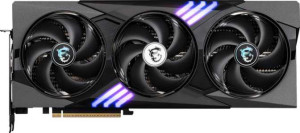
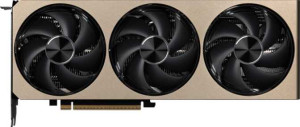
  • RGB lighting is present on the MSI GeForce RTX 5070 Ti Gaming Trio Plus but not available on the MSI GeForce RTX 5070 Ti Inspire 3X Plus.
  • Width is 338 mm on the MSI GeForce RTX 5070 Ti Gaming Trio Plus and 288 mm on the MSI GeForce RTX 5070 Ti Inspire 3X Plus.
  • Height is 140 mm on the MSI GeForce RTX 5070 Ti Gaming Trio Plus and 112 mm on the MSI GeForce RTX 5070 Ti Inspire 3X Plus.
Specs Comparison
MSI GeForce RTX 5070 Ti Gaming Trio Plus

MSI GeForce RTX 5070 Ti Gaming Trio Plus

MSI GeForce RTX 5070 Ti Inspire 3X Plus

MSI GeForce RTX 5070 Ti Inspire 3X Plus

Performance:
GPU clock speed 2295 MHz 2295 MHz
GPU turbo 2452 MHz 2452 MHz
pixel rate 235.4 GPixel/s 235.4 GPixel/s
floating-point performance 43.94 TFLOPS 43.94 TFLOPS
texture rate 686.6 GTexels/s 686.6 GTexels/s
GPU memory speed 1750 MHz 1750 MHz
shading units 8960 8960
texture mapping units (TMUs) 280 280
render output units (ROPs) 96 96
Has Double Precision Floating Point (DPFP)

When comparing the Performance specs of the MSI GeForce RTX 5070 Ti Gaming Trio Plus and the MSI GeForce RTX 5070 Ti Inspire 3X Plus, the data tells a clear story: these two cards are built on an identical performance foundation. Every single metric — from the base GPU clock speed of 2295 MHz and boost clock of 2452 MHz, to the 43.94 TFLOPS of floating-point throughput — is a perfect match. This means neither card will outrun the other in compute-heavy workloads, AI inference, or general rendering tasks.

The shared hardware configuration further reinforces this parity. Both cards feature 8960 shading units, 280 TMUs, and 96 ROPs, which directly govern how efficiently the GPU handles shader programs, textures, and pixel output respectively. The matching texture rate of 686.6 GTexels/s and pixel rate of 235.4 GPixel/s confirm that rasterization throughput — critical for high-refresh-rate gaming — will be indistinguishable between the two. Memory bandwidth potential is also equal, with both running GPU memory at 1750 MHz. Both cards also support Double Precision Floating Point, which is relevant for professional and scientific workloads beyond gaming.

The verdict for this group is a definitive tie. There is no performance advantage to be found here on either side. Any difference in the real-world experience between these two models will come down entirely to factors outside this spec group — such as cooling design, power delivery, or acoustics — not raw GPU horsepower.
Memory:
effective memory speed 28000 MHz 28000 MHz
maximum memory bandwidth 896 GB/s 896 GB/s
VRAM 16GB 16GB
GDDR version GDDR7 GDDR7
memory bus width 256-bit 256-bit
Supports ECC memory

The memory subsystem is often what separates a capable GPU from a truly future-proof one, and both the Gaming Trio Plus and the Inspire 3X Plus arrive with identical and highly competitive configurations. Both cards pack 16GB of GDDR7 VRAM across a 256-bit memory bus, delivering a peak bandwidth of 896 GB/s. That figure is substantial — it means the GPU can feed its shader array with data fast enough to avoid becoming a bottleneck in memory-intensive scenarios like 4K gaming with high-resolution texture packs, generative AI workloads, or large scene rendering in content creation tools.

The move to GDDR7 is the headline here. Compared to the GDDR6X found on previous-generation high-end cards, GDDR7 offers significantly higher efficiency and throughput at equivalent bus widths, which is exactly what the 28000 MHz effective memory speed reflects. This translates practically to smoother frame delivery in VRAM-heavy titles and faster data throughput when running local AI models or doing video editing at high resolutions. The support for ECC memory on both cards is also worth noting — while largely invisible in gaming, it provides error-correcting reliability that benefits professional and compute workloads.

As with the Performance group, this category ends in a complete tie. Every memory specification is identical across both cards, so neither holds any memory bandwidth, capacity, or technology advantage over the other. Buyers choosing between these two models can do so with full confidence that memory performance will never be a differentiating factor.

Features:
DirectX version DirectX 12 Ultimate DirectX 12 Ultimate
OpenGL version 4.6 4.6
OpenCL version 3 3
Supports multi-display technology
supports ray tracing
Supports 3D
supports DLSS
has XeSS (XMX)
AMD SAM / Intel Resizable BAR Intel Resizable BAR Intel Resizable BAR
has LHR
has RGB lighting
supported displays 4 4

Across the core feature set, these two cards are virtually identical. Both support DirectX 12 Ultimate, ray tracing, and DLSS — the three pillars of modern GPU feature support on NVIDIA hardware. DirectX 12 Ultimate ensures compatibility with the full suite of current-gen rendering techniques including mesh shaders and variable rate shading, while DLSS provides AI-driven upscaling that can significantly boost frame rates with minimal visual quality loss. Support for up to 4 displays simultaneously also makes both cards equally capable for multi-monitor productivity or gaming setups.

The one concrete differentiator in this group is RGB lighting. The Gaming Trio Plus includes it; the Inspire 3X Plus does not. For users who invest in a themed or illuminated build, this is a meaningful distinction — the Gaming Trio Plus will integrate into an RGB ecosystem while the Inspire 3X Plus will not contribute any lighting to the case interior. This is purely an aesthetic consideration with zero impact on gaming or compute performance, but it is the only feature separating the two cards in this category.

The Gaming Trio Plus holds a narrow edge in this group solely due to its RGB lighting support. For buyers who prioritize build aesthetics, that tips the scales toward the Gaming Trio Plus. Those indifferent to lighting will find both cards functionally equivalent here — every performance-relevant feature is shared across both models without exception.

Ports:
has an HDMI output
HDMI ports 1 1
HDMI version HDMI 2.1b HDMI 2.1b
DisplayPort outputs 3 3
USB-C ports 0 0
DVI outputs 0 0
mini DisplayPort outputs 0 0

Both the Gaming Trio Plus and the Inspire 3X Plus offer the same port layout: 3 DisplayPort outputs and 1 HDMI 2.1b port, totaling four display connections — which aligns with the maximum supported display count noted in the Features group. HDMI 2.1b is the latest revision of the standard, capable of handling 4K at high refresh rates and 8K output, making it well-suited for both high-performance gaming monitors and large-screen TVs without any need for adapters.

The three DisplayPort outputs give users flexibility for multi-monitor configurations, particularly in productivity or sim-racing setups where driving several screens simultaneously is the norm. Neither card includes USB-C, mini DisplayPort, or DVI outputs — legacy connectivity is entirely absent, reflecting the modern, forward-looking port design philosophy shared by both models.

This category is an unambiguous tie. The port selection is identical in every respect, from connector types and counts to the HDMI version. Display connectivity will not be a factor in choosing between these two cards.

General info:
GPU architecture Blackwell Blackwell
release date February 2025 February 2025
Thermal Design Power (TDP) 300W 300W
PCI Express (PCIe) version 5 5
semiconductor size 5 nm 5 nm
number of transistors 45600 million 45600 million
Has air-water cooling
width 338 mm 288 mm
height 140 mm 112 mm

At the architectural level, both cards are cut from the same cloth. Sharing NVIDIA's Blackwell architecture, a 5nm manufacturing process, and 45.6 billion transistors, they represent the same underlying silicon investment. The identical 300W TDP means power supply requirements and expected thermal output are equal — builders can plan their PSU headroom and case airflow the same way for either card.

Where this group finally reveals a meaningful physical difference is in dimensions. The Gaming Trio Plus measures 338 mm × 140 mm, while the Inspire 3X Plus is notably more compact at 288 mm × 112 mm — a difference of 50mm in length and 28mm in height. In practical terms, this is significant. The Inspire 3X Plus will fit comfortably in mid-tower cases where the Gaming Trio Plus might be a tight squeeze or outright incompatible, particularly in builds with front-mounted radiators or drives that reduce effective GPU clearance.

For this group, the Inspire 3X Plus holds a clear advantage for anyone working within space-constrained builds. Both cards draw the same power and are built on identical silicon, so the smaller footprint of the Inspire 3X Plus comes at no architectural cost — it is simply a more case-friendly design. The Gaming Trio Plus, by contrast, is better suited to full-tower builds where physical space is not a limiting factor.

Comparison Summary & Verdict

After a thorough side-by-side analysis, it is clear that the MSI GeForce RTX 5070 Ti Gaming Trio Plus and the MSI GeForce RTX 5070 Ti Inspire 3X Plus deliver identical performance, memory bandwidth, and feature support. The key distinctions come down to size and style. The Gaming Trio Plus is the larger card at 338 mm wide and 140 mm tall, and it adds RGB lighting for builders who value visual customization. The Inspire 3X Plus, measuring a more compact 288 mm by 112 mm, skips the RGB in favor of a smaller footprint. Choose based on your case clearance and aesthetic preferences, not on performance — because on that front, both cards are perfectly matched.

MSI GeForce RTX 5070 Ti Gaming Trio Plus
Buy MSI GeForce RTX 5070 Ti Gaming Trio Plus if...

Buy the MSI GeForce RTX 5070 Ti Gaming Trio Plus if you want RGB lighting to complement your build and have a case with ample room for a larger card.

MSI GeForce RTX 5070 Ti Inspire 3X Plus
Buy MSI GeForce RTX 5070 Ti Inspire 3X Plus if...

Buy the MSI GeForce RTX 5070 Ti Inspire 3X Plus if you need a more compact card that fits tighter cases and prefer a clean look without RGB lighting.