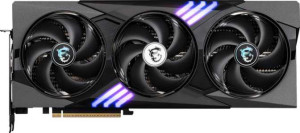
MSI GeForce RTX 5070 Ti Gaming Trio Plus
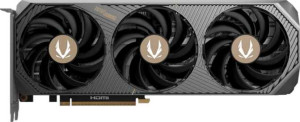
Zotac Gaming GeForce RTX 5070 Solid

MSI GeForce RTX 5070 Ti Gaming Trio Plus Zotac Gaming GeForce RTX 5070 Solid

Overview

Welcome to our in-depth specification comparison between the MSI GeForce RTX 5070 Ti Gaming Trio Plus and the Zotac Gaming GeForce RTX 5070 Solid — two Blackwell-architecture GPUs built on the same 5nm process but targeting different ends of the performance spectrum. We examine key battlegrounds including raw compute power, memory configuration, physical dimensions, and power consumption to help you decide which card best fits your needs.

Common Features

  • GPU memory speed is 1750 MHz on both products.
  • Both products support Double Precision Floating Point (DPFP).
  • Effective memory speed is 28000 MHz on both products.
  • Both products use GDDR7 memory.
  • Both products support ECC memory.
  • Both products support DirectX 12 Ultimate.
  • OpenGL version is 4.6 on both products.
  • OpenCL version is 3 on both products.
  • Multi-display technology is supported on both products.
  • Ray tracing is supported on both products.
  • 3D is supported on both products.
  • DLSS is supported on both products.
  • XeSS (XMX) is not available on either product.
  • Both products have an HDMI output.
  • Both products have 1 HDMI port.
  • HDMI version is HDMI 2.1b on both products.
  • Both products have 3 DisplayPort outputs.
  • Neither product has USB-C ports, DVI outputs, or mini DisplayPort outputs.
  • Both products are based on the Blackwell GPU architecture.
  • Both products use PCIe version 5.
  • Semiconductor size is 5 nm on both products.
  • Neither product has air-water cooling.

Main Differences

  • GPU clock speed is 2295 MHz on MSI GeForce RTX 5070 Ti Gaming Trio Plus and 2325 MHz on Zotac Gaming GeForce RTX 5070 Solid.
  • GPU turbo speed is 2452 MHz on MSI GeForce RTX 5070 Ti Gaming Trio Plus and 2512 MHz on Zotac Gaming GeForce RTX 5070 Solid.
  • Pixel rate is 235.4 GPixel/s on MSI GeForce RTX 5070 Ti Gaming Trio Plus and 201 GPixel/s on Zotac Gaming GeForce RTX 5070 Solid.
  • Floating-point performance is 43.94 TFLOPS on MSI GeForce RTX 5070 Ti Gaming Trio Plus and 30.87 TFLOPS on Zotac Gaming GeForce RTX 5070 Solid.
  • Texture rate is 686.6 GTexels/s on MSI GeForce RTX 5070 Ti Gaming Trio Plus and 482.3 GTexels/s on Zotac Gaming GeForce RTX 5070 Solid.
  • Shading units number 8960 on MSI GeForce RTX 5070 Ti Gaming Trio Plus and 6144 on Zotac Gaming GeForce RTX 5070 Solid.
  • Texture mapping units (TMUs) total 280 on MSI GeForce RTX 5070 Ti Gaming Trio Plus and 192 on Zotac Gaming GeForce RTX 5070 Solid.
  • Render output units (ROPs) total 96 on MSI GeForce RTX 5070 Ti Gaming Trio Plus and 80 on Zotac Gaming GeForce RTX 5070 Solid.
  • Maximum memory bandwidth is 896 GB/s on MSI GeForce RTX 5070 Ti Gaming Trio Plus and 672 GB/s on Zotac Gaming GeForce RTX 5070 Solid.
  • VRAM is 16GB on MSI GeForce RTX 5070 Ti Gaming Trio Plus and 12GB on Zotac Gaming GeForce RTX 5070 Solid.
  • Memory bus width is 256-bit on MSI GeForce RTX 5070 Ti Gaming Trio Plus and 192-bit on Zotac Gaming GeForce RTX 5070 Solid.
  • Thermal Design Power (TDP) is 300W on MSI GeForce RTX 5070 Ti Gaming Trio Plus and 250W on Zotac Gaming GeForce RTX 5070 Solid.
  • Number of transistors is 45600 million on MSI GeForce RTX 5070 Ti Gaming Trio Plus and 31100 million on Zotac Gaming GeForce RTX 5070 Solid.
  • Width is 338 mm on MSI GeForce RTX 5070 Ti Gaming Trio Plus and 304.4 mm on Zotac Gaming GeForce RTX 5070 Solid.
  • Height is 140 mm on MSI GeForce RTX 5070 Ti Gaming Trio Plus and 115.8 mm on Zotac Gaming GeForce RTX 5070 Solid.
Specs Comparison
MSI GeForce RTX 5070 Ti Gaming Trio Plus

MSI GeForce RTX 5070 Ti Gaming Trio Plus

Zotac Gaming GeForce RTX 5070 Solid

Zotac Gaming GeForce RTX 5070 Solid

Performance:
GPU clock speed 2295 MHz 2325 MHz
GPU turbo 2452 MHz 2512 MHz
pixel rate 235.4 GPixel/s 201 GPixel/s
floating-point performance 43.94 TFLOPS 30.87 TFLOPS
texture rate 686.6 GTexels/s 482.3 GTexels/s
GPU memory speed 1750 MHz 1750 MHz
shading units 8960 6144
texture mapping units (TMUs) 280 192
render output units (ROPs) 96 80
Has Double Precision Floating Point (DPFP)

At first glance, the Zotac Gaming GeForce RTX 5070 Solid appears to have a clock speed edge, running a slightly higher base of 2325 MHz and a turbo of 2512 MHz compared to the MSI Gaming Trio Plus at 2295 MHz base and 2452 MHz turbo. However, clock speed alone is a misleading metric when the underlying silicon differs significantly — and here it differs substantially.

The MSI GeForce RTX 5070 Ti Gaming Trio Plus carries 8960 shading units, 280 TMUs, and 96 ROPs, versus the Zotac's 6144 shading units, 192 TMUs, and 80 ROPs. This translates directly into raw throughput figures that are not close: the MSI delivers 43.94 TFLOPS of floating-point performance and a texture rate of 686.6 GTexels/s, while the Zotac reaches 30.87 TFLOPS and 482.3 GTexels/s. That is roughly a 42% compute advantage for the MSI — a gap no clock speed delta can bridge. Similarly, the MSI's pixel rate of 235.4 GPixel/s versus 201 GPixel/s on the Zotac means faster rasterization and better high-resolution output throughput.

Both cards share identical GPU memory speed at 1750 MHz and both support Double Precision Floating Point, so those are non-differentiating factors. The conclusion here is unambiguous: the MSI Gaming Trio Plus holds a decisive performance advantage across every meaningful compute metric, making it the clear winner in this group for workloads ranging from gaming at high resolutions to GPU-accelerated tasks.

Memory:
effective memory speed 28000 MHz 28000 MHz
maximum memory bandwidth 896 GB/s 672 GB/s
VRAM 16GB 12GB
GDDR version GDDR7 GDDR7
memory bus width 256-bit 192-bit
Supports ECC memory

Both cards run GDDR7 memory at an identical effective speed of 28000 MHz, so the generational technology is on equal footing. Where they diverge sharply is in bus width and capacity: the MSI GeForce RTX 5070 Ti Gaming Trio Plus uses a 256-bit memory interface paired with 16GB of VRAM, while the Zotac Gaming GeForce RTX 5070 Solid operates on a narrower 192-bit bus with 12GB.

That bus width difference has a direct, arithmetic consequence on bandwidth — the MSI delivers 896 GB/s versus the Zotac's 672 GB/s. In practice, higher memory bandwidth means the GPU can feed its shading units more data per second, which matters most in demanding scenarios like 4K gaming, high-resolution texture rendering, and AI-accelerated workloads. The 4GB VRAM advantage also becomes relevant as modern games and creative applications increasingly push past the 12GB threshold, meaning the Zotac is more likely to encounter VRAM pressure in future titles or large-asset workloads. Both cards support ECC memory, which is a shared feature relevant for professional and compute use cases requiring error correction.

The memory group verdict strongly favors the MSI Gaming Trio Plus. Its wider bus, greater bandwidth, and larger VRAM pool compound into a meaningful real-world advantage — particularly for users targeting high-resolution gaming or GPU compute tasks where memory capacity and throughput are frequent bottlenecks.

Features:
DirectX version DirectX 12 Ultimate DirectX 12 Ultimate
OpenGL version 4.6 4.6
OpenCL version 3 3
Supports multi-display technology
supports ray tracing
Supports 3D
supports DLSS
has XeSS (XMX)
AMD SAM / Intel Resizable BAR Intel Resizable BAR Intel Resizable BAR
has LHR
has RGB lighting
supported displays 4 4

Across every single feature data point provided, the MSI GeForce RTX 5070 Ti Gaming Trio Plus and the Zotac Gaming GeForce RTX 5070 Solid are in complete lockstep. Both support DirectX 12 Ultimate, ray tracing, and DLSS — the three pillars of modern GPU feature sets. DirectX 12 Ultimate ensures compatibility with the full suite of next-generation rendering techniques, while DLSS provides AI-driven upscaling that can significantly boost frame rates with minimal visual quality loss, a practically essential feature for high-resolution gaming.

Both cards also share Intel Resizable BAR support, which allows the CPU to access the full GPU frame buffer at once rather than in smaller chunks — a feature that can yield measurable frame rate improvements in supported titles. Multi-display support up to 4 simultaneous displays is identical on both, making either card equally capable for productivity multi-monitor setups or sim-racing rigs. Neither card carries LHR restrictions, and both include RGB lighting for those to whom aesthetics matter.

This group is an unambiguous tie. There is not a single feature differentiator between these two cards in the provided data — a buyer choosing between them on the basis of software and feature support alone has no reason to favor one over the other. The decision must rest on the performance and memory differences analyzed in the other groups.

Ports:
has an HDMI output
HDMI ports 1 1
HDMI version HDMI 2.1b HDMI 2.1b
DisplayPort outputs 3 3
USB-C ports 0 0
DVI outputs 0 0
mini DisplayPort outputs 0 0

Port configurations on both cards are identical in every respect. Each offers one HDMI 2.1b output and three DisplayPort outputs, totaling four display connections — consistent with the four-display limit noted in the features group. HDMI 2.1b is the latest HDMI standard, capable of handling 4K at high refresh rates and 8K output, making it well-suited for modern high-end monitors and televisions alike.

Neither card includes USB-C, mini DisplayPort, or legacy DVI outputs. The absence of USB-C is worth noting for users who own newer monitors that rely on that connector, as an adapter would be required. However, since both cards share this limitation equally, it is not a differentiating factor between them.

This is another clean tie. Connectivity options are a non-issue when choosing between these two cards — the layout is identical, and neither holds any advantage for single-display, multi-monitor, or mixed-output setups.

General info:
GPU architecture Blackwell Blackwell
release date February 2025 March 2025
Thermal Design Power (TDP) 300W 250W
PCI Express (PCIe) version 5 5
semiconductor size 5 nm 5 nm
number of transistors 45600 million 31100 million
Has air-water cooling
width 338 mm 304.4 mm
height 140 mm 115.8 mm

Sharing the same Blackwell architecture, 5nm process node, and PCIe 5.0 interface, these two cards are built on the same generational foundation — but they represent different tiers within it. The MSI GeForce RTX 5070 Ti Gaming Trio Plus packs 45,600 million transistors versus 31,100 million on the Zotac Gaming GeForce RTX 5070 Solid, a roughly 47% larger die that directly underpins the substantial compute gap observed in the performance group.

That larger, more powerful die comes with a higher power requirement: the MSI draws 300W TDP compared to the Zotac's 250W. The 50W difference means users building or upgrading a system around the MSI will need to account for a more capable power supply and potentially greater heat output in the chassis. On physical footprint, the MSI is also notably larger at 338 × 140 mm versus 304.4 × 115.8 mm for the Zotac — a difference that matters in compact or mid-tower cases where clearance is tight.

Neither card offers liquid cooling, so both rely entirely on air cooling solutions. For this group, there is no single winner — the context determines the edge. The Zotac Solid has a clear advantage for users with power, thermal, or space constraints, while the MSI Gaming Trio Plus justifies its larger footprint and higher TDP through the significantly greater transistor count that fuels its performance lead.

Comparison Summary & Verdict

After reviewing the full specification breakdown, a clear picture emerges for each GPU. The MSI GeForce RTX 5070 Ti Gaming Trio Plus holds decisive advantages in raw power: its 43.94 TFLOPS floating-point performance, 8960 shading units, 16GB GDDR7 across a 256-bit bus, and 896 GB/s memory bandwidth make it the stronger choice for demanding workloads and high-resolution gaming. The trade-off is a larger physical footprint and a 300W TDP. Meanwhile, the Zotac Gaming GeForce RTX 5070 Solid offers higher base and turbo clock speeds, a more compact 304.4 x 115.8 mm form factor, and a lower 250W power draw, making it appealing for tighter builds with modest power budgets. Both cards share DLSS support, ray tracing, DirectX 12 Ultimate, and identical port configurations, so the decision comes down to performance headroom versus size and efficiency.

MSI GeForce RTX 5070 Ti Gaming Trio Plus
Buy MSI GeForce RTX 5070 Ti Gaming Trio Plus if...

Buy the MSI GeForce RTX 5070 Ti Gaming Trio Plus if you want maximum compute performance, more VRAM (16GB vs 12GB), and greater memory bandwidth for demanding games or GPU-accelerated workloads and your case and PSU can accommodate its larger size and 300W TDP.

Zotac Gaming GeForce RTX 5070 Solid
Buy Zotac Gaming GeForce RTX 5070 Solid if...

Buy the Zotac Gaming GeForce RTX 5070 Solid if you need a more compact card with a lower 250W power draw and slightly higher clock speeds, and the reduced shading units and 12GB of VRAM are sufficient for your typical workloads.