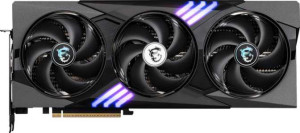
MSI GeForce RTX 5070 Ti Gaming Trio Plus
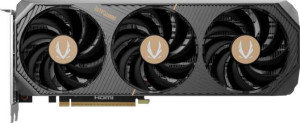
Zotac Gaming GeForce RTX 5070 Ti Solid SFF OC

MSI GeForce RTX 5070 Ti Gaming Trio Plus Zotac Gaming GeForce RTX 5070 Ti Solid SFF OC

Overview

Welcome to our detailed spec comparison of the MSI GeForce RTX 5070 Ti Gaming Trio Plus and the Zotac Gaming GeForce RTX 5070 Ti Solid SFF OC. Both cards are built on the same Blackwell architecture and share an identical memory configuration, yet they diverge in ways that matter depending on your setup. We examine their GPU boost clocks, raw compute throughput, and physical dimensions to help you decide which card belongs in your build.

Common Features

  • Both cards share a base GPU clock speed of 2295 MHz.
  • Both cards have a GPU memory speed of 1750 MHz.
  • Both cards feature 8960 shading units.
  • Both cards have 280 texture mapping units (TMUs).
  • Both cards have 96 render output units (ROPs).
  • Double Precision Floating Point (DPFP) is supported on both cards.
  • Both cards have an effective memory speed of 28000 MHz.
  • Both cards offer a maximum memory bandwidth of 896 GB/s.
  • Both cards come with 16GB of VRAM.
  • Both cards use GDDR7 memory.
  • Both cards have a 256-bit memory bus width.
  • ECC memory is supported on both cards.
  • Both cards support DirectX 12 Ultimate.
  • Both cards support OpenGL version 4.6.
  • Both cards support OpenCL version 3.
  • Multi-display technology is supported on both cards.
  • Ray tracing is supported on both cards.
  • DLSS is supported on both cards.
  • 3D support is available on both cards.
  • XeSS (XMX) support is not available on either card.
  • Both cards include one HDMI 2.1b output.
  • Both cards include three DisplayPort outputs.
  • Neither card has USB-C or DVI outputs.
  • Both cards are built on the Blackwell GPU architecture.
  • Both cards have a Thermal Design Power (TDP) of 300W.
  • Both cards use PCIe version 5.
  • Both cards are manufactured on a 5 nm semiconductor process.
  • Both cards contain 45600 million transistors.
  • Air-water cooling is not available on either card.

Main Differences

  • GPU turbo clock speed is 2452 MHz on MSI GeForce RTX 5070 Ti Gaming Trio Plus and 2482 MHz on Zotac Gaming GeForce RTX 5070 Ti Solid SFF OC.
  • Pixel rate is 235.4 GPixel/s on MSI GeForce RTX 5070 Ti Gaming Trio Plus and 238.3 GPixel/s on Zotac Gaming GeForce RTX 5070 Ti Solid SFF OC.
  • Floating-point performance is 43.94 TFLOPS on MSI GeForce RTX 5070 Ti Gaming Trio Plus and 44.48 TFLOPS on Zotac Gaming GeForce RTX 5070 Ti Solid SFF OC.
  • Texture rate is 686.6 GTexels/s on MSI GeForce RTX 5070 Ti Gaming Trio Plus and 695 GTexels/s on Zotac Gaming GeForce RTX 5070 Ti Solid SFF OC.
  • Card width is 338 mm on MSI GeForce RTX 5070 Ti Gaming Trio Plus and 304.4 mm on Zotac Gaming GeForce RTX 5070 Ti Solid SFF OC.
  • Card height is 140 mm on MSI GeForce RTX 5070 Ti Gaming Trio Plus and 115.8 mm on Zotac Gaming GeForce RTX 5070 Ti Solid SFF OC.
Specs Comparison
MSI GeForce RTX 5070 Ti Gaming Trio Plus

MSI GeForce RTX 5070 Ti Gaming Trio Plus

Zotac Gaming GeForce RTX 5070 Ti Solid SFF OC

Zotac Gaming GeForce RTX 5070 Ti Solid SFF OC

Performance:
GPU clock speed 2295 MHz 2295 MHz
GPU turbo 2452 MHz 2482 MHz
pixel rate 235.4 GPixel/s 238.3 GPixel/s
floating-point performance 43.94 TFLOPS 44.48 TFLOPS
texture rate 686.6 GTexels/s 695 GTexels/s
GPU memory speed 1750 MHz 1750 MHz
shading units 8960 8960
texture mapping units (TMUs) 280 280
render output units (ROPs) 96 96
Has Double Precision Floating Point (DPFP)

At the core, both the MSI GeForce RTX 5070 Ti Gaming Trio Plus and the Zotac Gaming GeForce RTX 5070 Ti Solid SFF OC are built on identical silicon foundations: the same 8960 shading units, 280 TMUs, 96 ROPs, and a matching base clock of 2295 MHz with 1750 MHz memory speed. This means that out of the box, before boost clocks come into play, both cards perform on perfectly equal footing — a reflection of them sharing the same GPU die and memory configuration.

The only meaningful differentiator within this group is the GPU turbo (boost) clock. The Zotac SFF OC reaches 2482 MHz versus the MSI's 2452 MHz — a 30 MHz advantage that cascades into marginally higher derived metrics: the Zotac edges ahead with 44.48 TFLOPS of floating-point performance versus 43.94 TFLOPS, and a texture rate of 695 GTexels/s versus 686.6 GTexels/s. In practice, a ~1.2% boost clock advantage of this magnitude will not produce perceptible differences in real-world gaming or rendering workloads — it falls well within the noise floor of typical frame-time variance.

In summary, for the Performance group, these two cards are effectively evenly matched. The Zotac holds a technical edge on paper thanks to its slightly higher factory overclock, but the margin is too slim to influence a purchase decision on performance grounds alone. Users should look to other factors — such as thermal design, form factor, or price — to differentiate between the two.
Memory:
effective memory speed 28000 MHz 28000 MHz
maximum memory bandwidth 896 GB/s 896 GB/s
VRAM 16GB 16GB
GDDR version GDDR7 GDDR7
memory bus width 256-bit 256-bit
Supports ECC memory

The memory subsystem of both cards is completely identical across every measurable dimension. Both the MSI Gaming Trio Plus and the Zotac SFF OC feature 16GB of GDDR7 running on a 256-bit bus at an effective speed of 28000 MHz, delivering a maximum bandwidth of 896 GB/s. GDDR7 is the latest generation of graphics memory, and its combination with a 256-bit interface here represents a meaningful generational leap in bandwidth efficiency over previous-gen GDDR6X solutions at the same bus width.

The real-world implication of 896 GB/s of bandwidth is significant: it ensures the GPU's shader array is rarely starved of data, particularly in high-resolution texturing, ray tracing workloads, or AI-accelerated tasks that demand rapid memory access. The 16GB capacity, meanwhile, provides ample headroom for 4K gaming with high-resolution texture packs, as well as emerging use cases like local AI inference and content creation pipelines that are increasingly VRAM-hungry. Both cards also support ECC memory, a feature more commonly associated with professional-grade hardware, which adds a layer of data integrity for compute and workstation tasks.

This group results in a complete tie. There is no differentiator here whatsoever — every spec, from capacity to speed to bus width, is shared between the two cards. Memory performance will be indistinguishable in any real-world scenario.

Features:
DirectX version DirectX 12 Ultimate DirectX 12 Ultimate
OpenGL version 4.6 4.6
OpenCL version 3 3
Supports multi-display technology
supports ray tracing
Supports 3D
supports DLSS
has XeSS (XMX)
AMD SAM / Intel Resizable BAR Intel Resizable BAR Intel Resizable BAR
has LHR
has RGB lighting
supported displays 4 4

Feature parity between the MSI Gaming Trio Plus and the Zotac SFF OC is total in this category. Both cards support DirectX 12 Ultimate — the current gold standard for modern gaming APIs, enabling hardware-accelerated ray tracing, mesh shaders, and variable rate shading in supported titles. Alongside this, both carry full ray tracing and DLSS support, the latter being NVIDIA's AI-driven upscaling technology that allows for significantly higher frame rates with minimal visual quality trade-offs, particularly valuable at 4K.

Both cards are also capable of driving up to 4 simultaneous displays and support Intel's Resizable BAR, a PCIe feature that allows the CPU to access the full GPU frame buffer at once rather than in smaller chunks — translating to measurable performance gains in a range of modern titles when paired with a compatible platform. Neither card carries LHR (Lite Hash Rate) restrictions, which is relevant for compute workloads beyond gaming. RGB lighting is present on both, though aesthetic preferences will vary by user.

Much like the memory group, this category yields a complete tie. Every feature flag is shared identically between the two cards — there is no software or API capability that distinguishes one from the other. Buyers can expect an identical feature set regardless of which model they choose.

Ports:
has an HDMI output
HDMI ports 1 1
HDMI version HDMI 2.1b HDMI 2.1b
DisplayPort outputs 3 3
USB-C ports 0 0
DVI outputs 0 0
mini DisplayPort outputs 0 0

Connectivity is another area where these two cards are indistinguishable. Both the MSI Gaming Trio Plus and the Zotac SFF OC offer a layout of 1 HDMI 2.1b and 3 DisplayPort outputs — a configuration that comfortably supports up to four monitors simultaneously, consistent with the multi-display capability noted in their feature specs. The absence of USB-C, DVI, and mini DisplayPort outputs is equally shared, and unremarkable for modern high-end discrete GPUs where those legacy or alternative connectors have largely been phased out.

The inclusion of HDMI 2.1b is worth highlighting: this revision supports up to 10K resolution, high frame rate modes at 4K and beyond, and Variable Refresh Rate (VRR) — making it fully compatible with the latest generation of gaming monitors and televisions without the need for adapters. The three DisplayPort outputs similarly ensure broad compatibility with high-refresh-rate PC monitors across the board.

There is no differentiator to speak of here — this group is a complete tie. Users of either card will have access to the same display ecosystem, the same maximum connected screen count, and the same protocol capabilities. Port selection should play no role in choosing between these two models.

General info:
GPU architecture Blackwell Blackwell
release date February 2025 March 2025
Thermal Design Power (TDP) 300W 300W
PCI Express (PCIe) version 5 5
semiconductor size 5 nm 5 nm
number of transistors 45600 million 45600 million
Has air-water cooling
width 338 mm 304.4 mm
height 140 mm 115.8 mm

Under the hood, these two cards are cut from exactly the same cloth. Both are built on NVIDIA's Blackwell architecture using a 5 nm process node, pack 45.6 billion transistors, connect via PCIe 5.0, and carry an identical 300W TDP. This means power supply requirements, system compatibility, and thermal output are equivalent — buyers of either card should plan their builds around the same power headroom.

Where this group finally reveals a meaningful split is in physical dimensions. The MSI Gaming Trio Plus measures 338 mm × 140 mm, while the Zotac SFF OC comes in considerably more compact at 304.4 mm × 115.8 mm — roughly 10% shorter and 17% narrower. For users building in small form factor cases, this distinction is not cosmetic; it can be the difference between a card fitting or not. The Zotac's ″SFF″ designation is well-earned, and it achieves this smaller footprint while drawing the same 300W and running on identical silicon — a notable engineering accomplishment.

For this group, the Zotac SFF OC holds a clear contextual advantage for space-constrained builds. Users with full-tower or mid-tower cases where clearance is not a concern will find the size difference irrelevant, but for anyone targeting a compact system, the Zotac's smaller footprint makes it the only viable option of the two based solely on these specs.

Comparison Summary & Verdict

After a thorough look at both cards, it is clear they are closely matched siblings sharing the same Blackwell architecture, 16GB GDDR7 memory, 300W TDP, and a full feature set including ray tracing and DLSS. The edge in raw performance goes to the Zotac Gaming GeForce RTX 5070 Ti Solid SFF OC, which posts a higher GPU turbo clock of 2482 MHz, a slightly better floating-point performance of 44.48 TFLOPS, and a superior texture rate of 695 GTexels/s. However, its most defining advantage is its compact form factor, measuring 304.4 mm wide and 115.8 mm tall, making it ideal for small form factor builds. The MSI GeForce RTX 5070 Ti Gaming Trio Plus, while marginally slower, is the better fit for standard mid-tower cases where its larger cooler may offer tangible thermal headroom during extended gaming sessions.

MSI GeForce RTX 5070 Ti Gaming Trio Plus
Buy MSI GeForce RTX 5070 Ti Gaming Trio Plus if...

Buy the MSI GeForce RTX 5070 Ti Gaming Trio Plus if you are building in a standard mid-tower case and want a card with a larger cooler that may provide better thermal headroom during long gaming sessions.

Zotac Gaming GeForce RTX 5070 Ti Solid SFF OC
Buy Zotac Gaming GeForce RTX 5070 Ti Solid SFF OC if...

Buy the Zotac Gaming GeForce RTX 5070 Ti Solid SFF OC if you need a compact card for a small form factor build, as it also edges ahead with a higher boost clock, better pixel rate, and superior floating-point performance.