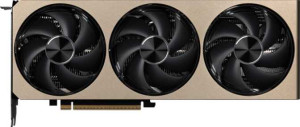
MSI GeForce RTX 5070 Ti Inspire 3X Plus
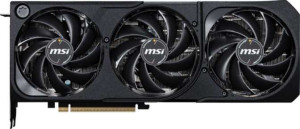
MSI GeForce RTX 5070 Ti Shadow 3X OC

MSI GeForce RTX 5070 Ti Inspire 3X Plus MSI GeForce RTX 5070 Ti Shadow 3X OC

Overview

When choosing between two premium graphics cards from the same product line, the finer details become crucial. This head-to-head comparison examines the MSI GeForce RTX 5070 Ti Inspire 3X Plus against the MSI GeForce RTX 5070 Ti Shadow 3X OC, two Blackwell-based GPUs that share a striking amount of common ground. We explore their differences across boost clock speeds, compute throughput, and physical dimensions to help you determine which card is the right fit for your system.

Common Features

  • Both cards have a base GPU clock speed of 2295 MHz.
  • Both cards have a GPU memory speed of 1750 MHz.
  • Both cards feature 8960 shading units.
  • Both cards have 280 texture mapping units (TMUs).
  • Both cards have 96 render output units (ROPs).
  • Double Precision Floating Point (DPFP) is supported on both cards.
  • Both cards have an effective memory speed of 28000 MHz.
  • Both cards offer a maximum memory bandwidth of 896 GB/s.
  • Both cards come with 16GB of VRAM.
  • Both cards use GDDR7 memory.
  • Both cards have a 256-bit memory bus width.
  • ECC memory is supported on both cards.
  • Both cards support DirectX 12 Ultimate.
  • Both cards support OpenGL version 4.6.
  • Both cards support OpenCL version 3.
  • Multi-display technology is supported on both cards.
  • Ray tracing is supported on both cards.
  • DLSS is supported on both cards.
  • XeSS (XMX) is not available on either card.
  • Both cards have one HDMI 2.1b output and three DisplayPort outputs, with no USB-C or DVI outputs.
  • Both cards are based on the Blackwell GPU architecture.
  • Both cards have a Thermal Design Power (TDP) of 300W.
  • Both cards use PCIe version 5.
  • Both cards are manufactured on a 5 nm process with 45,600 million transistors.
  • Air-water cooling is not available on either card.
  • 3D support is available on both cards.

Main Differences

  • GPU turbo clock speed is 2452 MHz on MSI GeForce RTX 5070 Ti Inspire 3X Plus and 2482 MHz on MSI GeForce RTX 5070 Ti Shadow 3X OC.
  • Pixel rate is 235.4 GPixel/s on MSI GeForce RTX 5070 Ti Inspire 3X Plus and 238.3 GPixel/s on MSI GeForce RTX 5070 Ti Shadow 3X OC.
  • Floating-point performance is 43.94 TFLOPS on MSI GeForce RTX 5070 Ti Inspire 3X Plus and 44.48 TFLOPS on MSI GeForce RTX 5070 Ti Shadow 3X OC.
  • Texture rate is 686.6 GTexels/s on MSI GeForce RTX 5070 Ti Inspire 3X Plus and 695 GTexels/s on MSI GeForce RTX 5070 Ti Shadow 3X OC.
  • Width is 288 mm on MSI GeForce RTX 5070 Ti Inspire 3X Plus and 303 mm on MSI GeForce RTX 5070 Ti Shadow 3X OC.
  • Height is 112 mm on MSI GeForce RTX 5070 Ti Inspire 3X Plus and 121 mm on MSI GeForce RTX 5070 Ti Shadow 3X OC.
Specs Comparison
MSI GeForce RTX 5070 Ti Inspire 3X Plus

MSI GeForce RTX 5070 Ti Inspire 3X Plus

MSI GeForce RTX 5070 Ti Shadow 3X OC

MSI GeForce RTX 5070 Ti Shadow 3X OC

Performance:
GPU clock speed 2295 MHz 2295 MHz
GPU turbo 2452 MHz 2482 MHz
pixel rate 235.4 GPixel/s 238.3 GPixel/s
floating-point performance 43.94 TFLOPS 44.48 TFLOPS
texture rate 686.6 GTexels/s 695 GTexels/s
GPU memory speed 1750 MHz 1750 MHz
shading units 8960 8960
texture mapping units (TMUs) 280 280
render output units (ROPs) 96 96
Has Double Precision Floating Point (DPFP)

Both cards share an identical foundation: the same 2295 MHz base clock, 8960 shading units, 280 TMUs, 96 ROPs, and 1750 MHz memory speed. This tells you they are built on the exact same silicon configuration with no architectural differences between them — the distinction comes down entirely to how aggressively each card boosts under load.

The MSI GeForce RTX 5070 Ti Shadow 3X OC holds a consistent, if modest, edge across every boost-dependent metric. Its 2482 MHz turbo clock outpaces the Inspire's 2452 MHz by 30 MHz, which cascades into slightly higher throughput across the board: 44.48 TFLOPS of floating-point performance versus 43.94 TFLOPS, and a texture rate of 695 GTexels/s against 686.6 GTexels/s. In real-world terms, a ~1.2% clock advantage like this rarely produces a perceptible difference in typical gaming workloads, but it can matter at the margins in heavily compute-bound scenarios or when sustained boost clocks are maintained under thermal pressure.

The Shadow 3X OC has the performance edge in this group, strictly by virtue of its higher factory overclock. That said, the gap is narrow enough that real-world frame rates will be statistically indistinguishable in most use cases. Buyers prioritizing peak theoretical throughput should lean toward the Shadow 3X OC, while those who find the Inspire's other characteristics more appealing can do so without meaningfully sacrificing performance.

Memory:
effective memory speed 28000 MHz 28000 MHz
maximum memory bandwidth 896 GB/s 896 GB/s
VRAM 16GB 16GB
GDDR version GDDR7 GDDR7
memory bus width 256-bit 256-bit
Supports ECC memory

Memory is one area where these two cards are in complete lockstep. Both the Inspire 3X Plus and the Shadow 3X OC carry 16GB of GDDR7 across a 256-bit bus, delivering an identical 896 GB/s of peak memory bandwidth at an effective speed of 28000 MHz. There is not a single differentiating data point between them in this category.

The specs themselves deserve context, though. GDDR7 represents a meaningful generational leap in memory technology, and 896 GB/s of bandwidth is substantial — enough to feed even the most texture-heavy and high-resolution workloads without becoming a bottleneck. The 16GB VRAM capacity is well-suited for 4K gaming, large generative AI models running locally, and creative workloads involving high-resolution assets. ECC memory support on both cards is a practical bonus for users doing precision compute or professional workloads where data integrity matters.

This group is a complete tie. Memory configuration will play no role whatsoever in choosing between these two cards — any difference in real-world performance will trace back entirely to other factors such as the clock speed delta covered in the Performance group.

Features:
DirectX version DirectX 12 Ultimate DirectX 12 Ultimate
OpenGL version 4.6 4.6
OpenCL version 3 3
Supports multi-display technology
supports ray tracing
Supports 3D
supports DLSS
has XeSS (XMX)
AMD SAM / Intel Resizable BAR Intel Resizable BAR Intel Resizable BAR
has LHR
has RGB lighting
supported displays 4 4

Feature parity is absolute between these two cards. Both support DirectX 12 Ultimate and DLSS — the two most practically significant entries in this group. DirectX 12 Ultimate ensures compatibility with the full suite of modern rendering techniques, including hardware-accelerated ray tracing, while DLSS gives users access to AI-driven upscaling that can dramatically boost frame rates with minimal visual cost, particularly valuable at 4K.

Multi-monitor users are equally served on both sides, with support for up to 4 simultaneous displays and Intel Resizable BAR enabled on each card. Resizable BAR allows the CPU to access the full GPU frame buffer at once rather than in chunks, which can yield modest performance gains in CPU-bound scenarios — and since both cards have it, neither gains an edge here. The absence of LHR (Lite Hash Rate) on both is also worth noting for those aware of it, though its practical relevance for gaming and creative workloads is negligible.

As with the Memory group, this is a complete tie. The feature set is identical down to every line item, so software capabilities and API support should not factor into a decision between the Inspire 3X Plus and the Shadow 3X OC.

Ports:
has an HDMI output
HDMI ports 1 1
HDMI version HDMI 2.1b HDMI 2.1b
DisplayPort outputs 3 3
USB-C ports 0 0
DVI outputs 0 0
mini DisplayPort outputs 0 0

Connectivity is another area where no distinction exists between the two cards. Both the Inspire 3X Plus and the Shadow 3X OC offer the same port layout: 3 DisplayPort outputs and 1 HDMI 2.1b port, totaling four outputs — which aligns with the four-display limit noted in the Features group. The absence of USB-C, DVI, and mini DisplayPort on both cards is consistent with modern GPU design trends, where those interfaces have been largely phased out in favor of full-size DisplayPort and HDMI.

The practical significance of HDMI 2.1b should not be overlooked. This latest HDMI revision supports up to 10K resolution and high frame rate outputs, making it fully capable of driving next-generation displays and TVs without any adapter or bandwidth compromises. Combined with three DisplayPort connectors — which similarly handle high-refresh, high-resolution monitors with ease — both cards are well-equipped for demanding multi-monitor setups or single high-end display configurations alike.

There is no differentiator to call out here: port selection is a complete tie. Connectivity preferences or existing display infrastructure will not give either card an advantage in this comparison.

General info:
GPU architecture Blackwell Blackwell
release date February 2025 February 2025
Thermal Design Power (TDP) 300W 300W
PCI Express (PCIe) version 5 5
semiconductor size 5 nm 5 nm
number of transistors 45600 million 45600 million
Has air-water cooling
width 288 mm 303 mm
height 112 mm 121 mm

At the architectural level, these two cards are indistinguishable. Both are built on the Blackwell architecture using a 5nm process node, pack the same 45.6 billion transistors, connect via PCIe 5.0, and draw a identical 300W TDP. Shared power consumption is particularly relevant for system builders — at 300W, both cards demand the same PSU headroom and will generate equivalent heat loads under sustained workloads, making thermal planning identical for either choice.

The one concrete differentiator in this group is physical size. The Inspire 3X Plus measures 288 mm × 112 mm, while the Shadow 3X OC is noticeably larger at 303 mm × 121 mm — a difference of 15mm in length and 9mm in height. In practice, this gap matters most for compact or mid-tower builds where clearance between the GPU and the front panel, drive cages, or case walls is tight. The Inspire's smaller footprint gives it a meaningful installation advantage in space-constrained cases, whereas the Shadow's additional volume may contribute to its slightly higher factory overclock by accommodating a more expansive cooling solution.

For users with full-tower cases or standard ATX builds where space is not a concern, this group is effectively a tie on all meaningful specs. However, in smaller enclosures, the Inspire 3X Plus holds a clear edge purely on the basis of its more compact dimensions.

Comparison Summary & Verdict

The MSI GeForce RTX 5070 Ti Inspire 3X Plus and the MSI GeForce RTX 5070 Ti Shadow 3X OC are remarkably similar cards, sharing the same Blackwell architecture, 16GB of GDDR7 memory on a 256-bit bus, and a 300W TDP. The Shadow 3X OC holds a measurable performance edge, delivering a higher GPU turbo clock of 2482 MHz, a floating-point performance of 44.48 TFLOPS, and a faster texture rate of 695 GTexels/s. However, the Inspire 3X Plus counters with a notably more compact form factor, measuring 288 mm wide and 112 mm tall versus 303 mm and 121 mm on the Shadow 3X OC. For builders prioritizing peak performance above all else, the Shadow 3X OC is the stronger choice. For those working within tight case clearances, the Inspire 3X Plus offers a meaningful size advantage without sacrificing core features.

MSI GeForce RTX 5070 Ti Inspire 3X Plus
Buy MSI GeForce RTX 5070 Ti Inspire 3X Plus if...

Buy the MSI GeForce RTX 5070 Ti Inspire 3X Plus if you need a more compact card, as its smaller dimensions make it the better fit for builds with tight case clearances.

MSI GeForce RTX 5070 Ti Shadow 3X OC
Buy MSI GeForce RTX 5070 Ti Shadow 3X OC if...

Choose the MSI GeForce RTX 5070 Ti Shadow 3X OC if you want the highest boost clock speed and best raw compute performance available between these two cards.