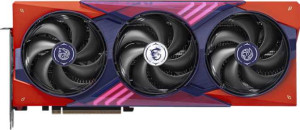
MSI GeForce RTX 5070 Ti MLG Edition OC
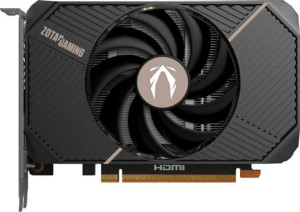
Zotac Gaming GeForce RTX 5050 Solo

MSI GeForce RTX 5070 Ti MLG Edition OC Zotac Gaming GeForce RTX 5050 Solo

Common Features

  • Both products have a GPU turbo of 2572 MHz.
  • Both products support Double Precision Floating Point (DPFP).
  • Both products support DirectX version 12 Ultimate.
  • Both products support OpenGL version 4.6.
  • Both products support OpenCL version 3.
  • Both products support multi-display technology.
  • Both products support ray tracing.
  • Both products support 3D.
  • Both products support DLSS.
  • Both products have an HDMI output.
  • Both products have 1 HDMI port.
  • Both products use HDMI version 2.1b.
  • Both products have 3 DisplayPort outputs.
  • Both products have 5 nm semiconductor size.
  • Both products use PCI Express (PCIe) version 5.
  • Both products are not equipped with air-water cooling.
  • Both products have the Blackwell GPU architecture.

Main Differences

  • GPU clock speed is 2295 MHz on MSI GeForce RTX 5070 Ti MLG Edition OC and 2317 MHz on Zotac Gaming GeForce RTX 5050 Solo.
  • Pixel rate is 246.9 GPixel/s on MSI GeForce RTX 5070 Ti MLG Edition OC and 82.3 GPixel/s on Zotac Gaming GeForce RTX 5050 Solo.
  • Floating-point performance is 46.09 TFLOPS on MSI GeForce RTX 5070 Ti MLG Edition OC and 13.17 TFLOPS on Zotac Gaming GeForce RTX 5050 Solo.
  • Texture rate is 720.2 GTexels/s on MSI GeForce RTX 5070 Ti MLG Edition OC and 205.8 GTexels/s on Zotac Gaming GeForce RTX 5050 Solo.
  • GPU memory speed is 1750 MHz on MSI GeForce RTX 5070 Ti MLG Edition OC and 2500 MHz on Zotac Gaming GeForce RTX 5050 Solo.
  • Shading units are 8960 on MSI GeForce RTX 5070 Ti MLG Edition OC and 2560 on Zotac Gaming GeForce RTX 5050 Solo.
  • Texture mapping units (TMUs) are 280 on MSI GeForce RTX 5070 Ti MLG Edition OC and 80 on Zotac Gaming GeForce RTX 5050 Solo.
  • Render output units (ROPs) are 96 on MSI GeForce RTX 5070 Ti MLG Edition OC and 32 on Zotac Gaming GeForce RTX 5050 Solo.
  • Effective memory speed is 28000 MHz on MSI GeForce RTX 5070 Ti MLG Edition OC and 20000 MHz on Zotac Gaming GeForce RTX 5050 Solo.
  • Maximum memory bandwidth is 896 GB/s on MSI GeForce RTX 5070 Ti MLG Edition OC and 320 GB/s on Zotac Gaming GeForce RTX 5050 Solo.
  • VRAM is 16GB on MSI GeForce RTX 5070 Ti MLG Edition OC and 8GB on Zotac Gaming GeForce RTX 5050 Solo.
  • GDDR version is GDDR7 on MSI GeForce RTX 5070 Ti MLG Edition OC and GDDR6 on Zotac Gaming GeForce RTX 5050 Solo.
  • Memory bus width is 256-bit on MSI GeForce RTX 5070 Ti MLG Edition OC and 128-bit on Zotac Gaming GeForce RTX 5050 Solo.
  • Thermal Design Power (TDP) is 300W on MSI GeForce RTX 5070 Ti MLG Edition OC and 130W on Zotac Gaming GeForce RTX 5050 Solo.
  • Number of transistors is 45600 million on MSI GeForce RTX 5070 Ti MLG Edition OC and 16900 million on Zotac Gaming GeForce RTX 5050 Solo.
  • Width is 338 mm on MSI GeForce RTX 5070 Ti MLG Edition OC and 164.5 mm on Zotac Gaming GeForce RTX 5050 Solo.
  • Height is 140 mm on MSI GeForce RTX 5070 Ti MLG Edition OC and 111.2 mm on Zotac Gaming GeForce RTX 5050 Solo.
Specs Comparison
MSI GeForce RTX 5070 Ti MLG Edition OC

MSI GeForce RTX 5070 Ti MLG Edition OC

Zotac Gaming GeForce RTX 5050 Solo

Zotac Gaming GeForce RTX 5050 Solo

Performance:
GPU clock speed 2295 MHz 2317 MHz
GPU turbo 2572 MHz 2572 MHz
pixel rate 246.9 GPixel/s 82.3 GPixel/s
floating-point performance 46.09 TFLOPS 13.17 TFLOPS
texture rate 720.2 GTexels/s 205.8 GTexels/s
GPU memory speed 1750 MHz 2500 MHz
shading units 8960 2560
texture mapping units (TMUs) 280 80
render output units (ROPs) 96 32
Has Double Precision Floating Point (DPFP)

The MSI GeForce RTX 5070 Ti MLG Edition OC and the Zotac Gaming GeForce RTX 5050 Solo differ notably in their performance specifications. The MSI card has a GPU clock speed of 2295 MHz, while the Zotac card slightly outperforms it with a GPU clock speed of 2317 MHz. However, both products share the same GPU turbo frequency of 2572 MHz, meaning they both reach the same peak performance under load.

In terms of pixel rate, the MSI card stands out significantly, offering a pixel rate of 246.9 GPixel/s compared to the Zotac card's 82.3 GPixel/s. This marks a clear difference in how many pixels each can process per second. Additionally, the MSI model has a considerably higher floating-point performance, rated at 46.09 TFLOPS, whereas the Zotac card offers 13.17 TFLOPS.

The MSI card also excels in texture rate with 720.2 GTexels/s, outpacing the Zotac's 205.8 GTexels/s. For memory speed, the Zotac card leads with 2500 MHz, while the MSI card has a lower memory speed of 1750 MHz. Regarding architecture, the MSI card has 8960 shading units, 280 TMUs, and 96 ROPs, all of which surpass the Zotac's 2560 shading units, 80 TMUs, and 32 ROPs. Both cards support Double Precision Floating Point (DPFP), making them suitable for high-precision tasks.

Memory:
effective memory speed 28000 MHz 20000 MHz
maximum memory bandwidth 896 GB/s 320 GB/s
VRAM 16GB 8GB
GDDR version GDDR7 GDDR6
memory bus width 256-bit 128-bit
Supports ECC memory

The MSI GeForce RTX 5070 Ti MLG Edition OC and the Zotac Gaming GeForce RTX 5050 Solo differ significantly in their memory specifications. The MSI card features a higher effective memory speed of 28000 MHz compared to the Zotac card's 20000 MHz. This means that the MSI card has a faster memory transfer rate. The MSI card also boasts a much higher maximum memory bandwidth at 896 GB/s, whereas the Zotac card has 320 GB/s.

Another major difference lies in the VRAM capacity, with the MSI card offering 16GB of VRAM, double the 8GB of VRAM found in the Zotac card. Additionally, the MSI card uses the newer GDDR7 memory type, while the Zotac card uses GDDR6 memory. The memory bus width on the MSI card is also wider at 256-bit, compared to the 128-bit bus width on the Zotac card, which can contribute to greater overall performance.

Both products support ECC (Error-Correcting Code) memory, which is important for ensuring data integrity during computations. This feature is present in both the MSI and Zotac models, ensuring error correction in their memory systems.

Features:
DirectX version DirectX 12 Ultimate DirectX 12 Ultimate
OpenGL version 4.6 4.6
OpenCL version 3 3
Supports multi-display technology
supports ray tracing
Supports 3D
supports DLSS
has XeSS (XMX)
AMD SAM / Intel Resizable BAR Intel Resizable BAR Intel Resizable BAR
has LHR
has RGB lighting
supported displays 4 4

The MSI GeForce RTX 5070 Ti MLG Edition OC and the Zotac Gaming GeForce RTX 5050 Solo share identical feature sets across all categories in this group. Both cards support DirectX 12 Ultimate, OpenGL 4.6, and OpenCL 3, ensuring compatibility with modern games and applications. Additionally, both support multi-display technology, ray tracing, 3D support, and DLSS, offering a rich and immersive gaming experience.

Neither card includes XeSS (XMX) support, but both feature Intel Resizable BAR (AMD SAM is not listed for either). Neither card has LHR (Low Hash Rate) limitations, which is important for cryptocurrency mining performance. Additionally, both the MSI and Zotac cards come equipped with RGB lighting, enhancing visual appeal in compatible systems.

Both cards support up to four displays, providing ample connectivity for multi-monitor setups, making them suitable for both gaming and professional environments where multiple screens are needed.

Ports:
has an HDMI output
HDMI ports 1 1
HDMI version HDMI 2.1b HDMI 2.1b
DisplayPort outputs 3 3
USB-C ports 0 0
DVI outputs 0 0
mini DisplayPort outputs 0 0

The MSI GeForce RTX 5070 Ti MLG Edition OC and the Zotac Gaming GeForce RTX 5050 Solo share identical port configurations. Both cards are equipped with one HDMI output, which supports the HDMI 2.1b version. Additionally, both models offer three DisplayPort outputs, but neither has USB-C ports, DVI outputs, or mini DisplayPort outputs. These similarities ensure that both products are well-suited for modern display setups, with ample options for connecting multiple monitors.

Since both cards feature the same port configuration, users can expect the same connectivity capabilities, making either choice a solid option for multi-monitor gaming or productivity setups.

General info:
GPU architecture Blackwell Blackwell
release date August 2025 June 2025
Thermal Design Power (TDP) 300W 130W
PCI Express (PCIe) version 5 5
semiconductor size 5 nm 5 nm
number of transistors 45600 million 16900 million
Has air-water cooling
width 338 mm 164.5 mm
height 140 mm 111.2 mm

The MSI GeForce RTX 5070 Ti MLG Edition OC and the Zotac Gaming GeForce RTX 5050 Solo both feature the same Blackwell GPU architecture and use the 5 nm semiconductor size, but they differ significantly in terms of power consumption and size. The MSI card has a much higher Thermal Design Power (TDP) of 300W, while the Zotac card has a significantly lower TDP of 130W, reflecting a much lower power requirement for the Zotac model.

Both cards use PCI Express (PCIe) version 5, ensuring compatibility with the latest motherboards. The MSI card has a larger form factor, with a width of 338 mm and a height of 140 mm, making it noticeably bigger than the Zotac card, which has a width of 164.5 mm and a height of 111.2 mm.

Additionally, both cards share the same transistor technology, with the MSI card containing 45600 million transistors, while the Zotac card has 16900 million transistors. Neither product includes air-water cooling solutions, indicating a reliance on traditional air-based cooling systems.

Comparison Summary

This is a specification comparison between MSI GeForce RTX 5070 Ti MLG Edition OC and Zotac Gaming GeForce RTX 5050 Solo. Both products support DirectX 12 Ultimate, OpenGL 4.6, and ray tracing. The MSI GeForce RTX 5070 Ti MLG Edition OC features higher performance with a GPU clock speed of 2295 MHz, a pixel rate of 246.9 GPixel/s, and a floating-point performance of 46.09 TFLOPS. In contrast, the Zotac Gaming GeForce RTX 5050 Solo offers a GPU clock speed of 2317 MHz, a pixel rate of 82.3 GPixel/s, and a VRAM of 8GB, compared to 16GB in the MSI model. The MSI card also has significantly higher memory bandwidth at 896 GB/s versus 320 GB/s on the Zotac card.