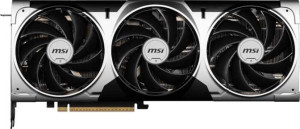
MSI GeForce RTX 5070 Ti MLG Edition
MSI GeForce RTX 5070 Ti Ventus 3X OC

MSI GeForce RTX 5070 Ti MLG Edition MSI GeForce RTX 5070 Ti Ventus 3X OC

Overview

When choosing between the MSI GeForce RTX 5070 Ti MLG Edition and the MSI GeForce RTX 5070 Ti Ventus 3X OC, both cards share the same Blackwell architecture and 16GB of GDDR7 memory, making the decision far from straightforward. This head-to-head comparison explores the key battlegrounds: GPU turbo clock speeds, physical dimensions, and aesthetic features like RGB lighting to help you find the right fit for your build.

Common Features

  • Both cards share a base GPU clock speed of 2295 MHz.
  • Both cards have a GPU memory speed of 1750 MHz.
  • Both cards feature 8960 shading units.
  • Both cards include 280 texture mapping units (TMUs).
  • Both cards have 96 render output units (ROPs).
  • Double Precision Floating Point (DPFP) is supported on both cards.
  • Both cards have an effective memory speed of 28000 MHz.
  • Both cards offer a maximum memory bandwidth of 896 GB/s.
  • Both cards come with 16GB of VRAM.
  • Both cards use GDDR7 memory.
  • Both cards have a 256-bit memory bus width.
  • ECC memory is supported on both cards.
  • Both cards support DirectX 12 Ultimate.
  • Both cards support OpenGL version 4.6.
  • Both cards support OpenCL version 3.
  • Multi-display technology is supported on both cards.
  • Ray tracing is supported on both cards.
  • 3D support is available on both cards.
  • DLSS is supported on both cards.
  • XeSS (XMX) is not available on either card.
  • Both cards include one HDMI 2.1b port and three DisplayPort outputs, with no USB-C or DVI outputs.
  • Both cards are built on the Blackwell GPU architecture.
  • Both cards have a Thermal Design Power (TDP) of 300W.
  • Both cards use PCIe version 5.
  • Both cards are manufactured on a 5 nm process with 45,600 million transistors.
  • Air-water cooling is not available on either card.

Main Differences

  • GPU turbo clock speed is 2452 MHz on the MSI GeForce RTX 5070 Ti MLG Edition and 2482 MHz on the MSI GeForce RTX 5070 Ti Ventus 3X OC.
  • Pixel rate is 235.4 GPixel/s on the MSI GeForce RTX 5070 Ti MLG Edition and 238.3 GPixel/s on the MSI GeForce RTX 5070 Ti Ventus 3X OC.
  • Floating-point performance is 43.94 TFLOPS on the MSI GeForce RTX 5070 Ti MLG Edition and 44.48 TFLOPS on the MSI GeForce RTX 5070 Ti Ventus 3X OC.
  • Texture rate is 686.6 GTexels/s on the MSI GeForce RTX 5070 Ti MLG Edition and 695 GTexels/s on the MSI GeForce RTX 5070 Ti Ventus 3X OC.
  • RGB lighting is present on the MSI GeForce RTX 5070 Ti MLG Edition but not available on the MSI GeForce RTX 5070 Ti Ventus 3X OC.
  • Card width is 338 mm on the MSI GeForce RTX 5070 Ti MLG Edition and 303 mm on the MSI GeForce RTX 5070 Ti Ventus 3X OC.
  • Card height is 140 mm on the MSI GeForce RTX 5070 Ti MLG Edition and 121 mm on the MSI GeForce RTX 5070 Ti Ventus 3X OC.
Specs Comparison
MSI GeForce RTX 5070 Ti MLG Edition

MSI GeForce RTX 5070 Ti MLG Edition

MSI GeForce RTX 5070 Ti Ventus 3X OC

MSI GeForce RTX 5070 Ti Ventus 3X OC

Performance:
GPU clock speed 2295 MHz 2295 MHz
GPU turbo 2452 MHz 2482 MHz
pixel rate 235.4 GPixel/s 238.3 GPixel/s
floating-point performance 43.94 TFLOPS 44.48 TFLOPS
texture rate 686.6 GTexels/s 695 GTexels/s
GPU memory speed 1750 MHz 1750 MHz
shading units 8960 8960
texture mapping units (TMUs) 280 280
render output units (ROPs) 96 96
Has Double Precision Floating Point (DPFP)

At their core, both the MLG Edition and the Ventus 3X OC share identical silicon foundations: the same 2295 MHz base clock, 8960 shading units, 280 TMUs, 96 ROPs, and 1750 MHz memory speed. This means the vast majority of their raw compute machinery is functionally equivalent, and any performance gap between them will be narrow by design.

The sole differentiator in this group is the GPU boost clock. The Ventus 3X OC reaches a turbo of 2482 MHz versus the MLG Edition's 2452 MHz — a delta of just 30 MHz, or roughly 1.2%. This small clock advantage cascades into proportionally higher derived metrics: the Ventus 3X OC posts 44.48 TFLOPS of floating-point throughput against the MLG's 43.94 TFLOPS, and leads in both pixel fill rate (238.3 vs. 235.4 GPixel/s) and texture throughput (695 vs. 686.6 GTexels/s). In practice, a ~1% clock gap of this size will be statistically invisible in gaming frame rates and will fall within run-to-run variance in most benchmarks.

On paper, the Ventus 3X OC holds the performance edge in this group by virtue of its higher boost clock and all the throughput figures that flow from it. However, the margin is so slim that real-world rendering performance between the two cards will be effectively indistinguishable. The decision between them should therefore hinge on other factors — such as cooling, acoustics, or price — rather than this negligible clock speed difference.

Memory:
effective memory speed 28000 MHz 28000 MHz
maximum memory bandwidth 896 GB/s 896 GB/s
VRAM 16GB 16GB
GDDR version GDDR7 GDDR7
memory bus width 256-bit 256-bit
Supports ECC memory

Memory is where these two cards are completely inseparable. Both the MLG Edition and the Ventus 3X OC carry an identical 16GB of GDDR7 VRAM across a 256-bit bus, delivering the same 896 GB/s of peak memory bandwidth. That bandwidth figure is a substantial leap over previous-generation GDDR6X implementations, and it directly benefits workloads that are memory-bound — think high-resolution texture streaming, 4K gaming with large asset pools, and GPU-accelerated content creation tasks.

The GDDR7 standard itself is worth noting: compared to GDDR6X, it achieves higher throughput at lower power per bit, which has positive downstream effects on thermals and efficiency under sustained load. The 256-bit bus width is the sweet spot for this performance tier — wide enough to sustain those bandwidth figures without the die-area cost of a 320- or 384-bit implementation. Both cards also support ECC memory, a feature more relevant to professional and compute workloads where data integrity under long-running operations matters.

This group is a straightforward tie. Every memory specification — capacity, speed, bandwidth, bus width, and ECC support — is identical across both cards. Memory subsystem performance will play absolutely no role in differentiating the MLG Edition from the Ventus 3X OC, and buyers should look to other spec groups to find meaningful distinctions.

Features:
DirectX version DirectX 12 Ultimate DirectX 12 Ultimate
OpenGL version 4.6 4.6
OpenCL version 3 3
Supports multi-display technology
supports ray tracing
Supports 3D
supports DLSS
has XeSS (XMX)
AMD SAM / Intel Resizable BAR Intel Resizable BAR Intel Resizable BAR
has LHR
has RGB lighting
supported displays 4 4

Functionally, these two cards are locked in step across every feature that affects rendering and compatibility. Both support DirectX 12 Ultimate, ray tracing, and DLSS — the trifecta that defines modern GPU feature parity for gaming — along with Resizable BAR support for CPU-to-GPU data throughput improvements on compatible Intel platforms. Four simultaneous display outputs round out a feature set that is, for all practical purposes, identical between the two.

The one concrete differentiator in this group is purely aesthetic: the MLG Edition includes RGB lighting, while the Ventus 3X OC does not. For builders who invest in a themed or illuminated system, this is a meaningful distinction — RGB on a card of this size can anchor the visual identity of an entire build. For those who prioritize a cleaner look or work in a light-controlled environment, its absence on the Ventus is equally a feature rather than a shortcoming.

From a functional standpoint, this group is a tie — no feature present on one card meaningfully improves gaming, compute, or display performance over the other. The MLG Edition holds a narrow edge only for buyers who actively want RGB lighting; everyone else will find no reason to favor one card over the other based on features alone.

Ports:
has an HDMI output
HDMI ports 1 1
HDMI version HDMI 2.1b HDMI 2.1b
DisplayPort outputs 3 3
USB-C ports 0 0
DVI outputs 0 0
mini DisplayPort outputs 0 0

Connectivity is another area where these two cards offer no grounds for differentiation whatsoever. Both the MLG Edition and the Ventus 3X OC ship with an identical port layout: three DisplayPort outputs and one HDMI 2.1b port, totaling four display connections — which aligns with the four-display limit noted in their features specs.

HDMI 2.1b is the current high-end standard, capable of driving 4K at up to 144Hz or 8K at 60Hz over a single cable, and also supports Variable Refresh Rate passthrough for compatible TVs. The three DisplayPort outputs are well-suited for high-refresh-rate PC monitor setups, including multi-monitor gaming or productivity arrangements. The absence of USB-C is worth noting for users who rely on that interface for VR headsets or displays with USB-C inputs, though neither card provides it — so this is a shared limitation rather than a point of distinction.

This group is a complete tie. Port selection, HDMI version, and output count are identical across both cards, meaning display compatibility and multi-monitor potential will be exactly the same regardless of which one you choose.

General info:
GPU architecture Blackwell Blackwell
release date August 2025 February 2025
Thermal Design Power (TDP) 300W 300W
PCI Express (PCIe) version 5 5
semiconductor size 5 nm 5 nm
number of transistors 45600 million 45600 million
Has air-water cooling
width 338 mm 303 mm
height 140 mm 121 mm

At the silicon level, these two cards are indistinguishable. Both are built on the Blackwell architecture using a 5nm process node with 45.6 billion transistors, and both draw a 300W TDP — meaning identical power supply requirements and, broadly speaking, similar thermal loads to manage. PCIe 5.0 support is shared as well, though in practice the bandwidth headroom of PCIe 4.0 is rarely saturated by a single GPU at this tier, making this a forward-compatibility feature rather than a current performance driver.

Where this group does produce a meaningful split is in physical dimensions. The Ventus 3X OC measures 303 mm × 121 mm, while the MLG Edition is noticeably larger at 338 mm × 140 mm — a difference of 35 mm in length and 19 mm in height. That length gap in particular is significant: many mid-tower cases list GPU clearances in the 320–340 mm range, meaning the MLG Edition could be a tight or incompatible fit in cases where the Ventus 3X OC installs without issue. Buyers with compact or mid-size builds should verify case compatibility carefully before choosing the MLG Edition.

For general specs and power requirements, this group is a tie. However, the Ventus 3X OC earns a practical edge through its more compact footprint, making it the more case-friendly option for builders working with tighter GPU clearances. The MLG Edition's larger dimensions may also bring different thermal headroom, but that cannot be inferred from the data in this group alone.

Comparison Summary & Verdict

After a thorough comparison, both the MSI GeForce RTX 5070 Ti MLG Edition and the MSI GeForce RTX 5070 Ti Ventus 3X OC prove to be highly capable cards built on the same Blackwell architecture with identical 16GB GDDR7 memory and a 300W TDP. The Ventus 3X OC edges ahead with a slightly higher GPU turbo clock of 2482 MHz versus 2452 MHz, translating to marginally better pixel rate, texture rate, and floating-point performance. It is also more compact at 303 x 121 mm compared to the MLG Edition's 338 x 140 mm, making it a better fit for tighter cases. The MLG Edition, on the other hand, stands out with its RGB lighting, appealing to users who value aesthetics alongside raw performance. Choose the Ventus 3X OC for a slightly faster, more compact card, or the MLG Edition if visual customization matters to your build.

MSI GeForce RTX 5070 Ti MLG Edition
Buy MSI GeForce RTX 5070 Ti MLG Edition if...

Buy the MSI GeForce RTX 5070 Ti MLG Edition if you want RGB lighting to complement a visually customized build and are not constrained by case size.

MSI GeForce RTX 5070 Ti Ventus 3X OC
Buy MSI GeForce RTX 5070 Ti Ventus 3X OC if...

Buy the MSI GeForce RTX 5070 Ti Ventus 3X OC if you want slightly higher GPU turbo clocks and better overall performance figures in a more compact form factor.