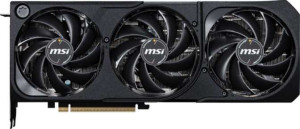
MSI GeForce RTX 5070 Ti Shadow 3X OC
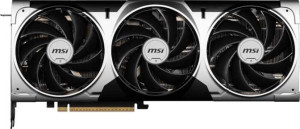
MSI GeForce RTX 5070 Ti Ventus 3X OC

MSI GeForce RTX 5070 Ti Shadow 3X OC MSI GeForce RTX 5070 Ti Ventus 3X OC

Overview

Welcome to our in-depth specification comparison between the MSI GeForce RTX 5070 Ti Shadow 3X OC and the MSI GeForce RTX 5070 Ti Ventus 3X OC. Both cards are built on the Blackwell architecture with a 5 nm process and share the same GPU family, yet they carry distinct identities within MSI’s lineup. In this comparison, we examine their performance metrics, memory configuration, feature sets, and connectivity side by side to help you make the most informed purchasing decision.

Common Features

  • Both cards have a GPU clock speed of 2295 MHz.
  • Both cards have a GPU turbo speed of 2482 MHz.
  • Both cards deliver a pixel rate of 238.3 GPixel/s.
  • Both cards offer floating-point performance of 44.48 TFLOPS.
  • Both cards have a texture rate of 695 GTexels/s.
  • Both cards have a GPU memory speed of 1750 MHz.
  • Both cards feature 8960 shading units.
  • Both cards include 280 texture mapping units (TMUs).
  • Both cards have an effective memory speed of 28000 MHz.
  • Both cards provide a maximum memory bandwidth of 896 GB/s.
  • Both cards come with 16GB of VRAM.
  • Both cards use GDDR7 memory.
  • Both cards have a 256-bit memory bus width.
  • ECC memory support is available on both cards.
  • Both cards support DirectX 12 Ultimate.
  • Both cards support OpenGL version 4.6.
  • Both cards support OpenCL version 3.
  • Multi-display technology is supported on both cards.
  • Ray tracing is supported on both cards.
  • DLSS is supported on both cards.
  • 3D support is available on both cards.
  • XeSS (XMX) support is not available on either card.
  • Both cards include one HDMI 2.1b output.
  • Both cards feature three DisplayPort outputs.
  • Neither card includes any USB-C ports.
  • Neither card includes any DVI outputs.
  • Neither card includes any mini DisplayPort outputs.
  • Both cards are built on the Blackwell GPU architecture.
  • Both cards have a Thermal Design Power (TDP) of 300W.
  • Both cards use PCIe version 5.
  • Both cards are manufactured on a 5 nm semiconductor process.
  • Both cards contain 45600 million transistors.
  • Air-water cooling is not available on either card.
  • Both cards have a width of 303 mm.
  • Both cards have a height of 121 mm.
Specs Comparison
MSI GeForce RTX 5070 Ti Shadow 3X OC

MSI GeForce RTX 5070 Ti Shadow 3X OC

MSI GeForce RTX 5070 Ti Ventus 3X OC

MSI GeForce RTX 5070 Ti Ventus 3X OC

Performance:
GPU clock speed 2295 MHz 2295 MHz
GPU turbo 2482 MHz 2482 MHz
pixel rate 238.3 GPixel/s 238.3 GPixel/s
floating-point performance 44.48 TFLOPS 44.48 TFLOPS
texture rate 695 GTexels/s 695 GTexels/s
GPU memory speed 1750 MHz 1750 MHz
shading units 8960 8960
texture mapping units (TMUs) 280 280
render output units (ROPs) 96 96
Has Double Precision Floating Point (DPFP)

When comparing the Performance specs of the MSI GeForce RTX 5070 Ti Shadow 3X OC and the MSI GeForce RTX 5070 Ti Ventus 3X OC, the data tells a remarkably clear story: these two cards are built on an identical performance foundation. Every core metric — base clock, boost clock, pixel rate, texture rate, floating-point throughput, and memory speed — is an exact match across the board.

Both cards run a 2295 MHz base / 2482 MHz boost clock configuration, delivering 44.48 TFLOPS of FP32 compute and a texture rate of 695 GTexels/s. In practical terms, this means users can expect the same frame rates, the same ray-tracing headroom, and the same AI-accelerated workload performance from either card. The shared 8960 shading units, 280 TMUs, and 96 ROPs further confirm they draw from the same GPU silicon with no factory-level binning advantage given to either model. Both also support Double Precision Floating Point, relevant for compute and professional workloads alongside gaming.

From a pure performance standpoint, this is a dead tie. Neither the Shadow 3X OC nor the Ventus 3X OC holds any measurable edge in this category. Any real-world difference between the two would have to come from thermals, acoustics, power delivery, or physical design — not from the GPU performance specifications themselves.

Memory:
effective memory speed 28000 MHz 28000 MHz
maximum memory bandwidth 896 GB/s 896 GB/s
VRAM 16GB 16GB
GDDR version GDDR7 GDDR7
memory bus width 256-bit 256-bit
Supports ECC memory

The memory configuration shared by both the Shadow 3X OC and the Ventus 3X OC is genuinely impressive — and identical in every measurable way. Both cards carry 16GB of GDDR7 VRAM across a 256-bit bus, producing a peak bandwidth of 896 GB/s. To put that in perspective, this bandwidth figure comfortably supports high-resolution texture streaming, large frame buffers for 4K gaming, and memory-intensive workloads like AI inference or 3D rendering without becoming a bottleneck.

GDDR7 is the key generational leap here. Compared to the GDDR6X found on previous-generation high-end cards, GDDR7 delivers significantly higher effective throughput at lower power per bit — meaning both cards benefit from a faster, more efficient memory subsystem. The 16GB capacity also ensures neither card will feel cramped running modern titles at maximum settings or working with large datasets. ECC memory support on both further widens their appeal to prosumers and creators who need data integrity in compute tasks.

As with the performance group, this is a complete tie. The Shadow 3X OC and Ventus 3X OC share every memory specification without exception, so no advantage can be awarded to either card in this category. Buyers prioritizing memory capability will find both options equally capable.

Features:
DirectX version DirectX 12 Ultimate DirectX 12 Ultimate
OpenGL version 4.6 4.6
OpenCL version 3 3
Supports multi-display technology
supports ray tracing
Supports 3D
supports DLSS
has XeSS (XMX)
AMD SAM / Intel Resizable BAR Intel Resizable BAR Intel Resizable BAR
has LHR
has RGB lighting
supported displays 4 4

Feature parity continues to be the defining theme of this comparison. Both the Shadow 3X OC and the Ventus 3X OC support DirectX 12 Ultimate, which unlocks the full suite of modern rendering features — hardware ray tracing, mesh shaders, variable rate shading, and sampler feedback — making both cards fully equipped for current and near-future game titles without compromise. Alongside this, DLSS support is a meaningful real-world advantage over competing platforms, enabling AI-driven upscaling that can dramatically boost frame rates with minimal image quality loss.

Both cards also support up to 4 simultaneous displays and include Intel Resizable BAR, which allows the CPU to access the full GPU frame buffer at once rather than in chunks — a tangible performance uplift in supported games. Neither card carries LHR restrictions, meaning full compute throughput is available for any workload. The absence of RGB lighting on both is worth noting for builders who factor aesthetics into their decision, though it has no bearing on performance.

Once again, the specs reveal a complete tie. Every feature — from API support to display output count to software capabilities — is shared identically between the Shadow 3X OC and the Ventus 3X OC. There is no feature-based reason to choose one over the other; the decision must rest on other factors such as cooling design, acoustics, or price.

Ports:
has an HDMI output
HDMI ports 1 1
HDMI version HDMI 2.1b HDMI 2.1b
DisplayPort outputs 3 3
USB-C ports 0 0
DVI outputs 0 0
mini DisplayPort outputs 0 0

The port layout on both the Shadow 3X OC and the Ventus 3X OC follows the same practical configuration: 3 DisplayPort outputs and 1 HDMI 2.1b port, totaling four physical display connections — which aligns exactly with the four-display limit established in the Features group. This is a well-balanced setup for the vast majority of users, covering everything from single-monitor gaming rigs to multi-display productivity workstations.

HDMI 2.1b is the headline here in terms of connectivity standards. It supports up to 4K at high refresh rates and 8K output, making both cards future-ready for next-generation displays and home theater setups alike. The three DisplayPort outputs further ensure flexibility for users running high-refresh-rate monitors, where DisplayPort remains the preferred interface. The absence of USB-C and DVI outputs is consistent with modern GPU design trends and unlikely to be a limitation for the target audience of these cards.

Predictably, this category ends in another complete tie. The Shadow 3X OC and Ventus 3X OC offer an identical port selection with no variation whatsoever. Connectivity preference will play no role in differentiating these two cards for prospective buyers.

General info:
GPU architecture Blackwell Blackwell
release date February 2025 February 2025
Thermal Design Power (TDP) 300W 300W
PCI Express (PCIe) version 5 5
semiconductor size 5 nm 5 nm
number of transistors 45600 million 45600 million
Has air-water cooling
width 303 mm 303 mm
height 121 mm 121 mm

At a foundational level, both the Shadow 3X OC and the Ventus 3X OC are built on the same silicon: NVIDIA's Blackwell architecture, manufactured on a 5nm process with 45.6 billion transistors. That transistor count and process node matter because they directly influence how much computational logic can be packed into the die while managing heat and power efficiency — and both cards benefit equally from these generational advances over previous architectures.

A 300W TDP is a meaningful power requirement that prospective buyers should plan for, ensuring their PSU has adequate headroom and that case airflow is sufficient. Both cards use air cooling exclusively, with identical physical dimensions of 303mm × 121mm — so case compatibility and slot clearance considerations are exactly the same for either option. The shared PCIe 5.0 interface ensures neither card will face any bandwidth constraints on compatible motherboards, and backward compatibility means both will also work on PCIe 4.0 systems without issue.

This group, like all previous ones, results in a complete tie. The Shadow 3X OC and Ventus 3X OC share every general specification — from architecture and process node down to physical size and cooling type. The differentiating factors between these two cards lie entirely outside the scope of these technical specifications.

Comparison Summary & Verdict

After a thorough side-by-side analysis, the MSI GeForce RTX 5070 Ti Shadow 3X OC and the MSI GeForce RTX 5070 Ti Ventus 3X OC turn out to be identical in every measurable specification. Both deliver the same 44.48 TFLOPS of floating-point performance, the same 16GB of GDDR7 VRAM on a 256-bit bus, identical clock speeds, port configurations, and a shared 300W TDP. Neither card holds a technical edge over the other. As a result, your choice between the two will come down entirely to factors such as aesthetics, pricing, and availability at the time of purchase. If you find one offered at a lower price, that card represents the better value, since both will deliver an absolutely equivalent gaming and workstation experience.

MSI GeForce RTX 5070 Ti Shadow 3X OC
Buy MSI GeForce RTX 5070 Ti Shadow 3X OC if...

Buy the MSI GeForce RTX 5070 Ti Shadow 3X OC if it is available at a lower price or if you prefer its aesthetic design, as its specifications are identical to the Ventus 3X OC.

MSI GeForce RTX 5070 Ti Ventus 3X OC
Buy MSI GeForce RTX 5070 Ti Ventus 3X OC if...

Buy the MSI GeForce RTX 5070 Ti Ventus 3X OC if it is the more accessible or affordable option at the time of purchase, since it shares every technical specification with the Shadow 3X OC.