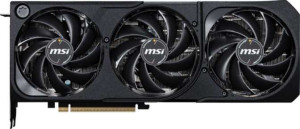
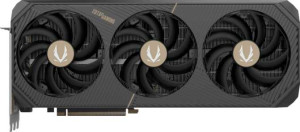
The memory subsystem is one of the most consequential factors in a high-end GPU, governing how quickly the card can feed data to its shaders — and here, both the MSI RTX 5070 Ti Shadow 3X OC and the Zotac Gaming RTX 5070 Ti Solid OC are built on identical foundations. Both feature 16GB of GDDR7 VRAM running across a 256-bit bus, delivering a maximum memory bandwidth of 896 GB/s. That bandwidth figure is substantial — it comfortably supports 4K gaming, high-resolution texture workloads, and GPU compute tasks without creating a memory bottleneck.
The use of GDDR7 is noteworthy in context: compared to the GDDR6X found in prior-generation flagship cards, GDDR7 achieves higher throughput at lower latency, which translates to smoother frame pacing in bandwidth-sensitive titles and more responsive AI inference. The 28000 MHz effective memory speed reflects this generational leap. Additionally, both cards support ECC memory, a feature typically associated with professional and workstation GPUs — it enables error-correcting code to catch and fix single-bit memory errors, making these cards more viable for precision compute workloads beyond gaming.
As with the performance group, this is a definitive tie. There is no differentiation whatsoever between the two cards in memory configuration, bandwidth, or feature support. The decision between them cannot be made on memory grounds — buyers should weigh other factors such as thermals, build quality, or price.