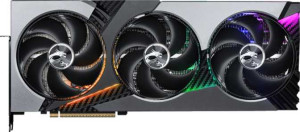
MSI GeForce RTX 5070 Ti Shadow 3X
MSI GeForce RTX 5070 Ti Vanguard OC

MSI GeForce RTX 5070 Ti Shadow 3X MSI GeForce RTX 5070 Ti Vanguard OC

Overview

Welcome to our in-depth specification comparison between the MSI GeForce RTX 5070 Ti Shadow 3X and the MSI GeForce RTX 5070 Ti Vanguard OC. Both cards share the same Blackwell architecture and 16GB GDDR7 memory foundation, yet they diverge in key areas such as boost clock speeds, raw compute performance, physical dimensions, and aesthetics. Read on to discover which of these two RTX 5070 Ti variants best fits your setup and performance expectations.

Common Features

  • Both cards share a base GPU clock speed of 2295 MHz.
  • Both cards have a GPU memory speed of 1750 MHz.
  • Both cards feature 8960 shading units.
  • Both cards include 280 texture mapping units (TMUs).
  • Both cards have 96 render output units (ROPs).
  • Double Precision Floating Point (DPFP) is supported on both cards.
  • Both cards have an effective memory speed of 28000 MHz.
  • Both cards offer a maximum memory bandwidth of 896 GB/s.
  • Both cards come with 16GB of VRAM.
  • Both cards use GDDR7 memory.
  • Both cards feature a 256-bit memory bus width.
  • ECC memory is supported on both cards.
  • Both cards support DirectX 12 Ultimate.
  • Both cards support OpenGL version 4.6.
  • Both cards support OpenCL version 3.
  • Multi-display technology is supported on both cards.
  • Ray tracing is supported on both cards.
  • 3D support is available on both cards.
  • DLSS is supported on both cards.
  • XeSS (XMX) is not available on either card.
  • Both cards include one HDMI 2.1b output.
  • Both cards feature three DisplayPort outputs.
  • Neither card includes USB-C, DVI, or mini DisplayPort outputs.
  • Both cards are built on the Blackwell GPU architecture.
  • Both cards have a Thermal Design Power (TDP) of 300W.
  • Both cards use PCIe version 5.
  • Both cards are manufactured on a 5 nm semiconductor process.
  • Both cards contain 45600 million transistors.
  • Neither card features air-water cooling.

Main Differences

  • GPU turbo clock speed is 2452 MHz on the MSI GeForce RTX 5070 Ti Shadow 3X and 2572 MHz on the MSI GeForce RTX 5070 Ti Vanguard OC.
  • Pixel rate is 235.4 GPixel/s on the MSI GeForce RTX 5070 Ti Shadow 3X and 246.9 GPixel/s on the MSI GeForce RTX 5070 Ti Vanguard OC.
  • Floating-point performance is 43.94 TFLOPS on the MSI GeForce RTX 5070 Ti Shadow 3X and 46.09 TFLOPS on the MSI GeForce RTX 5070 Ti Vanguard OC.
  • Texture rate is 686.6 GTexels/s on the MSI GeForce RTX 5070 Ti Shadow 3X and 720.2 GTexels/s on the MSI GeForce RTX 5070 Ti Vanguard OC.
  • RGB lighting is present on the MSI GeForce RTX 5070 Ti Vanguard OC but not available on the MSI GeForce RTX 5070 Ti Shadow 3X.
  • Card width is 303 mm on the MSI GeForce RTX 5070 Ti Shadow 3X and 357 mm on the MSI GeForce RTX 5070 Ti Vanguard OC.
  • Card height is 121 mm on the MSI GeForce RTX 5070 Ti Shadow 3X and 151 mm on the MSI GeForce RTX 5070 Ti Vanguard OC.
Specs Comparison
MSI GeForce RTX 5070 Ti Shadow 3X

MSI GeForce RTX 5070 Ti Shadow 3X

MSI GeForce RTX 5070 Ti Vanguard OC

MSI GeForce RTX 5070 Ti Vanguard OC

Performance:
GPU clock speed 2295 MHz 2295 MHz
GPU turbo 2452 MHz 2572 MHz
pixel rate 235.4 GPixel/s 246.9 GPixel/s
floating-point performance 43.94 TFLOPS 46.09 TFLOPS
texture rate 686.6 GTexels/s 720.2 GTexels/s
GPU memory speed 1750 MHz 1750 MHz
shading units 8960 8960
texture mapping units (TMUs) 280 280
render output units (ROPs) 96 96
Has Double Precision Floating Point (DPFP)

Both cards share the same architectural foundation: identical base clocks of 2295 MHz, the same 8960 shading units, 280 TMUs, 96 ROPs, and equal memory speeds of 1750 MHz. This means the gap between them is not structural but rather a product of factory overclocking — specifically, how aggressively MSI has tuned the boost behavior on each model.

That tuning makes a measurable difference. The Vanguard OC sustains a GPU turbo of 2572 MHz versus the Shadow 3X's 2452 MHz — a 120 MHz advantage that cascades directly into every derived metric. The Vanguard OC leads in floating-point throughput at 46.09 TFLOPS vs. 43.94 TFLOPS (roughly a 5% gap), and its texture and pixel fill rates follow the same proportional lead. In practice, this translates to a modest but consistent performance edge in sustained GPU-bound workloads — think high-resolution rendering, ray tracing, or compute tasks — rather than a dramatic generational leap.

The Vanguard OC holds a clear, if incremental, performance advantage in this group. The 5% boost headroom it carries over the Shadow 3X is real and consistent, not a cherry-picked outlier. Whether that margin justifies a price premium depends on the broader comparison, but on raw performance specs alone, the Vanguard OC is the stronger card.

Memory:
effective memory speed 28000 MHz 28000 MHz
maximum memory bandwidth 896 GB/s 896 GB/s
VRAM 16GB 16GB
GDDR version GDDR7 GDDR7
memory bus width 256-bit 256-bit
Supports ECC memory

Memory is where differentiation between these two cards completely disappears. Every single spec — 16GB of GDDR7, a 256-bit bus, 28000 MHz effective speed, and 896 GB/s of bandwidth — is identical across both the Shadow 3X and the Vanguard OC. There is no factory tuning or SKU-level variation here; the memory subsystem is locked in lockstep.

That shared specification is still worth contextualizing. GDDR7 paired with a 256-bit bus delivers substantially higher bandwidth than the GDDR6X configurations found on previous-generation cards at this tier. In practice, 896 GB/s of memory bandwidth means neither card will be starved of data in texture-heavy scenes, high-resolution workloads, or memory-intensive compute tasks. The 16GB VRAM allocation is also generous enough to handle 4K gaming assets and moderate AI/creative workloads without hitting capacity walls. ECC memory support is a bonus for users running professional or compute workloads where data integrity matters.

This group is an unambiguous tie. No aspect of memory configuration — capacity, speed, bus width, or bandwidth — distinguishes one card from the other. Any performance difference between these two products must be sourced entirely from the GPU clock domain, not from memory.

Features:
DirectX version DirectX 12 Ultimate DirectX 12 Ultimate
OpenGL version 4.6 4.6
OpenCL version 3 3
Supports multi-display technology
supports ray tracing
Supports 3D
supports DLSS
has XeSS (XMX)
AMD SAM / Intel Resizable BAR Intel Resizable BAR Intel Resizable BAR
has LHR
has RGB lighting
supported displays 4 4

Functionally, these two cards are feature-identical where it matters most. Both support DirectX 12 Ultimate, ray tracing, and DLSS — the core trio that defines the modern gaming feature set on NVIDIA hardware. Ray tracing capability enables hardware-accelerated lighting and shadow rendering in supported titles, while DLSS allows AI-driven upscaling that can recover significant frame rates at higher resolutions. Neither card is limited by LHR or lacks Resizable BAR support, and both can drive up to 4 displays simultaneously.

The only functional distinction in this group is aesthetic: the Vanguard OC includes RGB lighting, while the Shadow 3X does not. For users building a system where visual cohesion matters — coordinated lighting across components — this is a genuine, if purely cosmetic, differentiator. For those indifferent to aesthetics, it carries no practical weight whatsoever.

On features, this comparison is effectively a tie for performance-oriented buyers. Every capability that influences gaming, compute, or multi-display use is shared equally. The Vanguard OC gains a marginal edge only for users who actively want RGB lighting as part of their build — a preference-driven advantage rather than a technical one.

Ports:
has an HDMI output
HDMI ports 1 1
HDMI version HDMI 2.1b HDMI 2.1b
DisplayPort outputs 3 3
USB-C ports 0 0
DVI outputs 0 0
mini DisplayPort outputs 0 0

Port configuration is identical across both cards: one HDMI 2.1b output and three DisplayPort outputs, for a total of four display connections — matching the four-display limit noted in the Features group. There are no USB-C, DVI, or mini DisplayPort outputs on either model.

The connectivity standard in play here is worth noting. HDMI 2.1b supports high refresh rates at 4K and beyond, making it well-suited for modern TVs and monitors without requiring an adapter. The three DisplayPort outputs round out a versatile setup for multi-monitor configurations, whether that means a triple-screen gaming rig or a productivity-focused spread of panels.

This is a clean tie — port for port, version for version, the Shadow 3X and Vanguard OC offer identical connectivity. Display setup decisions will not be a factor in choosing between these two cards.

General info:
GPU architecture Blackwell Blackwell
release date February 2025 February 2025
Thermal Design Power (TDP) 300W 300W
PCI Express (PCIe) version 5 5
semiconductor size 5 nm 5 nm
number of transistors 45600 million 45600 million
Has air-water cooling
width 303 mm 357 mm
height 121 mm 151 mm

At the silicon level, these cards are indistinguishable. Both are built on the same Blackwell architecture, fabbed at 5 nm, packing 45.6 billion transistors, with an identical 300W TDP and PCIe 5.0 interface. The shared TDP is particularly relevant: despite the Vanguard OC's higher boost clocks shown in the Performance group, it achieves that headroom within the same power envelope — a sign of binning or tuning rather than a fundamentally different power configuration.

Where this group does produce a concrete difference is physical footprint. The Shadow 3X measures 303 mm × 121 mm, while the Vanguard OC is considerably larger at 357 mm × 151 mm — 54 mm longer and 30 mm taller. That gap is significant in practice. The Shadow 3X will fit into more compact mid-tower and smaller form-factor cases where the Vanguard OC may not clear clearance requirements. Builders working in constrained chassis should measure carefully before committing to the Vanguard OC.

For case compatibility, the Shadow 3X holds a meaningful advantage due to its more compact dimensions. For builders with spacious full-tower cases where size is a non-issue, this group is functionally a tie — TDP, architecture, and interface are identical, and neither card uses liquid cooling.

Comparison Summary & Verdict

Both the MSI GeForce RTX 5070 Ti Shadow 3X and the MSI GeForce RTX 5070 Ti Vanguard OC are built on the same Blackwell architecture with identical memory configurations, port layouts, and a 300W TDP, making them closely matched at their core. However, the Vanguard OC pulls ahead with a higher GPU boost clock of 2572 MHz, delivering 46.09 TFLOPS of floating-point performance and a superior texture rate of 720.2 GTexels/s, alongside RGB lighting for aesthetics-conscious builders. The Shadow 3X, meanwhile, offers a noticeably more compact footprint at 303 x 121 mm versus the Vanguard OC's 357 x 151 mm, making it the better fit for smaller chassis. Choose the Vanguard OC for maximum out-of-the-box performance and visual flair; choose the Shadow 3X if case compatibility and a sleeker profile are your priorities.

MSI GeForce RTX 5070 Ti Shadow 3X
Buy MSI GeForce RTX 5070 Ti Shadow 3X if...

Buy the MSI GeForce RTX 5070 Ti Shadow 3X if you need a more compact card that fits smaller cases, and a smaller physical footprint is more important to you than the highest possible boost clock.

MSI GeForce RTX 5070 Ti Vanguard OC
Buy MSI GeForce RTX 5070 Ti Vanguard OC if...

Buy the MSI GeForce RTX 5070 Ti Vanguard OC if you want maximum boost clock performance at 2572 MHz, higher floating-point throughput, and RGB lighting for a visually striking build.