MSI GeForce RTX 5070 Ti Shadow 3X
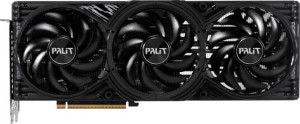
Palit GeForce RTX 5070 Ti GamingPro-S

MSI GeForce RTX 5070 Ti Shadow 3X Palit GeForce RTX 5070 Ti GamingPro-S

Overview

Welcome to our in-depth spec comparison between the MSI GeForce RTX 5070 Ti Shadow 3X and the Palit GeForce RTX 5070 Ti GamingPro-S. Both cards are built on the same Blackwell architecture and share identical core performance figures, making the choice between them surprisingly nuanced. The key battlegrounds in this head-to-head are physical dimensions and RGB lighting, which may be the deciding factors for builders with specific case or aesthetic requirements.

Common Features

  • Both cards share a GPU clock speed of 2295 MHz.
  • Both cards share a GPU turbo speed of 2452 MHz.
  • Both cards deliver a pixel rate of 235.4 GPixel/s.
  • Both cards offer a floating-point performance of 43.94 TFLOPS.
  • Both cards provide a texture rate of 686.6 GTexels/s.
  • Both cards have a GPU memory speed of 1750 MHz.
  • Both cards feature 8960 shading units.
  • Both cards include 280 texture mapping units (TMUs).
  • Both cards have an effective memory speed of 28000 MHz.
  • Both cards offer a maximum memory bandwidth of 896 GB/s.
  • Both cards come with 16GB of VRAM.
  • Both cards use GDDR7 memory.
  • Both cards have a 256-bit memory bus width.
  • ECC memory support is available on both cards.
  • Both cards support DirectX 12 Ultimate.
  • Both cards support OpenGL version 4.6.
  • Both cards support OpenCL version 3.
  • Multi-display technology is supported on both cards.
  • Ray tracing is supported on both cards.
  • 3D support is available on both cards.
  • DLSS is supported on both cards.
  • XeSS (XMX) support is not available on either card.
  • Both cards include one HDMI port using HDMI version 2.1b.
  • Both cards feature three DisplayPort outputs.
  • Neither card includes USB-C ports, DVI outputs, or mini DisplayPort outputs.
  • Both cards are built on the Blackwell GPU architecture.
  • Both cards have a Thermal Design Power (TDP) of 300W.
  • Both cards use PCIe version 5.
  • Both cards are manufactured with a 5 nm semiconductor process.
  • Both cards feature 45600 million transistors.
  • Neither card offers air-water cooling.

Main Differences

  • RGB lighting is present on the Palit GeForce RTX 5070 Ti GamingPro-S but not available on the MSI GeForce RTX 5070 Ti Shadow 3X.
  • Width is 303 mm on the MSI GeForce RTX 5070 Ti Shadow 3X and 331.9 mm on the Palit GeForce RTX 5070 Ti GamingPro-S.
  • Height is 121 mm on the MSI GeForce RTX 5070 Ti Shadow 3X and 127.1 mm on the Palit GeForce RTX 5070 Ti GamingPro-S.
Specs Comparison
MSI GeForce RTX 5070 Ti Shadow 3X

MSI GeForce RTX 5070 Ti Shadow 3X

Palit GeForce RTX 5070 Ti GamingPro-S

Palit GeForce RTX 5070 Ti GamingPro-S

Performance:
GPU clock speed 2295 MHz 2295 MHz
GPU turbo 2452 MHz 2452 MHz
pixel rate 235.4 GPixel/s 235.4 GPixel/s
floating-point performance 43.94 TFLOPS 43.94 TFLOPS
texture rate 686.6 GTexels/s 686.6 GTexels/s
GPU memory speed 1750 MHz 1750 MHz
shading units 8960 8960
texture mapping units (TMUs) 280 280
render output units (ROPs) 96 96
Has Double Precision Floating Point (DPFP)

When comparing the MSI GeForce RTX 5070 Ti Shadow 3X and the Palit GeForce RTX 5070 Ti GamingPro-S on raw performance metrics, the picture is unambiguous: every single specification in this group is identical. Both cards share the same 2295 MHz base clock and 2452 MHz boost clock, the same 8960 shading units, 280 TMUs, and 96 ROPs, and deliver the same 43.94 TFLOPS of floating-point performance alongside a 686.6 GTexels/s texture rate and 235.4 GPixel/s pixel fill rate.

What this means in practice is that both cards are drawing from the exact same GPU silicon running at the exact same frequencies, with no factory overclock differentiating one from the other. The 1750 MHz memory speed is also shared, so neither card holds an advantage in memory bandwidth either. In gaming workloads, compute tasks, or content creation pipelines, you should expect statistically identical frame rates and render times from both.

The verdict for this group is a complete tie. Neither the Shadow 3X nor the GamingPro-S holds any performance edge whatsoever based on the provided specs. Purchasing decisions between these two cards should therefore be driven entirely by other factors — cooling solution design, noise levels, build quality, warranty, and price — rather than any expectation of a performance difference.

Memory:
effective memory speed 28000 MHz 28000 MHz
maximum memory bandwidth 896 GB/s 896 GB/s
VRAM 16GB 16GB
GDDR version GDDR7 GDDR7
memory bus width 256-bit 256-bit
Supports ECC memory

The memory configuration on both the MSI RTX 5070 Ti Shadow 3X and the Palit RTX 5070 Ti GamingPro-S is built around a strong foundation: 16GB of GDDR7 running at an effective 28000 MHz across a 256-bit bus, yielding 896 GB/s of peak bandwidth. GDDR7 is a generational leap over GDDR6X, offering higher data rates at improved power efficiency, and 896 GB/s is a substantial bandwidth figure that keeps the GPU well-fed even in demanding, high-resolution rendering scenarios.

The 16GB frame buffer is particularly relevant for modern workloads — 4K gaming with high-resolution texture packs, AI-accelerated features, and content creation tasks all benefit from having ample VRAM headroom. Both cards also support ECC memory, a feature more commonly associated with professional compute cards; while gamers rarely need it, it adds a layer of data integrity that can matter in prosumer or lightly professional use cases.

As with the performance group, this is a complete tie. Every memory specification — capacity, speed, bandwidth, bus width, memory type, and ECC support — is identical across both cards. Memory subsystem performance will be indistinguishable in any real-world scenario, so this group offers no basis for choosing one card over the other.

Features:
DirectX version DirectX 12 Ultimate DirectX 12 Ultimate
OpenGL version 4.6 4.6
OpenCL version 3 3
Supports multi-display technology
supports ray tracing
Supports 3D
supports DLSS
has XeSS (XMX)
AMD SAM / Intel Resizable BAR Intel Resizable BAR Intel Resizable BAR
has LHR
has RGB lighting
supported displays 4 4

Across the core feature set, the MSI RTX 5070 Ti Shadow 3X and the Palit RTX 5070 Ti GamingPro-S are essentially identical: both support DirectX 12 Ultimate, ray tracing, DLSS, and up to 4 simultaneous displays, with Intel Resizable BAR enabling the CPU to access the full GPU frame buffer for potential performance gains in supported titles. These are the features that define the RTX 5070 Ti class as a whole, and neither card deviates from the standard.

The one tangible differentiator in this group is RGB lighting. The Palit GamingPro-S includes it; the MSI Shadow 3X does not. For builders who invest in a themed aesthetic or use addressable RGB ecosystems to tie together their system visually, this is a meaningful distinction. Conversely, users who prefer a clean, understated look — or who simply do not want to manage lighting software — may actually favor the Shadow 3X for its absence of RGB.

Neither card holds a functional performance or compatibility advantage here. The Palit GamingPro-S has a narrow aesthetic edge for RGB enthusiasts, while the Shadow 3X suits those who prefer no-frills styling. The decision in this group comes down entirely to personal preference on visual design rather than any technical capability difference.

Ports:
has an HDMI output
HDMI ports 1 1
HDMI version HDMI 2.1b HDMI 2.1b
DisplayPort outputs 3 3
USB-C ports 0 0
DVI outputs 0 0
mini DisplayPort outputs 0 0

Both the MSI RTX 5070 Ti Shadow 3X and the Palit RTX 5070 Ti GamingPro-S offer the same port layout: three DisplayPort outputs and one HDMI 2.1b port, totaling four display connections — which aligns with the four-display limit noted in the features group. The absence of USB-C, DVI, and mini DisplayPort outputs is standard for modern high-end discrete GPUs, where those legacy or alternative connectors have largely been phased out.

The HDMI 2.1b standard is worth noting: it supports up to 10K resolution, high frame rate 4K and 8K output, and Variable Refresh Rate (VRR), making it well-suited for both the latest high-refresh gaming monitors and living-room TV setups. The three DisplayPort outputs similarly cover the needs of multi-monitor workstation or gaming arrangements without requiring adapters.

This group is a complete tie. The port configuration is identical in every respect, so neither card offers any connectivity advantage. Users with specific display setups — such as those relying on USB-C monitors — should note that neither card accommodates that connection natively.

General info:
GPU architecture Blackwell Blackwell
release date February 2025 February 2025
Thermal Design Power (TDP) 300W 300W
PCI Express (PCIe) version 5 5
semiconductor size 5 nm 5 nm
number of transistors 45600 million 45600 million
Has air-water cooling
width 303 mm 331.9 mm
height 121 mm 127.1 mm

At a foundational level, the MSI RTX 5070 Ti Shadow 3X and the Palit RTX 5070 Ti GamingPro-S are cut from the same cloth: both are built on the Blackwell architecture using a 5nm process with 45.6 billion transistors, carry a 300W TDP, and connect via PCIe 5.0. The shared TDP means both cards will draw the same power under load and impose equivalent demands on your PSU and case airflow.

The meaningful difference in this group is physical size. The MSI Shadow 3X measures 303 × 121 mm, while the Palit GamingPro-S is noticeably larger at 331.9 × 127.1 mm — roughly 29mm longer and 6mm taller. In practical terms, this gap matters most for builders working with smaller mid-tower cases or ITX-adjacent builds where GPU clearance is tight. The Shadow 3X's more compact footprint gives it a real installation advantage in constrained enclosures.

For users with a full-tower or a case with generous GPU clearance, the size difference is unlikely to be a deciding factor. But for anyone fitting this card into a smaller build, the MSI Shadow 3X has a clear edge in this group purely on the basis of its more manageable dimensions — everything else here is identical between the two.

Comparison Summary & Verdict

After examining all available specifications, the MSI GeForce RTX 5070 Ti Shadow 3X and the Palit GeForce RTX 5070 Ti GamingPro-S are virtually identical in raw performance, memory configuration, port selection, and power draw. The meaningful distinctions come down to form and aesthetics. The MSI card is the more compact option, measuring 303 mm in width and 121 mm in height, making it the better fit for smaller cases or tighter builds. The Palit card, at 331.9 mm wide and 127.1 mm tall, is the larger of the two, but it adds RGB lighting that the MSI model lacks entirely. Choose the MSI if a sleek, space-efficient build is your priority; opt for the Palit if you want that extra visual flair in your rig.

MSI GeForce RTX 5070 Ti Shadow 3X
Buy MSI GeForce RTX 5070 Ti Shadow 3X if...

Buy the MSI GeForce RTX 5070 Ti Shadow 3X if you are working with a compact or space-constrained case, as its smaller dimensions make it the easier fit without sacrificing any performance.

Palit GeForce RTX 5070 Ti GamingPro-S
Buy Palit GeForce RTX 5070 Ti GamingPro-S if...

Buy the Palit GeForce RTX 5070 Ti GamingPro-S if RGB lighting is important to your build aesthetic, since it is the only one of the two cards to offer that feature.