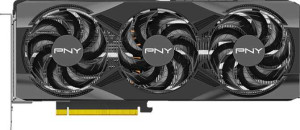
When comparing the Performance specs of the MSI GeForce RTX 5070 Ti Shadow 3X and the PNY GeForce RTX 5070 Ti Triple Fan, the data tells a remarkably clear story: these two cards are built on an identical performance foundation. Both share the same 2295 MHz base clock and 2452 MHz boost clock, meaning neither card has a factory overclock advantage out of the box. Every computed throughput metric flows directly from this — 43.94 TFLOPS of floating-point performance, a 235.4 GPixel/s pixel fill rate, and a 686.6 GTexels/s texture rate are shared identically.
Digging deeper into the compute units, both cards field the same 8960 shading units, 280 TMUs, and 96 ROPs. The shading unit count directly governs parallel computation throughput in games and creative workloads, while the ROP count determines how quickly the GPU can write finished pixels to the framebuffer — both are consequential at high resolutions and framerates. Equally, the 1750 MHz memory speed is shared, so neither card enjoys a bandwidth advantage at the memory interface level. Both also support Double Precision Floating Point (DPFP), which matters for professional compute and simulation workloads beyond standard gaming.
The verdict here is an unambiguous tie. Every single performance specification — from clocks to compute units to memory speed — is numerically identical between the two cards. Neither the MSI Shadow 3X nor the PNY Triple Fan holds any raw performance edge over the other. Any real-world differentiation between these two models will come from factors outside this group, such as cooling design, power delivery, or software features, not from GPU performance itself.