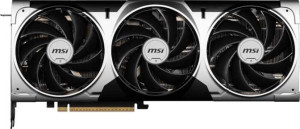
MSI GeForce RTX 5070 Ti Ventus 3X OC
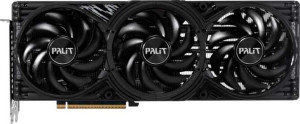
Palit GeForce RTX 5070 GamingPro-S OC

MSI GeForce RTX 5070 Ti Ventus 3X OC Palit GeForce RTX 5070 GamingPro-S OC

Overview

Welcome to our detailed specification face-off between the MSI GeForce RTX 5070 Ti Ventus 3X OC and the Palit GeForce RTX 5070 GamingPro-S OC. Both cards share Nvidia’s latest Blackwell architecture and GDDR7 memory, yet they target meaningfully different segments of the market. In this comparison, we examine the key battlegrounds of raw compute performance, memory capacity and bandwidth, power consumption, and physical dimensions to help you decide which card best suits your needs.

Common Features

  • Both cards share a GPU memory speed of 1750 MHz.
  • Double Precision Floating Point (DPFP) is supported on both products.
  • Both cards use an effective memory speed of 28000 MHz.
  • Both cards feature GDDR7 video memory.
  • ECC memory is supported on both products.
  • Both cards support DirectX 12 Ultimate.
  • Both cards support OpenGL version 4.6.
  • Both cards support OpenCL version 3.
  • Multi-display technology is supported on both products.
  • Ray tracing is supported on both products.
  • 3D support is available on both products.
  • DLSS is supported on both products.
  • XeSS (XMX) support is not available on either product.
  • Both cards include one HDMI output port running HDMI version 2.1b.
  • Both cards feature three DisplayPort outputs.
  • Neither card includes USB-C, DVI, or mini DisplayPort outputs.
  • Both cards are based on the Blackwell GPU architecture.
  • Both cards use PCIe version 5.
  • Both cards are manufactured on a 5 nm semiconductor process.
  • Air-water cooling is not available on either product.

Main Differences

  • GPU base clock speed is 2295 MHz on MSI GeForce RTX 5070 Ti Ventus 3X OC and 2325 MHz on Palit GeForce RTX 5070 GamingPro-S OC.
  • GPU turbo clock speed is 2482 MHz on MSI GeForce RTX 5070 Ti Ventus 3X OC and 2572 MHz on Palit GeForce RTX 5070 GamingPro-S OC.
  • Pixel rate is 238.3 GPixel/s on MSI GeForce RTX 5070 Ti Ventus 3X OC and 205.8 GPixel/s on Palit GeForce RTX 5070 GamingPro-S OC.
  • Floating-point performance is 44.48 TFLOPS on MSI GeForce RTX 5070 Ti Ventus 3X OC and 31.6 TFLOPS on Palit GeForce RTX 5070 GamingPro-S OC.
  • Texture rate is 695 GTexels/s on MSI GeForce RTX 5070 Ti Ventus 3X OC and 493.8 GTexels/s on Palit GeForce RTX 5070 GamingPro-S OC.
  • Shading units total 8960 on MSI GeForce RTX 5070 Ti Ventus 3X OC and 6144 on Palit GeForce RTX 5070 GamingPro-S OC.
  • Texture mapping units (TMUs) number 280 on MSI GeForce RTX 5070 Ti Ventus 3X OC and 192 on Palit GeForce RTX 5070 GamingPro-S OC.
  • Render output units (ROPs) total 96 on MSI GeForce RTX 5070 Ti Ventus 3X OC and 80 on Palit GeForce RTX 5070 GamingPro-S OC.
  • Maximum memory bandwidth is 896 GB/s on MSI GeForce RTX 5070 Ti Ventus 3X OC and 672 GB/s on Palit GeForce RTX 5070 GamingPro-S OC.
  • VRAM capacity is 16 GB on MSI GeForce RTX 5070 Ti Ventus 3X OC and 12 GB on Palit GeForce RTX 5070 GamingPro-S OC.
  • Memory bus width is 256-bit on MSI GeForce RTX 5070 Ti Ventus 3X OC and 192-bit on Palit GeForce RTX 5070 GamingPro-S OC.
  • RGB lighting is present on Palit GeForce RTX 5070 GamingPro-S OC but not available on MSI GeForce RTX 5070 Ti Ventus 3X OC.
  • Thermal Design Power (TDP) is 300W on MSI GeForce RTX 5070 Ti Ventus 3X OC and 250W on Palit GeForce RTX 5070 GamingPro-S OC.
  • Transistor count is 45600 million on MSI GeForce RTX 5070 Ti Ventus 3X OC and 31100 million on Palit GeForce RTX 5070 GamingPro-S OC.
  • Card width is 303 mm on MSI GeForce RTX 5070 Ti Ventus 3X OC and 331.9 mm on Palit GeForce RTX 5070 GamingPro-S OC.
  • Card height is 121 mm on MSI GeForce RTX 5070 Ti Ventus 3X OC and 127.1 mm on Palit GeForce RTX 5070 GamingPro-S OC.
Specs Comparison
MSI GeForce RTX 5070 Ti Ventus 3X OC

MSI GeForce RTX 5070 Ti Ventus 3X OC

Palit GeForce RTX 5070 GamingPro-S OC

Palit GeForce RTX 5070 GamingPro-S OC

Performance:
GPU clock speed 2295 MHz 2325 MHz
GPU turbo 2482 MHz 2572 MHz
pixel rate 238.3 GPixel/s 205.8 GPixel/s
floating-point performance 44.48 TFLOPS 31.6 TFLOPS
texture rate 695 GTexels/s 493.8 GTexels/s
GPU memory speed 1750 MHz 1750 MHz
shading units 8960 6144
texture mapping units (TMUs) 280 192
render output units (ROPs) 96 80
Has Double Precision Floating Point (DPFP)

At first glance, the Palit GeForce RTX 5070 GamingPro-S OC edges ahead on clock speeds, running a slightly higher base of 2325 MHz versus 2295 MHz, and a turbo of 2572 MHz versus 2482 MHz on the MSI GeForce RTX 5070 Ti Ventus 3X OC. However, clock speed alone is a misleading metric when the underlying silicon differs substantially — and here, it differs dramatically.

The RTX 5070 Ti Ventus 3X OC brings a significantly larger GPU with 8960 shading units, 280 TMUs, and 96 ROPs, compared to 6144 shading units, 192 TMUs, and 80 ROPs on the RTX 5070 GamingPro-S OC. More shading units mean more parallel work processed per clock cycle, TMUs directly determine how quickly textures are applied to geometry, and ROPs govern how fast rendered pixels are written to the framebuffer — all critical to real gaming and compute throughput. This gap translates directly into the raw numbers: the 5070 Ti delivers 44.48 TFLOPS of floating-point performance versus 31.6 TFLOPS, a roughly 41% advantage, and a texture rate of 695 GTexels/s versus 493.8 GTexels/s. Both cards share an identical 1750 MHz memory speed and both support Double Precision Floating Point, so those are non-differentiators.

The conclusion is clear: the MSI RTX 5070 Ti Ventus 3X OC holds a decisive performance advantage in this group. The marginally higher clocks of the Palit RTX 5070 GamingPro-S OC cannot compensate for the 5070 Ti′s substantially wider execution architecture. Users prioritizing raw rendering throughput — whether for high-refresh gaming, 4K workloads, or GPU-accelerated tasks — will find a meaningfully faster card in the 5070 Ti.
Memory:
effective memory speed 28000 MHz 28000 MHz
maximum memory bandwidth 896 GB/s 672 GB/s
VRAM 16GB 12GB
GDDR version GDDR7 GDDR7
memory bus width 256-bit 192-bit
Supports ECC memory

Both cards run GDDR7 memory at the same effective speed of 28000 MHz, so the raw memory clock is a non-factor here. Where things diverge meaningfully is in bus width and capacity: the MSI RTX 5070 Ti Ventus 3X OC uses a 256-bit memory interface paired with 16GB of VRAM, while the Palit RTX 5070 GamingPro-S OC operates on a narrower 192-bit bus with 12GB.

The bus width difference has a direct and tangible consequence — maximum memory bandwidth. The 5070 Ti reaches 896 GB/s, versus 672 GB/s on the RTX 5070 GamingPro-S OC, a roughly 33% gap. Bandwidth is the pipeline through which the GPU feeds its shading units with data; a wider, faster pipeline reduces stalls and keeps the GPU better utilized, particularly at higher resolutions, with large textures, or in memory-intensive compute workloads. The additional 4GB of VRAM on the 5070 Ti also matters practically — modern titles at 4K with high-resolution texture packs increasingly push past the 12GB threshold, making the 16GB buffer a more comfortable long-term allocation. Both cards support ECC memory, which is relevant for professional and compute use cases but neutral for gaming.

The memory advantage here belongs clearly to the MSI RTX 5070 Ti Ventus 3X OC on every meaningful dimension — more VRAM, wider bus, and substantially higher bandwidth. The Palit RTX 5070 GamingPro-S OC′s memory configuration is capable for its tier, but it cannot match the headroom the 5070 Ti provides for demanding or future workloads.

Features:
DirectX version DirectX 12 Ultimate DirectX 12 Ultimate
OpenGL version 4.6 4.6
OpenCL version 3 3
Supports multi-display technology
supports ray tracing
Supports 3D
supports DLSS
has XeSS (XMX)
AMD SAM / Intel Resizable BAR Intel Resizable BAR Intel Resizable BAR
has LHR
has RGB lighting
supported displays 4 4

From a feature standpoint, these two cards are remarkably aligned. Both support DirectX 12 Ultimate, ray tracing, DLSS, OpenCL 3, and Intel Resizable BAR, and both can drive up to 4 displays simultaneously. For gamers and professionals evaluating software capabilities, this is essentially a tie — every major modern gaming and compute feature is present on both cards.

The sole differentiator in this group is aesthetic: the Palit RTX 5070 GamingPro-S OC includes RGB lighting, while the MSI RTX 5070 Ti Ventus 3X OC does not. This is consistent with MSI′s Ventus line, which deliberately targets a cleaner, understated look over flashier designs. For builders who care about a lit-up system aesthetic or synchronization with an RGB ecosystem, the Palit has an edge here. For those who prefer a blacked-out build or simply don′t value lighting, the absence of RGB on the MSI is a non-issue.

Functionally, this group is a near-complete tie. The only practical differentiator — RGB lighting — is purely a matter of personal preference and has no bearing on performance or compatibility. Neither card holds a meaningful technical advantage based on the features data alone.

Ports:
has an HDMI output
HDMI ports 1 1
HDMI version HDMI 2.1b HDMI 2.1b
DisplayPort outputs 3 3
USB-C ports 0 0
DVI outputs 0 0
mini DisplayPort outputs 0 0

The port configuration on these two cards is identical in every respect. Both offer 1 HDMI 2.1b output and 3 DisplayPort outputs, totaling four display connections — which aligns with the four-display limit noted in the Features group. Neither card includes USB-C, DVI, or mini DisplayPort outputs.

The practical implications are the same for both: HDMI 2.1b supports high bandwidth output suitable for high-refresh, high-resolution displays, and the triple DisplayPort configuration gives multi-monitor users plenty of flexibility without needing adapters. The absence of USB-C is worth noting for users who own USB-C or Thunderbolt monitors, as they would require an adapter on either card.

This group is a complete tie — there is no basis for preferring one card over the other from a connectivity standpoint. Whichever card a buyer chooses, they get the exact same display output options.

General info:
GPU architecture Blackwell Blackwell
release date February 2025 March 2025
Thermal Design Power (TDP) 300W 250W
PCI Express (PCIe) version 5 5
semiconductor size 5 nm 5 nm
number of transistors 45600 million 31100 million
Has air-water cooling
width 303 mm 331.9 mm
height 121 mm 127.1 mm

Sharing the same Blackwell architecture, 5nm process node, and PCIe 5.0 interface, these two cards are built from the same generational foundation — but they represent distinctly different tiers within it. The transistor count tells that story plainly: the MSI RTX 5070 Ti Ventus 3X OC packs 45,600 million transistors versus 31,100 million on the Palit RTX 5070 GamingPro-S OC, a gap that directly underpins the larger execution units and higher throughput seen in the Performance group.

Power consumption reflects this difference too. The 5070 Ti carries a 300W TDP against the RTX 5070′s 250W, meaning buyers will need a more robust PSU and can expect higher heat output under load. Interestingly, the physical dimensions run counter to what one might expect: the Palit RTX 5070 GamingPro-S OC is actually the larger card at 331.9 mm × 127.1 mm, compared to 303 mm × 121 mm for the MSI 5070 Ti. This means the higher-TDP card is the more compact one — a notable consideration for small-to-mid-size cases where length is a constraint.

Neither card uses liquid cooling, so both rely on air cooling solutions to manage their respective thermal loads. Overall, the MSI RTX 5070 Ti Ventus 3X OC represents the more demanding but more powerful option in this group, drawing more power with a denser die — while the Palit RTX 5070 GamingPro-S OC offers a lower power envelope in a paradoxically longer chassis. Builders with tight cases may actually find the 5070 Ti the easier fit, despite its higher TDP.

Comparison Summary & Verdict

After examining every specification, a clear picture emerges for each card. The MSI GeForce RTX 5070 Ti Ventus 3X OC is the outright performance leader: its larger die delivers 44.48 TFLOPS of floating-point performance, 8960 shading units, a wider 256-bit memory bus with 16 GB of GDDR7 VRAM, and 896 GB/s of bandwidth — making it the stronger choice for demanding workloads, high-resolution gaming, and content creation tasks that benefit from extra VRAM headroom. The trade-off is a 300W TDP and a slightly more compact physical footprint. The Palit GeForce RTX 5070 GamingPro-S OC, meanwhile, offers a higher boost clock of 2572 MHz, a lower 250W power draw, RGB lighting, and a 12 GB GDDR7 configuration that still handles 1440p gaming with ease. It is the smarter pick for builders who prioritize power efficiency, case aesthetics, or simply do not need the extra headroom of the Ti-class GPU.

MSI GeForce RTX 5070 Ti Ventus 3X OC
Buy MSI GeForce RTX 5070 Ti Ventus 3X OC if...

Buy the MSI GeForce RTX 5070 Ti Ventus 3X OC if you want maximum compute performance, larger 16 GB VRAM with a 256-bit bus, and higher texture and pixel throughput for demanding 4K gaming or content creation workloads.

Palit GeForce RTX 5070 GamingPro-S OC
Buy Palit GeForce RTX 5070 GamingPro-S OC if...

Buy the Palit GeForce RTX 5070 GamingPro-S OC if you prefer a higher boost clock in a more power-efficient 250W package, and value RGB lighting for a visually striking build without needing Ti-class GPU headroom.