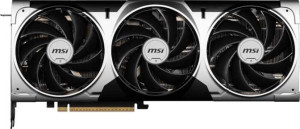
MSI GeForce RTX 5070 Ti Ventus 3X OC
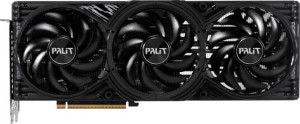
Palit GeForce RTX 5070 Ti GamingPro-S

MSI GeForce RTX 5070 Ti Ventus 3X OC Palit GeForce RTX 5070 Ti GamingPro-S

Overview

Welcome to our in-depth specification comparison between the MSI GeForce RTX 5070 Ti Ventus 3X OC and the Palit GeForce RTX 5070 Ti GamingPro-S. Both cards are built on the same Blackwell architecture with identical memory configurations, yet they diverge in meaningful ways across boost clock speeds, raw compute throughput, physical dimensions, and aesthetics. Read on to see which card earns its place in your build.

Common Features

  • Both cards share a base GPU clock speed of 2295 MHz.
  • Both cards have a GPU memory speed of 1750 MHz.
  • Both cards feature 8960 shading units.
  • Both cards include 280 texture mapping units (TMUs).
  • Both cards have 96 render output units (ROPs).
  • Double Precision Floating Point (DPFP) is supported on both cards.
  • Both cards have an effective memory speed of 28000 MHz.
  • Both cards offer a maximum memory bandwidth of 896 GB/s.
  • Both cards are equipped with 16GB of VRAM.
  • Both cards use GDDR7 memory.
  • Both cards have a 256-bit memory bus width.
  • ECC memory is supported on both cards.
  • Both cards support DirectX 12 Ultimate.
  • Both cards support OpenGL version 4.6.
  • Both cards support OpenCL version 3.
  • Multi-display technology is supported on both cards.
  • Ray tracing is supported on both cards.
  • 3D is supported on both cards.
  • DLSS is supported on both cards.
  • XeSS (XMX) is not available on either card.
  • Both cards include one HDMI 2.1b output.
  • Both cards feature three DisplayPort outputs.
  • Neither card includes USB-C, DVI, or mini DisplayPort outputs.
  • Both cards are based on the Blackwell GPU architecture.
  • Both cards have a Thermal Design Power (TDP) of 300W.
  • Both cards use PCIe version 5.
  • Both cards are manufactured on a 5 nm semiconductor process.
  • Both cards contain 45600 million transistors.
  • Neither card features air-water cooling.

Main Differences

  • GPU turbo clock speed is 2482 MHz on MSI GeForce RTX 5070 Ti Ventus 3X OC and 2452 MHz on Palit GeForce RTX 5070 Ti GamingPro-S.
  • Pixel rate is 238.3 GPixel/s on MSI GeForce RTX 5070 Ti Ventus 3X OC and 235.4 GPixel/s on Palit GeForce RTX 5070 Ti GamingPro-S.
  • Floating-point performance is 44.48 TFLOPS on MSI GeForce RTX 5070 Ti Ventus 3X OC and 43.94 TFLOPS on Palit GeForce RTX 5070 Ti GamingPro-S.
  • Texture rate is 695 GTexels/s on MSI GeForce RTX 5070 Ti Ventus 3X OC and 686.6 GTexels/s on Palit GeForce RTX 5070 Ti GamingPro-S.
  • RGB lighting is present on Palit GeForce RTX 5070 Ti GamingPro-S but not available on MSI GeForce RTX 5070 Ti Ventus 3X OC.
  • Card width is 303 mm on MSI GeForce RTX 5070 Ti Ventus 3X OC and 331.9 mm on Palit GeForce RTX 5070 Ti GamingPro-S.
  • Card height is 121 mm on MSI GeForce RTX 5070 Ti Ventus 3X OC and 127.1 mm on Palit GeForce RTX 5070 Ti GamingPro-S.
Specs Comparison
MSI GeForce RTX 5070 Ti Ventus 3X OC

MSI GeForce RTX 5070 Ti Ventus 3X OC

Palit GeForce RTX 5070 Ti GamingPro-S

Palit GeForce RTX 5070 Ti GamingPro-S

Performance:
GPU clock speed 2295 MHz 2295 MHz
GPU turbo 2482 MHz 2452 MHz
pixel rate 238.3 GPixel/s 235.4 GPixel/s
floating-point performance 44.48 TFLOPS 43.94 TFLOPS
texture rate 695 GTexels/s 686.6 GTexels/s
GPU memory speed 1750 MHz 1750 MHz
shading units 8960 8960
texture mapping units (TMUs) 280 280
render output units (ROPs) 96 96
Has Double Precision Floating Point (DPFP)

At their core, the MSI Ventus 3X OC and the Palit GamingPro-S are built on identical silicon configurations: the same 8960 shading units, 280 TMUs, 96 ROPs, and 1750 MHz memory speed. This means their theoretical throughput ceiling is defined entirely by how aggressively each card boosts its GPU clock — and that is where the two diverge.

The MSI card ships with a higher GPU turbo clock of 2482 MHz versus the Palit's 2452 MHz — a 30 MHz advantage that cascades into every derived metric. The MSI edges ahead in floating-point performance (44.48 TFLOPS vs 43.94 TFLOPS), pixel fill rate (238.3 GPixel/s vs 235.4 GPixel/s), and texture throughput (695 GTexels/s vs 686.6 GTexels/s). In practice, a ~1.2% boost clock difference is unlikely to be perceptible in most gaming workloads, as real-world frame rates depend on many factors beyond raw clock speed alone.

For this performance group, the MSI GeForce RTX 5070 Ti Ventus 3X OC holds a narrow but consistent edge across every throughput metric, solely due to its higher factory overclock. Both cards support Double Precision Floating Point, which benefits compute and professional workloads equally. Unless a buyer is specifically chasing the last fraction of out-of-box performance, the two are functionally equivalent for gaming purposes — but on paper, the MSI is the faster card.

Memory:
effective memory speed 28000 MHz 28000 MHz
maximum memory bandwidth 896 GB/s 896 GB/s
VRAM 16GB 16GB
GDDR version GDDR7 GDDR7
memory bus width 256-bit 256-bit
Supports ECC memory

When it comes to memory, these two cards are in complete lockstep. Both feature 16GB of GDDR7 running across a 256-bit bus at an effective speed of 28000 MHz, delivering 896 GB/s of memory bandwidth. That bandwidth figure is particularly significant — GDDR7 represents a generational leap in memory throughput, and 896 GB/s gives both cards ample headroom for high-resolution textures, large frame buffers at 4K, and memory-intensive workloads like AI inferencing or content creation.

The 16GB VRAM capacity is another practical strength shared by both. At 4K with demanding titles or ray tracing enabled, VRAM headroom increasingly determines whether a game runs smoothly or stutters due to memory overflow — 16GB positions both cards comfortably above the threshold where current-generation titles become problematic. ECC memory support on both cards is a bonus for users doing GPU compute or professional rendering, adding error-correction capability without any differentiation between the two.

This group is an unambiguous dead tie. Every single memory specification — capacity, speed, bandwidth, bus width, memory type, and ECC support — is identical. A buyer cannot use memory specifications as a tiebreaker between the MSI Ventus 3X OC and the Palit GamingPro-S; the decision must rest on other criteria entirely.

Features:
DirectX version DirectX 12 Ultimate DirectX 12 Ultimate
OpenGL version 4.6 4.6
OpenCL version 3 3
Supports multi-display technology
supports ray tracing
Supports 3D
supports DLSS
has XeSS (XMX)
AMD SAM / Intel Resizable BAR Intel Resizable BAR Intel Resizable BAR
has LHR
has RGB lighting
supported displays 4 4

Feature parity between these two cards is nearly total. Both support DirectX 12 Ultimate, ray tracing, DLSS, and Intel Resizable BAR — covering the full suite of capabilities that matter most to modern PC gamers. DirectX 12 Ultimate in particular ensures compatibility with the latest rendering techniques including mesh shaders and variable rate shading, while DLSS gives users AI-powered upscaling to recover performance at higher resolutions. Neither card supports XeSS, which is expected given that is an Intel-native technology.

The sole differentiator in this group is RGB lighting: the Palit GamingPro-S includes it, while the MSI Ventus 3X OC does not. This is purely an aesthetic consideration with no impact on performance or compatibility. For builders focused on a themed or illuminated system, the Palit has the edge; those indifferent to lighting — or actively preferring a cleaner look — will find the MSI's absence of RGB a non-issue or even a positive.

On functional features alone, this group is effectively a tie. Both cards support up to 4 simultaneous displays and share identical software and API capabilities. The only deciding factor here comes down to personal preference: if RGB lighting matters to your build aesthetic, the Palit GamingPro-S wins by default. Otherwise, there is nothing in this feature set to separate them.

Ports:
has an HDMI output
HDMI ports 1 1
HDMI version HDMI 2.1b HDMI 2.1b
DisplayPort outputs 3 3
USB-C ports 0 0
DVI outputs 0 0
mini DisplayPort outputs 0 0

Connectivity is identical across both cards. Each offers 3 DisplayPort outputs and 1 HDMI 2.1b port, totaling four display outputs — consistent with the four-display limit noted in the features group. HDMI 2.1b is the latest revision of the standard, supporting up to 4K at high refresh rates and 8K output, which means neither card will be a bottleneck for connecting modern high-performance monitors or TVs.

Neither card includes a USB-C port, which some users in creative or mixed-use workflows might note — certain monitors and capture devices favor USB-C for display output. However, since both cards are equally absent of it, this is a shared limitation rather than a differentiator. Legacy connectivity like DVI and mini DisplayPort is also absent on both, reflecting the industry's full transition away from older standards.

There is no basis for distinguishing the MSI Ventus 3X OC from the Palit GamingPro-S on ports — this group is a complete tie. Buyers with specific multi-monitor setups or display connection requirements will find both cards equally capable, and equally constrained by the same port selection.

General info:
GPU architecture Blackwell Blackwell
release date February 2025 February 2025
Thermal Design Power (TDP) 300W 300W
PCI Express (PCIe) version 5 5
semiconductor size 5 nm 5 nm
number of transistors 45600 million 45600 million
Has air-water cooling
width 303 mm 331.9 mm
height 121 mm 127.1 mm

Both cards are built on the same Blackwell architecture using a 5nm process with 45.6 billion transistors, and share identical 300W TDP and PCIe 5.0 interface specs. The 300W power envelope is worth noting for system builders — it demands a capable PSU and proper airflow, but is consistent with what this performance tier requires. PCIe 5.0 ensures maximum bandwidth headroom for current and near-future platforms, though both cards would perform identically on PCIe 4.0 systems in practice.

The one meaningful distinction in this group is physical size. The MSI Ventus 3X OC measures 303 × 121 mm, while the Palit GamingPro-S is noticeably larger at 331.9 × 127.1 mm — nearly 29mm longer and 6mm taller. For most full-tower and mid-tower builds this difference is inconsequential, but in compact mid-tower cases or ITX-adjacent builds where GPU clearance is tight, the MSI's smaller footprint could be the deciding factor between a clean fit and a compatibility headache.

On the fundamentals — architecture, process node, transistor count, power draw, and interface — these two cards are completely identical. The MSI Ventus 3X OC holds a practical edge in this group purely by virtue of its more compact dimensions, making it the more versatile choice for space-constrained builds.

Comparison Summary & Verdict

After examining every specification, these two cards share a remarkably similar foundation: the same 16GB GDDR7 memory, 300W TDP, and full feature support including ray tracing and DLSS. The key distinctions lie in the details. The MSI GeForce RTX 5070 Ti Ventus 3X OC edges ahead with a higher GPU turbo clock of 2482 MHz, slightly better floating-point performance at 44.48 TFLOPS, and a more compact form factor at 303 x 121 mm, making it ideal for smaller cases and performance-focused builders. The Palit GeForce RTX 5070 Ti GamingPro-S, on the other hand, brings RGB lighting to the table and suits builders who prioritize visual flair in a windowed chassis, accepting a marginally lower boost clock and larger physical footprint in return.

MSI GeForce RTX 5070 Ti Ventus 3X OC
Buy MSI GeForce RTX 5070 Ti Ventus 3X OC if...

Buy the MSI GeForce RTX 5070 Ti Ventus 3X OC if you want the highest boost clock and floating-point performance in a more compact card that fits tighter PC cases.

Palit GeForce RTX 5070 Ti GamingPro-S
Buy Palit GeForce RTX 5070 Ti GamingPro-S if...

Buy the Palit GeForce RTX 5070 Ti GamingPro-S if RGB lighting is important to your build aesthetic and the larger card dimensions are not a constraint for your case.