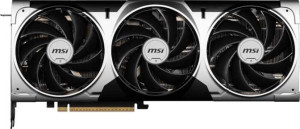
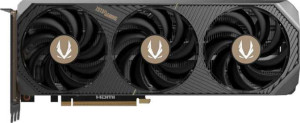
MSI GeForce RTX 5070 Ti Ventus 3X OC
Zotac Gaming GeForce RTX 5070 Ti Solid Core OC

MSI GeForce RTX 5070 Ti Ventus 3X OC Zotac Gaming GeForce RTX 5070 Ti Solid Core OC

Overview

When choosing between two premium graphics cards from the same generation, the MSI GeForce RTX 5070 Ti Ventus 3X OC and the Zotac Gaming GeForce RTX 5070 Ti Solid Core OC present a fascinating matchup. Built on the same Blackwell architecture and sharing identical core performance figures, these two cards diverge in areas such as physical dimensions and aesthetic design choices. Read on to discover which one is the better fit for your rig.

Common Features

  • Both cards have a base GPU clock speed of 2295 MHz.
  • Both cards have a GPU turbo clock speed of 2482 MHz.
  • Both cards deliver a pixel rate of 238.3 GPixel/s.
  • Both cards offer 44.48 TFLOPS of floating-point performance.
  • Both cards have a texture rate of 695 GTexels/s.
  • Both cards feature 8960 shading units.
  • Both cards include 280 texture mapping units (TMUs).
  • Both cards have a GPU memory speed of 1750 MHz.
  • Both cards have an effective memory speed of 28000 MHz.
  • Both cards offer a maximum memory bandwidth of 896 GB/s.
  • Both cards come with 16GB of VRAM.
  • Both cards use GDDR7 memory.
  • Both cards have a 256-bit memory bus width.
  • ECC memory support is available on both cards.
  • Both cards support DirectX 12 Ultimate.
  • Both cards support OpenGL version 4.6.
  • Both cards support OpenCL version 3.
  • Multi-display technology is supported on both cards.
  • Ray tracing is supported on both cards.
  • DLSS support is available on both cards.
  • 3D support is available on both cards.
  • XeSS (XMX) support is not available on either card.
  • Both cards include one HDMI 2.1b output.
  • Both cards include three DisplayPort outputs.
  • Neither card has USB-C ports, DVI outputs, or mini DisplayPort outputs.
  • Both cards are based on the Blackwell GPU architecture.
  • Both cards have a Thermal Design Power (TDP) of 300W.
  • Both cards use PCIe version 5.
  • Both cards are manufactured on a 5 nm semiconductor process.
  • Both cards feature 45,600 million transistors.
  • Neither card offers air-water cooling.

Main Differences

  • RGB lighting is present on the Zotac Gaming GeForce RTX 5070 Ti Solid Core OC but not available on the MSI GeForce RTX 5070 Ti Ventus 3X OC.
  • Width is 303 mm on the MSI GeForce RTX 5070 Ti Ventus 3X OC and 303.5 mm on the Zotac Gaming GeForce RTX 5070 Ti Solid Core OC.
  • Height is 121 mm on the MSI GeForce RTX 5070 Ti Ventus 3X OC and 115.8 mm on the Zotac Gaming GeForce RTX 5070 Ti Solid Core OC.
Specs Comparison
MSI GeForce RTX 5070 Ti Ventus 3X OC

MSI GeForce RTX 5070 Ti Ventus 3X OC

Zotac Gaming GeForce RTX 5070 Ti Solid Core OC

Zotac Gaming GeForce RTX 5070 Ti Solid Core OC

Performance:
GPU clock speed 2295 MHz 2295 MHz
GPU turbo 2482 MHz 2482 MHz
pixel rate 238.3 GPixel/s 238.3 GPixel/s
floating-point performance 44.48 TFLOPS 44.48 TFLOPS
texture rate 695 GTexels/s 695 GTexels/s
GPU memory speed 1750 MHz 1750 MHz
shading units 8960 8960
texture mapping units (TMUs) 280 280
render output units (ROPs) 96 96
Has Double Precision Floating Point (DPFP)

When comparing the MSI GeForce RTX 5070 Ti Ventus 3X OC and the Zotac Gaming GeForce RTX 5070 Ti Solid Core OC on pure GPU performance metrics, the picture is unambiguous: these two cards are completely identical in every measurable specification. Both run at a base clock of 2295 MHz and boost to 2482 MHz, share the same 44.48 TFLOPS of floating-point throughput, and feature the same shader and compute architecture — 8960 shading units, 280 TMUs, and 96 ROPs.

What do these numbers mean in practice? The 44.48 TFLOPS figure places both cards firmly in high-end territory, capable of driving demanding rasterized workloads and AI-accelerated tasks at high framerates. The 695 GTexels/s texture rate and 238.3 GPixel/s pixel fill rate are sufficient to handle 4K rendering without significant bottlenecking at the compute level. The 1750 MHz memory speed and full Double Precision Floating Point support further confirm both are built on the same uncompromised GPU configuration — no cuts have been made by either board partner.

The verdict for this group is a dead tie. Neither the MSI Ventus 3X OC nor the Zotac Solid Core OC holds any performance advantage over the other based on these specs. Any real-world difference in GPU performance between the two would be negligible and within normal variance. Buyers should look to other specification groups — such as cooling, design, or connectivity — to differentiate between these two cards.

Memory:
effective memory speed 28000 MHz 28000 MHz
maximum memory bandwidth 896 GB/s 896 GB/s
VRAM 16GB 16GB
GDDR version GDDR7 GDDR7
memory bus width 256-bit 256-bit
Supports ECC memory

The memory subsystems of the MSI RTX 5070 Ti Ventus 3X OC and the Zotac RTX 5070 Ti Solid Core OC are, once again, a perfect match across every specification. Both cards carry 16GB of GDDR7 memory on a 256-bit bus, delivering a peak bandwidth of 896 GB/s — a figure that represents a substantial generational leap over previous-gen GDDR6X implementations.

That 896 GB/s of memory bandwidth is the headline here. It means neither card will struggle to feed the GPU with data even in the most texture-heavy or high-resolution scenarios, keeping 4K gaming and creative workloads fluid. The 16GB VRAM capacity is also well-suited for modern AAA titles and AI-assisted workflows, which are increasingly pushing past the 12GB threshold. GDDR7 additionally offers improved power efficiency over GDDR6X, meaning this bandwidth is delivered without a proportional spike in heat output. Both cards also support ECC memory, a feature more relevant to professional and compute workloads where data integrity is critical, though it carries no meaningful weight for gaming use cases.

As with the performance group, this is an absolute tie. The MSI Ventus 3X OC and Zotac Solid Core OC share an identical memory configuration down to every last spec, so memory alone gives neither card any advantage. Prospective buyers will need to weigh other factors entirely to differentiate the two.

Features:
DirectX version DirectX 12 Ultimate DirectX 12 Ultimate
OpenGL version 4.6 4.6
OpenCL version 3 3
Supports multi-display technology
supports ray tracing
Supports 3D
supports DLSS
has XeSS (XMX)
AMD SAM / Intel Resizable BAR Intel Resizable BAR Intel Resizable BAR
has LHR
has RGB lighting
supported displays 4 4

Feature parity between the MSI RTX 5070 Ti Ventus 3X OC and the Zotac RTX 5070 Ti Solid Core OC is nearly total — both support DirectX 12 Ultimate, ray tracing, DLSS, and Intel Resizable BAR, and both can drive up to 4 displays simultaneously. These shared capabilities mean users of either card get access to the full modern NVIDIA feature stack, including hardware-accelerated ray tracing and AI-powered upscaling, without compromise.

The one concrete differentiator in this group is RGB lighting: the Zotac Solid Core OC includes it, while the MSI Ventus 3X OC does not. For builders who prioritize a themed or illuminated system aesthetic, this is a meaningful distinction — RGB on the GPU is often one of the most visible lighting elements in a windowed case. Conversely, users who prefer a clean, understated look, or who are building in a closed case where lighting is irrelevant, will find the MSI's lack of RGB a non-issue or even a positive.

Based strictly on the provided specs, the Zotac Solid Core OC holds a narrow edge in this group solely due to its RGB lighting support — it offers everything the MSI does, plus an aesthetic feature the MSI lacks. However, this advantage is entirely subjective in value; it has no impact on gaming performance, compatibility, or functionality. Buyers who do not care about lighting should treat this group as a practical tie.

Ports:
has an HDMI output
HDMI ports 1 1
HDMI version HDMI 2.1b HDMI 2.1b
DisplayPort outputs 3 3
USB-C ports 0 0
DVI outputs 0 0
mini DisplayPort outputs 0 0

Port selection on both the MSI RTX 5070 Ti Ventus 3X OC and the Zotac RTX 5070 Ti Solid Core OC is identical: one HDMI 2.1b output and three DisplayPort outputs, for a total of four display connections — matching the maximum supported display count established in the features group. Neither card includes USB-C or legacy DVI outputs.

The practical takeaway is that both cards are well-equipped for modern multi-monitor setups. HDMI 2.1b is the latest HDMI specification, supporting up to 4K at high refresh rates and 8K output, making it ideal for connecting a primary gaming display or a living-room TV. The three DisplayPort outputs provide flexible options for productivity-oriented multi-monitor arrangements or daisy-chaining compatible displays. The absence of USB-C is worth noting for users who own USB-C or Thunderbolt monitors, as they would require an active adapter — but this is a common trade-off at this product tier.

This group is a straightforward tie. The MSI Ventus 3X OC and Zotac Solid Core OC offer an identical port layout with no distinction whatsoever, so connectivity alone provides no basis for choosing one over the other.

General info:
GPU architecture Blackwell Blackwell
release date February 2025 February 2025
Thermal Design Power (TDP) 300W 300W
PCI Express (PCIe) version 5 5
semiconductor size 5 nm 5 nm
number of transistors 45600 million 45600 million
Has air-water cooling
width 303 mm 303.5 mm
height 121 mm 115.8 mm

At their core, the MSI RTX 5070 Ti Ventus 3X OC and the Zotac RTX 5070 Ti Solid Core OC are built on identical foundations: the Blackwell architecture, a 5nm process node with 45.6 billion transistors, a 300W TDP, and PCIe 5.0 interface support. These shared fundamentals mean both cards draw the same power, slot into the same motherboard interface, and benefit equally from the architectural improvements Blackwell brings over its predecessors.

The only measurable divergence in this group comes down to physical dimensions. Both cards are essentially the same length at roughly 303mm, but the MSI Ventus 3X OC is slightly taller at 121mm compared to the Zotac Solid Core OC's 115.8mm. That ~5mm difference in height is modest but not entirely irrelevant — in compact or mid-tower cases with tight GPU clearance above the PCIe slot, or in builds where cable routing near the GPU is constrained, the Zotac's slightly slimmer profile could offer a marginal fitment advantage. For most standard ATX builds, however, this gap will be inconsequential.

Overall, this group is effectively a tie, with the Zotac Solid Core OC holding a very minor edge in height that may matter only in space-constrained builds. The shared 300W TDP ensures neither card demands more from a power supply than the other, and the identical architecture and process node mean both represent the same generational positioning in NVIDIA's lineup.

Comparison Summary & Verdict

In this comparison, the MSI GeForce RTX 5070 Ti Ventus 3X OC and the Zotac Gaming GeForce RTX 5070 Ti Solid Core OC prove to be virtually identical in every performance metric, sharing the same Blackwell architecture, 16GB of GDDR7 memory, 44.48 TFLOPS of compute power, and a 300W TDP. Their differences come down entirely to form and aesthetics. The Zotac edges ahead for case compatibility with a shorter height of 115.8 mm versus the MSI at 121 mm, and it also stands out with its RGB lighting, making it the natural pick for builders who want a visually vibrant setup. The MSI, by contrast, suits those who prefer a cleaner, understated look without RGB. Both cards are exceptional performers; your choice ultimately hinges on style and fit within your specific chassis.

MSI GeForce RTX 5070 Ti Ventus 3X OC
Buy MSI GeForce RTX 5070 Ti Ventus 3X OC if...

Buy the MSI GeForce RTX 5070 Ti Ventus 3X OC if you prefer a clean, RGB-free aesthetic and a no-frills design that keeps the focus purely on performance.

Zotac Gaming GeForce RTX 5070 Ti Solid Core OC
Buy Zotac Gaming GeForce RTX 5070 Ti Solid Core OC if...

Buy the Zotac Gaming GeForce RTX 5070 Ti Solid Core OC if you want RGB lighting for a visually striking build, or if its slightly shorter height of 115.8 mm offers better clearance in your case.