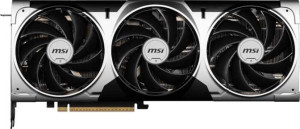
MSI GeForce RTX 5070 Ti Ventus 3X OC
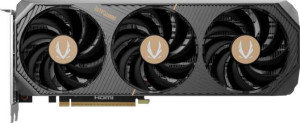
Zotac Gaming GeForce RTX 5070 Ti Solid SFF OC

MSI GeForce RTX 5070 Ti Ventus 3X OC Zotac Gaming GeForce RTX 5070 Ti Solid SFF OC

Overview

In this head-to-head comparison between the MSI GeForce RTX 5070 Ti Ventus 3X OC and the Zotac Gaming GeForce RTX 5070 Ti Solid SFF OC, two RTX 5070 Ti cards built on the same Blackwell foundation go up against each other. While their raw performance and feature sets are nearly identical, the real battle lies in physical dimensions and aesthetic design choices — differences that could make or break a carefully planned build.

Common Features

  • Both cards have a base GPU clock speed of 2295 MHz.
  • Both cards have a GPU turbo clock speed of 2482 MHz.
  • Both cards deliver a pixel rate of 238.3 GPixel/s.
  • Both cards offer 44.48 TFLOPS of floating-point performance.
  • Both cards have a texture rate of 695 GTexels/s.
  • Both cards have a GPU memory speed of 1750 MHz.
  • Both cards feature 8960 shading units.
  • Both cards have 280 texture mapping units (TMUs).
  • Both cards have an effective memory speed of 28000 MHz.
  • Both cards provide a maximum memory bandwidth of 896 GB/s.
  • Both cards come with 16GB of VRAM.
  • Both cards use GDDR7 memory.
  • Both cards have a 256-bit memory bus width.
  • ECC memory support is available on both cards.
  • Both cards support DirectX 12 Ultimate.
  • Both cards support OpenGL version 4.6.
  • Both cards support OpenCL version 3.
  • Multi-display technology is supported on both cards.
  • Ray tracing is supported on both cards.
  • 3D support is available on both cards.
  • DLSS support is available on both cards.
  • XeSS (XMX) support is not available on either card.
  • Both cards include one HDMI output using HDMI version 2.1b.
  • Both cards have three DisplayPort outputs.
  • Neither card has USB-C ports, DVI outputs, or mini DisplayPort outputs.
  • Both cards are built on the Blackwell GPU architecture.
  • Both cards have a Thermal Design Power (TDP) of 300W.
  • Both cards use PCIe version 5.
  • Both cards are manufactured on a 5 nm semiconductor process.
  • Both cards feature 45600 million transistors.
  • Air-water cooling is not available on either card.

Main Differences

  • RGB lighting is present on the Zotac Gaming GeForce RTX 5070 Ti Solid SFF OC but not available on the MSI GeForce RTX 5070 Ti Ventus 3X OC.
  • Width is 303 mm on the MSI GeForce RTX 5070 Ti Ventus 3X OC and 304.4 mm on the Zotac Gaming GeForce RTX 5070 Ti Solid SFF OC.
  • Height is 121 mm on the MSI GeForce RTX 5070 Ti Ventus 3X OC and 115.8 mm on the Zotac Gaming GeForce RTX 5070 Ti Solid SFF OC.
Specs Comparison
MSI GeForce RTX 5070 Ti Ventus 3X OC

MSI GeForce RTX 5070 Ti Ventus 3X OC

Zotac Gaming GeForce RTX 5070 Ti Solid SFF OC

Zotac Gaming GeForce RTX 5070 Ti Solid SFF OC

Performance:
GPU clock speed 2295 MHz 2295 MHz
GPU turbo 2482 MHz 2482 MHz
pixel rate 238.3 GPixel/s 238.3 GPixel/s
floating-point performance 44.48 TFLOPS 44.48 TFLOPS
texture rate 695 GTexels/s 695 GTexels/s
GPU memory speed 1750 MHz 1750 MHz
shading units 8960 8960
texture mapping units (TMUs) 280 280
render output units (ROPs) 96 96
Has Double Precision Floating Point (DPFP)

When it comes to raw GPU performance, the MSI GeForce RTX 5070 Ti Ventus 3X OC and the Zotac Gaming GeForce RTX 5070 Ti Solid SFF OC are in perfect lockstep. Both cards share an identical clock configuration — a base of 2295 MHz and a boost of 2482 MHz — and as a direct result, every derived performance metric is exactly the same: 44.48 TFLOPS of floating-point throughput, a pixel fill rate of 238.3 GPixel/s, and a texture rate of 695 GTexels/s. This is not a coincidence; both are built on the same GPU die with the same shader count of 8960 units, 280 TMUs, and 96 ROPs, and neither vendor has applied any meaningful factory overclock to differentiate them at the silicon level.

In practical terms, this means users should expect virtually indistinguishable frame rates and compute performance in gaming, content creation, or AI workloads when comparing these two cards head-to-head in a controlled environment. The 1750 MHz memory speed is also shared, so memory bandwidth — a critical factor in high-resolution texture streaming and large model inference — will not tip the scales either. Both cards also support Double Precision Floating Point (DPFP), which matters for scientific or professional compute tasks, though this too is a tie.

For this performance group, the verdict is an unambiguous tie. Neither card holds any measurable advantage over the other based solely on these specifications. The decision between the Ventus 3X OC and the Solid SFF OC should therefore hinge entirely on other factors — such as form factor, cooling solution, acoustics, or price — since no performance gain can be expected from choosing one over the other.

Memory:
effective memory speed 28000 MHz 28000 MHz
maximum memory bandwidth 896 GB/s 896 GB/s
VRAM 16GB 16GB
GDDR version GDDR7 GDDR7
memory bus width 256-bit 256-bit
Supports ECC memory

The memory subsystems of the Ventus 3X OC and the Solid SFF OC are, once again, completely identical across every measurable dimension. Both cards carry 16GB of GDDR7 VRAM on a 256-bit bus, delivering an effective memory speed of 28000 MHz and a peak bandwidth of 896 GB/s. That bandwidth figure is particularly significant — it is substantially higher than what GDDR6X could achieve on a comparable bus width, and it directly benefits workloads that are memory-bound, such as 4K texture streaming, large generative AI models, and high-resolution video editing.

The 16GB VRAM capacity deserves specific attention. At this tier, 16GB sits comfortably above the threshold where modern games and creative applications start to struggle, and it provides meaningful headroom for running local large language models or diffusion-based image generation pipelines alongside GPU-accelerated tasks. The shared support for ECC memory is a notable inclusion, as error-correcting memory reduces the risk of data corruption in precision-sensitive professional workflows — a feature more commonly associated with workstation-class hardware.

As with the performance group, this category resolves as a complete tie. Every specification — capacity, speed, bandwidth, bus width, memory generation, and ECC support — is identical between the two cards. Buyers evaluating these two products on memory alone will find no basis for differentiation here, and should direct their attention to other criteria such as physical design, cooling, or price.
Features:
DirectX version DirectX 12 Ultimate DirectX 12 Ultimate
OpenGL version 4.6 4.6
OpenCL version 3 3
Supports multi-display technology
supports ray tracing
Supports 3D
supports DLSS
has XeSS (XMX)
AMD SAM / Intel Resizable BAR Intel Resizable BAR Intel Resizable BAR
has LHR
has RGB lighting
supported displays 4 4

Across the core feature set, these two cards are effectively siblings. Both support DirectX 12 Ultimate, which unlocks the full suite of modern rendering features including hardware-accelerated ray tracing, mesh shaders, and variable-rate shading. DLSS support is present on both, giving users access to AI-driven upscaling and frame generation — arguably one of the most impactful real-world advantages of the RTX platform for maintaining high frame rates at demanding resolutions. Neither card carries a Lite Hash Rate limiter, and both support up to 4 simultaneous displays, making either a viable choice for multi-monitor productivity or immersive gaming setups.

The sole differentiator in this group is RGB lighting: the Zotac Solid SFF OC includes it, while the MSI Ventus 3X OC does not. For users building a system with a coordinated aesthetic or windowed case, this gives the Zotac a tangible advantage in customization and visual appeal. For those prioritizing a clean, understated look — or building in a case where the GPU is not visible — the absence of RGB on the MSI is unlikely to matter at all.

On purely functional features, this group is a tie. The only data-backed differentiator is the Zotac Solid SFF OC's RGB lighting, which makes it the marginal winner here for users who value aesthetic flexibility — but this advantage is entirely subjective and has no bearing on gaming or compute performance.

Ports:
has an HDMI output
HDMI ports 1 1
HDMI version HDMI 2.1b HDMI 2.1b
DisplayPort outputs 3 3
USB-C ports 0 0
DVI outputs 0 0
mini DisplayPort outputs 0 0

Port configurations on both cards are identical: one HDMI 2.1b output and three DisplayPort outputs, totaling four display connections — which aligns with the four-display maximum noted in the features group. HDMI 2.1b is the most current revision of the standard, supporting up to 10K resolution, uncompressed 4K at high refresh rates, and features like Variable Refresh Rate (VRR) and Auto Low Latency Mode (ALLM), making it fully future-proofed for high-end displays and the latest televisions used as monitors.

The three DisplayPort outputs provide ample flexibility for multi-monitor workstation arrangements or high-refresh-rate gaming setups, where DisplayPort's higher bandwidth ceiling is often preferred. Notably, neither card offers a USB-C output, which may be a consideration for users targeting newer USB-C-native monitors or VR headsets that rely on that connector — though this is an equal limitation for both.

This group is a straightforward tie. The port layout is byte-for-byte identical between the Ventus 3X OC and the Solid SFF OC, and neither card holds any connectivity advantage over the other.

General info:
GPU architecture Blackwell Blackwell
release date February 2025 March 2025
Thermal Design Power (TDP) 300W 300W
PCI Express (PCIe) version 5 5
semiconductor size 5 nm 5 nm
number of transistors 45600 million 45600 million
Has air-water cooling
width 303 mm 304.4 mm
height 121 mm 115.8 mm

At a foundational level, both cards are built on the same silicon: NVIDIA's Blackwell architecture, fabricated on a 5nm process with 45.6 billion transistors. This shared foundation means identical generational capabilities — improved power efficiency over the previous Ada Lovelace generation, enhanced AI acceleration cores, and next-generation ray tracing hardware. Both also connect via PCIe 5.0, ensuring maximum bandwidth headroom for current and near-future platforms, and both carry a 300W TDP, meaning power supply and airflow planning will be equally demanding for either card.

Where this group surfaces a subtle but meaningful difference is in physical dimensions. The Ventus 3X OC measures 303 mm × 121 mm, while the Solid SFF OC comes in at 304.4 mm × 115.8 mm — marginally longer but notably shorter in height by roughly 5mm. That height reduction is particularly relevant for the Zotac, given its SFF (Small Form Factor) designation: a slimmer profile eases installation in compact or ITX cases where vertical clearance between the GPU and adjacent components — or the case floor — can be a genuine constraint.

The Zotac Solid SFF OC holds a narrow but practical edge in this group purely on the basis of its reduced height. For standard ATX builds the difference is inconsequential, but for anyone targeting a space-constrained chassis, that 5mm reduction can be the deciding factor between a clean fit and an incompatible one. All other general specifications are identical.

Comparison Summary & Verdict

After a thorough review, both the MSI GeForce RTX 5070 Ti Ventus 3X OC and the Zotac Gaming GeForce RTX 5070 Ti Solid SFF OC deliver the exact same Blackwell-powered performance, memory bandwidth, and connectivity. The differences are strictly physical and cosmetic. The MSI card measures 303 mm wide and 121 mm tall, making it the slightly narrower option — a subtle advantage in tightly spaced builds with limited horizontal room. The Zotac card, at 304.4 mm wide and just 115.8 mm tall, wins on vertical clearance and adds RGB lighting for builders who value visual customization. If aesthetics and a shorter card height matter to you, the Zotac is the clear pick. If you prefer a cleaner, no-RGB look with a marginally narrower footprint, the MSI is the better fit.

MSI GeForce RTX 5070 Ti Ventus 3X OC
Buy MSI GeForce RTX 5070 Ti Ventus 3X OC if...

Choose the MSI GeForce RTX 5070 Ti Ventus 3X OC if you prefer a clean, no-RGB aesthetic and need a marginally narrower card at 303 mm to fit your build.

Zotac Gaming GeForce RTX 5070 Ti Solid SFF OC
Buy Zotac Gaming GeForce RTX 5070 Ti Solid SFF OC if...

Choose the Zotac Gaming GeForce RTX 5070 Ti Solid SFF OC if you want RGB lighting and benefit from its shorter 115.8 mm height for tighter vertical clearance in your case.