MSI GeForce RTX 5070 Ti Ventus 3X
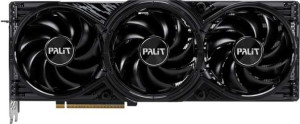
Palit GeForce RTX 5070 Ti GamingPro OC

MSI GeForce RTX 5070 Ti Ventus 3X Palit GeForce RTX 5070 Ti GamingPro OC

Overview

Welcome to our detailed spec comparison between the MSI GeForce RTX 5070 Ti Ventus 3X and the Palit GeForce RTX 5070 Ti GamingPro OC. Both cards are built on the same Blackwell architecture with identical memory configurations, yet they diverge in areas like boost clock performance and physical dimensions that could tip the scales for certain buyers. Read on to see how every spec stacks up.

Common Features

  • Both cards share a base GPU clock speed of 2295 MHz.
  • Both cards have a GPU memory speed of 1750 MHz.
  • Both cards feature 8960 shading units.
  • Both cards have 280 texture mapping units (TMUs).
  • Both cards have 96 render output units (ROPs).
  • Double Precision Floating Point (DPFP) is supported on both cards.
  • Both cards have an effective memory speed of 28000 MHz.
  • Both cards offer a maximum memory bandwidth of 896 GB/s.
  • Both cards come with 16GB of VRAM.
  • Both cards use GDDR7 memory.
  • Both cards have a 256-bit memory bus width.
  • ECC memory is supported on both cards.
  • Both cards support DirectX 12 Ultimate.
  • Both cards support OpenGL version 4.6.
  • Both cards support OpenCL version 3.
  • Multi-display technology is supported on both cards.
  • Ray tracing is supported on both cards.
  • 3D support is available on both cards.
  • DLSS is supported on both cards.
  • XeSS (XMX) is not available on either card.
  • Both cards include one HDMI 2.1b port and three DisplayPort outputs, with no USB-C, DVI, or mini DisplayPort outputs.
  • Both cards are built on the Blackwell GPU architecture.
  • Both cards have a Thermal Design Power (TDP) of 300W.
  • Both cards use PCIe version 5.
  • Both cards are manufactured on a 5 nm process node.
  • Both cards have 45,600 million transistors.
  • Air-water cooling is not available on either card.

Main Differences

  • GPU turbo clock speed is 2452 MHz on MSI GeForce RTX 5070 Ti Ventus 3X and 2482 MHz on Palit GeForce RTX 5070 Ti GamingPro OC.
  • Pixel rate is 235.4 GPixel/s on MSI GeForce RTX 5070 Ti Ventus 3X and 238.3 GPixel/s on Palit GeForce RTX 5070 Ti GamingPro OC.
  • Floating-point performance is 43.94 TFLOPS on MSI GeForce RTX 5070 Ti Ventus 3X and 44.48 TFLOPS on Palit GeForce RTX 5070 Ti GamingPro OC.
  • Texture rate is 686.6 GTexels/s on MSI GeForce RTX 5070 Ti Ventus 3X and 695 GTexels/s on Palit GeForce RTX 5070 Ti GamingPro OC.
  • RGB lighting is present on Palit GeForce RTX 5070 Ti GamingPro OC but not available on MSI GeForce RTX 5070 Ti Ventus 3X.
  • Card width is 303 mm on MSI GeForce RTX 5070 Ti Ventus 3X and 331.9 mm on Palit GeForce RTX 5070 Ti GamingPro OC.
  • Card height is 121 mm on MSI GeForce RTX 5070 Ti Ventus 3X and 127.1 mm on Palit GeForce RTX 5070 Ti GamingPro OC.
Specs Comparison
MSI GeForce RTX 5070 Ti Ventus 3X

MSI GeForce RTX 5070 Ti Ventus 3X

Palit GeForce RTX 5070 Ti GamingPro OC

Palit GeForce RTX 5070 Ti GamingPro OC

Performance:
GPU clock speed 2295 MHz 2295 MHz
GPU turbo 2452 MHz 2482 MHz
pixel rate 235.4 GPixel/s 238.3 GPixel/s
floating-point performance 43.94 TFLOPS 44.48 TFLOPS
texture rate 686.6 GTexels/s 695 GTexels/s
GPU memory speed 1750 MHz 1750 MHz
shading units 8960 8960
texture mapping units (TMUs) 280 280
render output units (ROPs) 96 96
Has Double Precision Floating Point (DPFP)

At the core, both the MSI Ventus 3X and the Palit GamingPro OC share identical silicon foundations: the same 8960 shading units, 280 TMUs, 96 ROPs, and a base GPU clock of 2295 MHz. This means any difference in real-world performance will not come from architectural variation but purely from how aggressively each card is factory-overclocked.

That is precisely where a measurable, if modest, gap emerges. The Palit GamingPro OC ships with a higher boost clock of 2482 MHz versus the MSI's 2452 MHz — a 30 MHz advantage that cascades across every derived throughput metric. The Palit edges ahead with 44.48 TFLOPS of floating-point performance versus 43.94 TFLOPS, and its texture throughput of 695 GTexels/s beats the MSI's 686.6 GTexels/s. In practice, a ~1.2% compute and texturing lead is unlikely to produce a perceptible framerate difference in most games, but it does reflect a slightly more aggressive out-of-box tune that could matter in sustained compute workloads or at the margins of GPU-limited scenarios.

In summary, the Palit GamingPro OC holds a narrow but consistent performance edge in this category, driven entirely by its higher factory boost clock. The MSI Ventus 3X is not slower by any meaningful real-world margin, but if raw peak throughput is the deciding factor, the Palit is the objectively faster card as configured from the factory.

Memory:
effective memory speed 28000 MHz 28000 MHz
maximum memory bandwidth 896 GB/s 896 GB/s
VRAM 16GB 16GB
GDDR version GDDR7 GDDR7
memory bus width 256-bit 256-bit
Supports ECC memory

The MSI GeForce RTX 5070 Ti Ventus 3X and the Palit GeForce RTX 5070 Ti GamingPro OC share identical specifications when it comes to memory. Both cards feature an effective memory speed of 28000 MHz and a maximum memory bandwidth of 896 GB/s. Additionally, both cards come with 16GB of VRAM, use the GDDR7 memory type, and have a 256-bit memory bus width.

Both models also support ECC memory, ensuring enhanced data integrity and stability during operations. Since all memory-related specs are the same across both products, the performance in this category will be virtually identical.

Features:
DirectX version DirectX 12 Ultimate DirectX 12 Ultimate
OpenGL version 4.6 4.6
OpenCL version 3 3
Supports multi-display technology
supports ray tracing
Supports 3D
supports DLSS
has XeSS (XMX)
AMD SAM / Intel Resizable BAR Intel Resizable BAR Intel Resizable BAR
has LHR
has RGB lighting
supported displays 4 4

The MSI GeForce RTX 5070 Ti Ventus 3X and the Palit GeForce RTX 5070 Ti GamingPro OC share nearly identical features, with only a few differences. Both cards support DirectX 12 Ultimate, OpenGL 4.6, and OpenCL 3, ensuring compatibility with the latest games and applications. They also support multi-display technology, ray tracing, and 3D rendering, and both cards are equipped with DLSS technology for improved performance.

Both products lack support for XeSS (XMX) and are compatible with Intel Resizable BAR, though neither card has an LHR (Lite Hash Rate) restriction. However, the Palit card has RGB lighting, which is not present on the MSI card. Both models support up to four displays, offering ample display connectivity.

Ports:
has an HDMI output
HDMI ports 1 1
HDMI version HDMI 2.1b HDMI 2.1b
DisplayPort outputs 3 3
USB-C ports 0 0
DVI outputs 0 0
mini DisplayPort outputs 0 0

The MSI GeForce RTX 5070 Ti Ventus 3X and the Palit GeForce RTX 5070 Ti GamingPro OC are identical in terms of their port configurations. Both cards feature one HDMI output, with support for HDMI 2.1b. Additionally, both models offer three DisplayPort outputs. Neither card includes USB-C ports, DVI outputs, or mini DisplayPort outputs.

With matching port setups, users can expect the same level of connectivity across both products, with no differences in available display options between the two models.

General info:
GPU architecture Blackwell Blackwell
release date February 2025 January 2025
Thermal Design Power (TDP) 300W 300W
PCI Express (PCIe) version 5 5
semiconductor size 5 nm 5 nm
number of transistors 45600 million 45600 million
Has air-water cooling
width 303 mm 331.9 mm
height 121 mm 127.1 mm

The MSI GeForce RTX 5070 Ti Ventus 3X and the Palit GeForce RTX 5070 Ti GamingPro OC share identical specifications in terms of GPU architecture, thermal design power (TDP), PCIe version, semiconductor size, and number of transistors. Both cards use the Blackwell GPU architecture, have a TDP of 300W, and support PCI Express version 5.0. They also both feature a 5 nm semiconductor size and contain 45,600 million transistors.

The main difference between the two products lies in their physical dimensions. The MSI card measures 303 mm in width and 121 mm in height, while the Palit card is slightly larger, with a width of 331.9 mm and a height of 127.1 mm. Both cards do not include air-water cooling systems.

Comparison Summary & Verdict

Both the MSI GeForce RTX 5070 Ti Ventus 3X and the Palit GeForce RTX 5070 Ti GamingPro OC share the same core DNA: identical 16GB GDDR7 memory, a 256-bit bus, 300W TDP, and full support for ray tracing and DLSS. The Palit edges ahead in raw numbers, offering a higher GPU turbo clock of 2482 MHz, 44.48 TFLOPS of floating-point performance, and a slightly superior texture rate, making it the stronger pick for users who want every last frame. It also adds RGB lighting for those who value aesthetics. The MSI, however, is noticeably more compact at 303 mm x 121 mm versus the Palit’s 331.9 mm x 127.1 mm, making it the smarter choice for smaller cases or tighter builds where physical clearance is a concern.

MSI GeForce RTX 5070 Ti Ventus 3X
Buy MSI GeForce RTX 5070 Ti Ventus 3X if...

Buy the MSI GeForce RTX 5070 Ti Ventus 3X if you need a more compact card that fits comfortably in smaller PC cases without sacrificing core RTX 5070 Ti performance.

Palit GeForce RTX 5070 Ti GamingPro OC
Buy Palit GeForce RTX 5070 Ti GamingPro OC if...

Buy the Palit GeForce RTX 5070 Ti GamingPro OC if you want the higher boost clock, marginally better raw performance figures, and RGB lighting for a more visually customized build.