MSI GeForce RTX 5070 Ti Ventus 3X
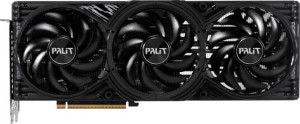
Palit GeForce RTX 5070 Ti GamingPro-S

MSI GeForce RTX 5070 Ti Ventus 3X Palit GeForce RTX 5070 Ti GamingPro-S

Overview

Welcome to this in-depth specification comparison between the MSI GeForce RTX 5070 Ti Ventus 3X and the Palit GeForce RTX 5070 Ti GamingPro-S. Both cards are built on the same Blackwell foundation and share identical core silicon, yet they diverge in ways that could matter depending on your build. In this comparison, we examine their physical dimensions and aesthetics to help you decide which card fits your chassis and style best.

Common Features

  • GPU clock speed is 2295 MHz on both products.
  • GPU turbo speed is 2452 MHz on both products.
  • Pixel rate is 235.4 GPixel/s on both products.
  • Floating-point performance is 43.94 TFLOPS on both products.
  • Texture rate is 686.6 GTexels/s on both products.
  • Both products have 8960 shading units.
  • Both products have 280 texture mapping units (TMUs).
  • VRAM is 16GB on both products.
  • Both products use GDDR7 memory.
  • Memory bus width is 256-bit on both products.
  • Maximum memory bandwidth is 896 GB/s on both products.
  • Effective memory speed is 28000 MHz on both products.
  • ECC memory is supported on both products.
  • Both products support DirectX 12 Ultimate.
  • Both products support OpenGL version 4.6 and OpenCL version 3.
  • Ray tracing is supported on both products.
  • DLSS is supported on both products.
  • XeSS (XMX) support is not available on either product.
  • Both products feature 1 HDMI 2.1b output and 3 DisplayPort outputs, with no USB-C or DVI outputs.
  • Both products are built on the Blackwell architecture with a 5 nm semiconductor size, 45600 million transistors, a 300W TDP, and PCIe 5 interface.
  • Air-water cooling is not available on either product.
  • Multi-display technology is supported on both products.

Main Differences

  • RGB lighting is present on Palit GeForce RTX 5070 Ti GamingPro-S but not available on MSI GeForce RTX 5070 Ti Ventus 3X.
  • Width is 303 mm on MSI GeForce RTX 5070 Ti Ventus 3X and 331.9 mm on Palit GeForce RTX 5070 Ti GamingPro-S.
  • Height is 121 mm on MSI GeForce RTX 5070 Ti Ventus 3X and 127.1 mm on Palit GeForce RTX 5070 Ti GamingPro-S.
Specs Comparison
MSI GeForce RTX 5070 Ti Ventus 3X

MSI GeForce RTX 5070 Ti Ventus 3X

Palit GeForce RTX 5070 Ti GamingPro-S

Palit GeForce RTX 5070 Ti GamingPro-S

Performance:
GPU clock speed 2295 MHz 2295 MHz
GPU turbo 2452 MHz 2452 MHz
pixel rate 235.4 GPixel/s 235.4 GPixel/s
floating-point performance 43.94 TFLOPS 43.94 TFLOPS
texture rate 686.6 GTexels/s 686.6 GTexels/s
GPU memory speed 1750 MHz 1750 MHz
shading units 8960 8960
texture mapping units (TMUs) 280 280
render output units (ROPs) 96 96
Has Double Precision Floating Point (DPFP)

When comparing the Performance specifications of the MSI GeForce RTX 5070 Ti Ventus 3X and the Palit GeForce RTX 5070 Ti GamingPro-S, the data tells a remarkably straightforward story: these two cards are perfectly identical across every single measurable performance metric. Both share a base GPU clock of 2295 MHz and a turbo of 2452 MHz, the same 8960 shading units, 280 TMUs, and 96 ROPs, yielding identical pixel rates, texture rates, and floating-point throughput of 43.94 TFLOPS.

This is not a coincidence — both are factory-clocked at Nvidia's reference specifications for the RTX 5070 Ti. In practice, this means neither card will outperform the other in GPU-bound workloads such as gaming, 3D rendering, or AI inference tasks. The 43.94 TFLOPS of FP32 throughput and 686.6 GTexels/s texture fill rate are competitive figures for this GPU tier, and both cards will deliver the exact same frame rates and compute performance under equivalent cooling and power conditions. The shared memory speed of 1750 MHz further eliminates any memory bandwidth differentiation.

From a pure performance standpoint, this comparison results in a complete tie. Neither the Ventus 3X nor the GamingPro-S holds any advantage here — the decision between them should rest entirely on other factors such as cooling design, acoustics, build quality, or price. There is no performance-based reason to prefer one over the other.

Memory:
effective memory speed 28000 MHz 28000 MHz
maximum memory bandwidth 896 GB/s 896 GB/s
VRAM 16GB 16GB
GDDR version GDDR7 GDDR7
memory bus width 256-bit 256-bit
Supports ECC memory

The memory subsystem is often what separates mid-range GPUs from true high-performance ones, and both the MSI Ventus 3X and the Palit GamingPro-S sit firmly in the same camp here. Both cards are equipped with 16GB of GDDR7 VRAM running on a 256-bit bus, delivering an effective memory speed of 28000 MHz and a peak bandwidth of 896 GB/s. These are not incremental improvements over the previous generation — GDDR7 represents a meaningful leap in bandwidth efficiency, and 896 GB/s is a substantial figure that keeps the GPU well-fed even in demanding, high-resolution workloads.

In practical terms, the 16GB frame buffer is large enough to handle 4K gaming with high-resolution texture packs, large AI model inference tasks, and professional creative workloads without running into VRAM bottlenecks under typical use cases. The 256-bit bus width, combined with GDDR7's speed advantage, ensures that bandwidth is rarely a limiting factor. ECC memory support is also present on both cards, which adds value for users running compute or workstation workloads where data integrity matters — though for gaming, this feature is largely transparent.

As with the performance group, the memory comparison ends in a complete tie. Every specification — capacity, speed, bus width, memory type, and ECC support — is identical between the two cards. Buyers cannot use memory as a differentiator; both will behave identically in every memory-sensitive scenario.

Features:
DirectX version DirectX 12 Ultimate DirectX 12 Ultimate
OpenGL version 4.6 4.6
OpenCL version 3 3
Supports multi-display technology
supports ray tracing
Supports 3D
supports DLSS
has XeSS (XMX)
AMD SAM / Intel Resizable BAR Intel Resizable BAR Intel Resizable BAR
has LHR
has RGB lighting
supported displays 4 4

Feature parity between these two cards is extremely high — both support DirectX 12 Ultimate, ray tracing, DLSS, and Intel Resizable BAR, and both can drive up to 4 displays simultaneously. DirectX 12 Ultimate is particularly significant as it unlocks the full suite of modern rendering features including hardware-accelerated ray tracing and variable-rate shading, ensuring both cards are future-proofed for current and upcoming game titles. DLSS support adds meaningful real-world value, enabling AI-driven upscaling that can substantially boost frame rates with minimal visual quality trade-offs.

The one concrete differentiator in this group is RGB lighting: the Palit GamingPro-S includes it, while the MSI Ventus 3X does not. For users building aesthetically themed systems with synchronized lighting ecosystems, this is a genuine distinction. For those indifferent to aesthetics — or those preferring a cleaner, understated look — the Ventus 3X's lack of RGB is equally acceptable. It is worth noting that neither card supports XeSS (XMX), which is an Intel-specific upscaling feature and not expected on Nvidia hardware, so its absence carries no practical weight here.

Overall, the Palit GamingPro-S holds a narrow edge in this group solely due to its RGB lighting support — a differentiator that matters only to users who prioritize system aesthetics. On every functionally significant feature, including API support, upscaling, ray tracing, and multi-display capability, these two cards are completely identical. The ″winner″ here depends entirely on whether RGB is a priority for the buyer.

Ports:
has an HDMI output
HDMI ports 1 1
HDMI version HDMI 2.1b HDMI 2.1b
DisplayPort outputs 3 3
USB-C ports 0 0
DVI outputs 0 0
mini DisplayPort outputs 0 0

Port selection on a GPU directly shapes which monitors and peripherals you can connect, and both the MSI Ventus 3X and the Palit GamingPro-S offer an identical layout: 3 DisplayPort outputs and 1 HDMI 2.1b port, totaling four potential display connections — which aligns with both cards' four-display maximum established in the Features group. This configuration is well-suited for the majority of modern multi-monitor setups, covering everything from a single high-refresh-rate gaming display to a mixed productivity and gaming arrangement.

HDMI 2.1b is a meaningful inclusion, as it supports up to 4K at high refresh rates and 8K output, making these cards compatible with the latest generation of large-format TVs and high-end monitors without requiring adapters. The three DisplayPort outputs further cater to users running high-resolution, high-refresh-rate PC monitors, where DisplayPort remains the preferred standard. The absence of USB-C and legacy DVI outputs is not a practical concern for the vast majority of current users, though those with older displays or needing USB-C connectivity to a monitor will need an adapter.

This group is another complete tie. The port configuration is identical down to the HDMI version, and neither card offers any connectivity advantage over the other. Buyers with specific port needs — such as a USB-C display — should plan for an adapter regardless of which card they choose.

General info:
GPU architecture Blackwell Blackwell
release date February 2025 February 2025
Thermal Design Power (TDP) 300W 300W
PCI Express (PCIe) version 5 5
semiconductor size 5 nm 5 nm
number of transistors 45600 million 45600 million
Has air-water cooling
width 303 mm 331.9 mm
height 121 mm 127.1 mm

At the architectural level, these two cards are built from the same foundation: both use Nvidia's Blackwell architecture on a 5nm process node, pack 45.6 billion transistors, draw 300W TDP, and connect via PCIe 5.0. This shared silicon means identical architectural capabilities and power requirements — neither card will demand more from your PSU or cooling infrastructure than the other, and both benefit equally from Blackwell's generational improvements in efficiency and compute density.

The only meaningful distinction in this group is physical size. The MSI Ventus 3X measures 303 × 121 mm, while the Palit GamingPro-S is noticeably larger at 331.9 × 127.1 mm — nearly 29mm longer and 6mm taller. In practical terms, this gap matters most to users working with compact mid-tower or small-form-factor cases, where GPU clearance can be a hard constraint. The Ventus 3X's smaller footprint gives it a tangible compatibility advantage in tighter builds, while the GamingPro-S's larger heatsink assembly may offer thermal headroom benefits — though the specs provided do not include thermal performance data to confirm that.

Based strictly on the data here, the MSI Ventus 3X holds a clear edge in case compatibility thanks to its more compact dimensions. For users with spacious full-tower cases, the size difference is a non-issue — but for anyone building in a constrained chassis, the Ventus 3X is the safer, more flexible choice.

Comparison Summary & Verdict

After a thorough review, it is clear that the MSI GeForce RTX 5070 Ti Ventus 3X and the Palit GeForce RTX 5070 Ti GamingPro-S deliver identical rendering performance, memory bandwidth, and feature sets. The decision ultimately comes down to physical fit and aesthetics. The MSI card is the more compact option, measuring 303 mm in width and 121 mm in height, making it the better choice for smaller cases or tighter builds. The Palit card is larger at 331.9 mm wide and 127.1 mm tall, but compensates with integrated RGB lighting for builders who want a more visually striking setup. If your case has ample room and you value personalized lighting, the Palit is the natural pick. If a cleaner, space-efficient installation is the priority, the MSI Ventus 3X is the more practical solution.

MSI GeForce RTX 5070 Ti Ventus 3X
Buy MSI GeForce RTX 5070 Ti Ventus 3X if...

Buy the MSI GeForce RTX 5070 Ti Ventus 3X if you need a more compact card that fits easily into smaller or tighter cases and you have no need for RGB lighting.

Palit GeForce RTX 5070 Ti GamingPro-S
Buy Palit GeForce RTX 5070 Ti GamingPro-S if...

Buy the Palit GeForce RTX 5070 Ti GamingPro-S if you have a spacious case and want built-in RGB lighting to enhance the visual appeal of your build.