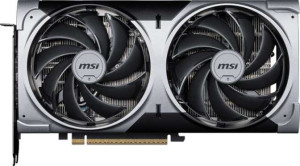
MSI GeForce RTX 5070 Ventus 2X OC
Zotac Gaming GeForce RTX 5070 Solid OC

MSI GeForce RTX 5070 Ventus 2X OC Zotac Gaming GeForce RTX 5070 Solid OC

Overview

Choosing between the MSI GeForce RTX 5070 Ventus 2X OC and the Zotac Gaming GeForce RTX 5070 Solid OC is a uniquely focused exercise, as both cards share the same Blackwell architecture and identical core specifications across performance, memory, and connectivity. The real battlegrounds in this comparison come down to physical dimensions and aesthetic features — nuances that can still make a decisive difference depending on your case and build goals. Read on for a complete side-by-side breakdown.

Common Features

  • Both cards have a GPU clock speed of 2325 MHz.
  • Both cards have a GPU turbo speed of 2542 MHz.
  • Both cards deliver a pixel rate of 203.4 GPixel/s.
  • Both cards offer 31.24 TFLOPS of floating-point performance.
  • Both cards have a texture rate of 488.1 GTexels/s.
  • Both cards feature 6144 shading units.
  • Both cards include 192 texture mapping units (TMUs).
  • Both cards have a GPU memory speed of 1750 MHz.
  • Both cards come with 12GB of GDDR7 VRAM.
  • Both cards have an effective memory speed of 28000 MHz.
  • Both cards provide a maximum memory bandwidth of 672 GB/s.
  • Both cards use a 192-bit memory bus width.
  • ECC memory is supported on both cards.
  • Both cards are built on the Blackwell GPU architecture.
  • Both cards have a Thermal Design Power (TDP) of 250W.
  • Both cards use a 5 nm semiconductor process and contain 31100 million transistors.
  • Both cards connect via PCIe version 5.
  • Both cards support DirectX 12 Ultimate, OpenGL 4.6, and OpenCL 3.
  • Ray tracing is supported on both cards.
  • DLSS is supported on both cards.
  • Multi-display technology is supported on both cards.
  • 3D support is available on both cards.
  • XeSS (XMX) is not available on either card.
  • Both cards include 1 HDMI 2.1b port and 3 DisplayPort outputs, with no USB-C, DVI, or mini DisplayPort outputs.
  • Air-water cooling is not available on either card.

Main Differences

  • RGB lighting is present on the Zotac Gaming GeForce RTX 5070 Solid OC but not available on the MSI GeForce RTX 5070 Ventus 2X OC.
  • Width is 236 mm on the MSI GeForce RTX 5070 Ventus 2X OC and 304.4 mm on the Zotac Gaming GeForce RTX 5070 Solid OC.
  • Height is 126 mm on the MSI GeForce RTX 5070 Ventus 2X OC and 115.8 mm on the Zotac Gaming GeForce RTX 5070 Solid OC.
Specs Comparison
MSI GeForce RTX 5070 Ventus 2X OC

MSI GeForce RTX 5070 Ventus 2X OC

Zotac Gaming GeForce RTX 5070 Solid OC

Zotac Gaming GeForce RTX 5070 Solid OC

Performance:
GPU clock speed 2325 MHz 2325 MHz
GPU turbo 2542 MHz 2542 MHz
pixel rate 203.4 GPixel/s 203.4 GPixel/s
floating-point performance 31.24 TFLOPS 31.24 TFLOPS
texture rate 488.1 GTexels/s 488.1 GTexels/s
GPU memory speed 1750 MHz 1750 MHz
shading units 6144 6144
texture mapping units (TMUs) 192 192
render output units (ROPs) 80 80
Has Double Precision Floating Point (DPFP)

When comparing the MSI GeForce RTX 5070 Ventus 2X OC and the Zotac Gaming GeForce RTX 5070 Solid OC on performance, the most striking finding is that every single metric is a perfect match. Both cards share an identical base clock of 2325 MHz and a turbo clock of 2542 MHz, meaning neither card is factory-overclocked more aggressively than the other — they sit at the same boost ceiling out of the box.

Deeper into the pipeline, the picture remains unchanged. Both GPUs deliver 31.24 TFLOPS of floating-point performance, a figure that directly reflects shader throughput in compute-heavy workloads like ray tracing, AI-accelerated rendering, and general rasterization. The 488.1 GTexels/s texture fill rate and 203.4 GPixel/s pixel rate are equally matched, meaning texture detail rendering and frame output capacity are identical. Both also share the same 6144 shading units, 192 TMUs, and 80 ROPs — the full shader, texturing, and rasterization hardware is a carbon copy between the two.

The verdict for this group is a complete tie. There is no performance advantage to be found on either side based strictly on these specs. Both cards draw from the same GPU silicon running at the same clocks, so any real-world performance difference in this category would be negligible and within margin of error. A buyer should look to other spec groups — such as cooling, power, or price — to differentiate between these two cards.

Memory:
effective memory speed 28000 MHz 28000 MHz
maximum memory bandwidth 672 GB/s 672 GB/s
VRAM 12GB 12GB
GDDR version GDDR7 GDDR7
memory bus width 192-bit 192-bit
Supports ECC memory

The memory specifications of the MSI GeForce RTX 5070 Ventus 2X OC and the Zotac Gaming GeForce RTX 5070 Solid OC are identical across the board. Both cards feature an effective memory speed of 28000 MHz and maximum memory bandwidth of 672 GB/s.

Each product comes with 12GB of VRAM, uses the GDDR7 memory type, and has a memory bus width of 192-bit.

Additionally, both cards support ECC memory, ensuring greater reliability for error correction. Overall, there are no differences in the memory specifications between these two models.

Features:
DirectX version DirectX 12 Ultimate DirectX 12 Ultimate
OpenGL version 4.6 4.6
OpenCL version 3 3
Supports multi-display technology
supports ray tracing
Supports 3D
supports DLSS
has XeSS (XMX)
AMD SAM / Intel Resizable BAR Intel Resizable BAR Intel Resizable BAR
has LHR
has RGB lighting
supported displays 4 4

The MSI GeForce RTX 5070 Ventus 2X OC and the Zotac Gaming GeForce RTX 5070 Solid OC share many key features in common. Both support DirectX 12 Ultimate, OpenGL 4.6, and OpenCL 3. Additionally, they both offer multi-display technology, ray tracing, 3D support, and DLSS, ensuring that both cards provide a rich, high-performance gaming experience.

There is a notable difference, however, in RGB lighting. The MSI GeForce RTX 5070 Ventus 2X OC does not have RGB lighting, while the Zotac Gaming GeForce RTX 5070 Solid OC does feature RGB lighting, adding a visual customization option to the Zotac card.

Other shared features include support for Intel Resizable BAR (with no mention of AMD SAM) and the absence of LHR (Low Hash Rate), indicating neither card is limited for cryptocurrency mining. Both cards also support up to 4 displays, making them highly capable for multi-monitor setups.

Ports:
has an HDMI output
HDMI ports 1 1
HDMI version HDMI 2.1b HDMI 2.1b
DisplayPort outputs 3 3
USB-C ports 0 0
DVI outputs 0 0
mini DisplayPort outputs 0 0

Both the MSI GeForce RTX 5070 Ventus 2X OC and the Zotac Gaming GeForce RTX 5070 Solid OC offer very similar port configurations. Each card has one HDMI output with HDMI 2.1b support, ensuring compatibility with high-definition displays. Both cards also feature three DisplayPort outputs, providing flexibility for multiple monitor setups.

Neither product includes USB-C, DVI, or mini DisplayPort outputs, indicating that both are focused on HDMI and DisplayPort connections. There are no differences between the two products in terms of their port offerings.

General info:
GPU architecture Blackwell Blackwell
release date January 2025 March 2025
Thermal Design Power (TDP) 250W 250W
PCI Express (PCIe) version 5 5
semiconductor size 5 nm 5 nm
number of transistors 31100 million 31100 million
Has air-water cooling
width 236 mm 304.4 mm
height 126 mm 115.8 mm

The MSI GeForce RTX 5070 Ventus 2X OC and the Zotac Gaming GeForce RTX 5070 Solid OC share the same key specifications in terms of GPU architecture, thermal design power (TDP), PCI Express version, semiconductor size, and number of transistors. Both cards use the Blackwell GPU architecture, have a TDP of 250W, support PCIe version 5, are built with a 5 nm semiconductor, and contain 31,100 million transistors.

Where they differ is in their physical dimensions. The MSI GeForce RTX 5070 Ventus 2X OC has a width of 236 mm and a height of 126 mm, while the Zotac Gaming GeForce RTX 5070 Solid OC is slightly larger, measuring 304.4 mm in width and 115.8 mm in height. Both products lack air-water cooling systems, which may impact thermal management in certain use cases.

Overall, the performance-related specs of both cards are the same, with the main difference being the physical size of the Zotac card, which is larger in width but shorter in height compared to the MSI card.

Comparison Summary & Verdict

The MSI GeForce RTX 5070 Ventus 2X OC and Zotac Gaming GeForce RTX 5070 Solid OC are exceptionally evenly matched, sharing the same GPU clock speeds, 12GB GDDR7 VRAM, 250W TDP, and full support for ray tracing and DLSS. The differences between them are limited to form factor and lighting. At 236 mm wide and 126 mm tall, the MSI Ventus 2X OC is the more compact option, making it the smarter pick for smaller or more restrictive cases. The Zotac Gaming Solid OC is notably wider at 304.4 mm, but it compensates with RGB lighting, giving it an edge for builders who prioritize a visually expressive setup. Neither card compromises on performance, so your decision should come down to your case clearance requirements and whether RGB aesthetics are part of your build vision.

MSI GeForce RTX 5070 Ventus 2X OC
Buy MSI GeForce RTX 5070 Ventus 2X OC if...

Buy the MSI GeForce RTX 5070 Ventus 2X OC if you need a compact card for a smaller or tighter case, as its 236 mm width makes it significantly easier to fit than the Zotac.

Zotac Gaming GeForce RTX 5070 Solid OC
Buy Zotac Gaming GeForce RTX 5070 Solid OC if...

Buy the Zotac Gaming GeForce RTX 5070 Solid OC if RGB lighting is a priority for your build, as it is the only one of the two cards to include it.