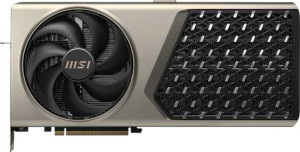
MSI GeForce RTX 5080 Expert OC
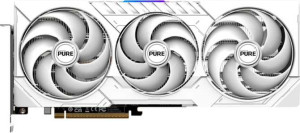
Sapphire Pure Radeon RX 9070 XT

MSI GeForce RTX 5080 Expert OC Sapphire Pure Radeon RX 9070 XT

Overview

Welcome to our in-depth specification comparison between the MSI GeForce RTX 5080 Expert OC and the Sapphire Pure Radeon RX 9070 XT — two powerful modern GPUs built on entirely different architectures. From memory bandwidth and shading units to display connectivity and feature support, these cards take distinct approaches to delivering high-end graphics performance. Read on as we break down the key battlegrounds across performance, memory, features, and design.

Common Features

  • Both products support Double Precision Floating Point (DPFP).
  • Both products come with 16GB of VRAM.
  • Both products use a 256-bit memory bus width.
  • ECC memory is supported on both products.
  • Both products support DirectX 12 Ultimate.
  • Both products support OpenGL version 4.6.
  • Multi-display technology is supported on both products.
  • Ray tracing is supported on both products.
  • 3D support is available on both products.
  • XeSS (XMX) support is not available on either product.
  • Neither product uses LHR (Lite Hash Rate) limiting.
  • Both products can drive up to 4 displays simultaneously.
  • Both products include an HDMI output.
  • Both products feature HDMI 2.1b.
  • Neither product includes USB-C ports, DVI outputs, or mini DisplayPort outputs.
  • Both products use PCI Express 5.0.
  • Neither product features air-water cooling.

Main Differences

  • GPU base clock speed is 2295 MHz on MSI GeForce RTX 5080 Expert OC and 1660 MHz on Sapphire Pure Radeon RX 9070 XT.
  • GPU turbo clock speed is 2715 MHz on MSI GeForce RTX 5080 Expert OC and 3010 MHz on Sapphire Pure Radeon RX 9070 XT.
  • Pixel rate is 304.1 GPixel/s on MSI GeForce RTX 5080 Expert OC and 385.3 GPixel/s on Sapphire Pure Radeon RX 9070 XT.
  • Floating-point performance is 58.38 TFLOPS on MSI GeForce RTX 5080 Expert OC and 49.32 TFLOPS on Sapphire Pure Radeon RX 9070 XT.
  • Texture rate is 912.2 GTexels/s on MSI GeForce RTX 5080 Expert OC and 770.6 GTexels/s on Sapphire Pure Radeon RX 9070 XT.
  • GPU memory speed is 1875 MHz on MSI GeForce RTX 5080 Expert OC and 2518 MHz on Sapphire Pure Radeon RX 9070 XT.
  • Shading units number 10752 on MSI GeForce RTX 5080 Expert OC and 4096 on Sapphire Pure Radeon RX 9070 XT.
  • Texture mapping units (TMUs) total 336 on MSI GeForce RTX 5080 Expert OC and 256 on Sapphire Pure Radeon RX 9070 XT.
  • Render output units (ROPs) total 112 on MSI GeForce RTX 5080 Expert OC and 128 on Sapphire Pure Radeon RX 9070 XT.
  • Effective memory speed is 30000 MHz on MSI GeForce RTX 5080 Expert OC and 20000 MHz on Sapphire Pure Radeon RX 9070 XT.
  • Maximum memory bandwidth is 960 GB/s on MSI GeForce RTX 5080 Expert OC and 644.6 GB/s on Sapphire Pure Radeon RX 9070 XT.
  • MSI GeForce RTX 5080 Expert OC uses GDDR7 memory, while Sapphire Pure Radeon RX 9070 XT uses GDDR6.
  • OpenCL version is 3 on MSI GeForce RTX 5080 Expert OC and 2.2 on Sapphire Pure Radeon RX 9070 XT.
  • DLSS support is present on MSI GeForce RTX 5080 Expert OC but not available on Sapphire Pure Radeon RX 9070 XT.
  • MSI GeForce RTX 5080 Expert OC supports Intel Resizable BAR, while Sapphire Pure Radeon RX 9070 XT supports AMD SAM.
  • RGB lighting is present on Sapphire Pure Radeon RX 9070 XT but not available on MSI GeForce RTX 5080 Expert OC.
  • HDMI port count is 1 on MSI GeForce RTX 5080 Expert OC and 2 on Sapphire Pure Radeon RX 9070 XT.
  • DisplayPort outputs number 3 on MSI GeForce RTX 5080 Expert OC and 2 on Sapphire Pure Radeon RX 9070 XT.
  • GPU architecture is Blackwell on MSI GeForce RTX 5080 Expert OC and RDNA 4.0 on Sapphire Pure Radeon RX 9070 XT.
  • Thermal Design Power (TDP) is 360W on MSI GeForce RTX 5080 Expert OC and 317W on Sapphire Pure Radeon RX 9070 XT.
  • Semiconductor size is 5 nm on MSI GeForce RTX 5080 Expert OC and 4 nm on Sapphire Pure Radeon RX 9070 XT.
  • Transistor count is 45600 million on MSI GeForce RTX 5080 Expert OC and 53900 million on Sapphire Pure Radeon RX 9070 XT.
  • Card width is 319 mm on MSI GeForce RTX 5080 Expert OC and 320 mm on Sapphire Pure Radeon RX 9070 XT.
  • Card height is 150 mm on MSI GeForce RTX 5080 Expert OC and 120.3 mm on Sapphire Pure Radeon RX 9070 XT.
Specs Comparison
MSI GeForce RTX 5080 Expert OC

MSI GeForce RTX 5080 Expert OC

Sapphire Pure Radeon RX 9070 XT

Sapphire Pure Radeon RX 9070 XT

Performance:
GPU clock speed 2295 MHz 1660 MHz
GPU turbo 2715 MHz 3010 MHz
pixel rate 304.1 GPixel/s 385.3 GPixel/s
floating-point performance 58.38 TFLOPS 49.32 TFLOPS
texture rate 912.2 GTexels/s 770.6 GTexels/s
GPU memory speed 1875 MHz 2518 MHz
shading units 10752 4096
texture mapping units (TMUs) 336 256
render output units (ROPs) 112 128
Has Double Precision Floating Point (DPFP)

The most striking divergence between these two cards lies in their shader architectures. The MSI RTX 5080 fields a massive 10,752 shading units and 336 TMUs against the Sapphire RX 9070 XT's 4,096 shaders and 256 TMUs — more than double the raw compute fabric. This directly drives the RTX 5080's dominance in floating-point throughput: 58.38 TFLOPS versus 49.32 TFLOPS, and a commanding texture rate of 912.2 GTexels/s compared to 770.6 GTexels/s. For shader-intensive workloads — complex rendering, ray tracing, or GPU compute tasks — the RTX 5080 holds a meaningful structural advantage rooted in sheer silicon count.

The picture is more nuanced on the rasterization and memory side, where the RX 9070 XT punches back. Its higher boost clock of 3010 MHz (versus 2715 MHz) and larger 128 ROPs (versus 112) combine to deliver a surprisingly higher pixel fill rate of 385.3 GPixel/s — actually outpacing the RTX 5080's 304.1 GPixel/s. More ROPs and higher pixel rate translate to faster high-resolution rendering of final pixel outputs, which can matter in scenarios with heavy blending, anti-aliasing, or high-framerate 4K gaming. Pair that with a notably faster GPU memory speed of 2518 MHz versus 1875 MHz on the RTX 5080, and the RX 9070 XT shows genuine strengths in bandwidth-sensitive operations.

Overall, the RTX 5080 holds the edge in raw compute and texture throughput, which tend to be the dominant performance factors across most modern rendering and AI-accelerated workloads. However, the RX 9070 XT's superior pixel fill rate and memory speed mean it is not simply outclassed — it trades blows in specific areas, particularly where output throughput and memory bandwidth matter most. Both cards support Double Precision Floating Point, making neither uniquely advantaged for DPFP workloads. The RTX 5080 is the stronger performer by the numbers, but the margin is more targeted than its shader count alone might suggest.
Memory:
effective memory speed 30000 MHz 20000 MHz
maximum memory bandwidth 960 GB/s 644.6 GB/s
VRAM 16GB 16GB
GDDR version GDDR7 GDDR6
memory bus width 256-bit 256-bit
Supports ECC memory

Both cards arrive with an identical 16GB VRAM allocation over a 256-bit bus, so neither has a capacity or bus-width advantage at this tier. Where they meaningfully diverge is the memory technology underpinning those specs. The RTX 5080 uses GDDR7 with an effective speed of 30,000 MHz, while the RX 9070 XT relies on GDDR6 running at 20,000 MHz — a 50% clock speed gap that is not subtle. Memory generation matters here: GDDR7 achieves higher data rates per pin through architectural improvements, not just higher clocking, making the RTX 5080's advantage both quantitative and qualitative.

That gap compounds directly into peak bandwidth: the RTX 5080 delivers 960 GB/s versus the RX 9070 XT's 644.6 GB/s — roughly 49% more memory bandwidth. In practice, bandwidth is the lifeline for high-resolution textures, large frame buffers, and GPU compute workloads. At 4K with high texture quality or in memory-bound AI inference tasks, the RTX 5080 has considerably more headroom before the memory subsystem becomes a bottleneck. The RX 9070 XT's bandwidth is competitive for its class, but it operates in a different league here.

ECC memory support is shared by both, which is a minor but welcome note for users running mixed creative or compute workloads where data integrity matters. That parity aside, the RTX 5080 holds a decisive memory advantage in this group — driven entirely by its GDDR7 technology and the bandwidth lead it enables. For users who push large assets, high resolutions, or bandwidth-hungry compute tasks, this gap is one of the most tangible differentiators between the two cards.

Features:
DirectX version DirectX 12 Ultimate DirectX 12 Ultimate
OpenGL version 4.6 4.6
OpenCL version 3 2.2
Supports multi-display technology
supports ray tracing
Supports 3D
supports DLSS
has XeSS (XMX)
AMD SAM / Intel Resizable BAR Intel Resizable BAR AMD SAM
has LHR
has RGB lighting
supported displays 4 4

At the API and standards level, these two cards are nearly identical — both support DirectX 12 Ultimate, OpenGL 4.6, and ray tracing, meaning neither has a foundational compatibility advantage for modern games or creative applications. The one minor difference is OpenCL: the RTX 5080 supports OpenCL 3 versus the RX 9070 XT's OpenCL 2.2, which could matter for GPU-accelerated compute tasks in specific professional software pipelines, though for most users this distinction is academic.

The most impactful feature split is upscaling support. The RTX 5080 includes DLSS, NVIDIA's AI-driven upscaling technology with a broad and growing list of supported titles, while the RX 9070 XT does not support DLSS — and neither card supports XeSS. This is a tangible gameplay advantage for the RTX 5080: DLSS can significantly boost frame rates at high resolutions with minimal perceptible quality loss, effectively extending the card's performance ceiling in supported games. AMD's own upscaling solution is not listed in the provided specs for the RX 9070 XT, so no equivalent can be credited to it based solely on this data.

On the aesthetics side, the Sapphire RX 9070 XT includes RGB lighting while the MSI RTX 5080 Expert OC does not — a meaningful point for build enthusiasts who prioritize visual customization. Both cards support up to 4 simultaneous displays, so multi-monitor setups are equally well served. Weighing the full picture, the RTX 5080 holds the feature edge in this group, primarily due to DLSS support, which has broader real-world impact than any other differentiator here. The RX 9070 XT counters only with RGB lighting, which matters for aesthetics but not performance.

Ports:
has an HDMI output
HDMI ports 1 2
HDMI version HDMI 2.1b HDMI 2.1b
DisplayPort outputs 3 2
USB-C ports 0 0
DVI outputs 0 0
mini DisplayPort outputs 0 0

Both cards share the same total output count — four display connections each — and both use HDMI 2.1b, so neither has an advantage in terms of maximum resolution or refresh rate capability over HDMI. The meaningful difference is how that output budget is divided. The RTX 5080 opts for a 1 HDMI + 3 DisplayPort configuration, while the RX 9070 XT flips the balance with 2 HDMI + 2 DisplayPort.

This split has real implications depending on your display setup. Users with multiple HDMI-native devices — such as TVs, capture cards, or monitors that lack DisplayPort — will find the RX 9070 XT more immediately convenient, requiring fewer adapters. Conversely, the RTX 5080's three DisplayPort outputs suit multi-monitor gaming or productivity rigs where DisplayPort daisy-chaining or high-refresh-rate panels are the norm. Neither configuration is objectively superior; it is a question of matching the card to your existing hardware.

With no USB-C, DVI, or mini DisplayPort on either card, the choice here narrows to a straightforward cable-compatibility question. The RX 9070 XT has a slight practical edge for users who rely on HDMI-primary setups, while the RTX 5080 better serves DisplayPort-centric multi-monitor configurations. For most single or dual-monitor users, the difference is effectively a tie.

General info:
GPU architecture Blackwell RDNA 4.0
release date August 2025 March 2025
Thermal Design Power (TDP) 360W 317W
PCI Express (PCIe) version 5 5
semiconductor size 5 nm 4 nm
number of transistors 45600 million 53900 million
Has air-water cooling
width 319 mm 320 mm
height 150 mm 120.3 mm

Despite belonging to different GPU families — NVIDIA's Blackwell and AMD's RDNA 4.0 — both cards share the same PCIe 5.0 interface, ensuring neither is bottlenecked by the platform on modern motherboards. The silicon story is more interesting: the RX 9070 XT is built on a 4 nm process with 53,900 million transistors, versus the RTX 5080's 5 nm node and 45,600 million transistors. AMD's denser, more transistor-rich die suggests a more compact and potentially more efficient design at the chip level — a notable engineering achievement that sets the stage for the power discussion.

That efficiency advantage shows up directly in TDP: the RX 9070 XT draws 317W against the RTX 5080's 360W — a 43W difference that is not trivial. Over extended gaming or compute sessions, this gap translates to measurably lower electricity consumption, less heat output into the case, and reduced demand on the power supply. Users with tighter PSU headroom or smaller enclosures will find the RX 9070 XT a more forgiving fit, while the RTX 5080 requires deliberate planning around cooling and power delivery.

Physically, both cards are virtually identical in length (~319–320 mm), but the RX 9070 XT is notably slimmer at 120.3 mm tall versus the RTX 5080's 150 mm — a nearly 30 mm difference in height that can meaningfully affect case compatibility and airflow in compact builds. Neither card offers liquid cooling in this configuration. On balance, the RX 9070 XT holds the advantage in this group: its smaller process node, higher transistor density, lower TDP, and reduced physical height make it the more build-friendly and thermally efficient card by the numbers provided.

Comparison Summary & Verdict

After examining the full specification sheet, it is clear that both GPUs serve different types of users well. The MSI GeForce RTX 5080 Expert OC pulls ahead with a significantly higher shading unit count of 10752, superior memory bandwidth at 960 GB/s thanks to GDDR7, greater floating-point performance, and exclusive DLSS support — making it the stronger choice for users who demand raw compute throughput and AI-assisted rendering. On the other hand, the Sapphire Pure Radeon RX 9070 XT counters with a higher GPU turbo clock of 3010 MHz, a better pixel rate, a more energy-efficient 317W TDP, a denser 4 nm process node, and the added bonus of RGB lighting and dual HDMI outputs. It represents a compelling option for users who value efficiency, versatile display connectivity, and strong rasterization performance at a potentially lower power footprint.

MSI GeForce RTX 5080 Expert OC
Buy MSI GeForce RTX 5080 Expert OC if...

Buy the MSI GeForce RTX 5080 Expert OC if you prioritize maximum memory bandwidth, higher floating-point performance, and exclusive DLSS support for AI-accelerated rendering workloads.

Sapphire Pure Radeon RX 9070 XT
Buy Sapphire Pure Radeon RX 9070 XT if...

Buy the Sapphire Pure Radeon RX 9070 XT if you want a higher GPU turbo clock, better pixel rate, lower power consumption, dual HDMI outputs, and a more compact card with RGB lighting.