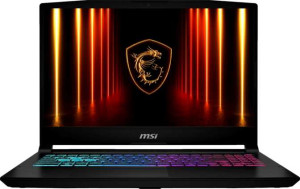
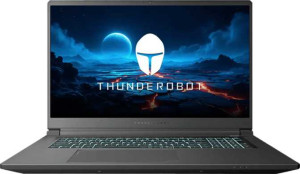
The raw performance gap between these two machines is substantial, and it is most dramatically visible in the GPU numbers. The MSI Katana 15 delivers 23.22 TFLOPS of floating-point performance alongside a GPU turbo clock of 2520 MHz, while the Thunderobot Range 17 G2 Pro posts 9.684 TFLOPS at a turbo of 1455 MHz. That is more than a 2.4× advantage in raw graphics throughput for the MSI — a difference that directly translates to higher sustainable frame rates, smoother performance at the displays' native resolutions, and significantly more headroom for ray tracing and compute-heavy workloads. Both carry 8GB of GDDR7 VRAM, so memory bandwidth is the equalizer, but the MSI's 4 nm GPU die versus the Thunderobot's 5 nm chip reflects a generational fabrication advantage that underpins its efficiency and clock speed headroom.
The CPU story follows a similar pattern. The MSI's processor fields 32 threads across a 24-core configuration with a turbo ceiling of 5.8 GHz, compared to the Thunderobot's 16 threads and a 4.9 GHz peak. For gaming, the thread count difference matters less, but in multitasking scenarios — streaming while gaming, video editing, or running background applications — the MSI's CPU will sustain higher throughput without throttling. Compounding this, the MSI ships with 32GB of DDR5 RAM versus the Thunderobot's 16GB, meaning the Thunderobot may require a RAM upgrade sooner to handle modern gaming and creative workloads comfortably.
Across every meaningful performance dimension — GPU power, CPU core count, clock speeds, and installed RAM — the MSI Katana 15 HX B14W holds a clear and commanding advantage. The Thunderobot is not a weak machine, but the data places it in a distinctly lower performance tier, making the MSI the unambiguous winner of this category.