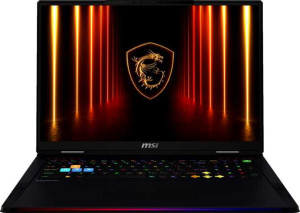
MSI Raider 18 HX AI A2XW (2025) 18" (Ultra 9 285HX / RTX 5080 Laptop / 64GB RAM / 4TB)
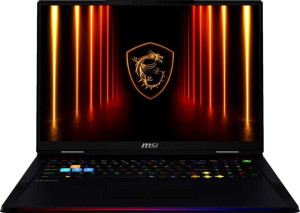
MSI Raider A18 HX A9W (2025) 18"

MSI Raider 18 HX AI A2XW (2025) 18" (Ultra 9 285HX / RTX 5080 Laptop / 64GB RAM / 4TB) MSI Raider A18 HX A9W (2025) 18"

Common Features

  • Both laptops are gaming-type devices with an 18″ screen size.
  • Both weigh 3600 g and share the same dimensions: 404 mm wide, 307 mm deep, and 24 mm thick.
  • Neither device uses a fanless design.
  • Both feature a backlit keyboard.
  • The display on both has a resolution of 3840 x 2400 px with a pixel density of 251 ppi.
  • Both screens have a 120Hz refresh rate.
  • Neither display has a touch screen or anti-reflection coating.
  • Both support up to 4 external displays simultaneously.
  • Both come with 64GB of RAM and support a maximum of 96GB.
  • Both use DDR5 memory and GDDR7 video memory.
  • Both use NVMe SSD flash storage.
  • Both support DirectX 12 Ultimate and multithreading.
  • Both have a 99 Wh battery.
  • Both include sleep-and-charge USB ports and neither has a MagSafe power adapter.
  • Both have stereo speakers, a 3.5 mm audio jack, and a single microphone.
  • Both support ray tracing and DLSS.
  • Dolby Atmos is not available on either product.
  • Both include a fingerprint scanner, and neither includes a stylus.
  • Both have 2 USB 4 40Gbps ports, an HDMI output, USB Type-C, and Wi-Fi support.
  • Both use the Blackwell GPU architecture, support Intel Resizable BAR, and are compatible with 3D and multi-display technology.

Main Differences

  • Display type is Mini-LED on MSI Raider 18 HX AI A2XW (2025) 18″ (Ultra 9 285HX / RTX 5080 Laptop / 64GB RAM / 4TB) and Mini-LED plus LCD on MSI Raider A18 HX A9W (2025) 18″.
  • RAM speed is 6400 MHz on MSI Raider 18 HX AI A2XW (2025) 18″ (Ultra 9 285HX / RTX 5080 Laptop / 64GB RAM / 4TB) and 5600 MHz on MSI Raider A18 HX A9W (2025) 18″.
  • Internal storage is 4096 GB on MSI Raider 18 HX AI A2XW (2025) 18″ (Ultra 9 285HX / RTX 5080 Laptop / 64GB RAM / 4TB) and 2048 GB on MSI Raider A18 HX A9W (2025) 18″.
  • CPU speed is 8 x 2.8 & 16 x 2.1 GHz on MSI Raider 18 HX AI A2XW (2025) 18″ (Ultra 9 285HX / RTX 5080 Laptop / 64GB RAM / 4TB) and 16 x 2.5 GHz on MSI Raider A18 HX A9W (2025) 18″.
  • CPU thread count is 24 on MSI Raider 18 HX AI A2XW (2025) 18″ (Ultra 9 285HX / RTX 5080 Laptop / 64GB RAM / 4TB) and 32 on MSI Raider A18 HX A9W (2025) 18″.
  • VRAM is 16 GB on MSI Raider 18 HX AI A2XW (2025) 18″ (Ultra 9 285HX / RTX 5080 Laptop / 64GB RAM / 4TB) and 24 GB on MSI Raider A18 HX A9W (2025) 18″.
  • Floating-point performance is 23.04 TFLOPS on MSI Raider 18 HX AI A2XW (2025) 18″ (Ultra 9 285HX / RTX 5080 Laptop / 64GB RAM / 4TB) and 31.8 TFLOPS on MSI Raider A18 HX A9W (2025) 18″.
  • Texture rate is 384 GTexels/s on MSI Raider 18 HX AI A2XW (2025) 18″ (Ultra 9 285HX / RTX 5080 Laptop / 64GB RAM / 4TB) and 496.9 GTexels/s on MSI Raider A18 HX A9W (2025) 18″.
  • Pixel rate is 144 GPixel/s on MSI Raider 18 HX AI A2XW (2025) 18″ (Ultra 9 285HX / RTX 5080 Laptop / 64GB RAM / 4TB) and 193.9 GPixel/s on MSI Raider A18 HX A9W (2025) 18″.
  • GPU clock speed is 975 MHz on MSI Raider 18 HX AI A2XW (2025) 18″ (Ultra 9 285HX / RTX 5080 Laptop / 64GB RAM / 4TB) and 990 MHz on MSI Raider A18 HX A9W (2025) 18″.
  • GPU turbo clock is 1500 MHz on MSI Raider 18 HX AI A2XW (2025) 18″ (Ultra 9 285HX / RTX 5080 Laptop / 64GB RAM / 4TB) and 1515 MHz on MSI Raider A18 HX A9W (2025) 18″.
  • CPU turbo clock is 5.5 GHz on MSI Raider 18 HX AI A2XW (2025) 18″ (Ultra 9 285HX / RTX 5080 Laptop / 64GB RAM / 4TB) and 5.4 GHz on MSI Raider A18 HX A9W (2025) 18″.
  • PassMark multi-core result is 58305 on MSI Raider 18 HX AI A2XW (2025) 18″ (Ultra 9 285HX / RTX 5080 Laptop / 64GB RAM / 4TB) and 61356 on MSI Raider A18 HX A9W (2025) 18″.
  • PassMark single-core result is 4629 on MSI Raider 18 HX AI A2XW (2025) 18″ (Ultra 9 285HX / RTX 5080 Laptop / 64GB RAM / 4TB) and 4491 on MSI Raider A18 HX A9W (2025) 18″.
  • USB 3.2 Gen 2 Type-A port count is 3 on MSI Raider 18 HX AI A2XW (2025) 18″ (Ultra 9 285HX / RTX 5080 Laptop / 64GB RAM / 4TB) and 1 on MSI Raider A18 HX A9W (2025) 18″.
  • Thunderbolt 4 ports are not present on MSI Raider 18 HX AI A2XW (2025) 18″ (Ultra 9 285HX / RTX 5080 Laptop / 64GB RAM / 4TB), while MSI Raider A18 HX A9W (2025) 18″ includes 2 Thunderbolt 4 ports.
  • USB 3.2 Gen 1 Type-C ports are absent on MSI Raider 18 HX AI A2XW (2025) 18″ (Ultra 9 285HX / RTX 5080 Laptop / 64GB RAM / 4TB), while MSI Raider A18 HX A9W (2025) 18″ has 2 such ports.
  • TDP is 80W on MSI Raider 18 HX AI A2XW (2025) 18″ (Ultra 9 285HX / RTX 5080 Laptop / 64GB RAM / 4TB) and 95W on MSI Raider A18 HX A9W (2025) 18″.
  • Shading units total 7680 on MSI Raider 18 HX AI A2XW (2025) 18″ (Ultra 9 285HX / RTX 5080 Laptop / 64GB RAM / 4TB) and 10496 on MSI Raider A18 HX A9W (2025) 18″.
  • L3 cache is 36 MB on MSI Raider 18 HX AI A2XW (2025) 18″ (Ultra 9 285HX / RTX 5080 Laptop / 64GB RAM / 4TB) and 128 MB on MSI Raider A18 HX A9W (2025) 18″.
  • An unlocked CPU multiplier is available on MSI Raider 18 HX AI A2XW (2025) 18″ (Ultra 9 285HX / RTX 5080 Laptop / 64GB RAM / 4TB) but not on MSI Raider A18 HX A9W (2025) 18″.
Specs Comparison
MSI Raider 18 HX AI A2XW (2025) 18" (Ultra 9 285HX / RTX 5080 Laptop / 64GB RAM / 4TB)

MSI Raider 18 HX AI A2XW (2025) 18" (Ultra 9 285HX / RTX 5080 Laptop / 64GB RAM / 4TB)

MSI Raider A18 HX A9W (2025) 18"

MSI Raider A18 HX A9W (2025) 18"

Design:
Type Gaming Gaming
weight 3600 g 3600 g
Uses a fanless design
Has a backlit keyboard
volume 2976.672 cm³ 2976.672 cm³
width 404 mm 404 mm
height 307 mm 307 mm
thickness 24 mm 24 mm
is weather-sealed (splashproof)
has a rugged build

In terms of design, the MSI Raider 18 HX AI A2XW (2025) and the MSI Raider A18 HX A9W (2025) are, by every measurable dimension, identical. Both share the same 404 × 307 × 24 mm footprint, the same 3,600 g weight, and the same 2,976.672 cm³ volume. Both are classified as gaming laptops, feature a backlit keyboard, and forgo a fanless design — meaning active cooling is present in both, as is expected for high-performance gaming machines of this class.

The 24 mm thickness and 3.6 kg mass place these laptops firmly in the ″desktop replacement″ category. Neither is designed for daily commuting; the weight demands a dedicated bag and a fixed workspace mindset. On the positive side, the relatively slim 24 mm profile for an 18-inch gaming chassis suggests reasonable thermal engineering without excessive bulk. Neither unit is weather-sealed or ruggedized, so standard precautions around liquids and drops apply equally to both.

Based strictly on the provided design specifications, these two products are in a complete tie. There is no differentiator — not in size, weight, build features, or form factor — that gives either model an advantage in this category. A buyer choosing between them on design alone has no basis for preference, and should look to other specification groups such as performance or display to make a meaningful distinction.

Display:
screen size 18" 18"
resolution 3840 x 2400 px 3840 x 2400 px
pixel density 251 ppi 251 ppi
Display type Mini-LED Mini-LED, LCD
has a touch screen
refresh rate 120Hz 120Hz
has anti-reflection coating
supported displays 4 4

Both laptops share a strong display foundation: an 18-inch panel running at 3840 × 2400 resolution with a resulting 251 ppi pixel density. At that pixel density on an 18-inch screen, individual pixels are essentially invisible in normal use, making this a genuinely sharp panel suited for both fine-detail gaming and content creation work. The 120Hz refresh rate is adequate for smooth gameplay, though not class-leading for a high-end gaming laptop in 2025.

The only differentiator in this group lies in how the display technology is described. The MSI Raider 18 HX AI A2XW lists its panel simply as Mini-LED, while the MSI Raider A18 HX A9W lists it as Mini-LED, LCD. In practice, Mini-LED is itself a form of LCD backlighting technology, so the A18 HX A9W′s listing is more descriptively explicit rather than technically different — both panels are almost certainly of the same underlying LCD construction with Mini-LED backlighting. Neither product gains a concrete, data-supported advantage from this distinction alone. Both also lack anti-reflection coating and touch input, which are reasonable omissions for performance-focused gaming machines.

Across all measurable display specs, these two models are effectively tied. The resolution, pixel density, refresh rate, panel technology, and external display support are identical. Buyers prioritizing display quality will find no meaningful basis for choosing one over the other in this category, and should weigh differences in other specification groups instead.

Performance:
RAM 64GB 64GB
RAM speed 6400 MHz 5600 MHz
Uses flash storage
internal storage 4096GB 2048GB
CPU speed 8 x 2.8 & 16 x 2.1 GHz 16 x 2.5 GHz
CPU threads 24 threads 32 threads
VRAM 16GB 24GB
floating-point performance 23.04 TFLOPS 31.8 TFLOPS
GDDR version GDDR7 GDDR7
texture rate 384 GTexels/s 496.9 GTexels/s
pixel rate 144 GPixel/s 193.9 GPixel/s
Is an NVMe SSD
DirectX version DirectX 12 Ultimate DirectX 12 Ultimate
GPU clock speed 975 MHz 990 MHz
uses multithreading
maximum memory amount 96GB 96GB
DDR memory version 5 5
turbo clock speed 5.5GHz 5.4GHz
GPU turbo 1500 MHz 1515 MHz
memory slots 2 2
PCI Express (PCIe) version 4 4
semiconductor size 4 nm 4 nm
has XeSS (XMX)
Supports 64-bit

The GPU gap is where this comparison gets interesting. The MSI Raider A18 HX A9W holds a commanding graphics advantage: its 31.8 TFLOPS of floating-point performance towers over the A2XW′s 23.04 TFLOPS — a roughly 38% lead. That delta carries through to texture throughput (496.9 vs 384 GTexels/s) and pixel fill rate (193.9 vs 144 GPixel/s), meaning the A18 HX A9W can push significantly more geometry and pixels per second. Compounding this, its 24GB VRAM versus the A2XW′s 16GB is a meaningful real-world differentiator — at the 4K resolution both screens support, VRAM headroom matters considerably for high-fidelity textures and future game titles.

The CPU picture is more nuanced. The A2XW′s processor uses a hybrid core layout (8 performance + 16 efficiency cores, 24 threads) peaking at 5.5 GHz turbo, while the A18 HX A9W runs a uniform 16-core, 32-thread design at up to 5.4 GHz. The A18 HX A9W′s higher thread count favors heavily parallelized workloads — rendering, simulation, streaming — whereas the A2XW′s slight turbo advantage may translate to marginally snappier single-threaded tasks. The A2XW also edges ahead on RAM speed (6400 MHz vs 5600 MHz) and ships with twice the storage (4TB vs 2TB), which are practical advantages for users managing large game libraries or creative project files.

Taking the full picture into account, the MSI Raider A18 HX A9W holds the clear edge in raw graphics performance — and for a gaming laptop, that is the metric that matters most. The A2XW counters with faster system memory and greater storage capacity, but those advantages are secondary to the substantial GPU lead the A18 HX A9W commands in this category.

Benchmarks:
PassMark result 58305 61356
PassMark result (single) 4629 4491

PassMark scores tell a split story here. In the multi-core test, the MSI Raider A18 HX A9W scores 61,356 against the A2XW′s 58,305 — a margin of roughly 5%. That gap is consistent with the A18 HX A9W′s higher thread count observed in the Performance group, and in practice it translates to a modest but real advantage in workloads that can distribute across many cores simultaneously, such as video encoding, 3D rendering, or large compilation tasks.

The single-core result flips the outcome. The MSI Raider 18 HX AI A2XW posts 4,629 versus the A18 HX A9W′s 4,491 — a lead of about 3%. Single-core performance governs responsiveness in everyday tasks: application launch times, UI snappiness, and the performance ceiling of games that are not well-threaded. The A2XW′s slight edge here aligns with its higher turbo clock speed noted in the specs.

Neither margin is large enough to be decisive in isolation, but together they paint a coherent picture: the A18 HX A9W has the edge in sustained parallel compute, while the A2XW holds a narrow advantage in peak single-threaded responsiveness. For pure gaming — which leans on both single-thread speed and GPU horsepower — the benchmark data alone does not hand a clear overall win to either machine in this category. It is effectively a split result, with each product leading in a different dimension.

Connectivity:
USB 3.2 Gen 2 ports (USB-C) 0 0
USB 3.2 Gen 2 ports (USB-A) 3 1
USB 4 20Gbps ports 0 0
USB 4 40Gbps ports 2 2
Thunderbolt 4 ports 0 2
USB 3.2 Gen 1 ports (USB-C) 0 2
USB 3.2 Gen 1 ports (USB-A) 0 0
Thunderbolt 3 ports 0 0
has an HDMI output
Has USB Type-C
supports Wi-Fi
Wi-Fi version Wi-Fi 7 (802.11be), Wi-Fi 6E (802.11ax), Wi-Fi 6 (802.11ax), Wi-Fi 5 (802.11ac), Wi-Fi 4 (802.11n) Wi-Fi 7 (802.11be), Wi-Fi 6E (802.11ax), Wi-Fi 6 (802.11ax), Wi-Fi 5 (802.11ac), Wi-Fi 4 (802.11n)
has an external memory slot
Bluetooth version 5.4 5.4
RJ45 ports 0 0
HDMI ports 1 1
HDMI version HDMI 2.1 HDMI 2.1
DisplayPort outputs 0 0
USB 2.0 ports 0 0
has AirPlay
mini DisplayPort outputs 0 0
has a VGA connector

Wireless connectivity is a non-issue for either machine — both carry Wi-Fi 7 and Bluetooth 5.4, ensuring access to the fastest available wireless standard with low-latency, multi-link operation support. The shared HDMI 2.1 output, external memory slot, and dual USB 4 40Gbps ports round out a strong common foundation. Where the two laptops diverge is in their wired port philosophy, and that difference is meaningful.

The MSI Raider A18 HX A9W adds 2 Thunderbolt 4 ports alongside 2 USB 3.2 Gen 1 USB-C ports. Thunderbolt 4 is a significant capability: it enables connection to high-bandwidth docking stations, external GPU enclosures, and daisy-chained peripherals — making the A18 HX A9W considerably more versatile as a desktop-replacement hub. The MSI Raider 18 HX AI A2XW skips Thunderbolt entirely but compensates with 3 USB-A 3.2 Gen 2 ports versus the A18 HX A9W′s single USB-A port. For users with multiple legacy peripherals — mice, headsets, USB drives — the A2XW requires fewer adapters in day-to-day use.

The A18 HX A9W takes the edge in this category. Thunderbolt 4 is a premium feature that unlocks ecosystem expandability the A2XW simply cannot match, and its practical value — particularly for users who dock at a desk — outweighs the A2XW′s advantage in USB-A port count, which is easily addressed with an inexpensive hub.

Battery:
battery size 99 Wh 99 Wh
Has sleep-and-charge USB ports
Has a MagSafe power adapter

Battery is the shortest story in this comparison: both laptops pack an identical 99 Wh cell — the practical ceiling for consumer laptops, as airline carry-on regulations cap batteries at 100 Wh. Both also support sleep-and-charge USB ports, meaning connected devices can draw power even when the laptop is off or asleep, a useful convenience for keeping phones and peripherals topped up without booting the machine.

A 99 Wh battery is a reasonable size for an 18-inch gaming laptop, but expectations should be calibrated accordingly. High-performance machines of this class draw substantial power under load, and real-world battery life during gaming will be limited regardless of capacity. Where the battery size becomes more relevant is in lighter workloads — browsing, productivity, media consumption — where both machines can extract meaningful untethered runtime from that 99 Wh reserve.

This category is a complete tie. Every data point — battery capacity, sleep-and-charge support, and the absence of MagSafe — is identical across both products. Neither machine offers a battery advantage, and buyers should not factor this group into their decision between the two.

Features:
release date January 2025 March 2025
has stereo speakers
has a socket for a 3.5 mm audio jack
supports ray tracing
supports DLSS
has Dolby Atmos
Stylus included
Has a fingerprint scanner
number of microphones 1 1
Uses 3D facial recognition
video recording (main camera) 1080 x 30 fps 1080 x 30 fps
has voice commands
has a front camera
Has S/PDIF Out port
has a gyroscope
has GPS
has an accelerometer
has a compass
Has an optical disc drive

Feature parity continues to be the defining theme between these two laptops. Both support ray tracing and DLSS, the two GPU-driven technologies that most directly elevate gaming visuals and frame rates respectively — their presence on both machines is expected at this performance tier and confirms neither cuts corners on modern rendering pipeline support. Security is equally matched: both offer a fingerprint scanner and 3D facial recognition, giving users two hardware-level authentication options for fast, password-free login.

On the audio and communication side, stereo speakers, a 3.5 mm jack, a single microphone, and a 1080p 30fps front camera appear on both models. The webcam spec is functional for video calls but unremarkable — 30fps at 1080p is adequate rather than impressive, and the single microphone is a modest setup for a flagship-class machine. Neither unit includes Dolby Atmos, GPS, motion sensors, or an optical drive, all of which are unsurprising omissions for gaming-focused laptops in this category.

With every single feature spec matching exactly, this group is an unambiguous tie. There is no feature present on one machine and absent on the other, and no hidden advantage to unpack. Buyers can treat both products as functionally equivalent here and focus their decision entirely on the performance, connectivity, and benchmark differences covered in other groups.

Miscellaneous:
USB 3.0 ports 0 0
USB ports 5 5
Thunderbolt ports 2 2
clock multiplier 28 25
AMD SAM / Intel Resizable BAR Intel Resizable BAR Intel Resizable BAR
GPU architecture Blackwell Blackwell
has LHR
Thermal Design Power (TDP) 80W 95W
Supports 3D
Supports multi-display technology
OpenCL version 3 3
OpenGL version 4.6 4.6
Supports ECC memory
memory bus width 256-bit 256-bit
effective memory speed 25400 MHz 25400 MHz
maximum memory bandwidth 811.5 GB/s 811.5 GB/s
render output units (ROPs) 96 128
texture mapping units (TMUs) 256 328
shading units 7680 10496
Has Double Precision Floating Point (DPFP)
GPU memory speed 2000 MHz 2000 MHz
number of transistors 17800 million 16630 million
Type Laptop Desktop, Laptop
instruction sets MMX, F16C, FMA3, AES, AVX, AVX2, SSE 4.1, SSE 4.2 MMX, F16C, FMA3, AES, AVX, AVX2, SSE 4.1, SSE 4.2
L3 cache 36 MB 128 MB
L2 cache 40 MB 16 MB
Has an unlocked multiplier
Has NX bit
CPU temperature 105 °C 100 °C
Has integrated graphics
memory channels 2 2
RAM speed (max) 6400 MHz 5600 MHz
Uses big.LITTLE technology

In the miscellaneous specifications, both the MSI Raider 18 HX AI A2XW (2025) and MSI Raider A18 HX A9W (2025) share several similarities. Both have 5 USB ports, 2 Thunderbolt ports, and support multi-display technology. Additionally, they both have Blackwell GPU architecture, support 3D, and have integrated graphics. Both also use Intel Resizable BAR, support ECC memory, and offer a maximum memory bandwidth of 811.5 GB/s.

The key differences arise in the clock multiplier, where the MSI Raider 18 HX AI A2XW (2025) has a multiplier of 28, compared to 25 in the MSI Raider A18 HX A9W (2025). This reflects a slight difference in CPU performance scaling. The MSI Raider 18 HX AI A2XW (2025) also features a higher maximum RAM speed of 6400 MHz, compared to the 5600 MHz in the MSI Raider A18 HX A9W (2025). The number of render output units (ROPs) is also higher in the MSI Raider A18 HX A9W (2025) at 128, compared to 96 in the MSI Raider 18 HX AI A2XW (2025). Similarly, the MSI Raider A18 HX A9W (2025) has more texture mapping units (TMUs) at 328, versus 256 in the MSI Raider 18 HX AI A2XW (2025), and more shading units at 10496 compared to 7680.

Other differences include L3 cache size, with the MSI Raider 18 HX AI A2XW (2025) featuring 36 MB, while the MSI Raider A18 HX A9W (2025) has a much larger 128 MB. The MSI Raider A18 HX A9W (2025) also has a slightly lower CPU temperature of 100°C, compared to 105°C in the MSI Raider 18 HX AI A2XW (2025). The latter also has an unlocked multiplier, while the MSI Raider A18 HX A9W (2025) does not. Lastly, the MSI Raider 18 HX AI A2XW (2025) supports big.LITTLE technology, whereas the MSI Raider A18 HX A9W (2025) does not.
Comparison Summary & Verdict

This is a specification comparison between MSI Raider 18 HX AI A2XW (2025) 18″ (Ultra 9 285HX / RTX 5080 Laptop / 64GB RAM / 4TB) and MSI Raider A18 HX A9W (2025) 18″. Both products share an 18″ screen with a resolution of 3840 x 2400 px, 64GB of RAM, and support for DirectX 12 Ultimate. However, they differ in several key areas. The MSI Raider 18 HX AI A2XW features a higher RAM speed of 6400 MHz, larger internal storage of 4096GB, and a lower thermal design power of 80W. In contrast, the MSI Raider A18 HX A9W offers 24 threads, a faster GPU turbo of 1515 MHz, and additional Thunderbolt 4 ports.