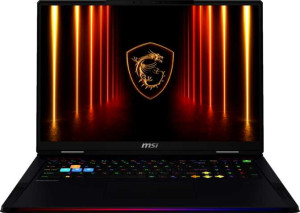
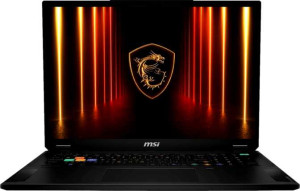
The GPU layer tells the same story as before — both machines run identical Blackwell architecture with matched memory bus width, bandwidth, shader counts, and a 95W TDP. That parity extends to API support and graphics-level specs, leaving the CPU architecture as the only meaningful battleground in this category.
The Raider's CPU carries substantially more cache: 36 MB L3 and 40 MB L2 versus the Stealth's 24 MB L3 and 12 MB L2. Larger caches reduce how often the processor must reach out to slower main memory, which directly benefits latency-sensitive workloads, gaming frame consistency, and complex data processing. The Raider also uses big.LITTLE hybrid core technology — an architecture that assigns workloads intelligently across performance and efficiency cores — while the Stealth does not, suggesting a more conventional core layout. On top of that, the Raider ships with an unlocked multiplier, giving technically inclined users headroom to push clock speeds beyond factory settings; the Stealth locks this out entirely.
One counterpoint favors the Stealth: its CPU officially supports RAM up to 7500 MHz, higher than the Raider's 6400 MHz ceiling. In practice, however, the Stealth ships with 5600 MHz memory per the performance specs, leaving that headroom untapped out of the box. Taken together, the Raider's larger caches, hybrid architecture, and overclocking freedom give it the edge in CPU-level sophistication within this group.