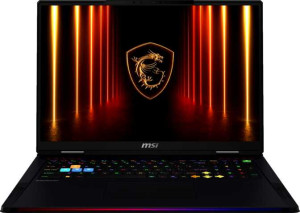
MSI Raider A18 HX A9W (2025) 18" (Ryzen 9 9955HX3D / RTX 5080 Laptop / 64GB RAM / 2TB)
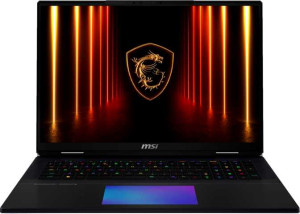
MSI Titan 18 HX AI A2XW (2025) 18"

MSI Raider A18 HX A9W (2025) 18" (Ryzen 9 9955HX3D / RTX 5080 Laptop / 64GB RAM / 2TB) MSI Titan 18 HX AI A2XW (2025) 18"

Overview

Welcome to our in-depth specification comparison between the MSI Raider A18 HX A9W (2025) 18″ (Ryzen 9 9955HX3D / RTX 5080 Laptop / 64GB RAM / 2TB) and the MSI Titan 18 HX AI A2XW (2025) 18″. Both are premium 18-inch gaming laptops sharing the same chassis dimensions, Blackwell GPU architecture, and Mini-LED display, yet they diverge significantly in raw GPU power, memory configuration, storage capacity, and connectivity options — making this a fascinating head-to-head matchup worth exploring closely.

Common Features

  • Both laptops are 18″ gaming laptops.
  • Both weigh 3600 g.
  • Neither uses a fanless design.
  • Both feature a backlit keyboard.
  • Both share the same volume of 2976.672 cm³, width of 404 mm, height of 307 mm, and thickness of 24 mm.
  • Both have an 18″ screen with a resolution of 3840 x 2400 px and a pixel density of 251 ppi.
  • Both have a 120Hz refresh rate.
  • Neither has a touch screen.
  • Neither has an anti-reflection coating.
  • Both support up to 4 external displays.
  • Both use a Mini-LED, LCD display type.
  • Both use flash NVMe SSD storage.
  • Both feature GDDR7 video memory.
  • Both support DirectX 12 Ultimate.
  • Both use multithreading.
  • Both have a maximum memory capacity of 96GB and 2 memory slots.
  • Both use DDR5 memory.
  • Both have 2 USB 4 40Gbps ports and no USB 3.2 Gen 2 USB-C ports, no USB 3.2 Gen 1 USB-A ports, and no Thunderbolt 3 ports.
  • Both have an HDMI output and USB Type-C connectivity.
  • Both support Wi-Fi.
  • Both have a 99 Wh battery.
  • Both have sleep-and-charge USB ports.
  • Neither uses a MagSafe power adapter.
  • Both have stereo speakers and a 3.5 mm audio jack.
  • Both support ray tracing and DLSS.
  • Neither has Dolby Atmos.
  • Neither includes a stylus.
  • Both have 1 microphone and support 1080p 30fps video recording.
  • Both use Intel Resizable BAR.
  • Both feature a Blackwell GPU architecture.
  • Neither has LHR.
  • Both support 3D and multi-display technology.
  • Both support OpenCL 3 and OpenGL 4.6.
  • Both support ECC memory.

Main Differences

  • RAM is 64GB on MSI Raider A18 HX A9W (2025) 18″ (Ryzen 9 9955HX3D / RTX 5080 Laptop / 64GB RAM / 2TB) and 96GB on MSI Titan 18 HX AI A2XW (2025) 18″.
  • RAM speed is 5600 MHz on MSI Raider A18 HX A9W (2025) 18″ (Ryzen 9 9955HX3D / RTX 5080 Laptop / 64GB RAM / 2TB) and 6400 MHz on MSI Titan 18 HX AI A2XW (2025) 18″.
  • Internal storage is 2048GB on MSI Raider A18 HX A9W (2025) 18″ (Ryzen 9 9955HX3D / RTX 5080 Laptop / 64GB RAM / 2TB) and 6144GB on MSI Titan 18 HX AI A2XW (2025) 18″.
  • CPU speed is 16 x 2.5 GHz on MSI Raider A18 HX A9W (2025) 18″ (Ryzen 9 9955HX3D / RTX 5080 Laptop / 64GB RAM / 2TB) and 8 x 2.8 & 16 x 2.1 GHz on MSI Titan 18 HX AI A2XW (2025) 18″.
  • CPU threads are 32 on MSI Raider A18 HX A9W (2025) 18″ (Ryzen 9 9955HX3D / RTX 5080 Laptop / 64GB RAM / 2TB) and 24 on MSI Titan 18 HX AI A2XW (2025) 18″.
  • VRAM is 16GB on MSI Raider A18 HX A9W (2025) 18″ (Ryzen 9 9955HX3D / RTX 5080 Laptop / 64GB RAM / 2TB) and 24GB on MSI Titan 18 HX AI A2XW (2025) 18″.
  • Floating-point performance is 23.04 TFLOPS on MSI Raider A18 HX A9W (2025) 18″ (Ryzen 9 9955HX3D / RTX 5080 Laptop / 64GB RAM / 2TB) and 31.8 TFLOPS on MSI Titan 18 HX AI A2XW (2025) 18″.
  • Texture rate is 384 GTexels/s on MSI Raider A18 HX A9W (2025) 18″ (Ryzen 9 9955HX3D / RTX 5080 Laptop / 64GB RAM / 2TB) and 496.9 GTexels/s on MSI Titan 18 HX AI A2XW (2025) 18″.
  • Pixel rate is 144 GPixel/s on MSI Raider A18 HX A9W (2025) 18″ (Ryzen 9 9955HX3D / RTX 5080 Laptop / 64GB RAM / 2TB) and 193.9 GPixel/s on MSI Titan 18 HX AI A2XW (2025) 18″.
  • GPU clock speed is 975 MHz on MSI Raider A18 HX A9W (2025) 18″ (Ryzen 9 9955HX3D / RTX 5080 Laptop / 64GB RAM / 2TB) and 990 MHz on MSI Titan 18 HX AI A2XW (2025) 18″.
  • Turbo clock speed is 5.4GHz on MSI Raider A18 HX A9W (2025) 18″ (Ryzen 9 9955HX3D / RTX 5080 Laptop / 64GB RAM / 2TB) and 5.5GHz on MSI Titan 18 HX AI A2XW (2025) 18″.
  • GPU turbo is 1500 MHz on MSI Raider A18 HX A9W (2025) 18″ (Ryzen 9 9955HX3D / RTX 5080 Laptop / 64GB RAM / 2TB) and 1515 MHz on MSI Titan 18 HX AI A2XW (2025) 18″.
  • PassMark result is 61356 on MSI Raider A18 HX A9W (2025) 18″ (Ryzen 9 9955HX3D / RTX 5080 Laptop / 64GB RAM / 2TB) and 62297 on MSI Titan 18 HX AI A2XW (2025) 18″.
  • PassMark single-core result is 4491 on MSI Raider A18 HX A9W (2025) 18″ (Ryzen 9 9955HX3D / RTX 5080 Laptop / 64GB RAM / 2TB) and 4784 on MSI Titan 18 HX AI A2XW (2025) 18″.
  • USB 3.2 Gen 2 USB-A ports number 1 on MSI Raider A18 HX A9W (2025) 18″ (Ryzen 9 9955HX3D / RTX 5080 Laptop / 64GB RAM / 2TB) and 3 on MSI Titan 18 HX AI A2XW (2025) 18″.
  • Thunderbolt 4 ports are present on MSI Raider A18 HX A9W (2025) 18″ (Ryzen 9 9955HX3D / RTX 5080 Laptop / 64GB RAM / 2TB) with 2 ports but not available on MSI Titan 18 HX AI A2XW (2025) 18″.
  • USB 3.2 Gen 1 USB-C ports are present on MSI Raider A18 HX A9W (2025) 18″ (Ryzen 9 9955HX3D / RTX 5080 Laptop / 64GB RAM / 2TB) with 2 ports but not available on MSI Titan 18 HX AI A2XW (2025) 18″.
  • An RJ45 port is present on MSI Titan 18 HX AI A2XW (2025) 18″ but not available on MSI Raider A18 HX A9W (2025) 18″ (Ryzen 9 9955HX3D / RTX 5080 Laptop / 64GB RAM / 2TB).
  • A fingerprint scanner is present on MSI Raider A18 HX A9W (2025) 18″ (Ryzen 9 9955HX3D / RTX 5080 Laptop / 64GB RAM / 2TB) but not available on MSI Titan 18 HX AI A2XW (2025) 18″.
  • 3D facial recognition is present on MSI Raider A18 HX A9W (2025) 18″ (Ryzen 9 9955HX3D / RTX 5080 Laptop / 64GB RAM / 2TB) but not available on MSI Titan 18 HX AI A2XW (2025) 18″.
  • The clock multiplier is 25 on MSI Raider A18 HX A9W (2025) 18″ (Ryzen 9 9955HX3D / RTX 5080 Laptop / 64GB RAM / 2TB) and 28 on MSI Titan 18 HX AI A2XW (2025) 18″.
  • Thermal Design Power (TDP) is 80W on MSI Raider A18 HX A9W (2025) 18″ (Ryzen 9 9955HX3D / RTX 5080 Laptop / 64GB RAM / 2TB) and 95W on MSI Titan 18 HX AI A2XW (2025) 18″.
  • Render output units (ROPs) are 96 on MSI Raider A18 HX A9W (2025) 18″ (Ryzen 9 9955HX3D / RTX 5080 Laptop / 64GB RAM / 2TB) and 128 on MSI Titan 18 HX AI A2XW (2025) 18″.
  • Texture mapping units (TMUs) are 256 on MSI Raider A18 HX A9W (2025) 18″ (Ryzen 9 9955HX3D / RTX 5080 Laptop / 64GB RAM / 2TB) and 328 on MSI Titan 18 HX AI A2XW (2025) 18″.
  • Shading units are 7680 on MSI Raider A18 HX A9W (2025) 18″ (Ryzen 9 9955HX3D / RTX 5080 Laptop / 64GB RAM / 2TB) and 10496 on MSI Titan 18 HX AI A2XW (2025) 18″.
  • Big.LITTLE technology is not used on MSI Raider A18 HX A9W (2025) 18″ (Ryzen 9 9955HX3D / RTX 5080 Laptop / 64GB RAM / 2TB) but is present on MSI Titan 18 HX AI A2XW (2025) 18″.
  • An unlocked multiplier is not available on MSI Raider A18 HX A9W (2025) 18″ (Ryzen 9 9955HX3D / RTX 5080 Laptop / 64GB RAM / 2TB) but is present on MSI Titan 18 HX AI A2XW (2025) 18″.
  • L3 cache is 128 MB on MSI Raider A18 HX A9W (2025) 18″ (Ryzen 9 9955HX3D / RTX 5080 Laptop / 64GB RAM / 2TB) and 36 MB on MSI Titan 18 HX AI A2XW (2025) 18″.
  • L2 cache is 16 MB on MSI Raider A18 HX A9W (2025) 18″ (Ryzen 9 9955HX3D / RTX 5080 Laptop / 64GB RAM / 2TB) and 40 MB on MSI Titan 18 HX AI A2XW (2025) 18″.
  • Maximum CPU temperature is 100 °C on MSI Raider A18 HX A9W (2025) 18″ (Ryzen 9 9955HX3D / RTX 5080 Laptop / 64GB RAM / 2TB) and 105 °C on MSI Titan 18 HX AI A2XW (2025) 18″.
Specs Comparison
MSI Raider A18 HX A9W (2025) 18" (Ryzen 9 9955HX3D / RTX 5080 Laptop / 64GB RAM / 2TB)

MSI Raider A18 HX A9W (2025) 18" (Ryzen 9 9955HX3D / RTX 5080 Laptop / 64GB RAM / 2TB)

MSI Titan 18 HX AI A2XW (2025) 18"

MSI Titan 18 HX AI A2XW (2025) 18"

Design:
Type Gaming Gaming
weight 3600 g 3600 g
Uses a fanless design
Has a backlit keyboard
volume 2976.672 cm³ 2976.672 cm³
width 404 mm 404 mm
height 307 mm 307 mm
thickness 24 mm 24 mm
is weather-sealed (splashproof)
has a rugged build

In terms of design, the MSI Raider A18 HX A9W (2025) and the MSI Titan 18 HX AI A2XW (2025) are, based on the provided specifications, completely identical across every measurable dimension. Both weigh 3600 g and share the exact same physical footprint — 404 mm wide, 307 mm deep, and 24 mm thick — resulting in the same total volume of 2976.672 cm³. At 3.6 kg, neither machine is designed for portability; these are desk-bound powerhouses where raw performance takes clear priority over mobility.

Both laptops are classified as Gaming machines, feature a backlit keyboard, and share the same limitations: no fanless design, no weather sealing, and no rugged build certification. This means neither is suited for outdoor use or harsh environments, which is entirely expected for high-end gaming laptops of this class. The backlit keyboard is a practical necessity for low-light gaming sessions, and its presence on both models meets baseline user expectations in this segment.

Based strictly on the design specifications provided, these two laptops are in a complete tie. There is no measurable physical or structural differentiator between them. Users choosing between the two should look to other specification groups — such as display, performance hardware, or features — to find meaningful differences, as design alone offers no grounds for preference.

Display:
screen size 18" 18"
resolution 3840 x 2400 px 3840 x 2400 px
pixel density 251 ppi 251 ppi
Display type Mini-LED, LCD LCD, Mini-LED
has a touch screen
refresh rate 120Hz 120Hz
has anti-reflection coating
supported displays 4 4

Both the MSI Raider A18 HX A9W (2025) and the MSI Titan 18 HX AI A2XW (2025) share an identical display configuration across every provided specification. Each packs an 18″ Mini-LED LCD panel running at a 3840 x 2400 resolution — a 16:10 aspect ratio that delivers noticeably more vertical screen real estate than the more common 16:9 format. At 251 ppi, pixel density is high enough that individual pixels are imperceptible at normal viewing distances, making this a genuinely sharp panel suited for both fine-detail gaming and content creation work.

The 120Hz refresh rate is functional for gaming but worth noting as a trade-off at this resolution. Driving 3840 x 2400 at high frame rates is extremely demanding, and the 120Hz ceiling reflects the practical limits of pushing this many pixels. Neither display features a touch screen or an anti-reflection coating — the latter being a real-world consideration for users in brighter environments, where glare could be a genuine nuisance. Both machines also support up to 4 external displays, which is a meaningful advantage for users who want an expansive multi-monitor productivity or creative setup.

As with the Design group, the display specifications result in a complete tie. There is no differentiator here — not in panel technology, resolution, refresh rate, or connectivity. Prospective buyers should weigh their decision on other specification categories, as the display experience will be indistinguishable between these two machines.

Performance:
RAM 64GB 96GB
RAM speed 5600 MHz 6400 MHz
Uses flash storage
internal storage 2048GB 6144GB
CPU speed 16 x 2.5 GHz 8 x 2.8 & 16 x 2.1 GHz
CPU threads 32 threads 24 threads
VRAM 16GB 24GB
floating-point performance 23.04 TFLOPS 31.8 TFLOPS
GDDR version GDDR7 GDDR7
texture rate 384 GTexels/s 496.9 GTexels/s
pixel rate 144 GPixel/s 193.9 GPixel/s
Is an NVMe SSD
DirectX version DirectX 12 Ultimate DirectX 12 Ultimate
GPU clock speed 975 MHz 990 MHz
uses multithreading
maximum memory amount 96GB 96GB
DDR memory version 5 5
turbo clock speed 5.4GHz 5.5GHz
GPU turbo 1500 MHz 1515 MHz
memory slots 2 2
PCI Express (PCIe) version 4 4
semiconductor size 4 nm 4 nm
has XeSS (XMX)
Supports 64-bit

This is where the two machines diverge significantly. The MSI Titan 18 HX AI A2XW (2025) holds a commanding GPU advantage: its 31.8 TFLOPS of floating-point performance against the Raider A18′s 23.04 TFLOPS represents nearly a 38% gap — a difference that translates directly into higher sustained frame rates, faster AI-accelerated workloads, and smoother performance at the Titan′s own 3840 x 2400 native resolution. The Titan also carries 24GB of GDDR7 VRAM versus 16GB on the Raider, which matters meaningfully when running memory-hungry workloads like large texture assets, AI model inference, or 3D rendering at extreme resolutions. Texture and pixel fill rates further confirm the gap: the Titan leads with 496.9 GTexels/s and 193.9 GPixel/s compared to 384 GTexels/s and 144 GPixel/s respectively.

The CPU story is more nuanced. The Raider A18 fields 32 threads from its 16-core configuration running at up to 5.4 GHz, while the Titan offers 24 threads from a hybrid 8+16 core layout peaking at 5.5 GHz. The Raider′s higher thread count could give it an edge in heavily parallelized workloads like video encoding or simulation, but the Titan′s architecture — mixing performance and efficiency cores — is tuned for a different balance. On memory, the Titan again pulls ahead with 96GB of DDR5 at 6400 MHz already installed and faster bandwidth, versus the Raider′s 64GB at 5600 MHz, though both share the same 96GB maximum capacity and dual-slot configuration. Storage is also substantially larger on the Titan at 6144GB versus 2048GB on the Raider.

The MSI Titan 18 HX AI A2XW (2025) holds a clear and decisive edge in this category. Its advantages in GPU throughput, VRAM, RAM capacity and speed, and storage make it the stronger performer across gaming, creative, and AI workloads based strictly on the provided data. The Raider A18′s higher CPU thread count is the one counter-point, but it is not enough to shift the overall balance.

Benchmarks:
PassMark result 61356 62297
PassMark result (single) 4491 4784

PassMark scores offer a standardized, if simplified, window into real-world CPU capability. In the multi-threaded test — which reflects performance in tasks like video encoding, compression, and heavily parallelized workloads — the MSI Titan 18 HX AI A2XW (2025) scores 62,297 against the Raider A18′s 61,356. That gap of roughly 940 points amounts to just under a 1.5% difference, which is practically imperceptible in day-to-day use. Both machines sit comfortably in elite territory for laptop CPUs.

The single-core result is more telling. The Titan scores 4,784 versus the Raider′s 4,491 — a gap of about 6.5%. Single-core performance governs responsiveness in tasks that cannot be parallelized: game engine logic, many productivity applications, UI rendering, and general system snappiness. A 6.5% lead here is modest but genuine, and users doing latency-sensitive or lightly-threaded work will notice the Titan feeling marginally more responsive.

The MSI Titan 18 HX AI A2XW (2025) takes a narrow but consistent edge across both benchmark metrics. The multi-core advantage is too slim to be practically meaningful, but the single-core lead adds up in real-world responsiveness. Combined, the benchmarks reinforce the Titan′s position as the stronger CPU performer of the two, even if the margin is far from dramatic.

Connectivity:
USB 3.2 Gen 2 ports (USB-C) 0 0
USB 3.2 Gen 2 ports (USB-A) 1 3
USB 4 20Gbps ports 0 0
USB 4 40Gbps ports 2 2
Thunderbolt 4 ports 2 0
USB 3.2 Gen 1 ports (USB-C) 2 0
USB 3.2 Gen 1 ports (USB-A) 0 0
Thunderbolt 3 ports 0 0
has an HDMI output
Has USB Type-C
supports Wi-Fi
Wi-Fi version Wi-Fi 7 (802.11be), Wi-Fi 6E (802.11ax), Wi-Fi 6 (802.11ax), Wi-Fi 5 (802.11ac), Wi-Fi 4 (802.11n) Wi-Fi 7 (802.11be), Wi-Fi 6E (802.11ax), Wi-Fi 6 (802.11ax), Wi-Fi 5 (802.11ac), Wi-Fi 4 (802.11n)
has an external memory slot
Bluetooth version 5.4 5.4
RJ45 ports 0 1
HDMI ports 1 1
HDMI version HDMI 2.1 HDMI 2.1
DisplayPort outputs 0 0
has AirPlay
mini DisplayPort outputs 0 0
has a VGA connector

Wireless connectivity is a wash — both machines offer Wi-Fi 7 and Bluetooth 5.4, putting them at the current cutting edge for wireless throughput, reduced latency, and multi-device handling. Wired display output is equally matched, with a single HDMI 2.1 port on each. Where things diverge is in the wired peripheral and networking ecosystem, and those differences reflect genuinely different design philosophies.

The MSI Raider A18 HX A9W (2025) stands out with 2 Thunderbolt 4 ports — a significant advantage for users who rely on Thunderbolt docking stations, external GPU enclosures, or ultra-fast storage. Thunderbolt 4 delivers up to 40Gbps bandwidth with broader device compatibility guarantees than generic USB 4, making it the preferred interface for professional peripheral setups. It also includes 2 USB 3.2 Gen 1 Type-C ports, adding flexible connectivity options. The MSI Titan 18 HX AI A2XW (2025), by contrast, skips Thunderbolt entirely but compensates with 3 USB 3.2 Gen 2 Type-A ports — useful for plugging in multiple standard peripherals without a hub — and critically, includes a dedicated RJ45 ethernet port, which the Raider lacks entirely. For competitive gaming where wired network stability matters, that ethernet port is a meaningful practical advantage.

Neither machine dominates outright — each serves a different user. The Raider A18 has the edge for power users invested in the Thunderbolt ecosystem, while the Titan is better suited for those who prioritize plug-and-play peripheral flexibility and a reliable wired network connection. On balance, the Titan′s RJ45 port is the more universally impactful omission on the Raider side, giving the Titan a slight practical edge for the core gaming audience these machines target.

Battery:
battery size 99 Wh 99 Wh
Has sleep-and-charge USB ports
Has a MagSafe power adapter

Battery life has never been the selling point of desktop-replacement gaming laptops, and the specs here reflect that reality. Both the MSI Raider A18 HX A9W (2025) and the MSI Titan 18 HX AI A2XW (2025) carry a 99 Wh battery — effectively the ceiling permitted by airline carry-on regulations, which caps cells at 100 Wh. This means both manufacturers have maxed out what is practically deployable in a portable form factor, leaving no room for differentiation on raw capacity.

Given the extreme power demands of the hardware inside these machines — high-end mobile GPUs and CPUs that can draw well over 150W under load — a 99 Wh pack will deplete quickly during gaming or intensive creative work regardless of which model you choose. Both units include sleep-and-charge USB ports, a convenient feature that allows charging phones or peripherals even when the laptop is off or sleeping, and neither offers MagSafe-style magnetic charging, which is consistent with the Windows gaming laptop segment.

This category is a complete tie. Every provided battery specification is identical across both machines. Users should expect similar real-world battery behavior from both and plan accordingly — these are laptops best used near a power outlet for any demanding workload.

Features:
release date March 2025 February 2025
has stereo speakers
has a socket for a 3.5 mm audio jack
supports ray tracing
supports DLSS
has Dolby Atmos
Stylus included
Has a fingerprint scanner
number of microphones 1 1
Uses 3D facial recognition
video recording (main camera) 1080 x 30 fps 1080 x 30 fps
has voice commands
has a front camera
Has S/PDIF Out port
has a gyroscope
has GPS
has an accelerometer
has a compass
Has an optical disc drive

For the most part, these two machines are feature-equivalent — both support ray tracing and DLSS, confirming full access to NVIDIA′s modern rendering pipeline for improved visual fidelity and AI-upscaled frame rates. Stereo speakers, a 3.5mm jack, a front camera capable of 1080p at 30fps, and a single microphone are shared across both, making them equally capable for video calls and basic audio needs. Neither includes Dolby Atmos, a stylus, or an optical drive, which is unremarkable for this class of machine.

The one meaningful split in this category is biometric security. The MSI Raider A18 HX A9W (2025) includes both a fingerprint scanner and 3D facial recognition, offering two independent layers of fast, password-free authentication. The MSI Titan 18 HX AI A2XW (2025) has neither. While biometric login may seem like a minor convenience feature, it meaningfully affects the daily-use experience — particularly for professionals or anyone who frequently locks and unlocks their machine. The absence of both methods on the Titan means falling back entirely on PIN or password entry.

The MSI Raider A18 HX A9W (2025) earns a clear edge in this category purely on the strength of its dual biometric authentication. Every other feature in this group is shared between the two machines, so this is the sole differentiator — but it is a tangible one for users who value seamless, secure access to their system.

Miscellaneous:
clock multiplier 25 28
AMD SAM / Intel Resizable BAR Intel Resizable BAR Intel Resizable BAR
GPU architecture Blackwell Blackwell
has LHR
Thermal Design Power (TDP) 80W 95W
Supports 3D
Supports multi-display technology
OpenCL version 3 3
OpenGL version 4.6 4.6
Supports ECC memory
memory bus width 256-bit 256-bit
effective memory speed 25400 MHz 25400 MHz
maximum memory bandwidth 811.5 GB/s 811.5 GB/s
render output units (ROPs) 96 128
texture mapping units (TMUs) 256 328
shading units 7680 10496
Has Double Precision Floating Point (DPFP)
GPU memory speed 2000 MHz 2000 MHz
Type Desktop, Laptop Laptop
Uses big.LITTLE technology
instruction sets MMX, F16C, FMA3, AES, AVX, AVX2, SSE 4.1, SSE 4.2 MMX, F16C, FMA3, AES, AVX, AVX2, SSE 4.1, SSE 4.2
Has an unlocked multiplier
Has NX bit
L3 cache 128 MB 36 MB
L2 cache 16 MB 40 MB
Has integrated graphics
memory channels 2 2
RAM speed (max) 5600 MHz 6400 MHz
CPU temperature 100 °C 105 °C

Digging into the GPU silicon confirms and extends what the Performance group already suggested. The MSI Titan 18 HX AI A2XW (2025) fields 10,496 shading units, 328 TMUs, and 128 ROPs against the Raider A18′s 7,680 shaders, 256 TMUs, and 96 ROPs — a roughly 37% advantage in raw shader count. Both GPUs share the same Blackwell architecture, 256-bit memory bus, identical effective memory speeds, and maximum memory bandwidth of 811.5 GB/s, so the gap comes down to the Titan simply running a higher-tier GPU die with more active compute resources.

The CPU picture is where the Raider A18 offers a genuinely surprising counter-punch: its 128MB L3 cache dwarfs the Titan′s 36MB, while the Titan answers with a larger 40MB L2 cache versus the Raider′s 16MB. These reflect fundamentally different CPU architectures and cache hierarchies — a very large L3 can dramatically reduce memory latency in cache-sensitive workloads like gaming, while a larger L2 benefits throughput-heavy tasks. The Titan also carries an unlocked multiplier, supports big.LITTLE hybrid core technology, has a higher 95W TDP versus the Raider′s 80W, and supports RAM up to 6400 MHz — all consistent with a chip tuned for sustained high-performance headroom. The Raider′s CPU max temperature ceiling is 100°C versus the Titan′s 105°C, a minor thermal envelope difference with limited practical impact.

The MSI Titan 18 HX AI A2XW (2025) holds the overall edge in this category, driven by its substantially larger GPU compute resources and greater CPU configurability via the unlocked multiplier. The Raider A18′s outsized L3 cache is a notable architectural strength that could give it an advantage in specific latency-sensitive scenarios, but it does not overturn the Titan′s broader dominance across the GPU metrics that define gaming and creative throughput.
Comparison Summary & Verdict

After examining every specification, both laptops are exceptional 18-inch gaming powerhouses, but they clearly target different users. The MSI Raider A18 HX A9W (2025) 18″ stands out with its massive 128MB L3 cache thanks to AMD 3D V-Cache, 32 CPU threads, Thunderbolt 4 ports, fingerprint scanner, and 3D facial recognition — making it ideal for users who value CPU cache-heavy workloads, versatile connectivity, and biometric security at a more accessible configuration. The MSI Titan 18 HX AI A2XW (2025) 18″, on the other hand, dominates with 24GB VRAM, 31.8 TFLOPS of floating-point performance, 96GB RAM, 6TB of storage, an unlocked CPU multiplier, and a higher 95W TDP — positioning it as the go-to choice for professionals and enthusiasts who demand maximum GPU rendering power and expandable, high-throughput computing. Choose the Raider for cache-optimized gaming and security; choose the Titan for uncompromising GPU muscle and storage capacity.

MSI Raider A18 HX A9W (2025) 18
Buy MSI Raider A18 HX A9W (2025) 18" (Ryzen 9 9955HX3D / RTX 5080 Laptop / 64GB RAM / 2TB) if...

Buy the MSI Raider A18 HX A9W (2025) 18″ (Ryzen 9 9955HX3D / RTX 5080 Laptop / 64GB RAM / 2TB) if you prioritize a massive 128MB L3 cache for cache-sensitive workloads, Thunderbolt 4 connectivity, and built-in biometric security features like fingerprint scanning and 3D facial recognition.

MSI Titan 18 HX AI A2XW (2025) 18
Buy MSI Titan 18 HX AI A2XW (2025) 18" if...

Buy the MSI Titan 18 HX AI A2XW (2025) 18″ if you need maximum GPU horsepower with 24GB VRAM and 31.8 TFLOPS, along with 96GB of high-speed RAM, 6TB of storage, and an unlocked CPU multiplier for uncompromising performance in rendering, AI workloads, and high-end gaming.