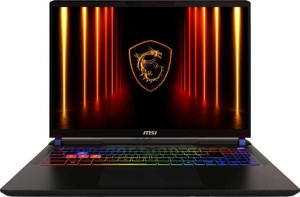
MSI Vector 16 HX AI A2XW (2025) 16"
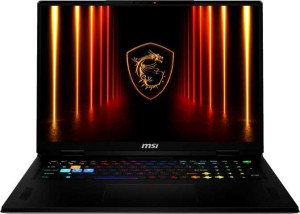
MSI Vector 18 HX AI A2XW (2025) 18"

MSI Vector 16 HX AI A2XW (2025) 16" MSI Vector 18 HX AI A2XW (2025) 18"

Overview

Welcome to this in-depth specification comparison between the MSI Vector 16 HX AI A2XW (2025) 16″ and the MSI Vector 18 HX AI A2XW (2025) 18″ — two high-performance gaming laptops sharing the same powerful core platform. While both machines offer identical CPUs, GPUs, and display technology, the key battlegrounds lie in their portability and form factor, memory and storage configurations, and a handful of feature differences that could tip the scales for the right buyer.

Common Features

  • Both products are gaming laptops.
  • Neither product uses a fanless design.
  • Both products feature a backlit keyboard.
  • Neither product is weather-sealed or splashproof.
  • Neither product has a rugged build.
  • Both products share the same 2560 x 1600 px resolution.
  • Both products use an LCD, LED-backlit, IPS display type.
  • Neither product has a touch screen.
  • Both products have a 240Hz refresh rate.
  • Neither product has an anti-reflection coating.
  • Both products support up to 4 connected displays.
  • Both products have RAM running at 6400 MHz.
  • Both products use flash storage.
  • Both products share the same CPU speed of 8 x 2.7 & 16 x 2.1 GHz.
  • Both products have 24 CPU threads.
  • Both products come with 24GB of VRAM.
  • Both products deliver 31.8 TFLOPS of floating-point performance.
  • Both products use GDDR7 memory.
  • Both products achieve the same texture rate of 496.9 GTexels/s.
  • Both products share identical PassMark benchmark results of 56426 (multi) and 4723 (single).
  • Neither product has any USB 3.2 Gen 2 Type-C ports.
  • Both products include 2 USB 3.2 Gen 2 Type-A ports.
  • Neither product has any USB 4 20Gbps ports.
  • Both products include 2 USB 4 40Gbps ports.
  • Neither product includes Thunderbolt 4 ports.
  • Both products include sleep-and-charge USB ports.
  • Neither product uses a MagSafe power adapter.
  • Both products feature stereo speakers.
  • Both products include a 3.5 mm audio jack.
  • Both products support ray tracing.
  • Both products support DLSS.
  • Neither product supports Dolby Atmos.
  • Neither product includes a stylus.
  • Neither product has a fingerprint scanner.
  • Both products include 1 microphone.
  • Neither product has LHR.
  • Both products use Intel Resizable BAR.
  • Both products feature a Blackwell GPU architecture.
  • Both products have a Thermal Design Power (TDP) of 95W.
  • Both products support 3D content.
  • Both products include 2 Thunderbolt ports.

Main Differences

  • Weight is 2700 g on MSI Vector 16 HX AI A2XW (2025) 16″ and 3600 g on MSI Vector 18 HX AI A2XW (2025) 18″.
  • Volume is 2230.536 cm³ on MSI Vector 16 HX AI A2XW (2025) 16″ and 2976.672 cm³ on MSI Vector 18 HX AI A2XW (2025) 18″.
  • Width is 357 mm on MSI Vector 16 HX AI A2XW (2025) 16″ and 404 mm on MSI Vector 18 HX AI A2XW (2025) 18″.
  • Height is 284 mm on MSI Vector 16 HX AI A2XW (2025) 16″ and 307 mm on MSI Vector 18 HX AI A2XW (2025) 18″.
  • Thickness is 22 mm on MSI Vector 16 HX AI A2XW (2025) 16″ and 24 mm on MSI Vector 18 HX AI A2XW (2025) 18″.
  • Screen size is 16″ on MSI Vector 16 HX AI A2XW (2025) 16″ and 18″ on MSI Vector 18 HX AI A2XW (2025) 18″.
  • Pixel density is 188 ppi on MSI Vector 16 HX AI A2XW (2025) 16″ and 167 ppi on MSI Vector 18 HX AI A2XW (2025) 18″.
  • RAM is 32GB on MSI Vector 16 HX AI A2XW (2025) 16″ and 64GB on MSI Vector 18 HX AI A2XW (2025) 18″.
  • Internal storage is 1024GB on MSI Vector 16 HX AI A2XW (2025) 16″ and 2048GB on MSI Vector 18 HX AI A2XW (2025) 18″.
  • Battery size is 90 Wh on MSI Vector 16 HX AI A2XW (2025) 16″ and 99 Wh on MSI Vector 18 HX AI A2XW (2025) 18″.
  • 3D facial recognition is available on MSI Vector 16 HX AI A2XW (2025) 16″ but not available on MSI Vector 18 HX AI A2XW (2025) 18″.
  • Total USB ports count is 4 on MSI Vector 16 HX AI A2XW (2025) 16″ and 5 on MSI Vector 18 HX AI A2XW (2025) 18″.
Specs Comparison
MSI Vector 16 HX AI A2XW (2025) 16"

MSI Vector 16 HX AI A2XW (2025) 16"

MSI Vector 18 HX AI A2XW (2025) 18"

MSI Vector 18 HX AI A2XW (2025) 18"

Design:
Type Gaming Gaming
weight 2700 g 3600 g
Uses a fanless design
Has a backlit keyboard
volume 2230.536 cm³ 2976.672 cm³
width 357 mm 404 mm
height 284 mm 307 mm
thickness 22 mm 24 mm
is weather-sealed (splashproof)
has a rugged build

Both the MSI Vector 16 HX AI and MSI Vector 18 HX AI are gaming laptops sharing the same design DNA — active cooling, a backlit keyboard, and no weather-sealing or rugged build features. These shared traits confirm they are purpose-built for performance over portability or durability in harsh conditions.

The most meaningful differentiator in this group is size and weight. The Vector 18 is notably larger across every dimension: 404 × 307 × 24 mm versus 357 × 284 × 22 mm, and it carries a significantly heavier footprint at 3600 g compared to 2700 g — a 900 g difference that is very perceptible in daily transport. Its volume is also roughly 33% greater (2976.672 cm³ vs 2230.536 cm³). In practical terms, the Vector 18 will demand a larger bag and will fatigue the user more quickly when carried between locations.

For users who prioritize a more manageable form factor without sacrificing the gaming-oriented design identity, the Vector 16 HX AI holds a clear edge in portability. The Vector 18 HX AI's larger chassis, however, is the natural trade-off for accommodating an 18-inch display, so buyers who want that bigger screen should expect and plan for the added bulk.

Display:
screen size 16" 18"
resolution 2560 x 1600 px 2560 x 1600 px
pixel density 188 ppi 167 ppi
Display type LCD, LED-backlit, IPS LCD, LED-backlit, IPS
has a touch screen
refresh rate 240Hz 240Hz
has anti-reflection coating
supported displays 4 4

At first glance, these two displays look nearly identical — same 2560 × 1600 resolution, same IPS LCD panel technology, same 240Hz refresh rate, and identical support for up to 4 external displays. The 240Hz rate is a genuine strength for competitive gaming, delivering smooth motion with minimal blur, and the 16:10 aspect ratio implied by the resolution provides a taller viewport that benefits productivity and gaming alike.

The key divergence lies in pixel density. Spreading the same resolution across a 16-inch panel yields 188 ppi, while the larger 18-inch screen dilutes that to 167 ppi. That 21 ppi gap is noticeable in practice — text edges appear slightly crisper and fine in-game details render more sharply on the Vector 16. For users who sit at a typical laptop viewing distance, the Vector 16's display will feel more refined.

The Vector 18 compensates with sheer screen real estate — an 18-inch panel offers a more immersive gaming canvas and more breathing room for multitasking — but on pure display quality metrics available here, the Vector 16 HX AI holds the edge thanks to its superior pixel density.

Performance:
RAM 32GB 64GB
RAM speed 6400 MHz 6400 MHz
Uses flash storage
internal storage 1024GB 2048GB
CPU speed 8 x 2.7 & 16 x 2.1 GHz 8 x 2.7 & 16 x 2.1 GHz
CPU threads 24 threads 24 threads
VRAM 24GB 24GB
floating-point performance 31.8 TFLOPS 31.8 TFLOPS
GDDR version GDDR7 GDDR7
texture rate 496.9 GTexels/s 496.9 GTexels/s
pixel rate 193.9 GPixel/s 193.9 GPixel/s
Is an NVMe SSD
DirectX version DirectX 12 Ultimate DirectX 12 Ultimate
GPU clock speed 990 MHz 990 MHz
uses multithreading
maximum memory amount 96GB 96GB
DDR memory version 5 5
turbo clock speed 5.4GHz 5.4GHz
GPU turbo 1515 MHz 1515 MHz
memory slots 2 2
PCI Express (PCIe) version 4 4
semiconductor size 4 nm 4 nm
has XeSS (XMX)
Supports 64-bit

Under the hood, these two machines are remarkably alike. They share an identical CPU configuration, the same GPU with 24GB GDDR7 VRAM, identical floating-point performance of 31.8 TFLOPS, and matching clock speeds — meaning raw compute throughput is a dead heat. Both also use PCIe 4.0 NVMe storage and DDR5 memory running at 6400 MHz, so neither has a speed architecture advantage over the other.

The only differentiators in this group are RAM capacity and storage. The Vector 18 ships with 64GB of RAM and 2TB of internal storage, doubling the Vector 16's 32GB and 1TB respectively. In practice, 32GB is sufficient for virtually all current games and most creative workloads, but 64GB opens the door to more demanding professional applications — large 3D scenes, video editing with heavy assets, or running virtual machines alongside a game. The doubled storage similarly reduces the need for external drives when managing a large game library or media archive.

Since both systems support up to 96GB across their two memory slots, the Vector 16 can be upgraded to match the Vector 18 later — but out of the box, the Vector 18 HX AI has a clear practical edge for power users who need headroom for memory- and storage-intensive workflows without buying extras at launch.

Benchmarks:
PassMark result 56426 56426
PassMark result (single) 4723 4723

The benchmark data tells a clear and unambiguous story: the Vector 16 HX AI and Vector 18 HX AI post identical PassMark scores56,426 in the multi-core test and 4,723 in the single-core test. This is a direct confirmation of what the Performance spec group already implied — both laptops run the same CPU configuration, and real-world measured results reflect that parity exactly.

A multi-core score of 56,426 places these machines firmly in the upper tier of gaming and creator laptops, comfortably handling demanding workloads such as video encoding, game compilation, and physics simulations. The single-core score of 4,723 is equally strong, which matters for tasks that do not scale across cores — including most games, where single-thread speed directly influences frame pacing and responsiveness.

This group is a definitive tie. Neither machine holds any CPU performance advantage over the other, and buyers should base their decision entirely on other factors — display size, portability, RAM, or storage — rather than expecting any processing speed difference between the two.

Connectivity:
USB 3.2 Gen 2 ports (USB-C) 0 0
USB 3.2 Gen 2 ports (USB-A) 2 2
USB 4 20Gbps ports 0 0
USB 4 40Gbps ports 2 2
Thunderbolt 4 ports 0 0
USB 3.2 Gen 1 ports (USB-C) 0 0
USB 3.2 Gen 1 ports (USB-A) 0 0
Thunderbolt 3 ports 0 0
has an HDMI output
Has USB Type-C
supports Wi-Fi
Wi-Fi version Wi-Fi 7 (802.11be), Wi-Fi 6E (802.11ax), Wi-Fi 6 (802.11ax), Wi-Fi 5 (802.11ac), Wi-Fi 4 (802.11n) Wi-Fi 7 (802.11be), Wi-Fi 6E (802.11ax), Wi-Fi 6 (802.11ax), Wi-Fi 5 (802.11ac), Wi-Fi 4 (802.11n)
has an external memory slot
Bluetooth version 5.4 5.4
RJ45 ports 0 0
HDMI ports 1 1
HDMI version HDMI 2.1 HDMI 2.1
DisplayPort outputs 0 0
USB 2.0 ports 0 0
has AirPlay
mini DisplayPort outputs 0 0
has a VGA connector

Connectivity is another area where these two laptops are completely in lockstep. Both offer the same port layout — two USB 4 (40Gbps) USB-C ports and two USB 3.2 Gen 2 USB-A ports — plus a single HDMI 2.1 output and an external memory card slot. The USB 4 ports are a highlight worth noting: at 40Gbps, they support high-speed external storage, external GPU enclosures, and daisy-chaining high-resolution displays, making them significantly more versatile than standard USB-C ports.

Wireless connectivity is equally matched. Both machines support Wi-Fi 7 — the latest standard — along with backward compatibility down to Wi-Fi 4, and both carry Bluetooth 5.4, which provides improved connection stability and lower latency compared to older Bluetooth versions. One notable absence shared by both: there is no RJ45 Ethernet port, which may matter to gamers who prefer a wired network connection for maximum stability.

This group is a complete tie — every connectivity feature is identical across both laptops. Buyers who need wired Ethernet should factor in the cost of a USB adapter regardless of which model they choose, but otherwise the connectivity suite is modern and well-equipped on both.

Battery:
battery size 90 Wh 99 Wh
Has sleep-and-charge USB ports
Has a MagSafe power adapter

Battery capacity is close but not identical: the Vector 18 edges ahead with a 99 Wh pack versus the Vector 16's 90 Wh — a roughly 10% larger reserve. Both models share sleep-and-charge USB ports, which allow connected devices like phones to charge even when the laptop is powered off, a convenient feature for users on the go.

That 9 Wh gap is meaningful in principle, but context matters. The Vector 18 also powers a larger display and houses a bigger chassis that may draw more power under load. Whether that larger battery translates into longer real-world runtime depends on overall system power consumption — data not available in this group. What the specs do confirm is that neither machine uses a MagSafe-style magnetic connector, so both rely on standard plug-in charging.

On the raw numbers alone, the Vector 18 HX AI holds a marginal edge in battery capacity. However, the practical advantage may be negligible given the larger screen it must power. For users prioritizing battery life above all else, the difference is unlikely to be decisive — both laptops are high-performance gaming machines where battery runtime was never the primary design goal.

Features:
release date August 2025 July 2025
has stereo speakers
has a socket for a 3.5 mm audio jack
supports ray tracing
supports DLSS
has Dolby Atmos
Stylus included
Has a fingerprint scanner
number of microphones 1 1
Uses 3D facial recognition
video recording (main camera) 1080 x 30 fps 1080 x 30 fps
has voice commands
has a front camera
Has S/PDIF Out port
has a gyroscope
has GPS
has an accelerometer
has a compass
Has an optical disc drive

Across most features, these two laptops are functionally identical — both support ray tracing and DLSS, both have stereo speakers, a 3.5mm audio jack, a front camera capable of 1080p at 30fps, and a single microphone. Gaming-critical capabilities like ray tracing and DLSS are important to highlight: they enable more realistic lighting in supported titles and AI-driven upscaling for better frame rates without a proportional hit to image quality.

The one meaningful differentiator in this group is security and login. The Vector 16 HX AI includes 3D facial recognition, while the Vector 18 does not. Unlike basic 2D face unlock — which can be fooled by a photograph — 3D facial recognition uses depth-sensing to provide a significantly more secure and convenient hands-free login experience. Neither model offers a fingerprint scanner, so for the Vector 18, password or PIN entry remains the primary authentication method.

For users who value fast, secure biometric login, the Vector 16 HX AI has a genuine and exclusive advantage here. It is a small but practical quality-of-life edge that the larger model simply does not offer.

Miscellaneous:
USB 3.0 ports 0 0
USB ports 4 5
Thunderbolt ports 2 2
clock multiplier 27 27
AMD SAM / Intel Resizable BAR Intel Resizable BAR Intel Resizable BAR
GPU architecture Blackwell Blackwell
has LHR
Thermal Design Power (TDP) 95W 95W
Supports 3D
Supports multi-display technology
OpenCL version 3 3
OpenGL version 4.6 4.6
Supports ECC memory
memory bus width 256-bit 256-bit
effective memory speed 25400 MHz 25400 MHz
maximum memory bandwidth 811.5 GB/s 811.5 GB/s
render output units (ROPs) 128 128
texture mapping units (TMUs) 328 328
shading units 10496 10496
Has Double Precision Floating Point (DPFP)
GPU memory speed 2000 MHz 2000 MHz
Type Laptop Laptop
CPU socket BGA 2114 BGA 2114
instruction sets MMX, F16C, FMA3, AES, AVX, AVX2, SSE 4.1, SSE 4.2 MMX, F16C, FMA3, AES, AVX, AVX2, SSE 4.1, SSE 4.2
Has an unlocked multiplier
L3 cache 36 MB 36 MB
L2 cache 40 MB 40 MB
Has NX bit
Turbo Boost version 2 2
CPU temperature 105 °C 105 °C
Has integrated graphics
memory channels 2 2
RAM speed (max) 6400 MHz 6400 MHz
Uses big.LITTLE technology

Dig into the technical architecture and the two laptops are essentially mirror images. Both are built on the Blackwell GPU architecture with identical shader counts, memory bus width, and bandwidth figures, and both CPUs share the same cache configuration, instruction set support, unlocked multiplier, and big.LITTLE design. Shared support for Intel Resizable BAR, ECC memory, and a maximum memory bandwidth of 811.5 GB/s further confirms that these machines are built from the exact same silicon foundation.

The sole differentiator in this group is a single USB port: the Vector 18 offers 5 USB ports total versus 4 on the Vector 16. For users who regularly connect multiple peripherals simultaneously — an external drive, a mouse, a headset, and a controller, for example — that extra port removes the need for a hub in everyday desktop-replacement use.

This group is nearly a tie, with the Vector 18 HX AI claiming a very minor practical edge due to its additional USB port. It is a small convenience advantage rather than a meaningful technical differentiator, and unlikely to be a deciding factor on its own — but for heavy peripheral users, it is a welcome addition.

Comparison Summary & Verdict

Both the MSI Vector 16 HX AI A2XW (2025) 16″ and the MSI Vector 18 HX AI A2XW (2025) 18″ deliver an identical core gaming experience, sharing the same CPU, GPU, 31.8 TFLOPS of floating-point performance, 240Hz IPS display, and benchmark scores. The differences are meaningful but targeted. The 16″ model is the better choice for users who value a lighter, more compact build (2700g vs 3600g), a sharper 188 ppi pixel density, and the convenience of 3D facial recognition. The 18″ model, on the other hand, is purpose-built for power users who need 64GB of RAM, 2TB of internal storage, a larger screen, and one extra USB port. If raw productivity headroom and screen real estate matter most, go 18″; if portability and display sharpness are the priority, the 16″ is the smarter pick.

MSI Vector 16 HX AI A2XW (2025) 16
Buy MSI Vector 16 HX AI A2XW (2025) 16" if...

Buy the MSI Vector 16 HX AI A2XW (2025) 16″ if you want a lighter, more portable gaming laptop with a sharper display and built-in 3D facial recognition, and 32GB of RAM is sufficient for your workload.

MSI Vector 18 HX AI A2XW (2025) 18
Buy MSI Vector 18 HX AI A2XW (2025) 18" if...

Buy the MSI Vector 18 HX AI A2XW (2025) 18″ if you need the extra headroom of 64GB of RAM, 2TB of internal storage, a larger 18″ screen, and an additional USB port for a more demanding desktop-replacement setup.