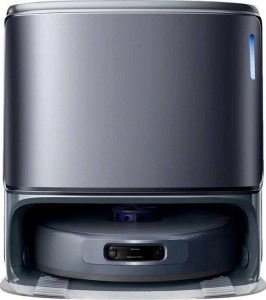
Narwal Flow
Narwal Freo Z10 Ultra

Narwal Flow Narwal Freo Z10 Ultra

Overview

When choosing between the Narwal Flow and the Narwal Freo Z10 Ultra, you are looking at two capable robot vacuum-mop combos from the same brand that share a surprising amount of common ground. Both models feature self-emptying docks, obstacle sensors, and powerful cleaning modes, yet they diverge in key areas such as suction power, dustbin capacity, and battery runtime. This detailed spec comparison will help you identify exactly which model best fits your home and cleaning needs.

Common Features

  • Both products have a HEPA filter.
  • Both products have an allergy filter.
  • Both products are compatible with Google Assistant.
  • Both products work with Alexa.
  • Both products come with a 1-year warranty.
  • The estimated empty time is 120 days on both products.
  • Both products support mapping.
  • Both products support no-go zones.
  • Both products support remote smartphone control.
  • Both products have an obstacle sensor.
  • Both products have problem area cleaning.
  • Both products are self-emptying.
  • Both products have carpet detection.
  • Neither product gets stuck.
  • Neither product has a display.
  • Both products have twin side brushes.
  • Both products include washable filters.
  • Both products automatically adjust their height.
  • Both products indicate when the dustbin is full.
  • Neither product uses bags.
  • Both products clean all floor types.
  • Both products offer 5 cleaning modes.
  • Both products can mop.
  • Both products have a dirt sensor.
  • Neither product has UV light.
  • Both products have a 6400 mAh battery.
  • Both products have a charge time of 3.5 hours.
  • Both products have a removable battery.
  • Both products have auto-off functionality.

Main Differences

  • Audible noise is 57 dB on Narwal Flow and 55 dB on Narwal Freo Z10 Ultra.
  • Weight is 4600 g on Narwal Flow and 4500 g on Narwal Freo Z10 Ultra.
  • Width is 351.2 mm on Narwal Flow and 355 mm on Narwal Freo Z10 Ultra.
  • Height is 95 mm on Narwal Flow and 109.6 mm on Narwal Freo Z10 Ultra.
  • Thickness is 363.5 mm on Narwal Flow and 350 mm on Narwal Freo Z10 Ultra.
  • Volume is 12127.814 cm³ on Narwal Flow and 13617.8 cm³ on Narwal Freo Z10 Ultra.
  • Docking station size is 84893.2942 cm³ on Narwal Flow and 77223.4848 cm³ on Narwal Freo Z10 Ultra.
  • Dustbin capacity is 0.8 l on Narwal Flow and 0.25 l on Narwal Freo Z10 Ultra.
  • Suction power is 22000 Pa on Narwal Flow and 18000 Pa on Narwal Freo Z10 Ultra.
  • Runtime is 190 min on Narwal Flow and 150 min on Narwal Freo Z10 Ultra.
Specs Comparison
Narwal Flow

Narwal Flow

Narwal Freo Z10 Ultra

Narwal Freo Z10 Ultra

General info:
has HEPA filter
audible noise 57 dB 55 dB
has an allergy filter
compatible with Google Assistant
works with Alexa
release date August 2025 September 2025
weight 4600 g 4500 g
width 351.2 mm 355 mm
height 95 mm 109.6 mm
thickness 363.5 mm 350 mm
volume 12127.814 cm³ 13617.8 cm³
warranty period 1 years 1 years
estimated empty time 120 days 120 days
docking station size 84893.2942 cm³ 77223.4848 cm³

Both the Narwal Flow and the Narwal Freo Z10 Ultra share a strong foundation of smart-home integration — each supports Google Assistant and Amazon Alexa, and both include a HEPA allergy filter, making either a solid choice for allergy-sensitive households. They also match on 1-year warranty and an identical 120-day estimated empty time, so neither has an edge on dust-bin autonomy or after-sales coverage.

Where real-world differences emerge is in physical footprint and acoustics. The Flow stands notably lower at 95 mm tall versus the Freo Z10 Ultra's 109.6 mm, giving it a meaningful clearance advantage under sofas and low furniture — a practical daily benefit many users overlook. On the other hand, the Freo Z10 Ultra is slightly quieter at 55 dB versus the Flow's 57 dB, and marginally lighter at 4500 g versus 4600 g — differences that are minor but consistent. The Freo Z10 Ultra also pairs with a more compact docking station (~77,223 cm³ vs the Flow's ~84,893 cm³), which matters in tighter living spaces.

Overall, neither product dominates this category outright. The Narwal Flow holds a clear edge for low-clearance environments thanks to its significantly shorter profile, while the Freo Z10 Ultra has a slight advantage in acoustic comfort and dock footprint. Your choice here should hinge on whether under-furniture reach or living-room discretion is the higher priority.

Features:
has mapping
supports no-go zones
supports a remote smartphone
has an obstacle sensor
has problem area cleaning
is self-emptying
has carpet detection
doesn't get stuck
supports virtual barriers
has route mapping
Has voice prompts
auto docking
has anti-fall sensor
can be scheduled
has a remote control
has water level adjustment
supports Wi-Fi
Wi-Fi version Wi-Fi 4 (802.11n) Wi-Fi 4 (802.11n)
has mop cleaning
has mop raising
has mop drying

Across the entire features category, the Narwal Flow and the Narwal Freo Z10 Ultra are in complete parity — every single capability listed is present on both models. This is notable because the feature set is genuinely comprehensive: both offer mapping, no-go zones, virtual barriers, and route mapping, forming a robust navigation toolkit that gives users precise control over where the robot cleans and where it doesn't.

On the maintenance and autonomy front, both robots are self-emptying and support auto docking, meaning day-to-day user intervention is minimal. The mopping suite is equally matched — each model includes mop cleaning, mop raising, and mop drying, which together represent a full wet-cleaning cycle. Mop raising in particular is critical for homes with mixed flooring, as it prevents carpet dampening mid-clean, while mop drying reduces odor and bacteria buildup in the dock. Both also share Wi-Fi 4 (802.11n) connectivity, which is sufficient for reliable app control but worth noting as neither steps up to Wi-Fi 5 or 6.

The verdict here is a straightforward tie. There is no feature-based differentiator between these two products — a buyer prioritizing software capabilities and cleaning functions will find identical value in either model. The decision will need to rest entirely on the hardware specifications covered in other groups.

Design:
dustbin capacity 0.8 l 0.25 l
Has a display
has twin side brushes
has included washable filters
automatically adjusts its height
Indicates when full
uses bags

The design category is defined by one decisive differentiator: dustbin capacity. The Narwal Flow carries an 0.8 L onboard bin compared to the Freo Z10 Ultra's 0.25 L — that's more than three times the capacity. In practical terms, a larger onboard bin means the robot can handle longer or dirtier cleaning sessions before needing to return to the dock for emptying, which matters most in larger homes or high-traffic areas with pets.

The remaining design elements are identical across both models: twin side brushes for edge cleaning, washable filters included in the box, automatic height adjustment for transitioning between floor types, and a full indicator when the bin reaches capacity. Neither robot uses disposable bags, keeping long-term consumable costs low for both. The absence of a display on either unit means all interaction is handled via the app or voice, which aligns with the smart-home positioning of both products.

The Narwal Flow holds a clear design edge in this group, purely on the strength of its much larger dustbin. For users who prioritize fewer interruptions mid-clean — especially in larger spaces — the Flow's bin size is a meaningful practical advantage that the Freo Z10 Ultra simply cannot match on paper.

Cleaning power:
suction power 22000 Pa 18000 Pa
cleans all floor types
cleaning modes 5 5
mops
has a dirt sensor
has UV light

Suction power is where these two models diverge most sharply in this category. The Narwal Flow delivers 22,000 Pa of suction versus the Freo Z10 Ultra's 18,000 Pa — a 22% increase that carries real-world weight. Higher Pascal ratings translate directly to better pickup of fine debris, pet hair embedded in carpet fibers, and heavier particles like cat litter or sand. For households with thick-pile rugs or pets that shed heavily, this gap is meaningful rather than merely cosmetic.

Beyond suction, the two robots are evenly matched on every other cleaning metric. Both support 5 cleaning modes, handle all floor types, include a dirt sensor for adaptive cleaning intensity, and integrate full mopping capability. Neither includes UV light sanitization, so germ-sensitive buyers will need to look elsewhere regardless of which model they choose.

The Narwal Flow has a clear edge in cleaning power for this group, with its substantially higher suction being the sole but significant differentiator. For users on hard floors or low-pile carpets where 18,000 Pa is already more than adequate, the gap matters less — but anyone dealing with deep carpeting or high-debris environments will find the Flow's extra suction a tangible advantage.

Power:
battery power 6400 mAh 6400 mAh
runtime 190 min 150 min
charge time 3.5 hours 3.5 hours
has a removable battery
has auto-off

Both robots draw from an identical 6,400 mAh battery and replenish it in the same 3.5 hours, so the hardware starting point is level. The story changes, however, when you look at runtime: the Narwal Flow runs for 190 minutes per charge versus the Freo Z10 Ultra's 150 minutes — a 40-minute advantage that represents roughly 27% more floor time from the same battery capacity. This suggests the Flow operates more efficiently under its rated conditions, and in practical terms it means the robot can cover significantly more square footage in a single session before needing to dock and recharge.

For context, 150 minutes is already generous for most apartments and mid-sized homes, but the Flow's extended runtime starts to matter in larger properties — think multi-story homes or open-plan spaces exceeding 150–200 square meters — where a shorter runtime forces more frequent charge interruptions and potentially splits a single clean across multiple sessions. Both models include a removable battery and auto-off functionality, keeping long-term ownership costs manageable and preventing unnecessary power drain.

The Narwal Flow takes a clear edge in this category. With equal battery capacity and identical charge times, the Flow's superior runtime points to better energy efficiency and translates directly into more autonomous, uninterrupted cleaning — a meaningful advantage for larger homes in particular.

Comparison Summary & Verdict

After examining every spec, both robots prove to be well-rounded cleaners, but they serve slightly different priorities. The Narwal Flow stands out with its superior 22,000 Pa suction power, a larger 0.8 L dustbin, and a longer 190-minute runtime, making it the stronger choice for larger homes or anyone who wants to go longer between maintenance stops. The Narwal Freo Z10 Ultra, on the other hand, is quieter at 55 dB, has a more compact docking station, and is slightly lighter, appealing to users who prioritize a tidier setup and a less intrusive cleaning experience. Both robots share the same battery capacity, charge time, mapping capabilities, and smart home compatibility, so neither feels like a compromise on the fundamentals.

Narwal Flow
Buy Narwal Flow if...

Buy the Narwal Flow if you want maximum suction power, a longer battery runtime, and a larger dustbin capacity for less frequent emptying in bigger spaces.

Narwal Freo Z10 Ultra
Buy Narwal Freo Z10 Ultra if...

Buy the Narwal Freo Z10 Ultra if you prefer a quieter operation, a more compact docking station footprint, and a slightly lighter robot that still delivers excellent all-round cleaning performance.