Narwal Flow
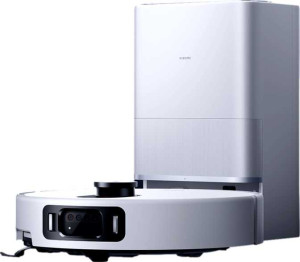
Xiaomi Robot Vacuum 5 Pro

Narwal Flow Xiaomi Robot Vacuum 5 Pro

Overview

When choosing between the Narwal Flow and the Xiaomi Robot Vacuum 5 Pro, shoppers face a genuinely competitive match-up in the premium robot vacuum segment. Both models share a strong foundation — HEPA filtration, self-emptying bases, mapping, no-go zones, and full mopping capability — yet they diverge in meaningful ways across battery performance, cleaning power, and everyday design choices. Whether you care most about runtime and suction strength or convenience features like warranty coverage and remote control, this comparison breaks down every specification to help you decide.

Common Features

  • Both products have a HEPA filter.
  • Both products have an allergy filter.
  • Both products are compatible with Google Assistant.
  • Both products work with Alexa.
  • Both products support mapping.
  • Both products support no-go zones.
  • Both products support remote smartphone control.
  • Both products have an obstacle sensor.
  • Both products have problem area cleaning.
  • Both products are self-emptying.
  • Both products have carpet detection.
  • Both products do not get stuck.
  • Neither product has a display.
  • Both products include washable filters.
  • Both products automatically adjust their height.
  • Both products indicate when full.
  • Both products clean all floor types.
  • Both products mop.

Main Differences

  • Audible noise is 57 dB on Narwal Flow and 50 dB on Xiaomi Robot Vacuum 5 Pro.
  • Weight is 4600 g on Narwal Flow and 3970 g on Xiaomi Robot Vacuum 5 Pro.
  • Width is 351.2 mm on Narwal Flow and 350 mm on Xiaomi Robot Vacuum 5 Pro.
  • Height is 95 mm on Narwal Flow and 88 mm on Xiaomi Robot Vacuum 5 Pro.
  • Thickness is 363.5 mm on Narwal Flow and 350 mm on Xiaomi Robot Vacuum 5 Pro.
  • Volume is 12127.814 cm³ on Narwal Flow and 10780 cm³ on Xiaomi Robot Vacuum 5 Pro.
  • Warranty period is 1 year on Narwal Flow and 2 years on Xiaomi Robot Vacuum 5 Pro.
  • Estimated empty time is 120 days on Narwal Flow and 90 days on Xiaomi Robot Vacuum 5 Pro.
  • Docking station size is 84893.2942 cm³ on Narwal Flow and 96782.4 cm³ on Xiaomi Robot Vacuum 5 Pro.
  • A remote control is available on Xiaomi Robot Vacuum 5 Pro but not on Narwal Flow.
  • Dustbin capacity is 0.8 l on Narwal Flow and 0.35 l on Xiaomi Robot Vacuum 5 Pro.
  • Twin side brushes are present on Narwal Flow but not on Xiaomi Robot Vacuum 5 Pro.
  • Narwal Flow does not use bags, while Xiaomi Robot Vacuum 5 Pro does use bags.
  • Suction power is 22000 Pa on Narwal Flow and 20000 Pa on Xiaomi Robot Vacuum 5 Pro.
  • Cleaning modes number 5 on Narwal Flow and 4 on Xiaomi Robot Vacuum 5 Pro.
  • A dirt sensor is present on Narwal Flow but not on Xiaomi Robot Vacuum 5 Pro.
  • Battery power is 6400 mAh on Narwal Flow and 5200 mAh on Xiaomi Robot Vacuum 5 Pro.
  • Runtime is 190 min on Narwal Flow and 140 min on Xiaomi Robot Vacuum 5 Pro.
  • Charge time is 3.5 hours on Narwal Flow and 4 hours on Xiaomi Robot Vacuum 5 Pro.
  • A removable battery is available on Narwal Flow but not on Xiaomi Robot Vacuum 5 Pro.
Specs Comparison
Narwal Flow

Narwal Flow

Xiaomi Robot Vacuum 5 Pro

Xiaomi Robot Vacuum 5 Pro

General info:
has HEPA filter
audible noise 57 dB 50 dB
has an allergy filter
compatible with Google Assistant
works with Alexa
release date August 2025 September 2025
weight 4600 g 3970 g
width 351.2 mm 350 mm
height 95 mm 88 mm
thickness 363.5 mm 350 mm
volume 12127.814 cm³ 10780 cm³
warranty period 1 years 2 years
estimated empty time 120 days 90 days
docking station size 84893.2942 cm³ 96782.4 cm³

Both the Narwal Flow and the Xiaomi Robot Vacuum 5 Pro share a strong foundational feature set for this category: both include a HEPA allergy filter and integrate with both Google Assistant and Alexa, so neither has an edge on filtration quality or smart-home compatibility. Their physical footprints are also nearly identical, with widths of 351.2 mm vs 350 mm, meaning both will navigate similarly sized spaces and furniture gaps without meaningful difference.

The more telling distinctions emerge in noise, weight, and ownership experience. The Xiaomi is noticeably quieter at 50 dB versus the Narwal's 57 dB — a 7 dB gap that, due to the logarithmic nature of sound, translates to roughly twice the perceived loudness for the Narwal. For households that run the robot during the day or in open-plan living areas, this is a real-world comfort difference. The Xiaomi is also lighter at 3,970 g compared to 4,600 g, which matters when manually moving or repositioning the unit. On the other hand, the Narwal's dock is more compact (~84,893 cm³ vs ~96,782 cm³ for the Xiaomi), giving it a footprint advantage in tighter laundry rooms or hallways where the base station lives permanently.

From a long-term ownership perspective, the Narwal edges ahead on self-maintenance autonomy with an estimated 120-day dustbin empty cycle versus the Xiaomi's 90 days — roughly one fewer monthly intervention per quarter. However, the Xiaomi counters with a 2-year warranty compared to the Narwal's 1 year, offering significantly more post-purchase protection. Overall, the Xiaomi holds a clear advantage in day-to-day liveability (quieter operation, longer warranty), while the Narwal wins on lower-maintenance emptying intervals and a smaller dock.

Features:
has mapping
supports no-go zones
supports a remote smartphone
has an obstacle sensor
has problem area cleaning
is self-emptying
has carpet detection
doesn't get stuck
supports virtual barriers
has route mapping
Has voice prompts
auto docking
has anti-fall sensor
can be scheduled
has a remote control
has water level adjustment
supports Wi-Fi
Wi-Fi version Wi-Fi 4 (802.11n) Wi-Fi 4 (802.11n)
has mop cleaning
has mop raising
has mop drying

At the feature level, these two robots are remarkably well-matched. Both offer the full modern autonomy stack: mapping with no-go zones and virtual barriers, obstacle and anti-fall sensors, carpet detection, self-emptying, auto-docking, and scheduling. Critically for multi-surface homes, both also support mop raising, mop drying, and water level adjustment — meaning neither cuts corners on wet-cleaning capability. Shared Wi-Fi 4 (802.11n) connectivity puts them on equal footing for app responsiveness and reliability.

The single differentiator in this group is the Xiaomi's inclusion of a physical remote control, which the Narwal Flow lacks. While smartphone control covers the vast majority of use cases, a dedicated remote is a genuine convenience for users who want to nudge the robot without reaching for their phone — particularly useful for less tech-comfortable household members or quick spot-clean commands from the couch.

In practice, this is about as close a feature comparison as you will find in this category. The Narwal Flow and Xiaomi Robot Vacuum 5 Pro are functionally equivalent across every meaningful autonomy and cleaning feature. The Xiaomi earns a narrow edge here solely due to the remote control, but for most users this will be a non-factor — the decision between these two is better made on the hardware and performance specs covered in other groups.

Design:
dustbin capacity 0.8 l 0.35 l
Has a display
has twin side brushes
has included washable filters
automatically adjusts its height
Indicates when full
uses bags

The most consequential design difference here is dustbin capacity. The Narwal Flow carries a 0.8 L onboard bin versus the Xiaomi's 0.35 L — more than twice the volume. Since both robots are self-emptying, the onboard bin only needs to last one cleaning session, but a larger bin provides a meaningful buffer in heavily soiled environments or large homes where the robot may not dock mid-run. The Narwal's bin is simply less likely to reach capacity before a session completes.

The bag-versus-bagless distinction is equally worth unpacking. The Xiaomi uses disposable bags in its dock, which contain dust more hygienically during emptying and are a strong choice for allergy-sensitive households — but they represent an ongoing consumable cost. The Narwal Flow is bagless, eliminating that recurring expense and the need to keep replacement bags in stock, though emptying requires more direct contact with collected debris. On brush design, the Narwal also includes twin side brushes where the Xiaomi has only a single brush, which can improve debris pickup along walls and in corners.

Both share washable filters, automatic height adjustment, and full-bin indicators, so the core maintenance experience is consistent. Overall, the Narwal Flow holds a clear design edge in this group — its larger dustbin, bagless convenience, and dual side brushes combine to give it a practical advantage for most households, while the Xiaomi's bagged system remains a reasonable trade-off specifically for users with severe dust allergies.

Cleaning power:
suction power 22000 Pa 20000 Pa
cleans all floor types
cleaning modes 5 4
mops
has a dirt sensor

Raw suction numbers tell a partial story, but the gap here is meaningful. The Narwal Flow delivers 22,000 Pa of suction against the Xiaomi's 20,000 Pa — a 10% advantage that translates to more confident performance on deep-pile carpets and better pickup of fine debris like pet dander or flour. Neither robot will struggle on hard floors, but in mixed-surface homes where carpet is a regular challenge, the Narwal's higher ceiling provides a tangible edge.

The more decisive differentiator is the Narwal's dirt sensor, which the Xiaomi lacks entirely. In practice, a dirt sensor allows the robot to automatically detect heavily soiled patches and increase cleaning intensity or make additional passes without any user input. The Xiaomi, without this capability, applies a fixed cleaning strategy regardless of what it encounters — meaning stubborn tracked-in dirt may require manual scheduling of a focused clean. Combined with its extra cleaning mode (5 vs 4), the Narwal offers finer-grained control over how it tackles different situations.

Both robots mop and clean all floor types, so the baseline versatility is equal. But across every performance metric in this group — suction power, mode count, and intelligent dirt detection — the Narwal Flow holds a clear and consistent advantage. For households with pets, children, or high-traffic areas where cleaning demand is unpredictable, these differences are likely to be noticeable in day-to-day results.

Power:
battery power 6400 mAh 5200 mAh
runtime 190 min 140 min
charge time 3.5 hours 4 hours
has a removable battery

The power gap between these two robots is substantial and consistently favors the Narwal Flow. Its 6,400 mAh battery versus the Xiaomi's 5,200 mAh — a 23% larger capacity — directly fuels a runtime advantage of 190 minutes against 140 minutes. That 50-minute difference is not marginal; it represents the ability to clean significantly larger floor areas on a single charge, or to complete a thorough multi-room clean in one uninterrupted run rather than returning to dock mid-session. For homes above roughly 150–200 square meters, this distinction becomes practically important.

Charging efficiency further widens the gap. The Narwal replenishes its larger battery in 3.5 hours, while the Xiaomi takes 4 hours despite carrying less capacity — meaning the Narwal is ready for its next run sooner in absolute terms. For users who schedule back-to-back cleans or need the robot available at predictable times, faster turnaround from a bigger battery is a compounding advantage.

The Narwal also includes a removable battery, which the Xiaomi lacks. While most users will never swap a battery mid-session, replaceability extends the robot's long-term serviceability — as battery degradation over years of charging cycles is a primary reason these appliances get retired. The Narwal Flow wins this group decisively across every metric: more capacity, longer runtime, faster recharge, and a longer useful lifespan through battery replaceability.

Comparison Summary & Verdict

After examining every specification, both robots are well-equipped for modern homes, but they suit different priorities. The Narwal Flow stands out for its superior battery performance — offering 190 minutes of runtime, a larger 6400 mAh battery, and a removable cell — alongside stronger 22000 Pa suction, a dirt sensor, twin side brushes, and a generous 120-day estimated empty time. It is the better pick for users who want maximum cleaning autonomy. The Xiaomi Robot Vacuum 5 Pro, on the other hand, is quieter at 50 dB, lighter, more compact, comes with a 2-year warranty, includes a remote control, and uses a bag-based dustbin system preferred by allergy sufferers. Its smaller footprint and longer warranty make it an appealing choice for those who value ease of maintenance and long-term support over raw cleaning endurance.

Narwal Flow
Buy Narwal Flow if...

Buy the Narwal Flow if you prioritize longer runtime, stronger suction power, and greater cleaning autonomy, especially in larger homes that benefit from its dirt sensor and twin side brushes.

Xiaomi Robot Vacuum 5 Pro
Buy Xiaomi Robot Vacuum 5 Pro if...

Buy the Xiaomi Robot Vacuum 5 Pro if you want a quieter, more compact robot vacuum with a longer 2-year warranty, a remote control, and a bag-based dustbin system for easier, hygienic emptying.