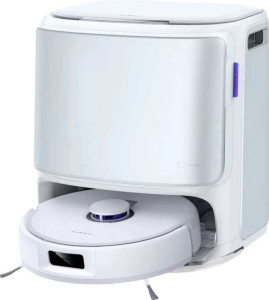
Narwal Freo Z10
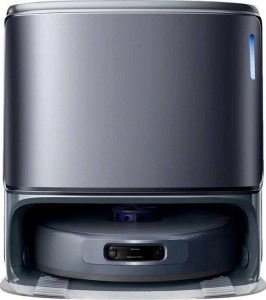
Narwal Freo Z10 Ultra

Narwal Freo Z10 Narwal Freo Z10 Ultra

Overview

When choosing between the Narwal Freo Z10 and the Narwal Freo Z10 Ultra, the decision is far from straightforward. Both robot vacuums share a strong foundation of smart features, but they diverge in meaningful ways across suction power, battery capacity, runtime, and dustbin size. Whether you prioritize raw cleaning performance or extended floor coverage, this head-to-head comparison breaks down exactly where each model stands out.

Common Features

  • Both products include a HEPA filter.
  • Both products include an allergy filter.
  • Both products are compatible with Google Assistant.
  • Both products work with Amazon Alexa.
  • Both products have a width of 355 mm.
  • Both products have a thickness of 350 mm.
  • Both products come with a warranty period of 1 year.
  • Both products have an estimated empty time of 120 days.
  • Both products support mapping.
  • Both products support no-go zones.
  • Both products support remote smartphone control.
  • Both products include an obstacle sensor.
  • Both products support problem area cleaning.
  • Both products are self-emptying.
  • Both products feature carpet detection.
  • Both products are designed to avoid getting stuck.
  • Neither product has a display.
  • Both products have twin side brushes.
  • Both products include washable filters.
  • Both products automatically adjust their height.
  • Both products indicate when the dustbin is full.
  • Neither product uses bags.
  • Both products clean all floor types.
  • Both products offer 5 cleaning modes.
  • Both products are capable of mopping.
  • Both products include a dirt sensor.
  • Neither product has UV light.
  • Both products have a charge time of 3.5 hours.
  • Both products have a removable battery.
  • Both products feature auto-off functionality.

Main Differences

  • Audible noise is 58 dB on Narwal Freo Z10 and 55 dB on Narwal Freo Z10 Ultra.
  • Weight is 4600 g on Narwal Freo Z10 and 4500 g on Narwal Freo Z10 Ultra.
  • Height is 107.7 mm on Narwal Freo Z10 and 109.6 mm on Narwal Freo Z10 Ultra.
  • Volume is 13381.725 cm³ on Narwal Freo Z10 and 13617.8 cm³ on Narwal Freo Z10 Ultra.
  • Docking station size is 84893.2942 cm³ on Narwal Freo Z10 and 77223.4848 cm³ on Narwal Freo Z10 Ultra.
  • Wi-Fi version supports both Wi-Fi 5 (802.11ac) and Wi-Fi 4 (802.11n) on Narwal Freo Z10, while Narwal Freo Z10 Ultra supports only Wi-Fi 4 (802.11n).
  • Dustbin capacity is 0.8 l on Narwal Freo Z10 and 0.25 l on Narwal Freo Z10 Ultra.
  • Suction power is 15000 Pa on Narwal Freo Z10 and 18000 Pa on Narwal Freo Z10 Ultra.
  • Battery power is 5000 mAh on Narwal Freo Z10 and 6400 mAh on Narwal Freo Z10 Ultra.
  • Runtime is 210 min on Narwal Freo Z10 and 150 min on Narwal Freo Z10 Ultra.
Specs Comparison
Narwal Freo Z10

Narwal Freo Z10

Narwal Freo Z10 Ultra

Narwal Freo Z10 Ultra

General info:
has HEPA filter
audible noise 58 dB 55 dB
has an allergy filter
compatible with Google Assistant
works with Alexa
release date April 2025 September 2025
weight 4600 g 4500 g
width 355 mm 355 mm
height 107.7 mm 109.6 mm
thickness 350 mm 350 mm
volume 13381.725 cm³ 13617.8 cm³
warranty period 1 years 1 years
estimated empty time 120 days 120 days
docking station size 84893.2942 cm³ 77223.4848 cm³

Both the Narwal Freo Z10 and the Freo Z10 Ultra share a strong foundation of general features: HEPA and allergy filtration, full compatibility with both Google Assistant and Amazon Alexa, a 1-year warranty, and an impressive 120-day estimated dustbin empty time. Their footprints are also identical at 355 × 350 mm, meaning neither will have an easier time navigating tight spaces or fitting under furniture based on width and depth alone.

Where differences emerge, the Z10 Ultra holds a modest but meaningful edge. Its audible noise level of 55 dB versus the Z10's 58 dB is a 3 dB reduction — and since the decibel scale is logarithmic, this translates to roughly half the perceived sound intensity in practice, making the Ultra noticeably quieter during operation. The Ultra is also 100 g lighter (4500 g vs. 4600 g), a minor but real advantage when manually moving the unit. Perhaps most practically significant is its smaller docking station footprint — approximately 77,223 cm³ compared to the Z10's 84,893 cm³ — meaning the Ultra's base station demands meaningfully less floor space, which matters in compact living environments.

Overall, the Freo Z10 Ultra has the edge in this general category. Its quieter operation and more compact dock offer tangible real-world benefits without any trade-offs visible in this spec group. The Z10 is marginally shorter in height and slightly smaller in robot body volume, but these differences have negligible practical impact. Users sensitive to noise or working with limited space around the docking station will find the Ultra the stronger choice here.

Features:
has mapping
supports no-go zones
supports a remote smartphone
has an obstacle sensor
has problem area cleaning
is self-emptying
has carpet detection
doesn't get stuck
supports virtual barriers
has route mapping
Has voice prompts
auto docking
has anti-fall sensor
can be scheduled
has a remote control
has water level adjustment
supports Wi-Fi
Wi-Fi version Wi-Fi 5 (802.11ac), Wi-Fi 4 (802.11n) Wi-Fi 4 (802.11n)
has mop cleaning
has mop raising
has mop drying

Across the features category, the Narwal Freo Z10 and Z10 Ultra are remarkably well-matched. Both robots deliver a comprehensive autonomous cleaning package: full mapping with route optimization, no-go zones, virtual barriers, scheduled cleaning, anti-fall sensors, obstacle detection, and problem-area targeting. On the mopping side, both units support mop cleaning, mop raising, and mop drying — a complete wet-cleaning lifecycle that sets them apart from more basic robot vacuums. Neither model includes a physical remote control, but both fully support smartphone remote operation, which is the more practical and feature-rich interface anyway.

The sole differentiator in this group is Wi-Fi version support. The Z10 connects via both Wi-Fi 5 (802.11ac) and Wi-Fi 4 (802.11n), while the Z10 Ultra supports only Wi-Fi 4 (802.11n). In practice, robot vacuums communicate low volumes of data — commands, maps, status updates — so raw Wi-Fi throughput rarely becomes a bottleneck. That said, Wi-Fi 5 offers improved signal stability in congested network environments (e.g., apartments with many competing devices), and its dual-band 5 GHz support can mean a more reliable connection in dense wireless conditions.

For this features group, the Z10 holds a narrow edge solely due to its broader Wi-Fi compatibility. The Z10 Ultra's Wi-Fi 4-only support is unlikely to affect day-to-day performance for most users, but in network-heavy households, the Z10's Wi-Fi 5 capability offers a tangible reliability advantage. Outside of connectivity, these two robots are functionally identical in features — users choosing between them on this basis alone will find little practical difference.
Design:
dustbin capacity 0.8 l 0.25 l
Has a display
has twin side brushes
has included washable filters
automatically adjusts its height
Indicates when full
uses bags

From a design standpoint, these two robots share nearly every structural characteristic: twin side brushes, washable included filters, bagless operation, automatic height adjustment, and a full-indicator for the dustbin. Neither features an onboard display, keeping the interaction model app-centric. These shared traits reflect a consistent design philosophy across the Z10 line — practical, maintenance-friendly, and autonomous.

The one meaningful divergence is the on-board dustbin capacity. The Z10 carries a 0.8 L bin, while the Z10 Ultra's is a notably smaller 0.25 L. At first glance this seems like a significant disadvantage for the Ultra, but context matters: both robots are self-emptying, meaning the on-board bin only needs to hold debris between docking cycles, not for entire cleaning sessions. The Ultra's smaller bin simply means it may need to return to the base station more frequently during very large or heavily soiled cleans — a minor operational consideration rather than a fundamental limitation for most households.

That said, the Z10 holds the edge here. Its larger 0.8 L capacity provides more of a buffer in high-debris scenarios — homes with pets, heavy foot traffic, or larger floor areas — reducing interruptions during extended cleaning runs. For users with average-sized homes and moderate debris loads, the Ultra's smaller bin will rarely pose a problem, but the Z10's design is simply more forgiving across a wider range of real-world conditions.

Cleaning power:
suction power 15000 Pa 18000 Pa
cleans all floor types
cleaning modes 5 5
mops
has a dirt sensor
has UV light

Cleaning power is where the Z10 Ultra makes its most compelling case. Both robots mop, cover all floor types, include a dirt sensor for adaptive cleaning intensity, and offer the same 5 cleaning modes — but the Ultra pulls ahead with a suction rating of 18,000 Pa versus the Z10's 15,000 Pa. That 20% increase in suction is not just a marketing number; it translates directly to more effective pickup of fine dust, pet hair embedded in carpet fibers, and debris in hard-to-reach corners where airflow resistance is higher.

Neither unit includes UV light sanitization, so the comparison stays squarely on mechanical cleaning performance. The shared dirt sensor is a meaningful feature on both — it allows the robot to detect and re-clean heavily soiled patches automatically, which partially compensates for any suction gap in moderate-mess scenarios. Still, in genuinely demanding conditions — thick-pile carpets, homes with multiple pets, or post-renovation dust — raw suction capacity becomes the deciding variable, and the Ultra's higher ceiling gives it a measurable advantage.

The Z10 Ultra wins this category clearly. Its 18,000 Pa suction rating represents a significant step up over the Z10's 15,000 Pa, with no trade-offs visible in this spec group — both robots are otherwise feature-identical in cleaning capability. Users who prioritize deep-clean performance, particularly on carpets or in high-debris households, will find the Ultra's additional suction power a meaningful real-world differentiator.

Power:
battery power 5000 mAh 6400 mAh
runtime 210 min 150 min
charge time 3.5 hours 3.5 hours
has a removable battery
has auto-off

The power specs for these two robots present a genuinely counterintuitive result: the Z10 Ultra carries a larger 6,400 mAh battery compared to the Z10's 5,000 mAh, yet delivers a notably shorter runtime of 150 minutes versus the Z10's 210 minutes. The explanation lies in the Ultra's significantly higher suction power established in the cleaning specs — greater motor demand burns through capacity faster, meaning the bigger battery is compensating for a more power-hungry system rather than extending endurance beyond the Z10's baseline.

In practical terms, the Z10's 210-minute runtime is a tangible advantage for larger homes or multi-room layouts where uninterrupted coverage matters. The Ultra's 150 minutes is still respectable for most average-sized residences, but users with floor areas exceeding what a single charge can cover will face more frequent recharge cycles. Charge time is identical at 3.5 hours for both, and both share removable batteries and auto-off functionality — so the infrastructure around power management is equivalent.

On balance, the Z10 holds the edge in this category with its 60-minute runtime advantage. The Ultra's larger battery capacity is ultimately in service of its more powerful motor rather than longer operational duration. For households prioritizing extended single-charge coverage — particularly larger homes — the Z10's power efficiency is a meaningful practical benefit that should factor into the buying decision alongside the Ultra's superior suction performance.

Comparison Summary & Verdict

After examining every specification, it is clear that the Narwal Freo Z10 and Narwal Freo Z10 Ultra each serve a distinct type of user. The Freo Z10 earns its place for those who value a longer runtime of 210 minutes, a much larger 0.8 L dustbin for less frequent emptying, and broader Wi-Fi 5 connectivity. It is the pragmatic choice for large homes where endurance and bin capacity matter most. The Freo Z10 Ultra, on the other hand, counters with a superior 18000 Pa suction power, a bigger 6400 mAh battery, and quieter 55 dB operation, making it the stronger pick for households that demand deeper, quieter cleans and do not mind more frequent base station visits. Neither robot is a clear-cut winner for every home; your ideal choice depends entirely on whether raw cleaning muscle or sustained coverage is your top priority.

Narwal Freo Z10
Buy Narwal Freo Z10 if...

Buy the Narwal Freo Z10 if you need a longer runtime of 210 minutes and a larger 0.8 L dustbin for extended cleaning sessions with fewer interruptions. It also offers broader Wi-Fi 5 connectivity for more versatile network compatibility.

Narwal Freo Z10 Ultra
Buy Narwal Freo Z10 Ultra if...

Buy the Narwal Freo Z10 Ultra if you prioritize stronger suction power at 18000 Pa and quieter operation at 55 dB for deeper, less disruptive cleaning. Its larger 6400 mAh battery also makes it a solid long-term investment.