Navee GT3 Pro
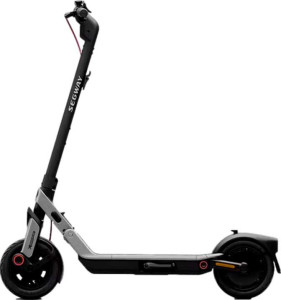
Segway E3 Pro

Navee GT3 Pro Segway E3 Pro

Overview

When choosing between the Navee GT3 Pro and the Segway E3 Pro, two capable adult electric scooters that share a surprising amount of common ground, the decision ultimately comes down to how you prioritize performance. Both are foldable, app-connected riders with 10″ pneumatic tires, front and rear brakes, and suspension — but they diverge sharply on motor power, top speed, and battery capacity. Read on to see which one fits your riding style.

Common Features

  • Both scooters feature suspension.
  • Both scooters have a dedicated smartphone app.
  • Both scooters are equipped with pneumatic tires.
  • Both scooters have a 10″ wheel diameter.
  • Neither scooter comes with a seat.
  • Both scooters can be folded.
  • Neither scooter is designed for kids.
  • Both scooters have front light(s).
  • Neither scooter has dual motors.
  • Both scooters have a rear brake.
  • Both scooters have a front brake.
  • Both scooters support a maximum weight capacity of 120 kg.
  • Both scooters have a battery level indicator.
  • Neither scooter has a removable battery.

Main Differences

  • Weight is 21000 g on the Navee GT3 Pro and 18200 g on the Segway E3 Pro.
  • Height is 1260 mm on the Navee GT3 Pro and 1235 mm on the Segway E3 Pro.
  • Width is 1280 mm on the Navee GT3 Pro and 1165 mm on the Segway E3 Pro.
  • Motor power is 1000W on the Navee GT3 Pro and 800W on the Segway E3 Pro.
  • Top speed is 25 km/h on the Navee GT3 Pro and 32 km/h on the Segway E3 Pro.
  • Climbing angle is 22° on the Navee GT3 Pro and 18° on the Segway E3 Pro.
  • Charge time is 8 hours on the Navee GT3 Pro and 7 hours on the Segway E3 Pro.
  • Maximum distance per charge is 60 km on the Navee GT3 Pro and 55 km on the Segway E3 Pro.
  • Battery size is 477.36 Wh on the Navee GT3 Pro and 368 Wh on the Segway E3 Pro.
Specs Comparison
Navee GT3 Pro

Navee GT3 Pro

Segway E3 Pro

Segway E3 Pro

Design:
weight 21000 g 18200 g
has suspension
Has a dedicated smartphone app
has pneumatic tires
wheel diameter 10" 10"
has a seat
can be folded
is designed for kids
height 1260 mm 1235 mm
width 1280 mm 1165 mm
has front light(s)
has rear light(s)
Ingress Protection (IP) rating IPX5 IPX5
release date September 2025 September 2025

At a high level, the Navee GT3 Pro and Segway E3 Pro share a remarkably similar design philosophy: both are full-sized, foldable adult scooters equipped with 10″ pneumatic tires, front and rear lighting, suspension, and an IPX5 water-resistance rating. That IP rating means both can handle rain splashes and light wet-road riding, but neither is built for submersion or heavy downpours — a practical tie on durability fundamentals.

Where the two diverge is in physical footprint and weight. The Segway E3 Pro comes in at 18,200 g versus the GT3 Pro's 21,000 g — a nearly 2.8 kg difference that becomes very tangible when you're carrying the scooter up stairs, onto public transit, or lifting it into a car trunk. On width, the gap is even more striking: the GT3 Pro measures 1,280 mm wide compared to the E3 Pro's 1,165 mm, a 115 mm spread that affects how the scooter navigates narrow corridors, doorways, and crowded sidewalks when folded or maneuvered by hand.

For commuters who prioritize portability and compact handling, the Segway E3 Pro holds a clear design edge — it is meaningfully lighter and narrower without sacrificing any of the core design features the GT3 Pro offers. The GT3 Pro's larger frame may hint at a more robust build or accommodate other performance-oriented components, but purely on design ergonomics and everyday manageability, the E3 Pro is the more practical choice.

Performance:
motor power 1000W 800W
top speed 25 km/h 32 km/h
has dual motors
climbing angle 22° 18°
has a rear brake
has a front brake
maximum weight capacity 120kg 120kg

The most intriguing tension in this performance comparison is that the Navee GT3 Pro packs a larger 1000W motor yet is capped at 25 km/h, while the Segway E3 Pro runs a smaller 800W motor but reaches 32 km/h. This apparent contradiction is almost certainly the result of firmware speed limiting on the GT3 Pro — a common practice to comply with regional e-scooter regulations — meaning the extra motor headroom translates not into top speed, but into pulling power at lower speeds and under load.

That extra torque shows up clearly in the climbing specs: the GT3 Pro handles a 22° incline versus the E3 Pro's 18°. Four degrees may sound modest, but in real-world terrain it represents the difference between confidently tackling steep urban hills and struggling on the same gradient. Both scooters share a 120 kg maximum load capacity and dual front-and-rear braking, so stopping power and rider weight support are evenly matched.

Which performance profile wins depends entirely on use case. Riders in hilly areas or those who prioritize raw grunt will find the GT3 Pro's motor and climb angle a genuine advantage. For flat urban commuters where speed matters more, the E3 Pro's 32 km/h ceiling offers a faster ride on a more efficient motor. Neither product dominates outright — the GT3 Pro leads on power and gradient capability, the E3 Pro leads on top speed.

Battery:
charge time 8 hours 7 hours
maximum distance per charge 60 km 55 km
has a battery level indicator
has a removable battery
battery size 477.36 Wh 368 Wh

Battery capacity is where the Navee GT3 Pro establishes a meaningful structural advantage. Its 477.36 Wh pack is roughly 30% larger than the Segway E3 Pro's 368 Wh unit — and that gap maps directly onto range: 60 km versus 55 km per charge. The 5 km range difference is less dramatic than the capacity gap might suggest, likely because the GT3 Pro's heavier frame and more powerful motor consume energy at a higher rate, partially offsetting the larger battery's advantage in distance.

On charging, the E3 Pro edges ahead with a 7-hour charge time compared to the GT3 Pro's 8 hours. That one-hour difference is worth considering for riders who charge overnight and occasionally need a midday top-up — a shorter charge cycle offers marginally more flexibility. Neither scooter offers a removable battery, so charging always requires access to the scooter itself rather than swapping a spare pack on the go.

Overall, the GT3 Pro holds the battery edge for riders who prioritize maximum range per charge — its larger pack provides a genuine buffer for longer or hillier routes. The E3 Pro counters with faster recharge times and impressively competitive range despite the smaller battery, making it the more energy-efficient design. For daily commutes well within the 55 km threshold, the practical difference between the two narrows considerably.

Comparison Summary & Verdict

After a thorough comparison, the two scooters serve meaningfully different rider profiles. The Navee GT3 Pro stands out for riders who tackle demanding terrain, thanks to its more powerful 1000W motor, steeper 22° climbing angle, and larger 477.36 Wh battery that delivers up to 60 km of range per charge — making it the stronger pick for long-distance commuters and hilly routes. The Segway E3 Pro, on the other hand, appeals to urban riders who value agility: it is notably lighter at 18200 g, more compact, reaches a higher top speed of 32 km/h, and charges slightly faster at 7 hours. Both scooters match on safety and convenience features, so the right choice comes down to raw range and power versus speed and portability.

Navee GT3 Pro
Buy Navee GT3 Pro if...

Buy the Navee GT3 Pro if you need a longer range, a more powerful motor for steep climbs, and a larger battery to handle extended daily commutes.

Segway E3 Pro
Buy Segway E3 Pro if...

Buy the Segway E3 Pro if you prioritize a lighter, more compact scooter with a higher top speed and slightly faster charging for urban riding.