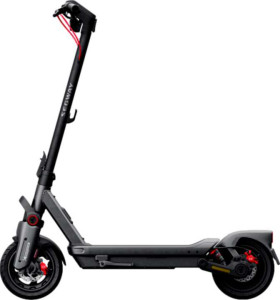
Ninebot by Segway eKickScooter Max G3
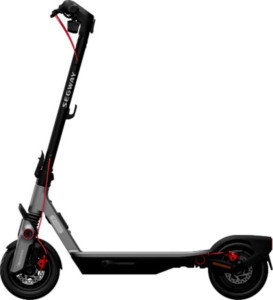
Ninebot by Segway KickScooter F3

Ninebot by Segway eKickScooter Max G3 Ninebot by Segway KickScooter F3

Overview

Welcome to our in-depth specification comparison between the Ninebot by Segway eKickScooter Max G3 and the Ninebot by Segway KickScooter F3. Both scooters share a solid foundation — folding design, pneumatic tires, suspension, and app connectivity — but they diverge sharply when it comes to motor power, top speed, and battery capacity. Read on to discover which model best matches your riding needs and lifestyle.

Common Features

  • Both scooters feature suspension for a smoother ride.
  • Both scooters are compatible with a dedicated smartphone app.
  • Both scooters are equipped with pneumatic tires.
  • Neither scooter includes a seat.
  • Both scooters can be folded for easy storage and transport.
  • Neither scooter is designed for kids.
  • Both scooters have front lighting.
  • Both scooters have rear lighting.
  • Neither scooter uses dual motors.
  • Both scooters are fitted with a rear brake.
  • Both scooters are fitted with a front brake.
  • Both scooters include a battery level indicator.
  • Regenerative braking is available on both scooters.
  • Neither scooter has a removable battery.

Main Differences

  • Weight is 24600 g on the Ninebot by Segway eKickScooter Max G3 and 18600 g on the Ninebot by Segway KickScooter F3.
  • Wheel diameter is 11″ on the Ninebot by Segway eKickScooter Max G3 and 10″ on the Ninebot by Segway KickScooter F3.
  • Height is 1299 mm on the Ninebot by Segway eKickScooter Max G3 and 1262 mm on the Ninebot by Segway KickScooter F3.
  • Width is 1218 mm on the Ninebot by Segway eKickScooter Max G3 and 1152 mm on the Ninebot by Segway KickScooter F3.
  • Motor power is 2000W on the Ninebot by Segway eKickScooter Max G3 and 1000W on the Ninebot by Segway KickScooter F3.
  • Top speed is 45 km/h on the Ninebot by Segway eKickScooter Max G3 and 25 km/h on the Ninebot by Segway KickScooter F3.
  • Climbing angle is 30° on the Ninebot by Segway eKickScooter Max G3 and 20° on the Ninebot by Segway KickScooter F3.
  • Maximum weight capacity is 150 kg on the Ninebot by Segway eKickScooter Max G3 and 120 kg on the Ninebot by Segway KickScooter F3.
  • Charge time is 3.5 hours on the Ninebot by Segway eKickScooter Max G3 and 8 hours on the Ninebot by Segway KickScooter F3.
  • Maximum distance per charge is 80 km on the Ninebot by Segway eKickScooter Max G3 and 70 km on the Ninebot by Segway KickScooter F3.
  • Battery size is 597 Wh on the Ninebot by Segway eKickScooter Max G3 and 477 Wh on the Ninebot by Segway KickScooter F3.
Specs Comparison
Ninebot by Segway eKickScooter Max G3

Ninebot by Segway eKickScooter Max G3

Ninebot by Segway KickScooter F3

Ninebot by Segway KickScooter F3

Design:
weight 24600 g 18600 g
has suspension
Has a dedicated smartphone app
has pneumatic tires
wheel diameter 11" 10"
has a seat
can be folded
is designed for kids
height 1299 mm 1262 mm
width 1218 mm 1152 mm
has front light(s)
has rear light(s)
Ingress Protection (IP) rating IPX6 IPX6
release date January 2025 January 2025

Both the Ninebot by Segway eKickScooter Max G3 and the Ninebot by Segway KickScooter F3 share a strong foundation of design features: foldable frames, pneumatic tires, front and rear lighting, suspension, a companion smartphone app, and an IPX6 water resistance rating — meaning both can handle heavy rain and splashing without issue. Neither is designed for kids, and neither offers a seat, placing them squarely in the adult commuter/leisure category.

The most meaningful differentiator in this group is weight. The G3 tips the scales at 24,600 g compared to the F3's 18,600 g — a difference of 6 kg, which is substantial when carrying the scooter up stairs, loading it into a car trunk, or navigating tight spaces. The G3 is also physically larger, with a height of 1,299 mm and width of 1,218 mm versus the F3's 1,262 mm and 1,152 mm. On wheel size, the G3 runs 11″ wheels against the F3's 10″, which in practice can contribute to slightly smoother rolling over uneven surfaces — though both use pneumatic tires and suspension, which already absorb much of that difference.

For pure portability and ease of handling, the F3 has a clear edge in this group: it is meaningfully lighter and more compact while matching the G3 on every shared convenience and safety design feature. The G3's marginal gains in wheel diameter and physical stature may appeal to taller riders or those prioritizing ride feel on rough terrain, but as a design package, the F3 is the more manageable and transport-friendly option.
Performance:
motor power 2000W 1000W
top speed 45 km/h 25 km/h
has dual motors
climbing angle 30° 20°
has a rear brake
has a front brake
maximum weight capacity 150kg 120kg

The performance gap between these two scooters is significant and shapes their entire use case. The Max G3 packs a 2000W motor capable of reaching 45 km/h, while the F3 runs a 1000W motor with a 25 km/h top speed — exactly half the power and well below the G3's ceiling. In practical terms, the G3 is built for riders who want brisk, confident acceleration and the ability to keep pace with urban traffic, whereas the F3 sits comfortably in the range of a regulated, lower-speed commuter scooter that may qualify for bike-lane use in many jurisdictions.

The hill-climbing figures reinforce this divide. A 30° climbing angle on the G3 means it handles steep urban inclines — think multi-story parking ramps or hilly city streets — with relative ease. The F3's 20° rating is respectable for a 1000W machine, but riders in hilly areas will notice the limitation. On weight capacity, the G3 supports up to 150 kg versus the F3's 120 kg, giving the G3 broader rider inclusivity and also headroom for carrying cargo without approaching its structural limits.

Both scooters share front and rear braking, which is the right setup for managing speed safely at either performance tier. That said, the G3 holds a commanding advantage across every performance metric in this group — power, speed, climb, and load capacity. It is unambiguously the higher-performance machine. The F3 is not weak for its class, but it is engineered for a different, more restricted riding profile.

Battery:
charge time 3.5 hours 8 hours
maximum distance per charge 80 km 70 km
has a battery level indicator
Has regenerative braking
has a removable battery
battery size 597 Wh 477 Wh

Range figures tell only part of the battery story — charge time is where the G3 truly separates itself. The Max G3's 597 Wh pack delivers up to 80 km per charge and refills in just 3.5 hours, making a full overnight charge unnecessary and enabling a meaningful top-up during a lunch break. The F3, by contrast, carries a smaller 477 Wh battery that still achieves a competitive 70 km of range, but demands a lengthy 8 hours to charge fully — more than twice as long. For daily commuters, that difference in charge time can meaningfully affect whether the scooter is ready to go each morning.

The range gap of 10 km is real but moderate in practical terms; both scooters cover distances well beyond a typical urban commute. What stands out, however, is the G3's efficiency relative to its power output: despite running a motor twice as powerful as the F3's, it extracts greater range from a battery that is only about 25% larger. Both scooters share regenerative braking, which helps recover energy during deceleration and contributes to real-world range on stop-start routes. Neither offers a removable battery, so charging is always tethered to a power outlet.

Across this group, the G3 holds a clear advantage — it offers more range, a substantially larger battery, and a charge time that is less than half that of the F3. The F3's 70 km range is adequate, but the 8-hour charge cycle is a genuine daily inconvenience that riders should weigh carefully before committing.

Comparison Summary & Verdict

After examining every specification, these two scooters serve clearly different riders. The Ninebot by Segway eKickScooter Max G3 is the more powerful and capable machine, boasting a 2000W motor, a top speed of 45 km/h, a 30° climbing angle, and an 80 km range on a single charge — making it ideal for demanding commuters, hilly terrain, and heavier riders up to 150 kg. The Ninebot by Segway KickScooter F3, on the other hand, wins on practicality: it is notably lighter at 18600 g, and despite its longer charge time of 8 hours, it still delivers a respectable 70 km range and suits riders who prioritize a lighter, more manageable scooter for everyday urban use. Choose the Max G3 for raw performance; choose the F3 for a lighter, more portable daily companion.

Ninebot by Segway eKickScooter Max G3
Buy Ninebot by Segway eKickScooter Max G3 if...

Buy the Ninebot by Segway eKickScooter Max G3 if you need maximum performance, with a 2000W motor, 45 km/h top speed, and 80 km range, especially if you tackle steep inclines or carry heavier loads.

Ninebot by Segway KickScooter F3
Buy Ninebot by Segway KickScooter F3 if...

Buy the Ninebot by Segway KickScooter F3 if you prefer a lighter, easier-to-carry scooter for everyday urban commuting, and a 70 km range is sufficient for your daily rides.