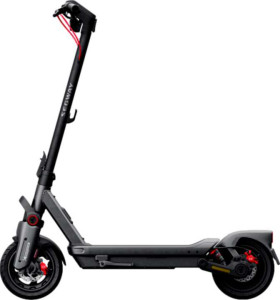
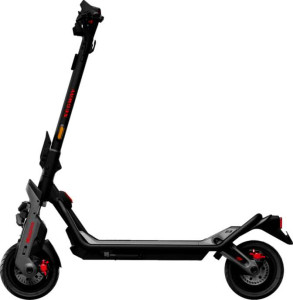
From a design standpoint, the most striking difference between the Ninebot by Segway eKickScooter Max G3 and the Segway SuperScooter GT3 is their weight. At 24,600 g, the Max G3 is roughly 15 kg lighter than the GT3's 39,500 g — a gap that is not trivial. In practical terms, this means the Max G3 is considerably easier to carry up stairs, lift into a car trunk, or maneuver manually when not riding. Despite both scooters being foldable, that folding mechanism offers far more real-world convenience on the lighter Max G3.
The GT3 is also physically larger in every dimension — 1,388 mm tall and 1,360 mm wide versus the Max G3's 1,299 mm and 1,218 mm. The wider stance of the GT3 suggests a more planted, stable riding posture, which is likely intentional given its heavier build and presumably more performance-oriented nature. However, that extra bulk also makes it harder to store in tight spaces or navigate crowded environments. Both share the same 11″ wheel diameter and both feature pneumatic tires with suspension, meaning ride comfort fundamentals are evenly matched on paper.
On shared features — front and rear lights, a dedicated smartphone app, IPX6 water resistance, and a non-kids, no-seat configuration — the two scooters are completely tied. The clear design edge goes to the Max G3 for portability and day-to-day handling ease, while the GT3's larger, heavier frame appears purpose-built for stability and presence over convenience. Buyers who frequently carry or store their scooter will find the Max G3 significantly more practical.