Ninebot by Segway eKickScooter Max G3
Segway SuperScooter GT3 Pro

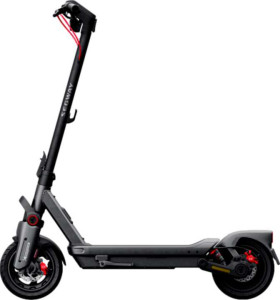
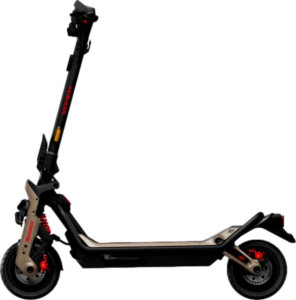
Ninebot by Segway eKickScooter Max G3 Segway SuperScooter GT3 Pro

Overview

Welcome to our in-depth specification comparison between the Ninebot by Segway eKickScooter Max G3 and the Segway SuperScooter GT3 Pro. Both scooters share a foldable design, pneumatic 11″ tires, and suspension, yet they target very different riders. In this comparison, we examine the key battlegrounds of motor power and top speed, battery capacity and range, and overall weight and dimensions to help you decide which model fits your needs.

Common Features

  • Both scooters feature suspension.
  • Both scooters have a dedicated smartphone app.
  • Both scooters are equipped with pneumatic tires.
  • Both scooters have an 11″ wheel diameter.
  • Neither scooter has a seat.
  • Both scooters can be folded.
  • Neither scooter is designed for kids.
  • Both scooters have front lights.
  • Both scooters have a rear brake.
  • Both scooters have a front brake.
  • Both scooters support a maximum weight capacity of 150 kg.
  • Both scooters have a battery level indicator.
  • Neither scooter has a removable battery.

Main Differences

  • Weight is 24600 g on Ninebot by Segway eKickScooter Max G3 and 53100 g on Segway SuperScooter GT3 Pro.
  • Height is 1299 mm on Ninebot by Segway eKickScooter Max G3 and 1388 mm on Segway SuperScooter GT3 Pro.
  • Width is 1218 mm on Ninebot by Segway eKickScooter Max G3 and 1360 mm on Segway SuperScooter GT3 Pro.
  • Motor power is 2000W on Ninebot by Segway eKickScooter Max G3 and 7000W on Segway SuperScooter GT3 Pro.
  • Top speed is 45 km/h on Ninebot by Segway eKickScooter Max G3 and 80 km/h on Segway SuperScooter GT3 Pro.
  • Dual motors are present on Segway SuperScooter GT3 Pro but not available on Ninebot by Segway eKickScooter Max G3.
  • Climbing angle is 30° on Ninebot by Segway eKickScooter Max G3 and 38° on Segway SuperScooter GT3 Pro.
  • Charge time is 3.5 hours on Ninebot by Segway eKickScooter Max G3 and 8 hours on Segway SuperScooter GT3 Pro.
  • Maximum distance per charge is 80 km on Ninebot by Segway eKickScooter Max G3 and 138 km on Segway SuperScooter GT3 Pro.
  • Battery size is 597 Wh on Ninebot by Segway eKickScooter Max G3 and 2160 Wh on Segway SuperScooter GT3 Pro.
Specs Comparison
Ninebot by Segway eKickScooter Max G3

Ninebot by Segway eKickScooter Max G3

Segway SuperScooter GT3 Pro

Segway SuperScooter GT3 Pro

Design:
weight 24600 g 53100 g
has suspension
Has a dedicated smartphone app
has pneumatic tires
wheel diameter 11" 11"
has a seat
can be folded
is designed for kids
height 1299 mm 1388 mm
width 1218 mm 1360 mm
has front light(s)
has rear light(s)
Ingress Protection (IP) rating IPX6 IPX6
release date January 2025 January 2025

Both the Ninebot by Segway eKickScooter Max G3 and the Segway SuperScooter GT3 Pro share a strong design foundation: suspension, pneumatic 11″ wheels, front and rear lighting, a foldable frame, and an IPX6 water-resistance rating. This means both can handle rain and splashes with confidence, fold for storage or transport, and offer a smoother ride thanks to their tire and suspension setup. For users comparing them on paper, these shared traits make them seem close — but the physical reality tells a very different story.

The single most consequential design difference is weight. The Max G3 tips the scales at 24,600 g (~54 lbs), while the GT3 Pro comes in at a substantial 53,100 g (~117 lbs) — more than double. Even though both are technically foldable, the GT3 Pro's mass means folding it is largely a formality; lifting or carrying it for any meaningful distance is impractical for most riders. The Max G3, while not lightweight by consumer standards, remains manageable for getting up a curb, loading into a car trunk, or carrying into a building. The GT3 Pro is better understood as a vehicle you park, not one you carry.

The Max G3 also has a noticeably more compact footprint — 1299 mm tall and 1218 mm wide versus the GT3 Pro's 1388 mm and 1360 mm — making it easier to navigate tighter spaces and store in smaller areas. On design alone, the Max G3 has a clear portability advantage. The GT3 Pro's larger, heavier build suggests it is engineered for raw performance and stability rather than everyday convenience, and buyers should weigh that tradeoff carefully before purchasing.
Performance:
motor power 2000W 7000W
top speed 45 km/h 80 km/h
has dual motors
climbing angle 30° 38°
has a rear brake
has a front brake
maximum weight capacity 150kg 150kg

The performance gap between these two scooters is enormous. The Max G3 runs a single motor rated at 2000W, delivering a top speed of 45 km/h — respectable for a commuter-class electric scooter. The GT3 Pro, by contrast, deploys a dual-motor setup producing a combined 7000W, pushing its top speed to 80 km/h. That is not a marginal upgrade; it places the GT3 Pro in an entirely different performance category, closer to a light electric motorcycle than a conventional kick scooter.

Hill-climbing tells a similar story. The Max G3 handles inclines up to 30°, which covers the vast majority of urban and suburban terrain comfortably. The GT3 Pro raises that ceiling to 38° — a notably steep grade that few real-world routes would ever demand. The practical implication is that the GT3 Pro carries its power reserves with headroom to spare on hills, while the Max G3 may feel more taxed on sustained steep climbs at its limits. Both scooters support a 150 kg maximum rider weight and feature full front-and-rear braking, so load capacity and braking configuration are a wash.

For performance, the GT3 Pro has an overwhelming advantage. Its dual-motor architecture and 3.5× power output translate directly into faster acceleration, higher sustained speeds, and greater climbing confidence. However, that raw capability comes with an important caveat: speeds approaching 80 km/h demand serious safety awareness, appropriate protective gear, and compliance with local regulations, which in many regions prohibit such speeds on public roads. Riders who genuinely need that performance envelope will find the GT3 Pro unmatched here; those who do not may find the Max G3 more than sufficient for everyday use.

Battery:
charge time 3.5 hours 8 hours
maximum distance per charge 80 km 138 km
has a battery level indicator
has a removable battery
battery size 597 Wh 2160 Wh

Battery capacity is where the scale of the GT3 Pro's engineering becomes most apparent. Its pack measures 2160 Wh — roughly 3.6 times the Max G3's 597 Wh — and that difference directly funds the GT3 Pro's rated range of 138 km per charge, compared to 80 km for the Max G3. For context, 80 km is already an excellent range figure for a commuter scooter; 138 km pushes into territory that few riders will exhaust in a single day of normal use.

The trade-off for that larger pack is charge time. Plugging in the Max G3 for 3.5 hours restores it to full — short enough to top up during a workday or an evening at home without much planning. The GT3 Pro demands 8 hours to fully recharge, which effectively means overnight charging is the only practical routine. For riders who deplete it heavily and need it ready the next morning, that is manageable; for anyone hoping to recharge mid-day and head back out, it becomes a genuine constraint. Neither scooter offers a removable battery, so there is no workaround of swapping packs.

On raw battery metrics, the GT3 Pro holds a clear advantage in capacity and range, which aligns with its role as a high-performance machine that draws heavily on its pack at speed. The Max G3, however, makes a strong case on efficiency grounds — its far smaller battery still delivers a competitive 80 km range, and its short charge time makes it significantly more convenient to live with day-to-day. The right choice here depends entirely on the rider's actual range needs versus their tolerance for long charge cycles.

Comparison Summary & Verdict

After examining the full spec sheet, it is clear that these two scooters occupy distinct positions in the market. The Ninebot by Segway eKickScooter Max G3 stands out for its lightweight 24.6 kg build and impressively fast 3.5-hour charge time, making it a practical choice for everyday commuters who value portability and convenience. The Segway SuperScooter GT3 Pro, on the other hand, is an entirely different beast — its 7000W dual-motor system, 80 km/h top speed, and massive 2160 Wh battery delivering up to 138 km of range place it firmly in the high-performance category for riders who demand power and endurance above all else. Both share a 150 kg weight limit, foldability, and app connectivity, so the decision ultimately comes down to your riding priorities: effortless daily commuting or exhilarating, long-distance performance.

Ninebot by Segway eKickScooter Max G3
Buy Ninebot by Segway eKickScooter Max G3 if...

Buy the Ninebot by Segway eKickScooter Max G3 if you want a lightweight, portable scooter with a fast 3.5-hour charge time and a practical 80 km range for daily commuting.

Segway SuperScooter GT3 Pro
Buy Segway SuperScooter GT3 Pro if...

Buy the Segway SuperScooter GT3 Pro if you demand maximum performance, with a 7000W dual-motor setup, an 80 km/h top speed, and an industry-leading 138 km range per charge.