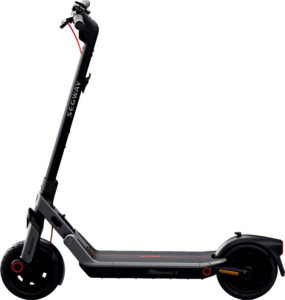
Ninebot by Segway KickScooter E3 Pro
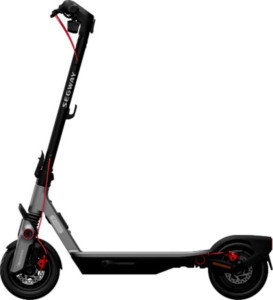
Ninebot by Segway KickScooter F3

Ninebot by Segway KickScooter E3 Pro Ninebot by Segway KickScooter F3

Overview

Welcome to our in-depth specification comparison between the Ninebot by Segway KickScooter E3 Pro and the Ninebot by Segway KickScooter F3. Both scooters share a strong foundation, including 10″ pneumatic tires, suspension, and a 25 km/h top speed, yet they diverge in meaningful ways. This comparison puts their motor power, battery capacity, and water resistance ratings under the microscope to help you decide which model truly fits your riding needs.

Common Features

  • Both scooters feature suspension for a smoother ride.
  • Both scooters are compatible with a dedicated smartphone app.
  • Both scooters are equipped with pneumatic tires.
  • The wheel diameter is 10″ on both scooters.
  • Neither scooter has a seat.
  • Both scooters can be folded for easy transport.
  • Neither scooter is designed for kids.
  • Both scooters have front lights.
  • The top speed is 25 km/h on both scooters.
  • Neither scooter has dual motors.
  • Both scooters have a rear brake.
  • Both scooters have a front brake.
  • The maximum weight capacity is 120 kg on both scooters.
  • Both scooters have a battery level indicator.
  • Regenerative braking is available on both scooters.
  • Neither scooter has a removable battery.

Main Differences

  • The Ninebot by Segway KickScooter E3 Pro weighs 17900 g, while the Ninebot by Segway KickScooter F3 weighs 18600 g.
  • The Ingress Protection rating is IPX5 on the Ninebot by Segway KickScooter E3 Pro and IPX6 on the Ninebot by Segway KickScooter F3.
  • Motor power is 800W on the Ninebot by Segway KickScooter E3 Pro and 1000W on the Ninebot by Segway KickScooter F3.
  • The climbing angle is 18° on the Ninebot by Segway KickScooter E3 Pro and 20° on the Ninebot by Segway KickScooter F3.
  • The maximum distance per charge is 55 km on the Ninebot by Segway KickScooter E3 Pro and 70 km on the Ninebot by Segway KickScooter F3.
  • Battery size is 368 Wh on the Ninebot by Segway KickScooter E3 Pro and 477 Wh on the Ninebot by Segway KickScooter F3.
Specs Comparison
Ninebot by Segway KickScooter E3 Pro

Ninebot by Segway KickScooter E3 Pro

Ninebot by Segway KickScooter F3

Ninebot by Segway KickScooter F3

Design:
weight 17900 g 18600 g
has suspension
Has a dedicated smartphone app
has pneumatic tires
wheel diameter 10" 10"
has a seat
can be folded
is designed for kids
has front light(s)
has rear light(s)
Ingress Protection (IP) rating IPX5 IPX6
release date January 2025 January 2025

From a design standpoint, the E3 Pro and the F3 share a remarkably similar physical profile: both are adult-oriented, foldable scooters rolling on 10″ pneumatic tires with suspension, front and rear lighting, and a companion smartphone app. For a rider doing a quick side-by-side comparison, these two will feel like close siblings on paper.

The meaningful differences come down to two specs. First, the F3 tips the scale at 18,600 g versus the E3 Pro's 17,900 g — a 700 g difference that, while modest, is noticeable when carrying the scooter up stairs or loading it into a car. Second, and more significantly, the F3 holds an IPX6 ingress protection rating compared to the E3 Pro's IPX5. In practice, IPX5 means the scooter can handle direct water jets from any direction, while IPX6 adds resistance to powerful water jets — making the F3 meaningfully better suited for riding in heavy rain or through puddles without concern for water damage.

Overall, the F3 has a clear edge in this group: its superior water resistance rating offers a tangible real-world benefit for riders in wet conditions. The E3 Pro's slight weight advantage is a minor consolation, but for most buyers, durability against the elements will outweigh saving 700 g.

Performance:
motor power 800W 1000W
top speed 25 km/h 25 km/h
has dual motors
climbing angle 18° 20°
has a rear brake
has a front brake
maximum weight capacity 120kg 120kg

Both scooters share the same 25 km/h top speed and identical braking setups — dual front and rear brakes with a 120 kg weight capacity — so on flat, straightforward commutes they deliver a nearly identical riding experience. The distinctions that matter emerge when the terrain gets demanding.

The F3 packs a 1000W motor versus the E3 Pro's 800W, a 25% power advantage that doesn't show up at top speed but reveals itself in how confidently each scooter accelerates and sustains performance under load. That extra wattage also underpins the F3's superior climbing angle of 20° compared to the E3 Pro's 18°. Two degrees may sound trivial, but on steep urban inclines — particularly for heavier riders approaching the weight limit — the F3 will maintain momentum where the E3 Pro may visibly struggle or slow.

The F3 wins this group, and it's not particularly close for riders who live in hilly areas or frequently carry cargo. For those navigating mostly flat terrain at lighter weights, the E3 Pro's performance gap is less consequential day-to-day, but the F3's headroom advantage makes it the more capable machine by the numbers.

Battery:
maximum distance per charge 55 km 70 km
has a battery level indicator
Has regenerative braking
has a removable battery
battery size 368 Wh 477 Wh

Battery capacity is where the gap between these two scooters becomes most tangible for daily riders. The F3 carries a 477 Wh pack against the E3 Pro's 368 Wh — a 109 Wh difference, or roughly 30% more stored energy. That translates directly into the rated range figures: 70 km for the F3 versus 55 km for the E3 Pro. For a commuter covering 20–25 km round trips, the E3 Pro can still go multiple days between charges, but the F3 offers a noticeably larger buffer before anxiety sets in — especially since real-world range consistently falls short of rated figures depending on rider weight, speed, and terrain.

Both scooters share regenerative braking, which marginally recovers energy during deceleration and slightly extends usable range in stop-and-go urban environments. Neither offers a removable battery, meaning charging is always tied to access to a power outlet at the scooter itself — worth considering for riders without convenient charging spots near their destination.

The F3 wins this group decisively. Its larger battery not only extends range but also means the pack undergoes shallower discharge cycles in everyday use, which generally supports better long-term battery health. Unless charging access is plentiful and trips are short, the F3's capacity advantage is a meaningful practical benefit.

Comparison Summary & Verdict

After examining every specification, it is clear that both scooters are well-matched in their core design and safety features, yet they cater to slightly different riders. The Ninebot by Segway KickScooter F3 pulls ahead with a more powerful 1000W motor, a larger 477 Wh battery delivering up to 70 km of range, a steeper 20° climbing angle, and a superior IPX6 water-resistance rating, making it the stronger choice for longer commutes and more demanding terrain. The Ninebot by Segway KickScooter E3 Pro, on the other hand, is the lighter of the two at 17900 g and still delivers a respectable 55 km range with its 800W motor, making it a compelling option for riders who value a slightly more manageable scooter without sacrificing core performance.

Ninebot by Segway KickScooter E3 Pro
Buy Ninebot by Segway KickScooter E3 Pro if...

Buy the Ninebot by Segway KickScooter E3 Pro if you prefer a lighter scooter and your daily rides stay within 55 km, making portability a higher priority than maximum range or motor output.

Ninebot by Segway KickScooter F3
Buy Ninebot by Segway KickScooter F3 if...

Buy the Ninebot by Segway KickScooter F3 if you need a longer range of up to 70 km, stronger 1000W motor performance, a steeper climbing ability, and enhanced IPX6 water resistance for riding in wetter conditions.