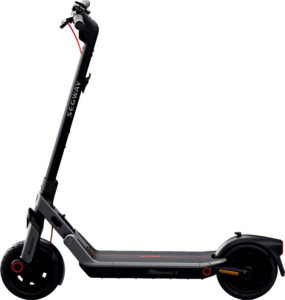
Ninebot by Segway KickScooter E3 Pro
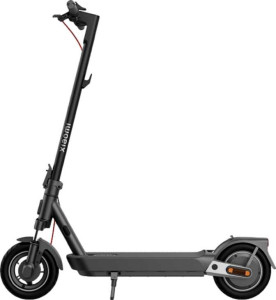
Xiaomi Electric Scooter 5

Ninebot by Segway KickScooter E3 Pro Xiaomi Electric Scooter 5

Overview

Welcome to our detailed spec comparison between the Ninebot by Segway KickScooter E3 Pro and the Xiaomi Electric Scooter 5 — two premium adult electric scooters that share a surprising amount of common ground. Both ride on 10″ pneumatic tires, fold for easy storage, and top out at 25 km/h. Yet key distinctions emerge around motor power, battery capacity, and overall weight, making the choice between them more nuanced than it first appears.

Common Features

  • Both scooters have suspension.
  • Both scooters have a dedicated smartphone app.
  • Both scooters are equipped with pneumatic tires.
  • Both scooters have a wheel diameter of 10″.
  • Neither scooter has a seat.
  • Both scooters can be folded.
  • Neither scooter is designed for kids.
  • Both scooters have front light(s).
  • Both scooters have a top speed of 25 km/h.
  • Neither scooter has dual motors.
  • Both scooters have a climbing angle of 18°.
  • Both scooters have a rear brake.
  • Both scooters have a front brake.
  • Both scooters have a maximum weight capacity of 120 kg.
  • Both scooters have a battery capacity of 10200 mAh.
  • Both scooters have a battery level indicator.
  • Both scooters support regenerative braking.
  • Neither scooter has a removable battery.

Main Differences

  • Weight is 17900 g on the Ninebot by Segway KickScooter E3 Pro and 20100 g on the Xiaomi Electric Scooter 5.
  • Motor power is 800W on the Ninebot by Segway KickScooter E3 Pro and 700W on the Xiaomi Electric Scooter 5.
  • Maximum distance per charge is 55 km on the Ninebot by Segway KickScooter E3 Pro and 60 km on the Xiaomi Electric Scooter 5.
  • Battery size is 368 Wh on the Ninebot by Segway KickScooter E3 Pro and 477 Wh on the Xiaomi Electric Scooter 5.
Specs Comparison
Ninebot by Segway KickScooter E3 Pro

Ninebot by Segway KickScooter E3 Pro

Xiaomi Electric Scooter 5

Xiaomi Electric Scooter 5

Design:
weight 17900 g 20100 g
has suspension
Has a dedicated smartphone app
has pneumatic tires
wheel diameter 10" 10"
has a seat
can be folded
is designed for kids
has front light(s)
has rear light(s)
Ingress Protection (IP) rating IPX5 IPX5
release date January 2025 January 2025

From a design standpoint, the Ninebot E3 Pro and the Xiaomi Electric Scooter 5 are remarkably similar — both fold for portability, ride on 10″ pneumatic tires, include suspension, front and rear lighting, and carry an IPX5 water-resistance rating, meaning neither is suited for riding in heavy rain but both handle light splashes. With so many shared fundamentals, the design comparison essentially comes down to a single meaningful variable: weight.

The Ninebot E3 Pro comes in at 17,900 g versus the Xiaomi's 20,100 g — a difference of roughly 2.2 kg. While that gap may sound modest on paper, it becomes tangible when you factor in real-world usage: carrying the scooter up stairs, lifting it onto public transit, or hoisting it into a car trunk. A lighter scooter reduces fatigue during those moments and makes the folding design more practically useful.

On design, the Ninebot E3 Pro holds a clear edge due to its lower weight. All other design attributes are identical between the two — same wheel size, same protection rating, same fold mechanism, same lighting setup — so the weight advantage is the sole but genuine differentiator here for users who prioritize portability and ease of handling.

Performance:
motor power 800W 700W
top speed 25 km/h 25 km/h
has dual motors
climbing angle 18° 18°
has a rear brake
has a front brake
maximum weight capacity 120kg 120kg

Performance-wise, these two scooters share a near-identical profile across most metrics — both cap out at 25 km/h, tackle a maximum 18° incline, and support a 120 kg rider. The braking setup is also the same, with front and rear brakes on each, which at this speed class is a reassuring safety baseline. Given so much parity, the only specification that separates them is motor output.

The Ninebot E3 Pro packs an 800W motor against the Xiaomi's 700W — a 100W gap that, while not dramatic, has real-world relevance. Since top speed is electronically limited to the same 25 km/h on both, the extra wattage won't translate to going faster on flat ground. Where it does matter is in how each scooter sustains that speed: the E3 Pro is more likely to hold its top speed confidently on inclines or when carrying heavier riders near the weight limit, whereas the Xiaomi's motor may work harder under the same conditions.

The Ninebot E3 Pro holds a narrow performance edge strictly due to its higher motor power. For flat urban commutes with lighter riders, the difference will rarely be felt. But for users who regularly encounter hills or ride closer to the maximum load, the E3 Pro's extra headroom gives it a practical advantage that the otherwise identical spec sheet cannot obscure.

Battery:
battery power 10200 mAh 10200 mAh
maximum distance per charge 55 km 60 km
has a battery level indicator
Has regenerative braking
has a removable battery
battery size 368 Wh 477 Wh

At first glance, the battery specs look identical — both scooters share a 10,200 mAh capacity, regenerative braking, and a built-in charge indicator. But dig one level deeper and a meaningful divergence emerges: the Xiaomi Electric Scooter 5 carries a significantly larger 477 Wh battery pack versus the Ninebot E3 Pro's 368 Wh. The mAh figure alone is misleading here, because watt-hours account for voltage and reflect true energy storage — and on that measure, the Xiaomi holds roughly 30% more usable energy.

That difference shows up directly in the rated range: 60 km for the Xiaomi against 55 km for the Ninebot. The 5 km gap may seem modest, but it represents a meaningful buffer for longer commutes or riders who want less anxiety about charge levels mid-journey. Regenerative braking on both units helps recover some energy during deceleration, partially offsetting real-world range losses — but the Xiaomi starts with a larger reservoir to draw from.

The Xiaomi Electric Scooter 5 wins this category. Despite the shared mAh rating creating a superficial tie, the substantially higher watt-hour capacity and longer rated range give it a clear and quantifiable advantage for battery endurance.

Comparison Summary & Verdict

After examining every specification, both scooters prove to be well-matched commuter options — but each excels in a different area. The Ninebot by Segway KickScooter E3 Pro holds the edge in motor power at 800W and is notably lighter at 17,900 g, making it the better pick for riders who value responsive acceleration and easier portability. The Xiaomi Electric Scooter 5, on the other hand, counters with a larger 477 Wh battery and a superior maximum range of 60 km, making it the stronger choice for longer daily commutes where every kilometer counts. Both share identical top speeds, braking systems, climbing ability, and smart app connectivity, so neither compromises on core fundamentals.

Ninebot by Segway KickScooter E3 Pro
Buy Ninebot by Segway KickScooter E3 Pro if...

Buy the Ninebot by Segway KickScooter E3 Pro if you prioritize a more powerful 800W motor and a lighter build that makes carrying and maneuvering your scooter easier.

Xiaomi Electric Scooter 5
Buy Xiaomi Electric Scooter 5 if...

Buy the Xiaomi Electric Scooter 5 if longer range is your top priority, as its larger 477 Wh battery delivers up to 60 km per charge — 5 km more than the competition.