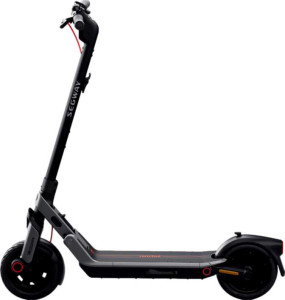
Ninebot by Segway KickScooter E3
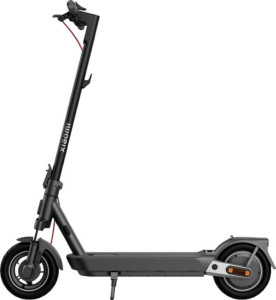
Xiaomi Electric Scooter 5 Max

Ninebot by Segway KickScooter E3 Xiaomi Electric Scooter 5 Max

Overview

Welcome to our in-depth specification comparison between the Ninebot by Segway KickScooter E3 and the Xiaomi Electric Scooter 5 Max. Both scooters share a strong common foundation, including a 25 km/h top speed, 10″ pneumatic tires, suspension, and foldable design — but key differences in motor power, range, and overall weight set them apart. Read on to find out which one best suits your riding needs.

Common Features

  • Both scooters come equipped with suspension.
  • Both scooters have a dedicated smartphone app.
  • Both scooters use pneumatic tires.
  • Both scooters feature a 10″ wheel diameter.
  • Neither scooter includes a seat.
  • Both scooters can be folded for storage or transport.
  • Neither scooter is designed for kids.
  • Both scooters have front lights.
  • Both scooters share a top speed of 25 km/h.
  • Neither scooter uses dual motors.
  • Both scooters have a rear brake.
  • Both scooters have a front brake.
  • Both scooters support a maximum weight capacity of 120 kg.
  • Both scooters include a battery level indicator.
  • Neither scooter has a removable battery.

Main Differences

  • Weight is 17500 g on the Ninebot by Segway KickScooter E3 and 22300 g on the Xiaomi Electric Scooter 5 Max.
  • Height is 1235 mm on the Ninebot by Segway KickScooter E3 and 1271 mm on the Xiaomi Electric Scooter 5 Max.
  • Width is 1165 mm on the Ninebot by Segway KickScooter E3 and 1192 mm on the Xiaomi Electric Scooter 5 Max.
  • Motor power is 800W on the Ninebot by Segway KickScooter E3 and 1000W on the Xiaomi Electric Scooter 5 Max.
  • Climbing angle is 18° on the Ninebot by Segway KickScooter E3 and 22° on the Xiaomi Electric Scooter 5 Max.
  • Charge time is 7 hours on the Ninebot by Segway KickScooter E3 and 9 hours on the Xiaomi Electric Scooter 5 Max.
  • Maximum distance per charge is 45 km on the Ninebot by Segway KickScooter E3 and 60 km on the Xiaomi Electric Scooter 5 Max.
Specs Comparison
Ninebot by Segway KickScooter E3

Ninebot by Segway KickScooter E3

Xiaomi Electric Scooter 5 Max

Xiaomi Electric Scooter 5 Max

Design:
weight 17500 g 22300 g
has suspension
Has a dedicated smartphone app
has pneumatic tires
wheel diameter 10" 10"
has a seat
can be folded
is designed for kids
height 1235 mm 1271 mm
width 1165 mm 1192 mm
has front light(s)
has rear light(s)
Ingress Protection (IP) rating IPX5 IPX5
release date January 2025 January 2025

From a design standpoint, the Ninebot by Segway KickScooter E3 and the Xiaomi Electric Scooter 5 Max share a very similar feature set: both are foldable adult scooters with 10″ pneumatic tires, front and rear lighting, suspension, a companion smartphone app, and an IPX5 water resistance rating — meaning both can handle rain splashes but are not submersible. These shared fundamentals put them on equal footing for everyday commuting practicality.

The most meaningful differentiator in this group is weight. The Segway E3 comes in at 17,500 g versus the Xiaomi 5 Max's 22,300 g — a difference of nearly 4.8 kg. That gap is significant in real-world use: carrying a scooter up stairs, lifting it onto public transit, or storing it under a desk becomes noticeably harder with the heavier Xiaomi. The E3 is also slightly more compact, with a lower standing height (1235 mm vs 1271 mm) and narrower width (1165 mm vs 1192 mm), which can matter in tight storage spaces or crowded commutes.

On design, the Segway E3 holds a clear edge due to its significantly lower weight and slightly smaller footprint, making it the more portable and manageable of the two. The Xiaomi 5 Max's extra bulk suggests it may prioritize range or power in other spec groups, but purely from a handling and portability perspective, the E3 is the more practical daily carry.

Performance:
motor power 800W 1000W
top speed 25 km/h 25 km/h
has dual motors
climbing angle 18° 22°
has a rear brake
has a front brake
maximum weight capacity 120kg 120kg

Both scooters share a 25 km/h top speed and identical braking setups — dual front and rear brakes, plus a 120 kg maximum rider capacity — so for flat urban commuting, day-to-day performance feels largely comparable on paper. The real divergence emerges when you push beyond the straightaways.

Motor output is where the Xiaomi 5 Max pulls ahead. Its 1000W motor versus the Segway E3's 800W represents a 25% power advantage — and that gap becomes tangible on inclines. The Xiaomi's 22° climbing angle versus the E3's 18° means it can handle noticeably steeper hills without bogging down. For riders in hilly cities or areas with significant elevation changes, that 4-degree difference translates directly into whether a scooter struggles, stalls, or climbs confidently. The higher wattage also generally contributes to stronger acceleration feel and better sustained speed under load, particularly for heavier riders approaching the weight limit.

The Xiaomi Electric Scooter 5 Max holds a clear performance edge here. While both scooters match each other on top speed and braking capability, the more powerful motor and superior hill-climbing rating make the Xiaomi the stronger choice for riders who regularly face uneven or hilly terrain.

Battery:
charge time 7 hours 9 hours
maximum distance per charge 45 km 60 km
has a battery level indicator
has a removable battery

Range is where these two scooters diverge most sharply. The Xiaomi Electric Scooter 5 Max offers a maximum distance of 60 km per charge, compared to 45 km for the Segway E3 — a 33% advantage that makes a real difference for longer commutes or riders who can't charge mid-day. For context, 45 km already comfortably covers most urban round trips, but the Xiaomi's extra headroom means less range anxiety and more flexibility for unpredictable routes or errands.

The trade-off is charge time. The Xiaomi's larger battery demands 9 hours to fully replenish, versus 7 hours for the E3. That two-hour gap matters most for riders who charge overnight and occasionally start late — the E3 is more forgiving if you plug in after midnight. Neither scooter offers a removable battery, so both require access to a power outlet near the scooter itself, and both include a battery level indicator to help manage charge planning on the go.

The Xiaomi 5 Max takes the edge in this category. Its significantly longer range outweighs the slower charge time for most use cases, particularly for commuters who prioritize fewer charging cycles and greater daily flexibility. The Segway E3's quicker top-up is a consolation, but range ultimately drives more purchasing decisions in this segment.

Comparison Summary & Verdict

After a thorough comparison, both scooters prove to be capable, feature-rich options for urban commuters. The Ninebot by Segway KickScooter E3 stands out with its lighter 17,500 g frame and significantly faster 7-hour charge time, making it an excellent choice for riders who value portability and convenience. On the other hand, the Xiaomi Electric Scooter 5 Max takes the lead in raw capability, offering a more powerful 1,000W motor, a steeper 22° climbing angle, and an impressive 60 km range per charge, ideal for riders tackling longer distances or hilly terrain. Choose the Segway E3 if a lighter, quicker-charging scooter is your priority; opt for the Xiaomi 5 Max if you need greater range and hill-climbing performance.

Ninebot by Segway KickScooter E3
Buy Ninebot by Segway KickScooter E3 if...

Buy the Ninebot by Segway KickScooter E3 if you prioritize a lighter scooter that is easier to carry and charges significantly faster at just 7 hours.

Xiaomi Electric Scooter 5 Max
Buy Xiaomi Electric Scooter 5 Max if...

Buy the Xiaomi Electric Scooter 5 Max if you need a longer range of 60 km per charge, a more powerful 1,000W motor, and better hill-climbing capability at 22°.