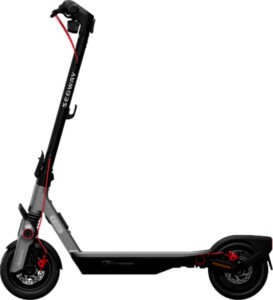
Ninebot by Segway KickScooter F3 Pro
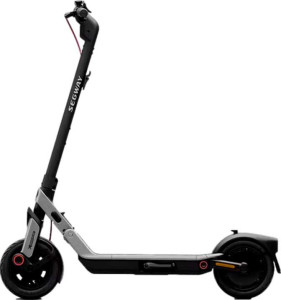
Segway E3 Pro

Ninebot by Segway KickScooter F3 Pro Segway E3 Pro

Overview

When choosing between the Ninebot by Segway KickScooter F3 Pro and the Segway E3 Pro, riders face a fascinating trade-off within the same brand family. Both scooters share a strong foundation — pneumatic 10″ tires, front and rear brakes, suspension, and app connectivity — yet they diverge sharply when it comes to motor power and range versus top speed and weight. This comparison breaks down every key specification to help you decide which model truly fits your riding needs.

Common Features

  • Both scooters feature suspension.
  • Both scooters have a dedicated smartphone app.
  • Both scooters are equipped with pneumatic tires.
  • Both scooters have a 10″ wheel diameter.
  • Neither scooter has a seat.
  • Both scooters can be folded.
  • Neither scooter is designed for kids.
  • Both scooters have front lights.
  • Neither scooter has dual motors.
  • Both scooters have a rear brake.
  • Both scooters have a front brake.
  • Both scooters support a maximum weight capacity of 120kg.
  • Both scooters have a battery level indicator.
  • Neither scooter has a removable battery.

Main Differences

  • Weight is 19300 g on the Ninebot by Segway KickScooter F3 Pro and 18200 g on the Segway E3 Pro.
  • Height is 1262 mm on the Ninebot by Segway KickScooter F3 Pro and 1235 mm on the Segway E3 Pro.
  • Width is 1152 mm on the Ninebot by Segway KickScooter F3 Pro and 1165 mm on the Segway E3 Pro.
  • The Ingress Protection rating is IPX6 on the Ninebot by Segway KickScooter F3 Pro and IPX5 on the Segway E3 Pro.
  • Motor power is 1200W on the Ninebot by Segway KickScooter F3 Pro and 800W on the Segway E3 Pro.
  • Top speed is 25 km/h on the Ninebot by Segway KickScooter F3 Pro and 32 km/h on the Segway E3 Pro.
  • Climbing angle is 24° on the Ninebot by Segway KickScooter F3 Pro and 18° on the Segway E3 Pro.
  • Charge time is 8 hours on the Ninebot by Segway KickScooter F3 Pro and 7 hours on the Segway E3 Pro.
  • Maximum distance per charge is 70 km on the Ninebot by Segway KickScooter F3 Pro and 55 km on the Segway E3 Pro.
  • Battery size is 477 Wh on the Ninebot by Segway KickScooter F3 Pro and 368 Wh on the Segway E3 Pro.
Specs Comparison
Ninebot by Segway KickScooter F3 Pro

Ninebot by Segway KickScooter F3 Pro

Segway E3 Pro

Segway E3 Pro

Design:
weight 19300 g 18200 g
has suspension
Has a dedicated smartphone app
has pneumatic tires
wheel diameter 10" 10"
has a seat
can be folded
is designed for kids
height 1262 mm 1235 mm
width 1152 mm 1165 mm
has front light(s)
has rear light(s)
Ingress Protection (IP) rating IPX6 IPX5
release date January 2025 September 2025

Both the Ninebot KickScooter F3 Pro and the Segway E3 Pro share a strong foundation in design: they both fold, ride on 10″ pneumatic tires, feature suspension, front and rear lighting, and a dedicated smartphone app — making them near-identical on paper for the core riding experience. Neither is designed for kids, and neither offers a seat, so both target the same adult commuter audience.

Where differences emerge is in the details. The F3 Pro is 1,100 g heavier (19,300 g vs. 18,200 g), which matters when carrying the scooter up stairs or onto public transit — the E3 Pro's lighter frame gives it a tangible ergonomic edge in daily portability. Dimensionally, the F3 Pro is slightly taller (1,262 mm vs. 1,235 mm), while the E3 Pro is marginally wider (1,165 mm vs. 1,152 mm); these are minor differences unlikely to affect real-world use or storage.

The most meaningful differentiator in this group is water resistance: the F3 Pro carries an IPX6 rating versus the E3 Pro's IPX5. In practical terms, IPX6 withstands powerful water jets, while IPX5 handles only lower-pressure water streams — giving the F3 Pro a clear edge for riders who frequently commute in heavy rain. Overall, the E3 Pro wins on portability thanks to its lower weight, but the F3 Pro holds the advantage in weather resilience, making the better choice dependent on whether weight or all-weather durability matters more to the user.

Performance:
motor power 1200W 800W
top speed 25 km/h 32 km/h
has dual motors
climbing angle 24° 18°
has a rear brake
has a front brake
maximum weight capacity 120kg 120kg

The performance profiles of these two scooters reveal a deliberate trade-off. The F3 Pro packs a significantly more powerful 1,200W motor compared to the E3 Pro's 800W, and that 50% power advantage translates directly into climbing ability: a 24° climbing angle versus just 18°. For riders in hilly cities or areas with steep inclines, this is a meaningful real-world gap — the F3 Pro will tackle demanding gradients with noticeably less strain on the motor and more confidence underfoot.

Counterintuitively, the less powerful E3 Pro reaches a higher top speed: 32 km/h versus the F3 Pro's 25 km/h. This suggests the two scooters are tuned for different riding priorities — the F3 Pro optimizes its motor output for torque and hill-climbing, while the E3 Pro is geared toward flat-terrain speed. It is also worth noting that in many markets, 25 km/h aligns with legal e-scooter speed limits, meaning the F3 Pro's cap may be a regulatory choice rather than a hardware limitation. On shared weight capacity — both handle up to 120 kg — they are evenly matched.

Braking is identical across both units, with front and rear brakes on each, so stopping performance is a wash. Overall, the F3 Pro holds a clear performance edge for mixed or hilly terrain, while the E3 Pro is the faster option on flat ground — making the better choice entirely dependent on the rider's typical environment.

Battery:
charge time 8 hours 7 hours
maximum distance per charge 70 km 55 km
has a battery level indicator
has a removable battery
battery size 477 Wh 368 Wh

Battery capacity tells the core story here: the F3 Pro's 477 Wh pack is roughly 30% larger than the E3 Pro's 368 Wh, and the range figures reflect that directly — 70 km versus 55 km per charge. That 15 km gap is substantial for a commuter; it could mean the difference between charging every day and charging every other day, depending on trip length. For riders with longer daily routes or those who simply prefer less frequent charging, the F3 Pro's battery endurance is a genuine advantage.

The trade-off is charge time: the larger pack naturally takes longer to replenish, at 8 hours versus the E3 Pro's 7 hours. In practice, both scooters are best left charging overnight, so this one-hour difference is unlikely to inconvenience most users. Neither scooter offers a removable battery, meaning on-the-go swapping is not an option for either — a limitation shared equally. Both include a battery level indicator, so riders are equally equipped to monitor remaining range.

On battery, the F3 Pro holds a clear advantage: its larger capacity delivers meaningfully more range at the cost of only a marginal increase in charge time. The E3 Pro's smaller pack charges slightly faster, but for most riders the priority is how far the scooter can go, not how quickly it tops up overnight.

Comparison Summary & Verdict

After examining all the specifications, it becomes clear that these two scooters serve different rider profiles. The Ninebot by Segway KickScooter F3 Pro stands out with its 1200W motor, impressive 70 km range, larger 477 Wh battery, and steeper 24° climbing angle, making it the stronger choice for riders tackling hilly terrain or long daily commutes. It also offers a higher IPX6 water resistance rating for added durability in wet conditions. The Segway E3 Pro, on the other hand, appeals with its higher top speed of 32 km/h, lighter weight of 18200 g, and slightly faster 7-hour charge time, making it better suited for riders who prioritize pace and portability on flatter urban routes.

Ninebot by Segway KickScooter F3 Pro
Buy Ninebot by Segway KickScooter F3 Pro if...

Buy the Ninebot by Segway KickScooter F3 Pro if you need a longer range, more powerful motor, and better hill-climbing capability for demanding commutes.

Segway E3 Pro
Buy Segway E3 Pro if...

Buy the Segway E3 Pro if you prioritize a higher top speed and a lighter, more portable scooter for everyday flat urban riding.