Ninebot by Segway KickScooter F3 Pro
Segway SuperScooter GT3

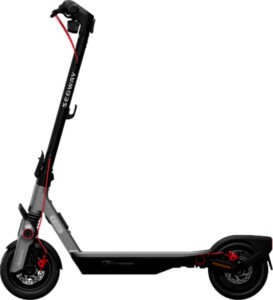
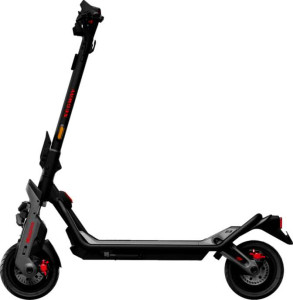
Ninebot by Segway KickScooter F3 Pro Segway SuperScooter GT3

Overview

Welcome to our in-depth specification comparison between the Ninebot by Segway KickScooter F3 Pro and the Segway SuperScooter GT3. Both scooters share a solid foundation — folding design, pneumatic tires, suspension, and a companion app — yet they target very different riders. In this comparison, we examine the key battlegrounds of performance and motor power, overall weight and dimensions, and battery capacity and range to help you decide which scooter fits your lifestyle best.

Common Features

  • Both scooters feature suspension.
  • Both scooters have a dedicated smartphone app.
  • Both scooters are equipped with pneumatic tires.
  • Neither scooter has a seat.
  • Both scooters can be folded.
  • Neither scooter is designed for kids.
  • Both scooters have front light(s).
  • Both scooters have rear light(s).
  • Neither scooter has dual motors.
  • Both scooters have a rear brake.
  • Both scooters have a front brake.
  • Both scooters have a battery level indicator.
  • Neither scooter has a removable battery.

Main Differences

  • Weight is 19300 g on Ninebot by Segway KickScooter F3 Pro and 39500 g on Segway SuperScooter GT3.
  • Wheel diameter is 10″ on Ninebot by Segway KickScooter F3 Pro and 11″ on Segway SuperScooter GT3.
  • Height is 1262 mm on Ninebot by Segway KickScooter F3 Pro and 1388 mm on Segway SuperScooter GT3.
  • Width is 1152 mm on Ninebot by Segway KickScooter F3 Pro and 1360 mm on Segway SuperScooter GT3.
  • Motor power is 1200W on Ninebot by Segway KickScooter F3 Pro and 2400W on Segway SuperScooter GT3.
  • Top speed is 25 km/h on Ninebot by Segway KickScooter F3 Pro and 50 km/h on Segway SuperScooter GT3.
  • Climbing angle is 24° on Ninebot by Segway KickScooter F3 Pro and 30° on Segway SuperScooter GT3.
  • Maximum weight capacity is 120 kg on Ninebot by Segway KickScooter F3 Pro and 150 kg on Segway SuperScooter GT3.
  • Charge time is 8 hours on Ninebot by Segway KickScooter F3 Pro and 6.5 hours on Segway SuperScooter GT3.
  • Maximum distance per charge is 70 km on Ninebot by Segway KickScooter F3 Pro and 72 km on Segway SuperScooter GT3.
  • Battery size is 477 Wh on Ninebot by Segway KickScooter F3 Pro and 899 Wh on Segway SuperScooter GT3.
Specs Comparison
Ninebot by Segway KickScooter F3 Pro

Ninebot by Segway KickScooter F3 Pro

Segway SuperScooter GT3

Segway SuperScooter GT3

Design:
weight 19300 g 39500 g
has suspension
Has a dedicated smartphone app
has pneumatic tires
wheel diameter 10" 11"
has a seat
can be folded
is designed for kids
height 1262 mm 1388 mm
width 1152 mm 1360 mm
has front light(s)
has rear light(s)
Ingress Protection (IP) rating IPX6 IPX6
release date January 2025 January 2025

Both the Ninebot by Segway KickScooter F3 Pro and the Segway SuperScooter GT3 share a strong foundation of practical design features: both fold for storage, ride on pneumatic tires with suspension, carry front and rear lights, and hold an IPX6 water-resistance rating — meaning neither is fazed by heavy rain or splashing water. Neither is designed for kids, and both pair with a dedicated smartphone app. At this level, they are evenly matched on safety and convenience essentials.

Where the two diverge significantly is in physical scale. The GT3 is substantially larger, standing 1388 mm tall and 1360 mm wide versus the F3 Pro's 1262 mm height and 1152 mm width. More striking is the weight gap: the GT3 tips the scales at 39,500 g — more than double the F3 Pro's 19,300 g. Even folded, the GT3 is a two-handed, commit-to-carrying proposition, while the F3 Pro remains manageable for most adults navigating stairs, public transit, or tight storage. The GT3 also runs slightly larger 11″ wheels compared to the F3 Pro's 10″, which can contribute to a smoother roll over uneven surfaces but adds to the overall bulk.

On design, the F3 Pro has a clear practical edge for users who prioritize portability and everyday handling. The GT3's greater mass and dimensions are clearly the trade-off of a machine built for more demanding performance use cases — its heft is a design consequence, not an oversight. If compactness and ease of transport matter, the F3 Pro wins this group outright; if you rarely need to carry the scooter and want the larger platform, the GT3's size becomes a non-issue.
Performance:
motor power 1200W 2400W
top speed 25 km/h 50 km/h
has dual motors
climbing angle 24° 30°
has a rear brake
has a front brake
maximum weight capacity 120kg 150kg

The performance gap between these two scooters is substantial and deliberate. The SuperScooter GT3 packs a 2400W motor — exactly double the F3 Pro's 1200W — and that difference translates directly into a top speed of 50 km/h versus 25 km/h. In practical terms, the GT3 can keep pace with urban traffic on arterial roads, while the F3 Pro is calibrated for bike-lane and last-mile use. Notably, neither uses dual motors despite their power outputs, meaning both route all that wattage through a single drivetrain.

Hill-climbing tells a similar story. The GT3's 30° climbing angle versus the F3 Pro's 24° means the GT3 handles steep inclines with meaningfully more confidence — a 30° grade is roughly a 58% slope, the kind found on aggressive urban hills or off-road terrain, whereas 24° already covers most real-world city inclines comfortably. The GT3 also supports a higher rider weight capacity of 150 kg compared to 120 kg, broadening its usable audience. Both scooters are equipped with front and rear brakes, so stopping hardware is evenly matched regardless of the speed differential.

On performance, the GT3 holds a decisive advantage across every measurable dimension — power, speed, gradient capability, and payload. The F3 Pro is not underpowered for its intended role, but users seeking genuine speed or tackling challenging terrain will find the GT3 operates in an entirely different performance tier.

Battery:
charge time 8 hours 6.5 hours
maximum distance per charge 70 km 72 km
has a battery level indicator
has a removable battery
battery size 477 Wh 899 Wh

The most striking detail in this battery comparison is not the range figures — it's the efficiency story behind them. The SuperScooter GT3 carries a substantially larger 899 Wh battery versus the F3 Pro's 477 Wh, yet both arrive at nearly identical maximum ranges of 72 km and 70 km respectively. That means the GT3 consumes almost twice the energy to travel roughly the same distance — a direct consequence of its greater weight and higher-performance motor working harder at speed. The F3 Pro extracts far more range per watt-hour, making it the more energy-efficient machine by a significant margin.

Charging dynamics add another layer to this picture. Despite its much larger pack, the GT3 actually reaches a full charge in 6.5 hours — faster than the F3 Pro's 8 hours — implying a higher-output charger is included. For users who charge overnight, both are perfectly workable, but the GT3's quicker turnaround is a genuine convenience advantage for those fitting in mid-day top-ups. Neither scooter offers a removable battery, so charging always means access to a power outlet near where the scooter is parked.

This group is genuinely nuanced: the F3 Pro wins on efficiency, squeezing comparable real-world range from a pack half the size, while the GT3 charges faster and carries the headroom to sustain high-speed riding without the deep discharge cycles that degrade cells faster over time. For most commuters, the F3 Pro's battery is the smarter, leaner package; for performance-oriented riders already committed to the GT3's weight class, the larger pack is a necessary foundation rather than a luxury.

Comparison Summary & Verdict

After examining every specification, the two scooters reveal clearly distinct identities. The Ninebot by Segway KickScooter F3 Pro stands out for its lightweight 19,300 g build and compact dimensions, making it the more practical choice for riders who need an easily portable daily commuter capped at the common urban speed limit of 25 km/h. The Segway SuperScooter GT3, on the other hand, is a powerhouse built for those who demand more: its 2400W motor, 50 km/h top speed, 30° climbing angle, and 150 kg weight capacity position it firmly in the high-performance segment. Its larger 899 Wh battery also charges faster at 6.5 hours. If portability and simplicity matter most, the F3 Pro is your match; if raw power and capability are the priority, the GT3 is the clear answer.

Ninebot by Segway KickScooter F3 Pro
Buy Ninebot by Segway KickScooter F3 Pro if...

Buy the Ninebot by Segway KickScooter F3 Pro if you want a lightweight, foldable commuter scooter that is easy to carry and suits urban speed limits.

Segway SuperScooter GT3
Buy Segway SuperScooter GT3 if...

Buy the Segway SuperScooter GT3 if you prioritize high-performance riding with a more powerful motor, higher top speed, greater climbing ability, and a larger battery capacity.