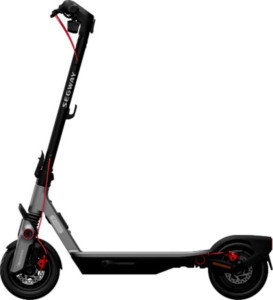
Ninebot by Segway KickScooter F3
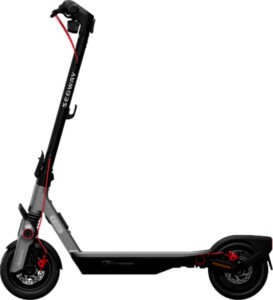
Ninebot by Segway KickScooter F3 Pro

Ninebot by Segway KickScooter F3 Ninebot by Segway KickScooter F3 Pro

Overview

Welcome to our in-depth comparison of the Ninebot by Segway KickScooter F3 and the Ninebot by Segway KickScooter F3 Pro. These two electric scooters share a strong foundation of shared features, yet differ in ways that could meaningfully influence your buying decision. In this comparison, we examine how they stack up across key areas including motor power, climbing capability, and overall weight, helping you find the right fit for your riding needs.

Common Features

  • Both scooters come equipped with suspension.
  • A dedicated smartphone app is available for both scooters.
  • Both scooters use pneumatic tires.
  • The wheel diameter is 10″ on both scooters.
  • Neither scooter has a seat.
  • Both scooters can be folded.
  • Neither scooter is designed for kids.
  • Both scooters stand at a height of 1262 mm.
  • The top speed is 25 km/h on both scooters.
  • Neither scooter has dual motors.
  • Both scooters are equipped with a rear brake.
  • Both scooters are equipped with a front brake.
  • The maximum weight capacity is 120 kg on both scooters.
  • The charge time is 8 hours on both scooters.
  • The maximum distance per charge is 70 km on both scooters.
  • A battery level indicator is present on both scooters.
  • Regenerative braking is available on both scooters.
  • Neither scooter has a removable battery.
  • The battery size is 477 Wh on both scooters.

Main Differences

  • The weight is 18600 g on the Ninebot by Segway KickScooter F3 and 19300 g on the Ninebot by Segway KickScooter F3 Pro.
  • The motor power is 1000W on the Ninebot by Segway KickScooter F3 and 1200W on the Ninebot by Segway KickScooter F3 Pro.
  • The climbing angle is 20° on the Ninebot by Segway KickScooter F3 and 24° on the Ninebot by Segway KickScooter F3 Pro.
Specs Comparison
Ninebot by Segway KickScooter F3

Ninebot by Segway KickScooter F3

Ninebot by Segway KickScooter F3 Pro

Ninebot by Segway KickScooter F3 Pro

Design:
weight 18600 g 19300 g
has suspension
Has a dedicated smartphone app
has pneumatic tires
wheel diameter 10" 10"
has a seat
can be folded
is designed for kids
height 1262 mm 1262 mm
width 1152 mm 1152 mm
has front light(s)
has rear light(s)
Ingress Protection (IP) rating IPX6 IPX6
release date January 2025 January 2025

From a design standpoint, the Ninebot by Segway KickScooter F3 and F3 Pro are remarkably similar — sharing identical dimensions (1262 mm height, 1152 mm width, 10″ wheels), the same foldable form factor, suspension, pneumatic tires, front and rear lighting, app connectivity, and an IPX6 water resistance rating. This means both scooters offer the same physical footprint, the same ride-comfort features, and the same level of weather protection in real-world use.

The only measurable design difference is weight: the F3 comes in at 18,600 g (~18.6 kg) versus the F3 Pro's 19,300 g (~19.3 kg) — a gap of just 700 g. In practical terms, this difference is barely perceptible when riding, but can matter slightly when carrying the scooter up stairs or lifting it into a car trunk. Neither model includes a seat, and neither is designed for children, keeping both firmly in the adult commuter category.

On design alone, these two scooters are essentially tied. The F3 holds a marginal edge due to its slightly lower weight, which marginally improves portability, but the difference is too small to be a deciding factor for most users. Anyone choosing between the two should look beyond design specs to performance and battery data for meaningful differentiation.

Performance:
motor power 1000W 1200W
top speed 25 km/h 25 km/h
has dual motors
climbing angle 20° 24°
has a rear brake
has a front brake
maximum weight capacity 120kg 120kg

Both scooters share a 25 km/h top speed, identical braking setups (front and rear), and a 120 kg maximum load capacity — so day-to-day commuting at flat speeds feels essentially the same on either model. The real performance divergence emerges when the terrain gets demanding.

The F3 Pro's 1200W motor versus the F3's 1000W unit is a 20% power increase that directly translates to hill-climbing ability: the F3 Pro handles gradients up to 24° compared to the F3's 20°. In practical terms, a 20° incline is already moderately steep — think a challenging urban hill — while 24° pushes into genuinely steep territory. For riders in hilly cities or areas with sharp ramps, this gap is meaningful. The extra motor power also typically means the F3 Pro sustains its top speed more confidently under load or on inclines, even if the stated maximum speed is identical on paper.

For performance, the F3 Pro holds a clear edge. Riders on flat terrain may never notice the difference, but anyone navigating elevation changes regularly will benefit tangibly from the stronger motor and steeper climb rating. The F3 remains competent, but the F3 Pro is the more capable machine where it counts.

Battery:
charge time 8 hours 8 hours
maximum distance per charge 70 km 70 km
has a battery level indicator
Has regenerative braking
has a removable battery
battery size 477 Wh 477 Wh

Battery is the one category where there is absolutely nothing to separate these two scooters. Both pack an identical 477 Wh battery, deliver the same claimed 70 km range per charge, and replenish fully in 8 hours — a full overnight charge cycle. The 477 Wh capacity is genuinely substantial for the scooter segment, making a 70 km ceiling credible under favorable conditions, though real-world range will vary with rider weight, speed, and terrain.

Worth noting is that both models include regenerative braking, which recovers a small amount of energy during deceleration and can modestly extend range in stop-and-go urban environments. Neither scooter offers a removable battery, meaning charging must be done with the unit stationary and plugged in — a practical consideration for riders without easy outlet access near their parking spot.

This category is a complete tie. Interestingly, the F3 Pro's stronger motor does not come at the cost of range — both scooters claim the same 70 km on the same battery. This makes the F3 Pro look particularly efficient on paper, though the provided specs offer no further detail to explain why. Either way, battery should play no role in the decision between these two models.

Comparison Summary & Verdict

Both the Ninebot by Segway KickScooter F3 and the Ninebot by Segway KickScooter F3 Pro are remarkably well-matched scooters, sharing an identical 70 km range, 477 Wh battery, 25 km/h top speed, and a host of convenience features like suspension, pneumatic tires, and app connectivity. The differences, while few, are significant for the right rider. The F3 Pro edges ahead with a more powerful 1200W motor and a steeper 24° climbing angle, making it the stronger choice for riders who regularly tackle hills or demanding terrain. The standard F3, with its 1000W motor and slightly lighter 18600 g frame, is the more practical pick for flat urban commutes where the extra power is unnecessary. Choose based on your terrain, not just the spec sheet.

Ninebot by Segway KickScooter F3
Buy Ninebot by Segway KickScooter F3 if...

Buy the Ninebot by Segway KickScooter F3 if you primarily ride on flat urban terrain and prefer a slightly lighter scooter, as it delivers the same range and speed at a lower weight.

Ninebot by Segway KickScooter F3 Pro
Buy Ninebot by Segway KickScooter F3 Pro if...

Buy the Ninebot by Segway KickScooter F3 Pro if you frequently ride on hilly routes, since its more powerful 1200W motor and 24° climbing angle give it a clear advantage over the standard F3.