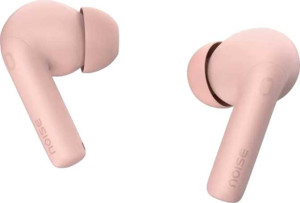
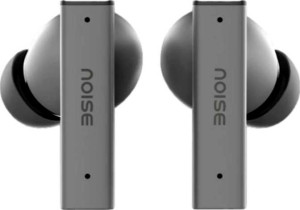
Noise Air Buds Pro 6
Noise Buds Marine

Noise Air Buds Pro 6 Noise Buds Marine

Overview

When choosing between the Noise Air Buds Pro 6 and the Noise Buds Marine, two strong contenders emerge in the truly wireless earbuds space. Both share a solid foundation of active noise cancellation, a 4-microphone setup, and multipoint connectivity, but key differences in battery performance, codec support, and water resistance ratings set them apart. Read on to see how every specification stacks up before making your decision.

Common Features

  • Both products have an in-ear fit.
  • Neither product uses wires or cables.
  • Neither product is a neckband earbud style.
  • Wingtips are not included with either product.
  • RGB lighting is not featured on either product.
  • Both products have stereo speakers.
  • UV light is not present on either product.
  • Neither product has a display.
  • Both products support active noise cancellation (ANC).
  • Both products have passive noise reduction.
  • The lowest frequency on both products is 20 Hz.
  • The highest frequency on both products is 20000 Hz.
  • Spatial audio is not supported on either product.
  • Dolby Atmos is not available on either product.
  • Neither product has a neodymium magnet.
  • Both products have a charge time of 1.5 hours.
  • Wireless charging is not available on either product.
  • Both products have a battery level indicator.
  • Both products have a rechargeable battery.
  • Both products feature USB Type-C connectivity.
  • LDAC is not supported on either product.
  • Bluetooth LE Audio is not supported on either product.
  • aptX Adaptive is not supported on either product.
  • aptX Low Latency is not supported on either product.
  • aptX HD is not supported on either product.
  • aptX is not supported on either product.
  • aptX Lossless is not supported on either product.
  • Both products support ambient sound mode.
  • Fast charging is supported on both products.
  • Both products support multipoint connection with 2 devices.
  • Neither product can read notifications.
  • A mute function is available on both products.
  • Both products can be used as a headset.
  • Both products have a control panel placed on the device.
  • Voice prompts are available on both products.
  • Both products are equipped with 4 microphones.
  • A noise-canceling microphone is featured on both products.

Main Differences

  • Ingress Protection rating is IPX5 on Noise Air Buds Pro 6 and IPX4 on Noise Buds Marine.
  • Water resistance is rated as water resistant on Noise Air Buds Pro 6, while Noise Buds Marine is rated as sweat resistant only.
  • Driver unit size is 12.4 mm on Noise Air Buds Pro 6 and 13 mm on Noise Buds Marine.
  • Battery life per charge is 7 hours on Noise Air Buds Pro 6 and 8 hours on Noise Buds Marine.
  • Battery life of the charging case is 36 hours on Noise Air Buds Pro 6 and 27 hours on Noise Buds Marine.
  • Fast pairing is supported on Noise Air Buds Pro 6 but not available on Noise Buds Marine.
  • LDHC codec support is present on Noise Air Buds Pro 6 but not available on Noise Buds Marine.
  • AAC codec support is present on Noise Air Buds Pro 6 but not available on Noise Buds Marine.
  • In-ear/on-ear detection is featured on Noise Air Buds Pro 6 but not available on Noise Buds Marine.
Specs Comparison
Noise Air Buds Pro 6

Noise Air Buds Pro 6

Noise Buds Marine

Noise Buds Marine

Design:
Fit In-ear In-ear
Ingress Protection (IP) rating IPX5 IPX4
water resistance Water resistant Sweat resistant
has no wires or cables
are neckband earbuds
wingtips included
has RGB lighting
has stereo speakers
has UV light
Has a display

Both the Noise Air Buds Pro 6 and the Noise Buds Marine share the same fundamental design DNA: fully wireless, in-ear fit with stereo output and no extras like wingtips, RGB lighting, or a display. For most users, this means a clean, minimalist form factor on both sides.

The most meaningful differentiator in this group is water resistance. The Air Buds Pro 6 carries an IPX5 rating, meaning it can withstand sustained, low-pressure water jets — making it genuinely suitable for workouts in rain or heavy sweating. The Buds Marine, rated at IPX4, is only protected against splashes from any direction, which covers light sweat and unexpected rain but falls short of more intense exposure. In practical terms, IPX5 offers a meaningfully higher margin of safety for active use.

The Noise Air Buds Pro 6 holds a clear edge in this group solely due to its superior ingress protection. If water and sweat resistance during vigorous activity is a priority, the Pro 6 is the stronger choice. For casual, low-intensity use, the difference may rarely matter, but the Pro 6 provides greater peace of mind.

Sound quality:
has active noise cancellation (ANC)
has passive noise reduction
driver unit size 12.4 mm 13 mm
lowest frequency 20 Hz 20 Hz
highest frequency 20000 Hz 20000 Hz
supports spatial audio
has Dolby Atmos
has Dirac Virtuo
has a neodymium magnet

At the architecture level, both earbuds are remarkably well-matched. Each features active noise cancellation, passive noise reduction, and an identical frequency range of 20 Hz to 20,000 Hz — covering the full spectrum of human hearing. Neither supports spatial audio, Dolby Atmos, or Dirac Virtuo, so advanced audio processing is off the table for both.

The only tangible differentiator here is driver size. The Buds Marine sports a slightly larger 13 mm driver compared to the Pro 6's 12.4 mm unit. A larger driver can theoretically move more air, which may lend itself to fuller low-end reproduction, but driver size alone is not a reliable predictor of output quality — tuning, materials, and enclosure design matter just as much, none of which are captured in these specs.

On paper, this group is essentially a near-tie. The Buds Marine has a marginal driver size advantage that could translate to slightly more bass presence, but without acoustic tuning data, neither product can be declared a clear winner in sound quality based solely on these specs.

Power:
Battery life 7 hours 8 hours
Battery life of charging case 36 hours 27 hours
charge time 1.5 hours 1.5 hours
has wireless charging
Has a solar power battery
has a battery level indicator
has a rechargeable battery

Battery performance is where these two earbuds diverge most clearly. The Buds Marine edges ahead with 8 hours of earbud playback versus the Pro 6's 7 hours — a modest but real difference that could mean finishing a long commute or workout without reaching for the case. Charge time is identical at 1.5 hours for both, and neither supports wireless charging.

Flip the equation to total stamina, though, and the Pro 6 reasserts itself. Its case extends total battery life to 36 hours, compared to just 27 hours for the Buds Marine. That 9-hour gap is significant for multi-day travel or situations where access to a power outlet is limited — the Pro 6 can go roughly a full extra day before needing a wall charge.

The verdict here depends on usage pattern. For users who charge frequently and prioritize longer single-session listening, the Buds Marine holds a slight edge. For those who travel, commute heavily, or simply prefer to charge less often, the Pro 6's superior total battery reserve makes it the more practical choice overall.

Connectivity:
has fast pairing
Has USB Type-C
has LDAC
has LDHC
has Bluetooth LE Audio
has aptX Adaptive
has aptX Low Latency
has aptX HD
has aptX
has aptX Lossless
has aptX Voice
has Auracast
maximum Bluetooth range 10 m 10 m
supports Bluetooth pairing using NFC
Can be used wirelessly
has AAC

Shared ground between these two is limited to USB-C charging, a 10 m Bluetooth range, and wireless operation — table stakes for any modern true wireless earbud. Neither supports advanced codecs like LDAC, aptX variants, or Bluetooth LE Audio, which keeps both squarely in the mainstream tier of connectivity.

Within that constraint, the Pro 6 pulls ahead on two fronts. First, it supports LDHC and AAC — codecs that offer higher-bitrate audio transmission compared to the standard SBC baseline that the Buds Marine appears limited to. LDHC in particular targets high-resolution wireless audio, which can make a perceptible difference in audio fidelity on compatible source devices. Second, the Pro 6 includes fast pairing, reducing the friction of switching between devices — a small but genuinely useful quality-of-life feature the Buds Marine lacks.

The Noise Air Buds Pro 6 has a clear advantage in this group. Its codec support translates to potentially better wireless audio quality, and fast pairing adds everyday convenience. The Buds Marine offers no offsetting connectivity strengths based on the available data.

Features:
release date April 2025 July 2025
has ambient sound mode
has in/on-ear detection
Supports fast charging
multipoint count 2 2
can read notifications
has a mute function
can be used as a headset
control panel placed on a device
Has voice prompts
travel bag is included
Has an in-line control panel
Has a temperature sensor
Has a built-in camera remote control function

Feature parity between these two earbuds is remarkably high. Ambient sound mode, fast charging, 2-device multipoint connectivity, mute, on-device controls, voice prompts, and an included travel bag are all present on both — a well-rounded set of features for the category.

The sole differentiator is in/on-ear detection, which the Pro 6 supports and the Buds Marine does not. This sensor automatically pauses playback when an earbud is removed and resumes when it is reinserted — a small but frequently used convenience that reduces the need to manually interact with the device during everyday moments like taking a call or having a quick conversation.

The Noise Air Buds Pro 6 holds a narrow edge here, entirely on the strength of ear detection. It is not a transformative advantage, but for users who value seamless, hands-free interaction, its absence on the Buds Marine is a noticeable omission. Otherwise, this group is essentially a draw.

Microphone:
number of microphones 4 4
has a noise-canceling microphone

Microphone hardware is identical across both earbuds: a 4-microphone array paired with noise-canceling capability on each. A quad-mic setup is a meaningful specification at this tier, as it enables more sophisticated beamforming — isolating the speaker's voice while suppressing wind, crowd, and ambient noise during calls.

This is a complete tie. With no differences in microphone count or noise-canceling support, neither the Pro 6 nor the Buds Marine can be distinguished from the other based solely on these specs. Call quality potential, at least on paper, is evenly matched.

Comparison Summary & Verdict

After a thorough comparison, both earbuds prove to be well-rounded options, yet each suits a different type of user. The Noise Air Buds Pro 6 stands out with its stronger IPX5 water resistance, a significantly larger 36-hour charging case battery, fast pairing, and broader codec support including AAC and LDHC — making it the better pick for commuters and frequent travelers who rely on long total playback time and seamless connectivity. The Noise Buds Marine, on the other hand, offers a slightly larger 13 mm driver and a longer 8-hour single-charge battery life, which could appeal to users who prioritize extended uninterrupted listening sessions. Both deliver ANC, ambient sound mode, and fast charging, so neither disappoints on core features. Your ideal choice ultimately comes down to whether you value total case endurance and connectivity versatility, or per-charge stamina.

Noise Air Buds Pro 6
Buy Noise Air Buds Pro 6 if...

Buy the Noise Air Buds Pro 6 if you need a longer-lasting charging case, stronger water resistance, and advanced codec support with fast pairing for seamless daily use.

Noise Buds Marine
Buy Noise Buds Marine if...

Buy the Noise Buds Marine if you prioritize a longer single-charge battery life and a slightly larger driver unit for extended, uninterrupted listening sessions.