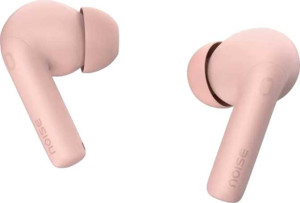
Noise Air Buds Pro 6
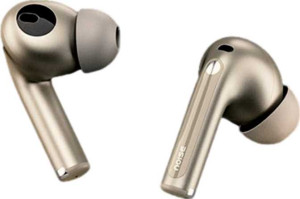
Noise Master Buds

Noise Air Buds Pro 6 Noise Master Buds

Overview

Choosing between the Noise Air Buds Pro 6 and the Noise Master Buds is no easy task when both earbuds share so much common ground. From their IPX5 water resistance and active noise cancellation to their 12.4 mm drivers and multipoint connectivity, these two truly wireless earbuds are closely matched on paper. The real question comes down to a handful of key battlegrounds: battery life, spatial audio, microphone count, and fast pairing support.

Common Features

  • Both products use an in-ear fit.
  • Both products carry an IPX5 ingress protection rating, making them water resistant.
  • Both products are fully wireless with no wires or cables.
  • Neither product is a neckband earbud style.
  • Neither product includes wingtips.
  • Neither product features RGB lighting.
  • Both products have stereo speakers.
  • Both products support active noise cancellation (ANC).
  • Both products offer passive noise reduction.
  • Both products use a 12.4 mm driver unit.
  • The frequency range on both products spans from 20 Hz to 20000 Hz.
  • Dolby Atmos support is not available on either product.
  • Dirac Virtuo support is not available on either product.
  • Neither product uses a neodymium magnet.
  • Both products take 1.5 hours to fully charge.
  • Wireless charging is not available on either product.
  • Neither product has a solar power battery.
  • Both products include a battery level indicator.
  • Both products have a rechargeable battery.
  • Both products feature a USB Type-C connection.
  • LDAC support is not available on either product.
  • Both products support LDHC audio codec.
  • Bluetooth LE Audio is not supported on either product.
  • aptX Adaptive is not supported on either product.
  • aptX Low Latency is not supported on either product.
  • aptX HD is not supported on either product.
  • aptX is not supported on either product.
  • Both products support ambient sound mode.
  • Both products include in/on-ear detection.
  • Both products support fast charging.
  • Both products support multipoint connection with up to 2 devices.
  • Neither product can read notifications.
  • Both products include a mute function.
  • Both products can be used as a headset.
  • Both products have a control panel placed on the device.
  • Both products feature a noise-canceling microphone.

Main Differences

  • Spatial audio support is present on Noise Master Buds but not available on Noise Air Buds Pro 6.
  • Battery life is 7 hours on Noise Air Buds Pro 6 and 6 hours on Noise Master Buds.
  • Battery life of the charging case is 36 hours on Noise Air Buds Pro 6 and 38 hours on Noise Master Buds.
  • Fast pairing is available on Noise Air Buds Pro 6 but not present on Noise Master Buds.
  • The number of microphones is 4 on Noise Air Buds Pro 6 and 6 on Noise Master Buds.
Specs Comparison
Noise Air Buds Pro 6

Noise Air Buds Pro 6

Noise Master Buds

Noise Master Buds

Design:
Fit In-ear In-ear
Ingress Protection (IP) rating IPX5 IPX5
water resistance Water resistant Water resistant
has no wires or cables
are neckband earbuds
wingtips included
has RGB lighting
has stereo speakers
has UV light
Has a display

In terms of design, the Noise Air Buds Pro 6 and the Noise Master Buds are virtually identical across every measured spec. Both sport an in-ear fit, carry an IPX5 water resistance rating, are fully wireless, and include stereo speakers — with no neckband, no wingtips, no RGB lighting, no UV light, and no display on either model.

The IPX5 rating means both earbuds can handle sweat and light splashes comfortably, making them suitable for workouts or commuting in light rain, though neither is rated for submersion. The true wireless form factor on both ensures complete cable freedom, and the in-ear fit is designed to provide passive noise isolation alongside the physical seal.

Given that every design specification is identical between the two products, this category is a clear tie. Neither model offers any structural or protection advantage over the other based solely on the provided design data. Buyers should look to other spec groups — such as audio performance, battery life, or connectivity — to differentiate between the two.

Sound quality:
has active noise cancellation (ANC)
has passive noise reduction
driver unit size 12.4 mm 12.4 mm
lowest frequency 20 Hz 20 Hz
highest frequency 20000 Hz 20000 Hz
supports spatial audio
has Dolby Atmos
has Dirac Virtuo
has a neodymium magnet

Both the Noise Air Buds Pro 6 and the Noise Master Buds share a strong sound quality foundation: identical 12.4 mm drivers, the same 20 Hz – 20,000 Hz frequency range, and both feature active noise cancellation alongside passive noise reduction. The 12.4 mm driver size is notably large for in-ear buds and generally translates to fuller bass response and better overall loudness headroom.

The one meaningful differentiator here is spatial audio support — the Master Buds has it, the Air Buds Pro 6 does not. Spatial audio creates a wider, more immersive soundstage by simulating sound coming from different directions, which is particularly noticeable when watching movies, playing games, or listening to spatially mixed music tracks. It is a genuine experiential upgrade over standard stereo playback, even without Dolby Atmos or Dirac Virtuo implementation.

The Noise Master Buds holds a clear edge in this category purely on the strength of its spatial audio support. All other sound quality parameters are evenly matched, so this single feature tips the scale in favor of the Master Buds for users who prioritize an immersive, three-dimensional listening experience.

Power:
Battery life 7 hours 6 hours
Battery life of charging case 36 hours 38 hours
charge time 1.5 hours 1.5 hours
has wireless charging
Has a solar power battery
has a battery level indicator
has a rechargeable battery

The power story between these two comes down to a straightforward trade-off. The Noise Air Buds Pro 6 delivers 7 hours of earbud battery life per charge, while the Noise Master Buds offers 6 hours — a one-hour gap that matters for long commutes, flights, or extended work sessions where reaching for the case is inconvenient.

Flip the perspective to total combined battery, however, and the Master Buds partially closes the gap: its case tops out at 38 hours versus the Air Buds Pro 6's 36 hours, meaning the Master Buds ekes out slightly more total runtime across multiple full charges. Both share an identical 1.5-hour charge time and neither supports wireless charging, so the charging experience is effectively the same for both users.

Choosing a winner here depends on usage pattern. For listeners who value longer continuous sessions without interruption, the Air Buds Pro 6 has the edge with its superior per-charge earbud life. For those who cycle the case frequently and care about total weekly endurance, the Master Buds' marginally higher case capacity makes it a near wash. On balance, the Air Buds Pro 6 holds a slight practical advantage for most everyday use cases.

Connectivity:
has fast pairing
Has USB Type-C
has LDAC
has LDHC
has Bluetooth LE Audio
has aptX Adaptive
has aptX Low Latency
has aptX HD
has aptX
has aptX Lossless
has aptX Voice
has Auracast
maximum Bluetooth range 10 m 10 m
supports Bluetooth pairing using NFC
Can be used wirelessly
has AAC

Connectivity between these two is largely a mirror image — both support LDHC and AAC audio codecs, share a 10 m Bluetooth range, and offer USB Type-C charging. Neither ventures into premium codec territory like LDAC or aptX Adaptive, so audio transmission quality over Bluetooth is on equal footing for both.

The sole differentiator is fast pairing, which the Noise Air Buds Pro 6 supports and the Noise Master Buds does not. Fast pairing streamlines the initial device setup by automating Bluetooth discovery and connection — a small but genuinely convenient quality-of-life feature, especially for users who frequently switch between devices or set up on a new phone.

On connectivity, the Air Buds Pro 6 holds a narrow but real edge thanks to fast pairing. It is not a dramatic advantage, but it is the only functional differentiator in this category, and it favors the Air Buds Pro 6 for users who value a smoother out-of-the-box and day-to-day pairing experience.

Features:
release date April 2025 February 2025
has ambient sound mode
has in/on-ear detection
Supports fast charging
multipoint count 2 2
can read notifications
has a mute function
can be used as a headset
control panel placed on a device
Has voice prompts
travel bag is included
Has an in-line control panel
Has a temperature sensor
Has a built-in camera remote control function

Across the features category, the Noise Air Buds Pro 6 and Noise Master Buds are completely identical — every single spec matches. Both offer ambient sound mode, in-ear detection, fast charging, and multipoint connectivity for up to 2 devices simultaneously, alongside a mute function, on-device controls, voice prompts, and an included travel bag.

The highlights worth contextualizing: multipoint support at 2 devices is a genuinely practical feature for users juggling a laptop and phone, allowing seamless switching without manual re-pairing. Ambient sound mode complements the ANC found in both earbuds, giving users the flexibility to let in environmental audio when situational awareness matters — at a crosswalk, for instance, or in an office setting. In-ear detection adds convenience by auto-pausing playback when an earbud is removed.

This category is an unambiguous tie. There is no feature present in one product that is absent from the other, and no spec here differentiates the two in any meaningful way. Buyers will need to weigh other spec groups to find a deciding factor between the Air Buds Pro 6 and the Master Buds.

Microphone:
number of microphones 4 6
has a noise-canceling microphone

Microphone hardware is where these two products part ways most clearly. Both feature noise-canceling microphones, but the Noise Master Buds packs in 6 microphones compared to the 4 microphones on the Noise Air Buds Pro 6. That two-mic difference is not merely a numbers game — more microphones enable more sophisticated beamforming and noise isolation algorithms, which directly translates to cleaner voice pickup during calls in noisy environments.

A higher microphone count allows the earbuds to sample ambient sound from more angles simultaneously, making it easier to isolate the wearer's voice and suppress background noise like wind, crowd chatter, or keyboard clicks. For users who take frequent calls or rely on voice assistants, this architecture gives the Master Buds a structural advantage in call clarity that the Air Buds Pro 6 cannot fully match on mic count alone.

The Noise Master Buds wins this category outright. With 6 microphones versus 4, it is better equipped for demanding call environments, and that advantage is directly supported by the provided specs.

Comparison Summary & Verdict

After a thorough look at the specs, both the Noise Air Buds Pro 6 and the Noise Master Buds prove to be well-rounded truly wireless earbuds built on a strong shared foundation. However, their differences are telling. The Noise Air Buds Pro 6 edges ahead with a longer 7-hour battery life per charge and the convenience of fast pairing, making it a solid pick for users who prioritize endurance and quick device switching. On the other hand, the Noise Master Buds counters with spatial audio support and a superior 6-microphone array, making it the better choice for audiophiles and those who frequently take calls or rely on voice features. Both deliver ANC, LDHC, and fast charging, so the decision ultimately hinges on whether immersive audio and call quality or raw battery stamina and pairing speed matter more to you.

Noise Air Buds Pro 6
Buy Noise Air Buds Pro 6 if...

Buy the Noise Air Buds Pro 6 if you want longer playback per charge and value the convenience of fast pairing for quick device switching.

Noise Master Buds
Buy Noise Master Buds if...

Buy the Noise Master Buds if you prioritize spatial audio for a more immersive listening experience and want a 6-microphone setup for clearer calls.