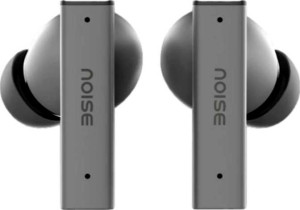
Noise Buds Marine
OnePlus Nord Buds 3R

Noise Buds Marine OnePlus Nord Buds 3R

Overview

When choosing between the Noise Buds Marine and the OnePlus Nord Buds 3R, the decision is far from straightforward. Both earbuds share a solid foundation — in-ear fit, passive noise reduction, fast charging, and a 4-microphone setup — yet they diverge meaningfully in areas that matter most to everyday listeners. From noise cancellation capabilities to battery endurance and water resistance ratings, each product carves out a distinct identity. Read on to see how these two contenders stack up across every key specification.

Common Features

  • Both products have an in-ear fit.
  • Neither product uses cables or wires.
  • Neither product is a neckband earbud design.
  • Wingtips are not included with either product.
  • RGB lighting is not present on either product.
  • Both products feature stereo speakers.
  • UV light is not present on either product.
  • Neither product has a display.
  • Both products offer passive noise reduction.
  • The lowest frequency for both products is 20 Hz.
  • The highest frequency for both products is 20000 Hz.
  • Dolby Atmos support is not available on either product.
  • Dirac Virtuo support is not available on either product.
  • A neodymium magnet is not used in either product.
  • Wireless charging is not available on either product.
  • Neither product has a solar power battery.
  • Both products include a battery level indicator.
  • Both products have a rechargeable battery.
  • Fast pairing is not available on either product.
  • Both products feature a USB Type-C port.
  • LDAC support is not available on either product.
  • Bluetooth LE Audio is not supported on either product.
  • aptX Adaptive support is not available on either product.
  • Both products have 4 microphones.
  • Both products include a noise-canceling microphone.
  • In-ear or on-ear detection is not available on either product.
  • Both products support fast charging.
  • Both products support connecting to 2 devices simultaneously via multipoint.
  • Neither product can read notifications.
  • A mute function is available on both products.
  • Both products can be used as a headset.
  • Both products have a control panel placed on the device.
  • Voice prompts are available on both products.

Main Differences

  • The IP rating is IPX4 on Noise Buds Marine and IP55 on OnePlus Nord Buds 3R.
  • Noise Buds Marine is sweat resistant while OnePlus Nord Buds 3R is water resistant.
  • Active noise cancellation is present on Noise Buds Marine but not available on OnePlus Nord Buds 3R.
  • The driver unit size is 13 mm on Noise Buds Marine and 12.4 mm on OnePlus Nord Buds 3R.
  • Spatial audio support is present on OnePlus Nord Buds 3R but not available on Noise Buds Marine.
  • Battery life is 8 hours on Noise Buds Marine and 12 hours on OnePlus Nord Buds 3R.
  • Battery life of the charging case is 27 hours on Noise Buds Marine and 32 hours on OnePlus Nord Buds 3R.
  • Charge time is 1.5 hours on Noise Buds Marine and 2 hours on OnePlus Nord Buds 3R.
  • The Bluetooth version is 5.3 on Noise Buds Marine and 5.4 on OnePlus Nord Buds 3R.
  • Ambient sound mode is present on Noise Buds Marine but not available on OnePlus Nord Buds 3R.
  • A find device feature is present on OnePlus Nord Buds 3R but not available on Noise Buds Marine.
Specs Comparison
Noise Buds Marine

Noise Buds Marine

OnePlus Nord Buds 3R

OnePlus Nord Buds 3R

Design:
Fit In-ear In-ear
Ingress Protection (IP) rating IPX4 IP55
water resistance Sweat resistant Water resistant
has no wires or cables
are neckband earbuds
wingtips included
has RGB lighting
has stereo speakers
has UV light
Has a display

Both the Noise Buds Marine and the OnePlus Nord Buds 3R share the same fundamental design philosophy: fully wireless, in-ear earbuds with stereo output and no extras like wingtips, RGB lighting, or displays. For most users, the day-to-day form factor experience will feel nearly identical between the two.

The single but meaningful differentiator in this group is ingress protection. The Noise Buds Marine carry an IPX4 rating, meaning they can handle sweat and light splashes from any direction — adequate for workouts but not much beyond that. The Nord Buds 3R steps up to a full IP55 certification, which adds rated protection against dust ingress and resistance to low-pressure water jets. In real-world terms, this means the Nord Buds 3R can more confidently handle rain, heavy sweat sessions, or accidental splashes from a water bottle, while also being better shielded in dusty environments like a gym or outdoor trail.

On design, the OnePlus Nord Buds 3R holds a clear edge purely due to its superior IP55 rating. For users who push their earbuds in varied or demanding conditions, that extra layer of protection is a genuine, practical advantage — not just a spec on paper.

Sound quality:
has active noise cancellation (ANC)
has passive noise reduction
driver unit size 13 mm 12.4 mm
lowest frequency 20 Hz 20 Hz
highest frequency 20000 Hz 20000 Hz
supports spatial audio
has Dolby Atmos
has Dirac Virtuo
has a neodymium magnet

The frequency range is identical on both — 20 Hz to 20,000 Hz — covering the full audible spectrum, and the driver sizes are close enough (13 mm vs 12.4 mm) that neither alone would be a decisive real-world differentiator. Where these two earbuds genuinely diverge is in how they approach noise management and audio immersion.

The Noise Buds Marine includes Active Noise Cancellation (ANC), which uses microphones to detect and counteract ambient sound in real time. This is a significant practical advantage for commuters, office workers, or anyone frequently in noisy environments — passive noise reduction alone, which both earbuds share through physical ear seal, simply cannot match ANC's effectiveness against sustained low-frequency noise like traffic or air conditioning. The Nord Buds 3R skips ANC entirely, which is a notable omission at this product tier. However, it counters with spatial audio support, a feature the Marine lacks. Spatial audio can create a wider, more three-dimensional soundstage — particularly noticeable with compatible content like movies or games — though its real-world benefit depends heavily on the source material and software implementation.

This group comes down to a trade-off rather than a clean sweep: the Noise Buds Marine holds the edge for noise-sensitive listening environments thanks to ANC, while the Nord Buds 3R appeals more to users who prioritize immersive, spatially rich audio. For the majority of everyday use cases, ANC tends to have broader and more consistent utility, giving the Marine a slight overall advantage here.

Power:
Battery life 8 hours 12 hours
Battery life of charging case 27 hours 32 hours
charge time 1.5 hours 2 hours
has wireless charging
Has a solar power battery
has a battery level indicator
has a rechargeable battery

Battery endurance is one of the most tangible day-to-day factors in choosing earbuds, and here the OnePlus Nord Buds 3R pulls ahead meaningfully. Its 12-hour earbud battery life versus the Noise Buds Marine's 8 hours is not a marginal gap — that extra four hours can be the difference between making it through a long-haul flight or a full workday without reaching for the case. Combined with a case that extends total playback to 32 hours versus the Marine's 27 hours, the Nord Buds 3R simply goes longer between charges across the board.

The one area where the Marine reclaims some ground is charge time: it refills in just 1.5 hours compared to the Nord Buds 3R's 2 hours. For users who tend to charge opportunistically — topping up during a commute or a lunch break — that 30-minute difference is a genuine convenience advantage. Neither model supports wireless charging, so both require a wired connection regardless.

On balance, the Nord Buds 3R holds a clear power advantage. Unless rapid wired charging is a priority, its substantially longer per-charge and total battery life makes it the stronger choice for users who want to minimize interruptions.

Connectivity:
has fast pairing
Has USB Type-C
Bluetooth version 5.3 5.4
has LDAC
has LDHC
has Bluetooth LE Audio
has aptX Adaptive
has aptX Low Latency
has aptX HD
has aptX
has aptX Lossless
has aptX Voice
has Auracast
maximum Bluetooth range 10 m 10 m
supports Bluetooth pairing using NFC
Can be used wirelessly
has AAC

Connectivity is largely a wash between these two earbuds. Both pair wirelessly over Bluetooth, charge via USB Type-C, cap out at a 10 m range, and skip advanced features like NFC pairing, fast pairing, and high-resolution audio codecs such as LDAC or aptX. The absence of any premium codec support on either device means audio is transmitted over standard Bluetooth compression — a ceiling that affects both equally.

The only technical distinction in this group is the Bluetooth version: 5.3 on the Noise Buds Marine versus 5.4 on the OnePlus Nord Buds 3R. In practical terms, Bluetooth 5.4 brings incremental improvements in connection reliability and efficiency over 5.3, but these differences are subtle under real-world conditions and unlikely to be perceptible to most users in everyday use.

Given how closely matched the two are, the Nord Buds 3R holds a negligible technical edge from its newer Bluetooth version, but this group is effectively a tie. Neither product differentiates itself meaningfully through connectivity features, and a buyer's decision here should rest on the other specification groups.

Features:
release date July 2025 August 2025
has ambient sound mode
has in/on-ear detection
has find device feature
Supports fast charging
multipoint count 2 2
can read notifications
has a mute function
can be used as a headset
control panel placed on a device
Has voice prompts
travel bag is included
Has an in-line control panel
Has a temperature sensor
Has a built-in camera remote control function

Across most practical features, these two earbuds are well-matched. Both support fast charging, multipoint connection for two devices simultaneously, on-device touch controls, a mute function, headset use for calls, voice prompts, and even include a travel bag. For the majority of everyday use cases, users of either product will find a comparable feature set at their fingertips.

The divergence comes down to two specific features, each exclusive to one product. The Noise Buds Marine offers ambient sound mode, which pipes in environmental audio so users can stay aware of their surroundings without removing the earbuds — a genuinely useful safety and convenience feature for commuters, runners, or anyone in a shared space. The OnePlus Nord Buds 3R counters with a find device feature, which helps locate misplaced earbuds — a practical convenience that anyone prone to losing small accessories will appreciate.

Which advantage matters more is user-dependent, but ambient sound mode tends to be a more frequently used, day-to-day feature compared to the occasional utility of device tracking. On that basis, the Noise Buds Marine holds a slight edge in this group — though users who prioritize never losing their earbuds may weigh the Nord Buds 3R's find feature just as highly.

Microphone:
number of microphones 4 4
has a noise-canceling microphone

Microphone performance on paper is identical between the two: both the Noise Buds Marine and the OnePlus Nord Buds 3R pack 4 microphones and feature noise-canceling microphone technology. A four-mic array is a solid setup at this tier, enabling the beamforming and noise isolation algorithms that help filter out wind, background chatter, and ambient noise during calls.

With no differentiating data points in this group, this is a clear and complete tie. Users prioritizing call clarity and voice pickup quality can expect a comparable on-paper microphone specification from either earbud, and the choice between them should be driven by the other specification groups.

Comparison Summary & Verdict

After a thorough look at every specification, the Noise Buds Marine and OnePlus Nord Buds 3R clearly cater to different listener profiles. The Noise Buds Marine stands out with its active noise cancellation and ambient sound mode, making it the stronger pick for commuters or anyone who needs to manage their acoustic environment. The OnePlus Nord Buds 3R, on the other hand, impresses with a longer battery life of 12 hours (versus 8 hours), a more robust IP55 water resistance rating, spatial audio support, and a newer Bluetooth 5.4 connection. If longevity and durability in varied environments are your priorities, the OnePlus edges ahead. Choose the Noise Buds Marine if immersive, controlled listening is your main goal.

Noise Buds Marine
Buy Noise Buds Marine if...

Buy the Noise Buds Marine if active noise cancellation and an ambient sound mode are essential to your daily listening experience.

OnePlus Nord Buds 3R
Buy OnePlus Nord Buds 3R if...

Buy the OnePlus Nord Buds 3R if you need longer battery life, stronger IP55 water resistance, and spatial audio support for a more versatile everyday earbud.